




Documentary bares it all, the row over which ‘warthog’ deserves the throne of Balobedu
6 Kings and 6 Queens has all elements for a powerful documentary about a bruising royal succession battle-intrigue, conspiracy, suspicion and behind the scene scheming.
By Edward Tsumele, CITYLIFE/ARTS Editor
The invitation came through on Friday inquiring about my availability to watch a documentary about the Rain Queen, Queen Modjadji of the Balobedu people found in Limpopo Province. I could of course not say no. How could I when this royal family is not an ordinary one in Southern Africa. How could I say no when these are the people who have the power to summon the heavens to bring down rain during debilitating spells o drought, and according to their traditions, the heavens obey. Always.
The rains often do come as a downpour watering the valleys, the rivers, and streams, filling them with life-saving water that gives life to plants, animals and human beings. And so their gift as a people of the rain is well known. These after all are the Rozvi people, the descendants of the great and mystical builders of powerful Kingdoms of Monomutapa in Zimbabwe and Mapungubwe in Limpopo. Kingdoms that stood the test of time till this day, the evidence of innovation standing intact today, defying the dismissive gaze and judgment of supremacists who cannot fathom an African having mastered advanced technical skills to build what in the present even scientifically trained experts with advanced technical education skills cannot build.
These are the mysterious people who in my distant, fading memory as an impressionable child, I used to hear stories about these people and their mysterious rain making powers, and I was particularly intrigued by the idea of a people having the power to summon the heavens to open and allow rain to come down and fill the rivers and water the thirsty meal fields, resulting in bountiful feasts of harvesting by those that would have worked the fields in time, who fed the hungry and averted hunger and death.
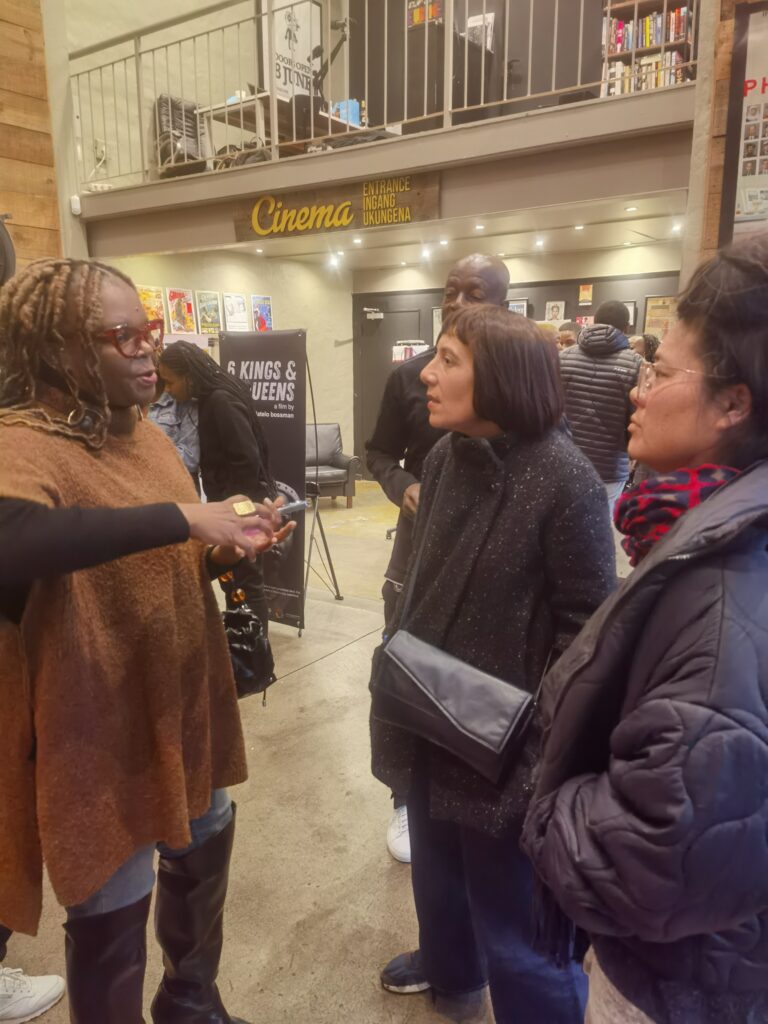
And so on Saturday, though tired from attending another art engagement at the JSE in Sandton, I heeded the call of duty and headed straight to Bioscope at 44 Stanley, Milpark, where I joined a cinema full of people also curious to know what this documentary had in store for us.
And therefore let me state this, right here. In the past as a young person out of university, I dabbled in documentary making, efforts that to say the least did not take me anywhere, as either I lost interest, or, did not follow up on the would-be partners in this journey, and therefore that sealed my fate as a budding documentary filmmaker. However fortunately that adventure has left me with more than a cursory understanding of how documentaries are made, particularly good documentaries.
And also I have over the years watched enough documentaries to tell if a documentary was half done, those that are linear in their narrative structure, lacking complexity and compelling layering to the point of taking the audience for granted, and in some cases, regarding the audience as stupid and passive receivers of information. And yet when a documentary is well produced the audience are sucked into the story proper and tight. They become active participants in the story as attentive listeners and questioning minds actively engaged with the story development right from its beginning to its end.
But this documentary is not one of those –the boring type. It is complex. Its structure is multi-dimensional and the narrative is nuanced, allowing the audience to think through as facts, situations, the characters involved in the narrative are explored deeply, allowing the audience to think along and in some cases actively taking a side, depending on what is presented by the filmmaker. It really takes a good director to achieve this.
Essentially this documentary is about the succession debacle that has plunged the Balobedu Royal family into a divisive turmoil most probably seen only few times in the 400 year history of this royal family. This family and the Royal Council, the highest decision making structure in the royal family, are pitted against each other as they try to manage succession after the death of the previous Rain Queen Modjadji V1. Her death in 2005, itself, is controversial as it is coated in mystery.
In that succession battle enters prominent academic and ANC leader Mathole Motshekga, whose role was that of advisor to the late Queen Modjadji V1. When the queen died she left behind a baby girl named Masanaba, who according to the tradition of the Balobedu Royal Family for the past 200 years, must ascend to the throne as the new Queen. But problem is when the mother passed on, she was too young to take on the role. But there is a brother of the late Queen Mpapatla Modjadji, that some within the Royal Family believe must ascend to the throne. But only as a regent King till the young would be Queen Masanaba turns 18, which she has since done. However she still has not ascended the throne as we speak.
However in her place, with the agreement of some in the Royal Family Mpapatla indeed is controversially enthroned as Regent, making a disruption in the 200 matrilineal dynasty of female rulers.
But another complication right now is that the Royal Family, at least those who are behind the younger brother, not only do they seem to not be in a hurry to remove the Regent King in favour of the now old enough-Masanaba to take her place on the throne. They are considering to change the way the Royal Family has been ruled in the past 200 years by contemplating reintroducing the reign of Kings as per prior to the 200 years when women rulers within the royal family broke that tradition by taking over the reins from their male counterparts.
The issue however is complicated further when the person who groomed the would be Queen is none other than Dr Mathole Motshekga who stands accused by some members of the royal family of not only middling in the family affairs, but having an ulterior motive as well. They accuse him of not only of having bulldozed his way into being a foster father of the then young Masanaba, raising her as his own daughter, but also wanting to steal the Queendom itself. This among other things, they accuse, the good doctor wants to be the one arranging the secret suitors of his choice for the Queen, as per tradition, and who are close family members of his. This, his detractors within the Royal Family insist, will only happen over their dead body. They are not going to allow daylight robbery of the Queendom by a Molobedu commoner that they say Motshekga is within the hierarchy of the Balobedu nation.
However Motshekga says he too has royal blood running through his veins, hence his totem is that of a warthog, that happens to be the totem of the Balobedu Royal Family.
But the good doctor will have none of this, according to the documentary. His role is that of a wise man, steeped in the tradition of the Balobedu, of which he is very much part of. Just like the role he played as advisor to the-would be Queen’s late mother, he again is playing that role by mentoring the queen into becoming a responsible leader ready to lead her people.
However, the documentary ends without resolving the issue of who is the rightful leader of this nation of two million people in South Africa between Masanaba and Mpapatla Modjadji.
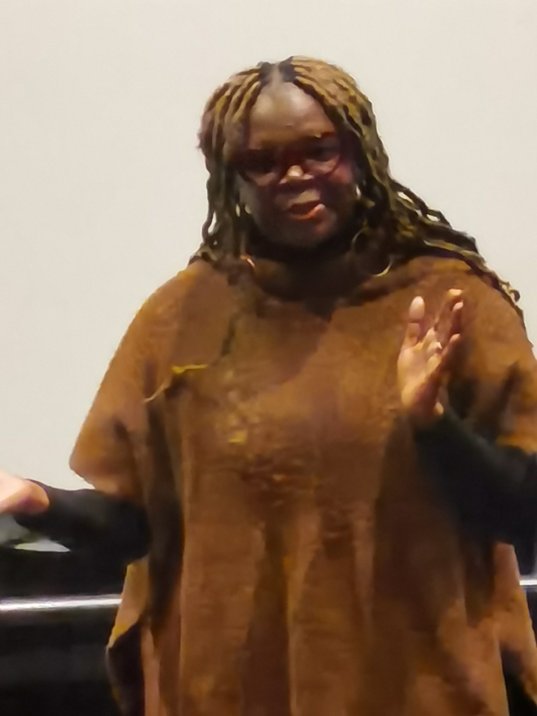
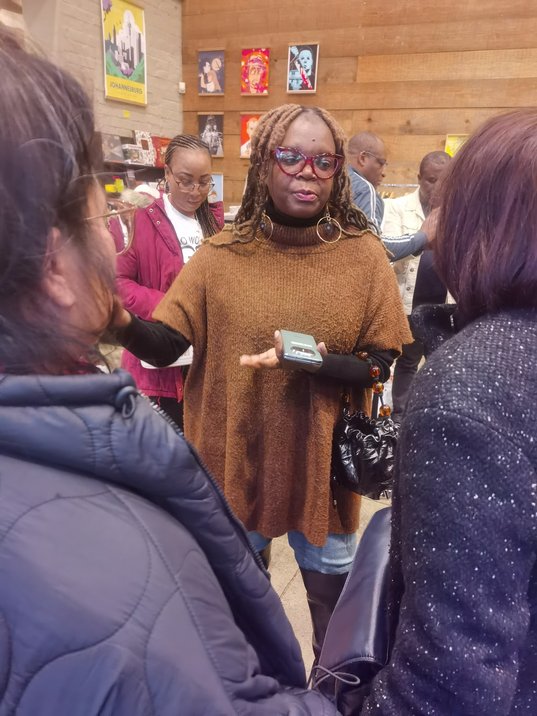
“That was actually intentional on our part. And this is because as it is, the issue is before the courts, and a judge must decide,” the documentary’s director Molatelo Bossman told CITYLIFE/ARTS shortly after the screening had ended.
And so it appears the issue of who is the right warthog to ascend to the throne of one of Southern Africa’s enduring royal families is far from over.
Only the courts will eventually settle this issue and effectively decide whether this royal family remains a Queendom as per Tolo Commission confirmation or is changed into a Kingdom as per the wishes of some Royal Family members.
However the Balobedu Royal Council are resolute that the Balobedu Nation is a Queendom, and not a Kingdom, and therefore should remain so with Masanaba enthroned as Modjadji V11.
The point here though is, through intimate interviews, archival footage, and cultural reflection, the documentary unpacks the political, traditional and gender-based tensions that arose within the royal family and the broader Balobedu community. It explores in a compelling way, the enduring legacy of the Rain Queen lineage and raises broader questions of power, identity and rightful leadership in post- Apartheid South Africa.
6 Kings and 6 Queens, which is part of this year’s Encounters Documentary Film Festival, which wrapped up on Sunday, June 29, 2025, is a powerful nuanced production about the intricacies of succession battles within an African royal family. It has all the elements that make a powerful documentary about a royal succession dispute – intrigue, conspiracy, suspicion and behind the scene scheming.