
On The Map: perspectives on art from Africa South Vol.1: A book launch that was more than a book launch
The discussion raised the following questions: Are national art histories compatible with a decolonial practice? Does the writing of South African art history carry legitimacy in the current climate of hostility towards African migrants, or does the affirmation of a national identity bequeathed by colonialism and imperialism feed Afrophobia? What does a decolonial art history look like? And how do we write it from the space that is South Africa today?
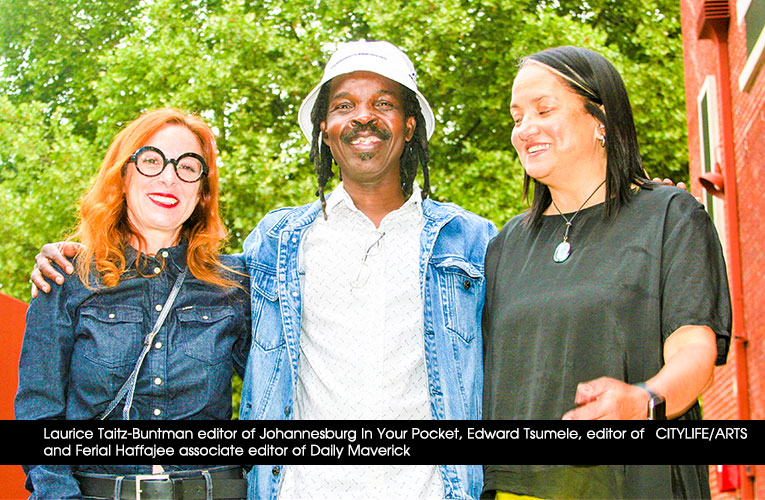
By Edward Tsumele, Winner of NHC Heritage Journalism Award 2026
The discussion was as robust as it was honest and illuminating. It cut through the noise and clutter that normally pollutes discussions around the state of contemporary art in South Africa, the role of art history in shaping the architecture of South African society, as well as the tension that inherently develops at the intersection of art and policy.
It also helped to focus the discussion that the provocation put forward by art historian and researcher Mario Pissarra was clear. No layer of ambiguity.
Also, it was notable that though funding is necessary for such important conversation to take place, for practical reasons, sometimes for honest conversations to take place in the arts, holding such conversations without the control of the funder, in directing the course of the discussion, is sometimes necessary. This is because, the discussions does not get constrained by the consideration of the interest of the funder. Though that is also important, that does not mean that, it is always in the best interest of the arts and creative sector, but rather sometimes confines the discussion to the narrow interest of the funder.
A good example of this, are talk panels that are put together from time to time, often taking place at South Africa’s fledgling art fairs. Necessary as they are, however such talks are limited by the narrow interest of those bank rolling such talks, and therefore, constraining the impact of such talks to the creative sector at large.
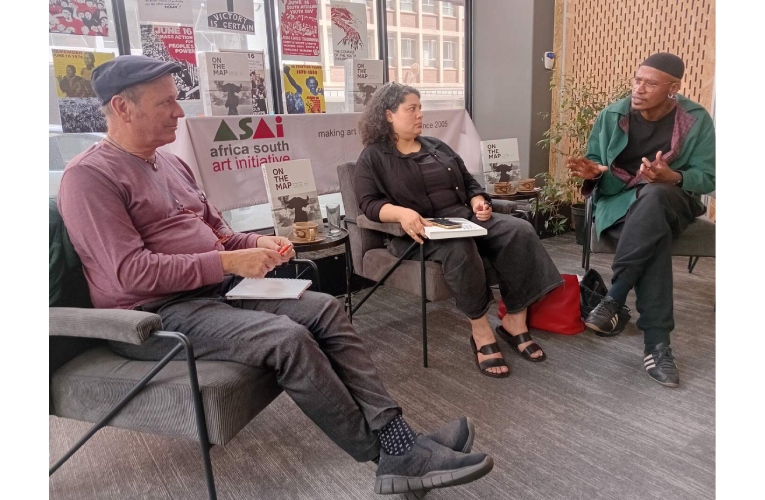
However, not the conversation that took place at the launch of the book On The Map: perspectives on art from Africa SouthVol.1, that took place on Saturday, 3 October, 2026 at The Forge in Braamfontein. That conversation must rate as one of the most honest discussion in recent months in South Africa.
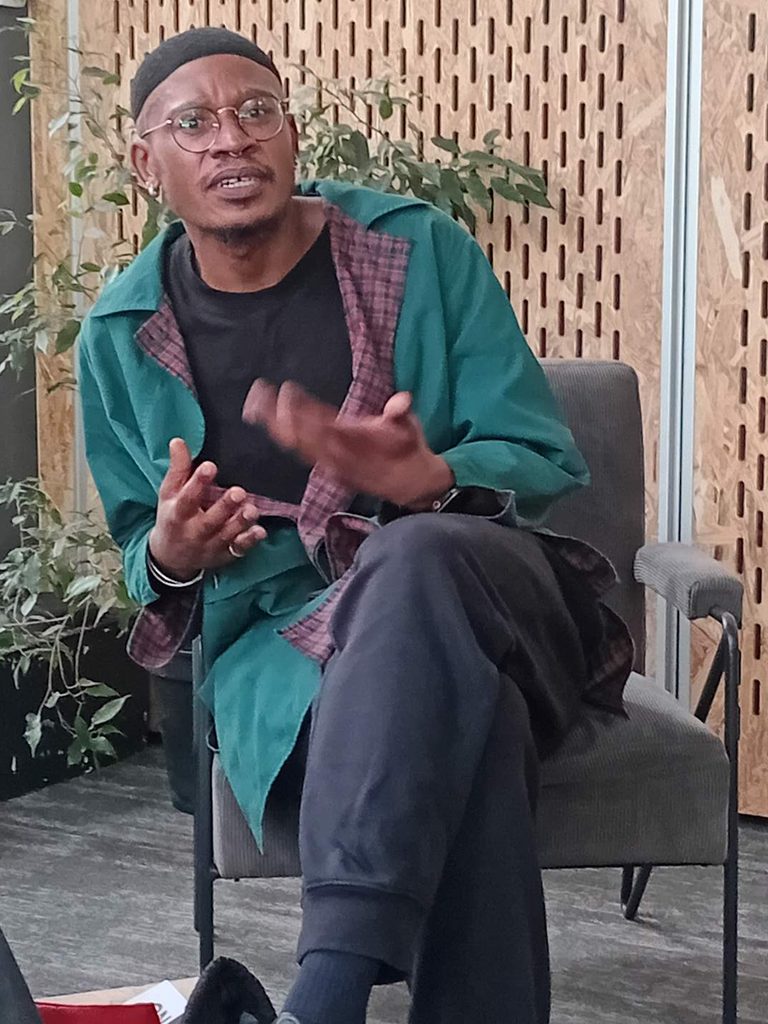
Though the turn-out was small in terms of numbers, the weight of the subject under discussion and the quality of the conversion were impactful and notable.
The provocation that was put forward was simple but loaded: “Are national art histories compatible with a decolonial practice? Does the writing of South African art history carry legitimacy in the current climate of hostility towards African migrants, or does the affirmation of a national identity bequeathed by colonialism and imperialism feed Afrophobia? What does a decolonial art history look like? And how do we write it from the space that is South Africa today?”
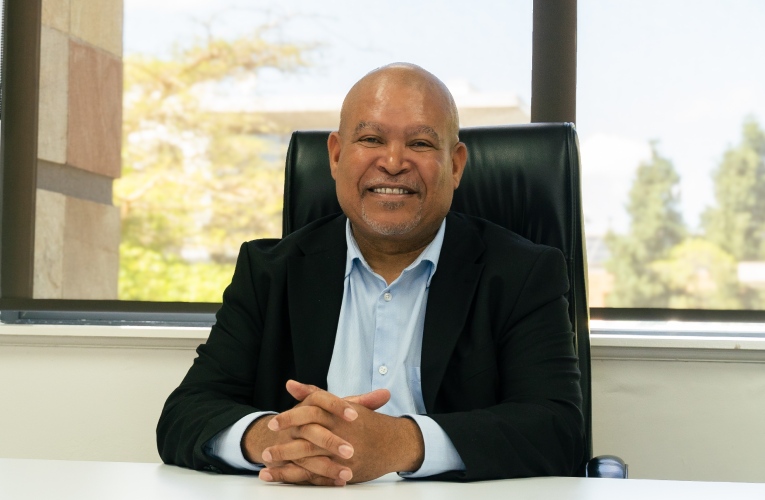
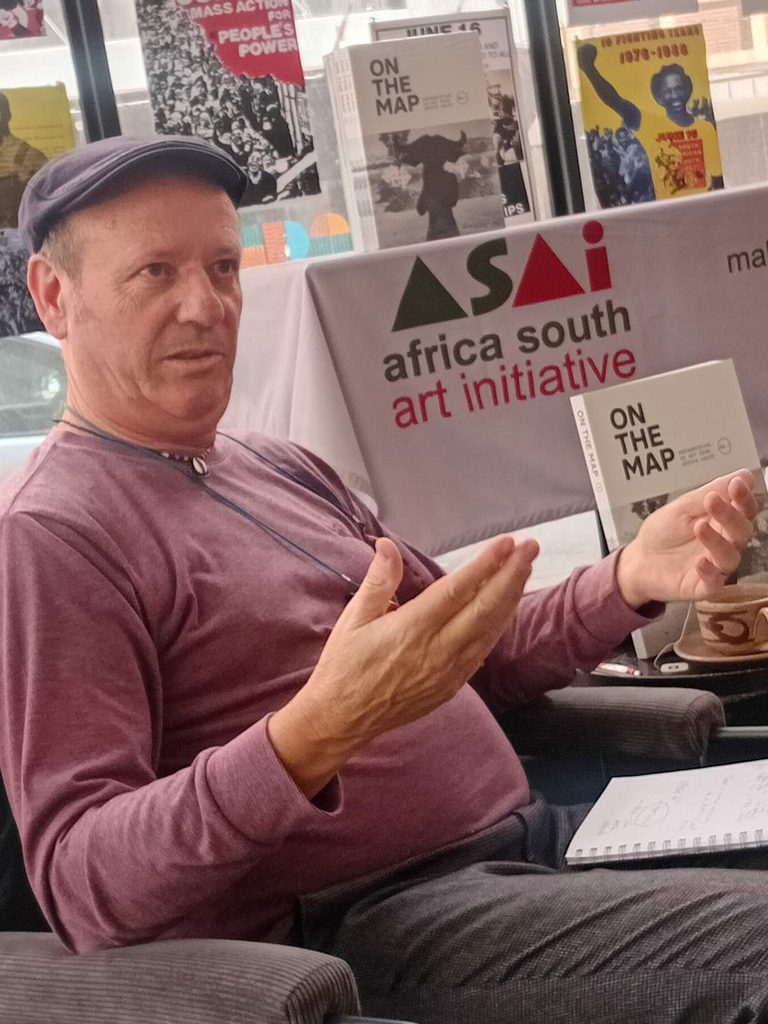
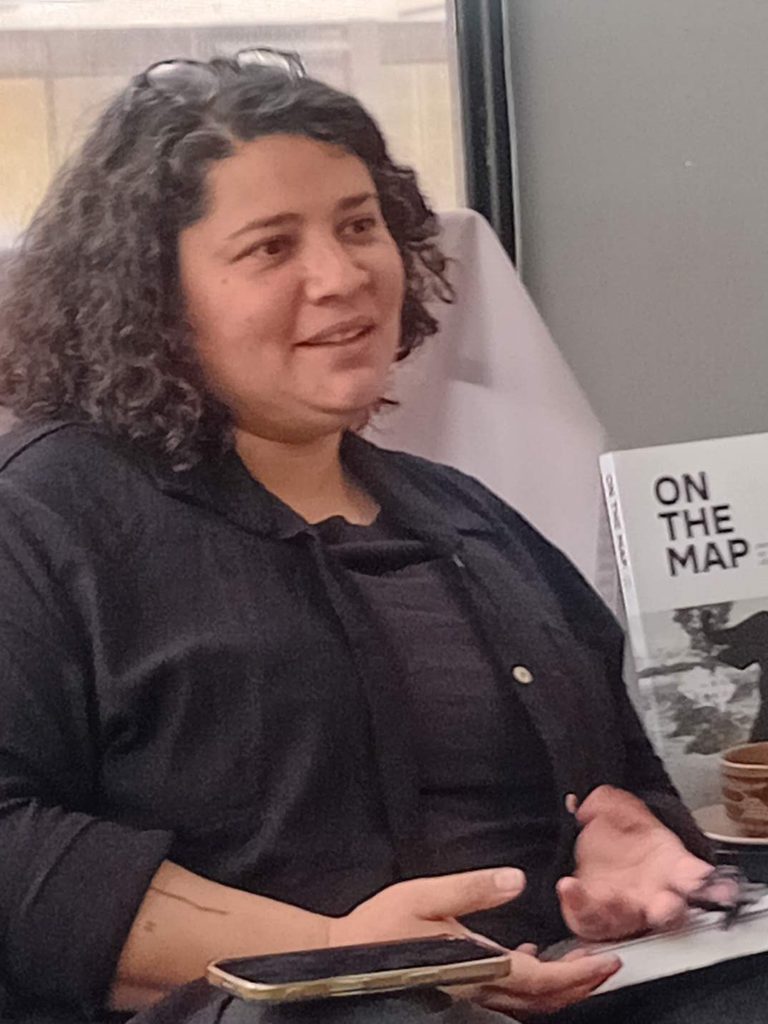
On the panel to take the conversation forward were art historian Sinethemba Twalo and curator Tammy Langtry in conversation with Mario Pissarra, editor of On the Map: perspectives on art from Africa south, published by Africa South Art Initiative this year, a small but impactful Non-Profit Organisation (ASAI) in 2026, founded by Pissarra to research and document art histories of Southern Africa, or rather as the organisation frames it, art history of Africa South.
That simple provocation, unleashed a multi-layered and complex conversation that profoundly touched on contemporary politics in South Africa, particularly the emergence of right wing politics as expressed through inward looking politics and narrow ethno-nationalism frames, the complicated public funding layers in South Africa, art history and the question of who does the funding architecture include and who does it exclude, consequently the issue of who benefits from official funding channels and who does not.
Mario set the tone for the afternoon discussion by looking at the broad art history of Europe in general, and Germany in particular, especially the different art movements that emerged say in Germany, such as the Expressionist Movement, whose impact was not only restricted to Europe. For example, that movement influenced to a large degree, South African art modernist art history, such as the art practices of Irma Stern, one of the most iconic artists to have emerged out of South Africa, as well as Maggie Loubser, and these are my words and not Mario’s. Their art practice was influenced by the time they spent in Germany at a time when the Expressionism movement was at its height
Mario however in his framing said something quite important, especially when one wants to understand the role of art and art history. For example, the current issue of the phenomenon of conservatism and the rise of nationalism in some sections of society in South Africa.
“’The art movements that emerged in Europe were influenced by nationalism, all of them, including Expressionism,” he stated.
He went on and zoomed on the art history of South Africa during apartheid that tended to downplay the role and art practices of black artists, whose position in art making was never taken seriously by art critics. In fact, their practices were given inferior labels. Think of township art and craft, while those of white artists, whose practices were embedded within the conventions of Western art making, were recognised and elevated above those of their black counterparts.
“Ëven art historians and critics, such as Esme Berman, were caught up in that paradigm,” he said. Berman became the imminent art historian in South Africa, highly regarded. Berman’s Art & Artists of South Africa book, first published in 1970, is the most comprehensive reference work on South African art yet published. Since the first edition in 1970, it has been critically acclaimed, repeatedly reprinted, and nationally and internationally acknowledged as the standard work on the subject. The text features biographies of hundreds of artists.
Mario, based on the experience of his organisation when it comes to funding, said that the current official funding architecture, the policies, are limiting, as for example, priority is on the inclusion of young people in the projects that they plan and apply for funding from example, the National Arts Council. Noble as the idea is for including young people, particularly in a country that has a high rate of youth unemployment, however that requirement undeniably limits the scope of what the organisation could do to have a bigger impact on society in general and South Africa’s art history documentation in particular.
In other words, projects that the NAC gives priority to when it comes to funding, are those that intentionally include the youth, and in some cases, talented writers can be undeniably unearthed from that demography of the population, but still to achieve super quality, experience counts, and that can only be found in the ranks of those that have beaten the long, hard path of research and writing, and have access to wide networks and sources for material they compile.
Also when it comes to including other categories of artists and role players in the projects, such as experienced white writers, black writers above the age of 35, and locally based and relevant foreign artists from the rest of the southern Africa region, the funding mandate is limiting. The funding architecture does not reward such efforts, no matter the value that category of art professionals could bring to the project. It is not a demography that will make the official to sign the cheque while smiling. If anything, he or she will sign off the money while grumbling, if one in the first place is lucky to have gone that far, having passed the gate keepers, who job seems to be more gate-keeping, and less opening up access to funding for deserving projects.
“For example, if you look at the southern African region, there are cultural links among the populations beyond borders. But, the borders drawn up by colonialists, have created artificial boundaries among people of Africa south. For example, it does not make sense to not include artists from Lesotho, which is a country that is practically in in South Africa, and culturally, the people there, share the same culture with South Africans. And so are people in the rest of the southern African region. I am not saying here, that Lesotho must be integrated into South Africa,” he pointed out.
Curator Tammy Langtry weighed in on the issue of funding, questioning for example, why artists do not explore international organisations for which South Africa is a member, to look for further for funding. Such as the AU, which receives development Aid from other sources for development in member AU countries. For example, the European Union for makes funds available to African counties through the AU, including for arts and culture. But such arts funding programme seem to operate opaquely.
“I once had a conversation with the late William Kgositsile when he was an advisor to then Minister of Arts and Culture Pallo Jordan. Kgositsitsile confirmed that indeed there were international agreements signed between the Department of Arts and Culture and other countries. He however indicated that it was up to the Department to initiate such request for funding under those agreements with their international partners.
Therefore there may as well be agreements lying in government offices that needed to be actioned (by relevant government officials,” Mario said.
Sibongile Msimango, one of the contributing writers to On The Map: perspectives on art from Africa South, and who has experience for working for one of the European institutes that funds arts and culture development on the African continent, pointed out the limits to what funds sourced from such funders with regards to their scope of funding. For example, such funders choose which artists from what country must benefit from their funding, she explained.
Art historian and academic Sinethemba Twalo, questioned whether researching art history only, and not extending the scope to covering the broad area of visual histories and identities is in a world that is ever evolving, not limiting.
On The Map: perspectives on art from Africa Vol. 1.
This book, is a must-have book, especially for researchers of art history, the general public who want to understand which artists in South Africa create what kind of art, who they are and what philosophies underpin their art practices, and art collectors looking for collectable art. This book is an essential resource in reaching South African art history.
The contributors here, have done a great job in documenting some of the visual voices that would otherwise, remain on the margin of art history, but whose practices deserve to be noted and appreciated, as they immensely enrich society in different ways, and hopefully assist in stimulating South Africa’s intellectual curiosity.
The contributors toOn the Map: perspectives on art from Africa south Vol.1,are MarioPissarra (Editor), Sibongile Msimango, Candice Alison, Candice Jansen, Stepahanie Jason, Elize van Huyssteen, Keely Shinners, Khumo Sebambo, Lena Sulik, Lize Van Robbroeck, M. Neelika Jayawardane, Sihle Motsa, Thelma Mort and Thulile Gamedze.
.On The Map: perspectives on art from Africa Vol. 1. Is found in any good bookshop in South Africa. In Johannesburg, you can also purchase the book at The Forge, Ground Floor, 87 De Korte Street, Braamfontein, Johannesburg.