



The night Johannesburg literati congratulated young writer Thobile Phudi, winner of the 2026 Achmat Dangor Literary Prize
But we were to wait. Our patience tested. Not even sipping wine hid our impatience. It was written all over our faces. The lady seated on a chair next to me did not even attempt to hide it anymore. And so did the others around me. Then the winner was announced. Relief and congratulations followed.
By Edward Tsumele, Winner of NHC Heritage Journalism Award for 2026
I can imagine what must have been happening in their heads, at that moment, when they heard words like the following coming out of the lips of revered writer and teacher Ivan Vladislavić, as they waited for the judges’ verdict as to who among them, the five finalists that is, who was going to be announced as the winner:
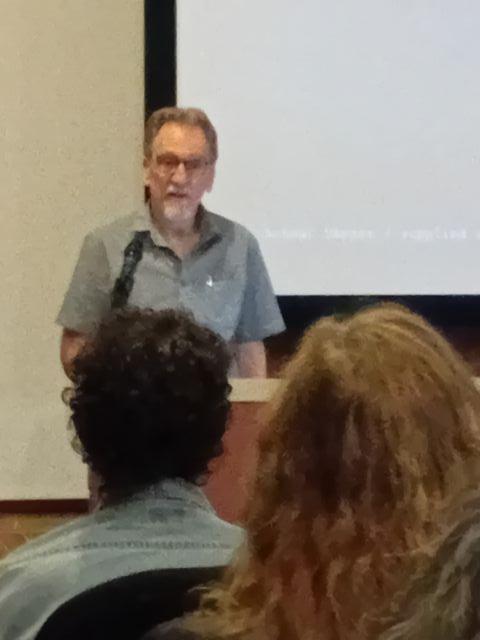
“A novel is a serious vehicle of speculation, experimentation of language. He is a writer of our time. Gives literary ideas of our time. Good readers make good writers. He was an adventurous reader. What Stacy (Hardy) calls a dangerous reader.
This was at Graduate Humanities Centre, South West Engineering Building, Wits University, on Thursday, October 29, 2026, at the announcement of the winner of the 2026, Achmat Dangor Literary legacy. I can imagine what must have been taking place in the heads of the five finalists. The tension was real. After all, the atmosphere and the space itself had an air of a prestigious literary event, and too was the pressure as the yes of the audience hovered around to try and guess who among the audience was going to go to that podium and claim the prize that everyone would have wanted to claim for themselves.
At that moment, the competing writers and those would be competing writers who were in the audience felt the same tension.
But we were to wait. Our patience tested. Not even sipping wine hid our impatience. It was written all over our faces. The lady seated on a chairnext to me did not even attempt to hide it anymore. And so did the others around me. Behind,and those on seats in front of me. Everywhere on the seats actually. Waiting. Sipping wine. Holding our breath. But reality is, they werea few minutes of waiting, but they felt longer than normal. I tried to hide my impatience by sipping my drink. Discretely looked at the woman seated on my left. She too, was waiting for the moment. The moment we wanted to witness. Do not get me wrong. We were not impatient because those in charge of the ceremony were not moving fast. Rather, it was us, who felt as if we were the ones whose judges’ verdict would seal our literary fate too. Just like the five finalists.
But the announcement too had to wait. Just like the rest of us.
“He had curiosity about what I read. My father. He believed deeply in South African stories. South African authors. He understood the power of literature to challenge….I accompanied him to poetry readings. He understood the importance of giving people an opportunity…As a family, our hope through this award, is to give a young writer an opportunity to find their voice. He loved South African writers. Their freedom to imagine a future of possibilities.”
When Justine Dangor said these words, there was a sense that the tension that had been building up in the audience to find out who the winner would be, was somehow, about to be disrupted. But it was not.
“I am currently writing a book about my grandfather. At least that is what I thought. This is because, you end up writing about your grandmother as well. About migration….Maybe memory is less about what we possess, but about something that possesses us. Memory can also be a prison…His characters (in Achmat Dangor’s novels) are contradictory and sad. I want to imagine my grandfather not as a saint, but a contradictory person. To write about him, is through pictures. Memory. In the process, imagining what cannot be recovered,” said Gabrielle, the winner of the 2024 edition of the award as she was given an opportunity to speak.
Tension? Still building in the room.
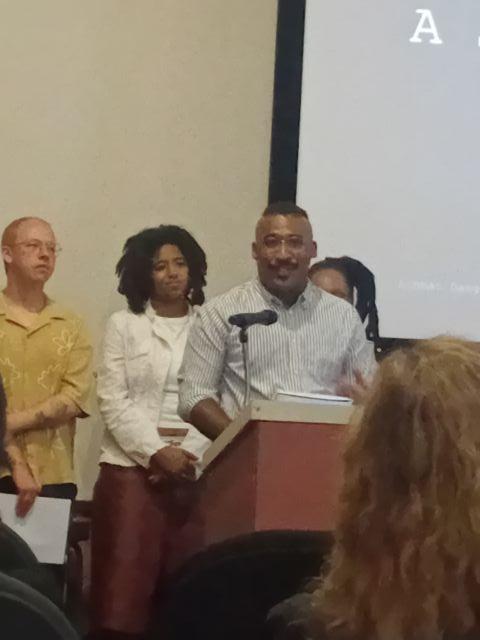
Fellow MA creating writing students from Wits, joined her on the podium. They read excerpts from their work produced during the programme. Cool stuff really. A number of the pieces that were read by the writers, that is.
But it did not disrupt the tension.
Stacy went on stage again. Called the Dean of Humanities on stage Professor MuchaMusemwa, to announce not out-rightly the winner, but first, all the five finalists. We though knew only one was going to be declared the winner. Tension.
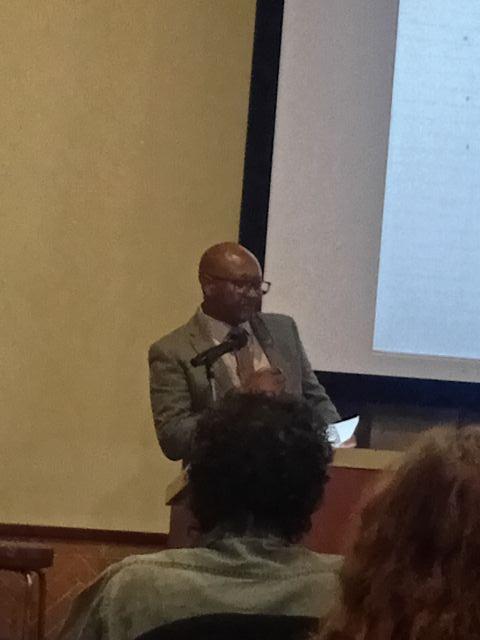
“But before I read what I have prepared, there is one person who would not talk about it herself, who has just been awarded the Vice Chancellor’s Citizen Award for 2027. Stacy Hardy,” Professor Musemwa said.
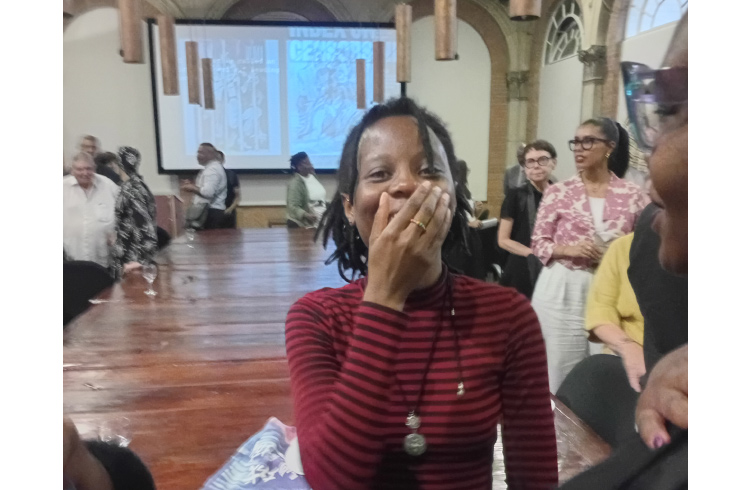
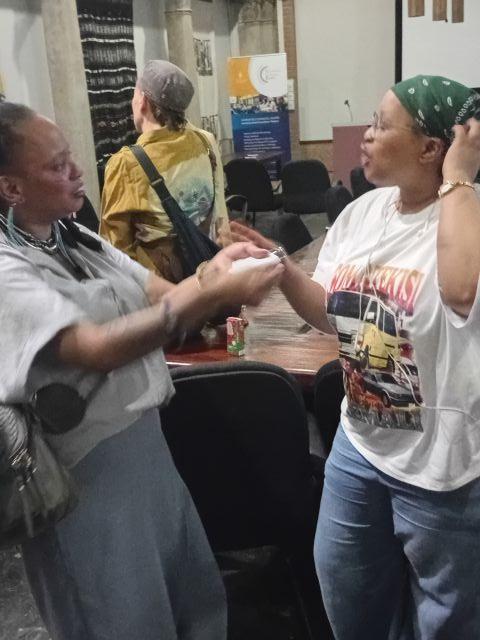
When Wits BA (HONS) creative writing student Thobile Phudi was called on stage, the tension could not be contained anymore. The room erupted in jubilation. Congratulations followed thereafter, as guests enjoyed refreshments.
The young writer was understandably emotional as she received congratulations from well-wishers. The aftermath of a literary feat.
“I was glad that they did not ask me to speak,” she confessed to CITYLIFE/ARTS after the announcement. I understood.