


Sankofa Heritage Festival: The evolution of Thandiswa Mazwai as a powerful cultural and music force in South Africa
By Edward Tsumele, CITYLIFE/ARTS Editor
When I heard that Thandiswa Mazwai the vocalist from Bongo Maffin was going to go solo I I mmediately dismissed that as just rumours in the industry, which is not short of that by the way. After all at the time, sometime in the mid-2000s, the group for which she was a member, Bongo Maffin, which comprised of Stoan, Apleseed, (now going by the unique name of Jahseed) and Speedy, who left the group earlier than Thandiswa, was at the top of their game, to use the often used industry word, used often to describe a musician or group that has reached an epic layer of their art practice.
Bongo Maffin were exactly that. They were the stars of high profile festivals at the time, as their music had found favour with mostly the youth. I was one of them. So, because at the time, I did not fit what into strangers, often young people, now refer to me as malume. Age has a way of creating new names in one’s life.
But then, the rumours swirled into truth when out of the blue in 2004, I received an invitation to interview Thandiswa at Gallo, where she had just completed her debut solo album, Zabalaza, produced then by then Gallo Records’ deputy chief executive officer Sipho Sithole. The duo did a fine job on the album, it must be admitted.
When I made my way to Gallo in Rosebank, I was filled with mixed emotions and thoughts, having been plunged into serious contemplation.
Here was I, going to interview someone that I and others who had witnessed Bongo Maffin form in the mid 90’s before they evolved into a powerful cultural and musical force in our then neighbourhood of Yeoville. I, and am sure, other people of my generation who had bitten the same streets of that that suburb as some sort of cultural vultures, were somehow disappointed. It felt like Thandiswa was selling out. We were not even sure whether she could make it on her own, or whether our favourite group would survive without the talented vocalist.
You see, Bongo Maffin had come up with a unique sound different from the music of our youth, kwaito, the flavour of the moment. Theirs had lyrics that were discernible. Their rhythm was supercool for an audience that was just coming of age, exiting the youth stage into adulthood. I was brave and experimental at a time when dance floors were filled with people dancing into kwaito.
Their Afro influenced flavour was a breath of fresh air for some of us who were starting to be weary with the repetitive kwaito beats and their shallow non lyrics infused into their music. We wanted something new. Something fresh. Bongo Maffin was the answer. Thandiswa as the only female vocalist in the group, completed Bong Maffin’s journey of refinement. Their sound was distinct from the noise. Can you then imagine hearing that such talent was leaving such a tight and successful group to launch what we believed at the time was a musical journey of uncertainty, full of risks.
But, then here I was to interview her for Sunday World newspaper for its discontinued arts and culture supplement, Hola, which was very popular with both artists and readers at the time, particularly the supplement’s lead articles titled Up Clolse& Personal. But ijob ijob, and so. I had to do the assignment. The interview went well, and I found Thandiswa to be intellectually engaging and was clearly clued about what she was doing, articulating her position clearly about where she was taking her career to as a solo artist, without the advantage of Bongo Maffin, which she joined at the very beginning of the group. But still I had my doubts as I drove back to the office in Industria to write the story.
I had not had the opportunity to listen to the music, as the objective of the interview was not about listening to the product still in progress, but get to unpack Thandiswa the person, and the Thandiswa, the musician, about where she wanted to take her career to after Bongo Maffin.
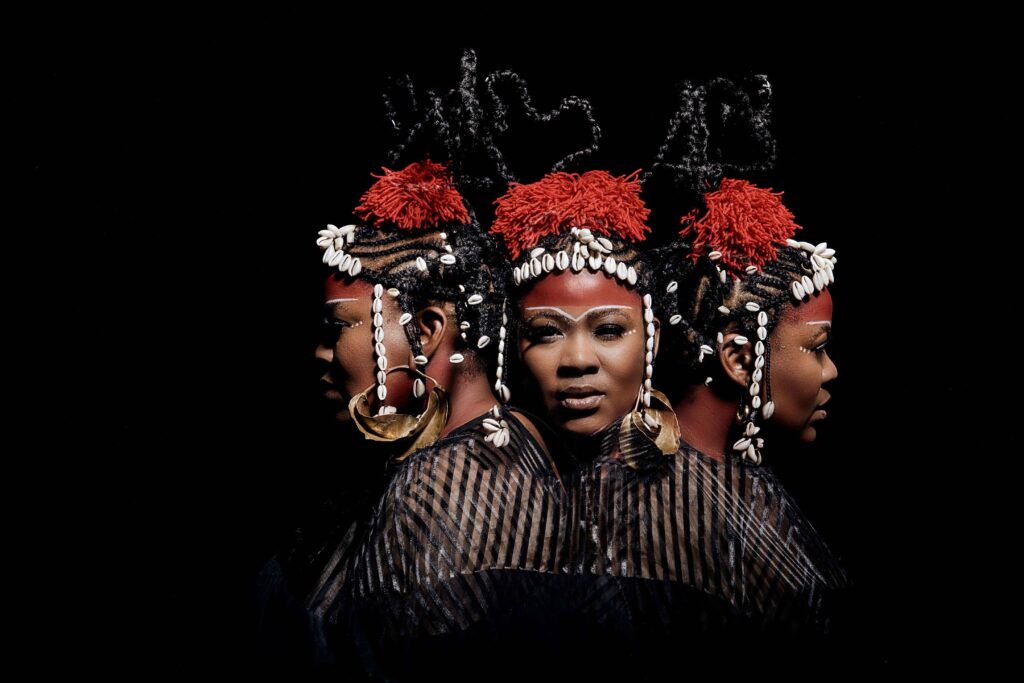
But then sooner, I got an invitation to attend the launch of the album alongside other journalists at the then Blues Room in Sandton. And boy, we were all blown away by Zabalaza. She clearly knew what she was doing. Everybody left praising her and her artistry at the end. Thandiswa had arrived on the adult contemporary music scene, her repertoire very much rooted in African traditional music in general, and her Xhosa culture in particular, weaving a sound that is sophisticated, multi-layered and textured. The complexity of her sound, we immediately fell in love with. It nicely connected with us spiritually, reaffirming our cultural roots as Africans, somehow debased by urbanity and whatever was happening in the belly of a city in transition, for that is what Johannesburg was at the time. Some of us after the launch, were even starting to forgive her for ‘betraying’ our favourite group Bongo Maffin before we even reached our homes. That is how powerful the Zabalaza album affected us at he launch. We knew it was it.
Now the rest is history. Thandiswa has since released several successful albums, bagged several awards, toured the world –the rest of the African continent, North America and Europe, among other destinations of Significance.
Launching a solo career after all was not a mistake.
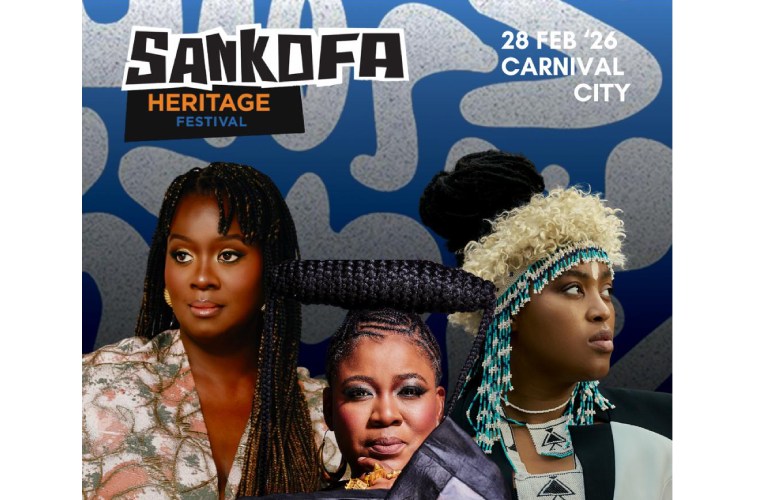
You can now catch Thadiswa at the upcoming Sankofa Heritage Festival, a festival she founded where she will be joined by top names as guest artists, mostly her friends in the music sector who have crossed a path with her.
“Sankofa Heritage Festival announces Special Guests for Thandiswa Mazwai’s Set and Reveals Opening Act Winner,” – the media release I received reads.
It continues: “Thandi Ntuli, Madala Kunene, Jahseed, Sivuyile Traditional Dance Group, and DJ Kenzhero join Thandiswa’s Sankofa Festival Lineup on 28 February
The point is The Sankofa Heritage Festival has now announced special guests who will join her during her headline performance. Taking place on Saturday, 28 February 2026, at Carnival City. The festival marks Thandiswa’s 50th birthday and celebrates her three-decade journey in music, while establishing a new annual platform dedicated to African heritage, indigenous sound, and cultural memory.
Joining Mazwai on stage:
- Thandi Ntuli is an award-winning pianist, composer, and bandleader known for her genre-fluid approach that blends jazz, African spiritual traditions, and contemporary composition.
- Madala Kunene, revered as one of South Africa’s great guitarists and cultural custodians, brings his signature style rooted in Zulu musical traditions
- Jahseed, a core member of the pioneering kwaito collective Bongo Maffin, represents a key part of Mazwai’s early musical journey and the movement that helped define a generation of South African sound.
- The Sivuyile Traditional Dance Group will bring powerful Xhosa dance expression to the stage
The festival’s previously announced co-headliners remain Grammy-nominated artist Somi (Rwanda/Uganda) and acclaimed South African musician Msaki, both long-time collaborators and creative sisters of Mazwai. Their performances anchor the festival’s pan-African vision.
DJ Kenzhero will round off the evening with his selection of South African sounds.
Ticket link: https://computicket.com/event/sankofa-fest-ft-thandiswa-and-friends/7352993
Opening Act Competition Winner Announced
The festival also confirmed that the Opening Act Competition winner is Vuyo Viwe (Vuyo Tshwele), selected from 250 applicants from across South Africa. The competition spotlighted emerging artists rooted in traditional and indigenous musical forms.
Vuyo Viwe is a 25-year-old flautist, composer, and vocalist based in Johannesburg. Their sound blends South African traditional song forms with orchestral folk and alternative vocal approaches, combining electronic textures with classical instrumentation. Drawing on the raw sensibilities of uhadi, ngoma time signatures, and intentional dissonance, Vuyo Viwe represents a bold new voice grounded in heritage while pushing sonic boundaries.
Vuyo says “I am beyond honoured to share a stage with one of my earliest and most formidable sonic heroes. This is honestly a dream realised, and proof that African music is here to stay. I am most thankful and excited to do what I was born to do!”
Thandiswa says “I am so excited to welcome Vuyo Tshwele to open the show at Sankofa Fest. She is a dynamic musician who we look forward to seeing on stage at Carnival city. Along with my other special guests who have been a part of my musical journey. A special thank you to our elder Madala Kunene for agreeing to share space with us” She adds “This festival aims to uplift young musicians and introduce them to new audiences. Thank you to everyone who entered the competition, we are so excited to be a part of all of your journeys and next year, it could be you!”
The Sankofa Heritage Festival is dedicated to preserving and celebrating indigenous African music. Each performance will echo ancestral rhythms and bridge the past, present, and future of African sound. This event marks the beginning of what promises to become an annual African cultural celebration, devoted to honouring heritage through music.
This year’s festival has been made possible through the support of the Department of Sports Arts and Culture’s Mzansi Golden Economy Initiative.