
Double book launch that was more than a launch, brings together the writers’ community in J’oburg
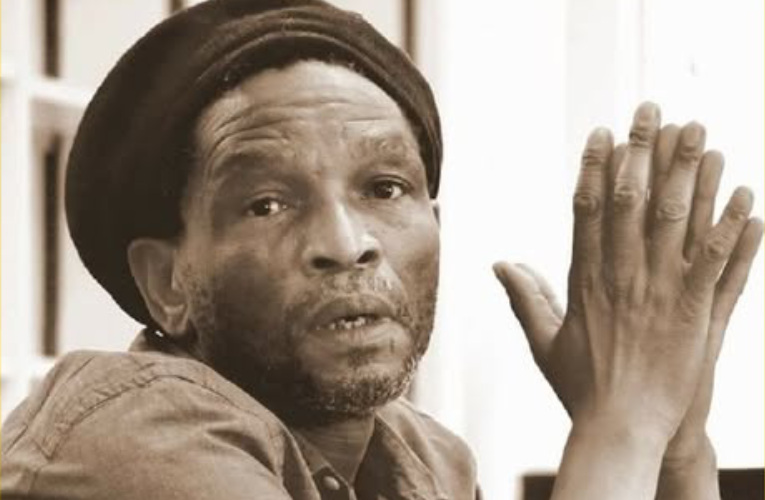
Essentially, the prominent literati gathered on Friday, May 1, attending a double launch of the two books by Hardy and veteran South African literary figure, the widely travelled poet Lesego Ramapolokeng.
By Edward Tsumele, CITYLIFE/ARTS Editor
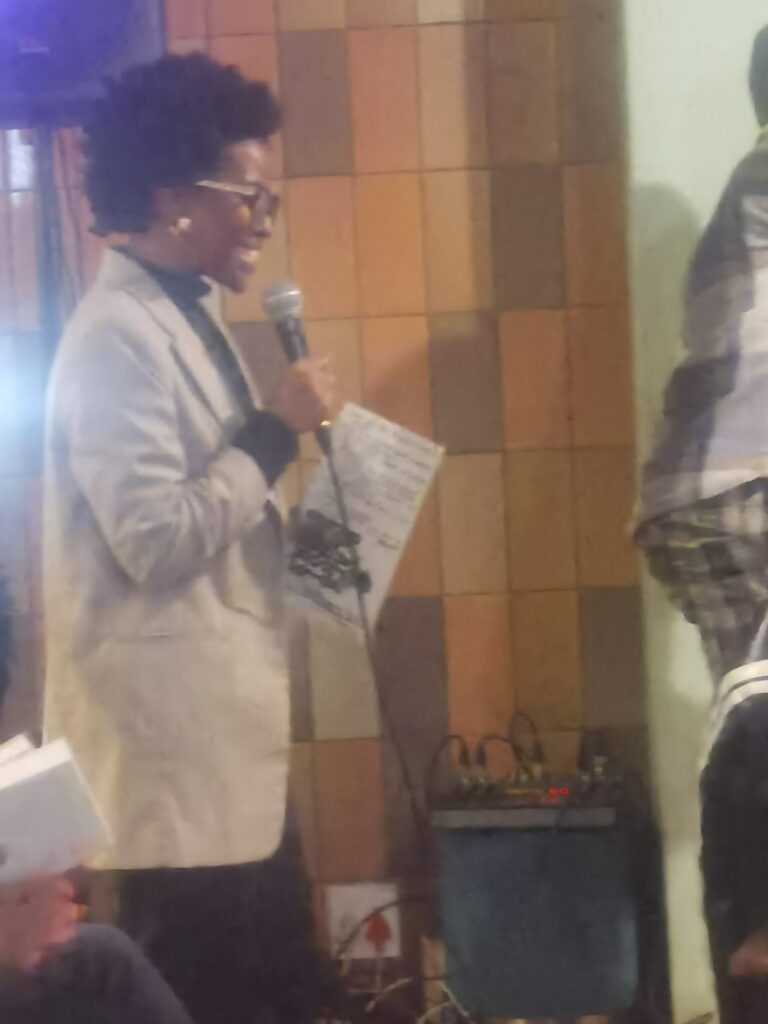
Writer, researcher and creative writing lecturer, Stacy Hardy, made an important point in writing when, she recently emphasised the point that a book launch was more than a book launch. The one she was speaking specifically about, was the double launch of two books by herself and fellow long time literary traveller and collaborator Lesego Ramapolokeng. That event, Stacy suggested, was an event that is aimed at building a community of writers.
The academic, currently with the Creative Writing Unit at Wits, known for her fine prose she produces, especially in short fiction, was in fact, spot on. This is because the country’s development of a strong literary tradition depends as much on the creative output of its writers, as it does on a vibrant, engaged community that constantly exchanges notes and read each other’s manuscripts before rushing to publish as well as an active reading public.
This is especially because one does not need to look that far to see a recent welcome development to have books out there by new voices. This is indeed a positive development as readers now have a variety of reading material to choose from. From self-help books, motivation books, political biographies, current affairs and memoirs to fiction that are now a feature of South African contemporary literature.
And therefore, post-Apartheid South Africa, no doubt, has a literary landscape that has a sizeable number of writers –new emerging literary voices producing a diverse literary canon alongside established writers that have long beaten this path. The landscape has never been as vibrant as it has been in the past, especially in the last 10 to 15 years.
The mushrooming of these new literary voices and the number of books being produced, will hopefully result in the much needed increase in the consolidation of a reading culture among South Africa’s 65 million odd souls. Sadly, however, our reading culture, particularly for pleasure, is way below the international standard. This, is an intriguing phenomenon that has so far eluded researchers as to what the reasons are. This is especially because our literacy rate is not that bad after all, compared to other countries of the Global South.
“South Africa’s adult literacy rate has reached 95%, ranking it as the second most literate country on the African continent.
The data from research centre Intelpoint suggests the majority of the population aged 15 years and older possesses basic reading and writing skills. The findings from studies on adult literacy from 2018 to 2021 showed that Seychelles had the highest literacy rate in Africa at 95.9%, while Chad had the lowest at 26.8%,”reports the Mail &Guardian edition of 2025.
However, while it is a good thing to unleash as many books as it is possible on the market, some of the books being produced out there, would benefit greatly from passing through several eyes before they are published, hence the need for building an engaged and vibrant community of writers, where ideas and advice among writers flow easily.
Also the challenge is that these books are being churned out in the context of a book market environment that is stagnant, with the Best seller in the Non-Fiction category, such as memoir and biography standing at 5000, and Fiction is even less, with a Best Selling book standing at 3000 copies.
This means that in as much as the country has a prolific writing community, the same cannot be said of the growth of readers to match the literary output of the country.
For example, a report commissioned by Publishers Association of South Africa, and compiled by Elizabeth le Roux, Lisa Treffry Goatley, Ivy Anyang and Savannah Harvett of University of Pretoria, representing around 200 active publishers, both small and big, suggests that in 2023/24, the South African publishing industry generated almost R4 billion in revenue, from sales of locally produced books, rights sales, and other income streams.
However volumes of the number of books sold in the period under review declined, suggesting that only a few local titles sold a huge number. Besides, most of that income came from the academic segment of the book trade, and certainly not the reading for pleasure segment.
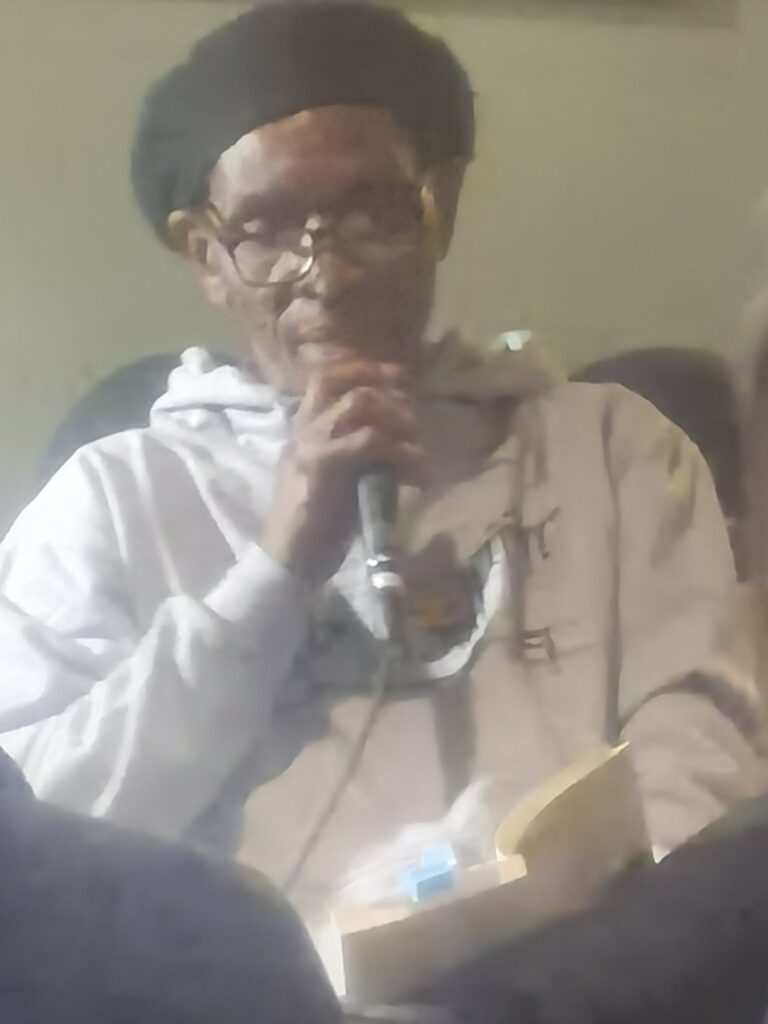
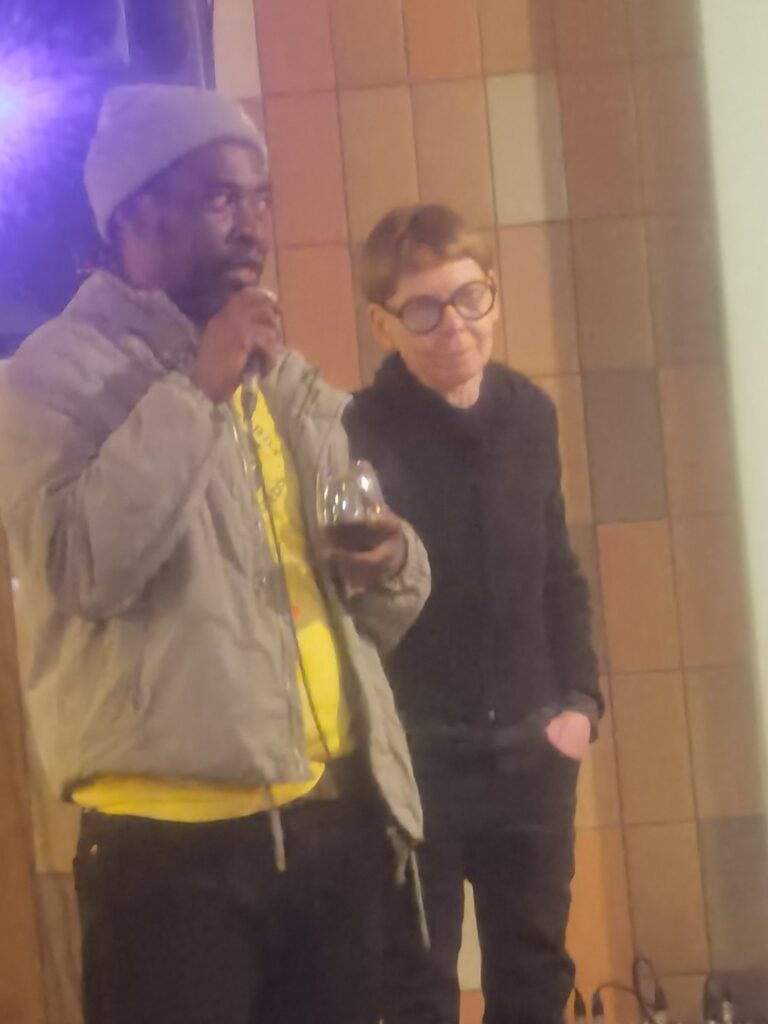
Hope is not lost completely though, because what Stacy wished for, was apparent in the room – there were quite a number of prominent writers attending the event at Breezeblock in Brixton, organised by bookshop Lit. Culture. The bookstore, which has found a market niche in the rare-to-find category in the book trade, is housed at Breezeblock, a place that houses a restaurant/coffee shop and Lit.Culture. It is an establishment that is fast consolidating its position as a space for informed literary discussions in Johannesburg. Several book launches have consistently been held at this place in the recent past, particularly in 2025, and the discussions are often engaging and illuminating. This time, it was no different.
Given the fact that there was an overflow of room accommodating those who attended the launch, almost akin to attending a concert of a popular jazz musician in Johannesburg, including a big number of writers, and of course readers, indeed, it is possible to build a community of writers, just as it is to build solid readership.
Hardy, who is part of the trio behind the independent publishing initiative Black Ghost Books, alongside Rhofiwa Maneta and Lesego Ramapolokeng, which published Hardy’s new short story anthology, An Archaeology of Holes, and Lesego’s poetry collection When the Fires Go Down, kicked off the discussion by retracing the literary journey she and Lesego have travelled till now.
They met some donkey years ago on a project they worked together on. “I was a mere 16 years old at the time, and the role I played almost got the production cancelled,” she revealed the circumstances under which their long collaboration started.
Essentially, the prominent literati gathered on Friday, May 1, to attend this double launch of the two books by Hardy and veteran South African literary figure, the widely travelled poet Lesego Ramapolokeng.
Often, always combative in literary discussions, Lesego was his usual self at the launch – well spoken, often employing his often belligerent tone during the discussion. The book launch event was moderated by Rofhiwa Maneta.
Lesego revisited the often controversial issue in local literary circles, of who is a poet and who is not. Or even most imporatntly, who decides who is to be called a poet, and not a poet and why.
“I have refused to be called a performance poet. In fact, I am not a poet,” he declared emphatically. This surprising remark from someone who has made a huge mark in South African poetry, running for decades, enjoying several invitations to international literary festivals in several European countries, such as Germany, elicited murmurs of both disapproval and surprise from the audience.
Lesego has in fact, published and performed his often hard hitting poetry for decades, long before it was fashionable to be a poet in this country. In other words, he became a pioneer of both performance and publishing poetry at a time when poetry was not regarded as a significant part of mainstream literature in South Africa, let alone getting paid well for performing poetry.
In other words, the poet at the time, was almost a lone voice in both performing and publishing poetry from as early as the late1980s, with his debuit book pubslihed in 1990. He popularised both performance poetry as well as reciting in front of an audience, in the process opening doors for later day young performance poets. Such as Lebo Mashile, Ntsiki Mazwai, Afurakan, Kabambo, Natalia Molebatsi, and Mak Manaka among others.
This crop of young poets, when they unleashed their voices on the performance poetry stage, found fertile ground that had long been fertilised by the likes of Lesego, who is popularly known as Raps in poetry circles. Their arrival was much smoother than it could have been, had people like Lesego not pioneered poetry reading before them.
This new generation of poets, that emerged at the right time in early 2000s, when poetry, especially performance poetry, had gone commercial, interestingly to an extent that they were even booked to perform at official government events for a handsome fee, actually benefited from the earlier work of poets, such as Raps.
Lesego had long shown that poetry could be appreciated by a wide audience, particularly of the performance type. But the time seemed not to be right, for his poetry seemed to thrive overseas, where he regularly read, performed and sold his books, and not so much in South Africa.
However, Lesego’s remark on Friday, rather his refusal to be called a performance poet, seems to emanate from the ongoing debate about the role of performance poetry in the poetics of poetry, which in most cases, its gravitas, depending more on the charisma of the performance of the individual, and less about the quality of text.
In other words, most performance poetry tends to be huge in connecting the audience with the performer, while it is often miserably found wanting textually.
In such confusion, it is not unusual to hear critics say, some of these young poets do more talking onstage than reciting a poem, a critique of the shallowness of what has increasingly turned out to be something between rapping and poetry, often vocalised by some young generation of performers who became prominent in the 2000s.
There were indeed those in their ranks, who were really talented and were good in the craft of penning good poems. However there were also some who were in it for the stage charisma and stage craft rather than the ability ti write poems, poems that can “sing on a page”, so to speak. This lot followed the trends, and of course the money in it.
That is perhaps why at the height of performance poetry by these young poets that emerged in the early 2000s, the late South African Poet Laureate, William Kgositsile, saw it fit to intervene and counsel these poets to focus on strengthening their capacity to write poetry, whose quality on a page, should be able to stand without performance.
The poetics of poetry aside, the launch was a lovely affair, connecting writers with readers, and writers with writers. We need more of such in Johannesburg.
.Look out for copies of An Archaeology of Holes by Stacy Hardy and When the Fires Go Down by Lesego Ramapolokeng in your nearest bookshop or order from the publisher Blackghostbooks.org.