




Kgafela oa Magogodi’s new play Australopithecus exposes racism in scientific research of the past
There you have it. Will a brave artistic director take this play out there to the broader audience of theatre goers, for this is a sad and yet humorous piece of theatre, an important play that is at the intersection of race, history, anthropology, art and science.
By Edward Tsumele, CITYLIFE/ARTS Editor
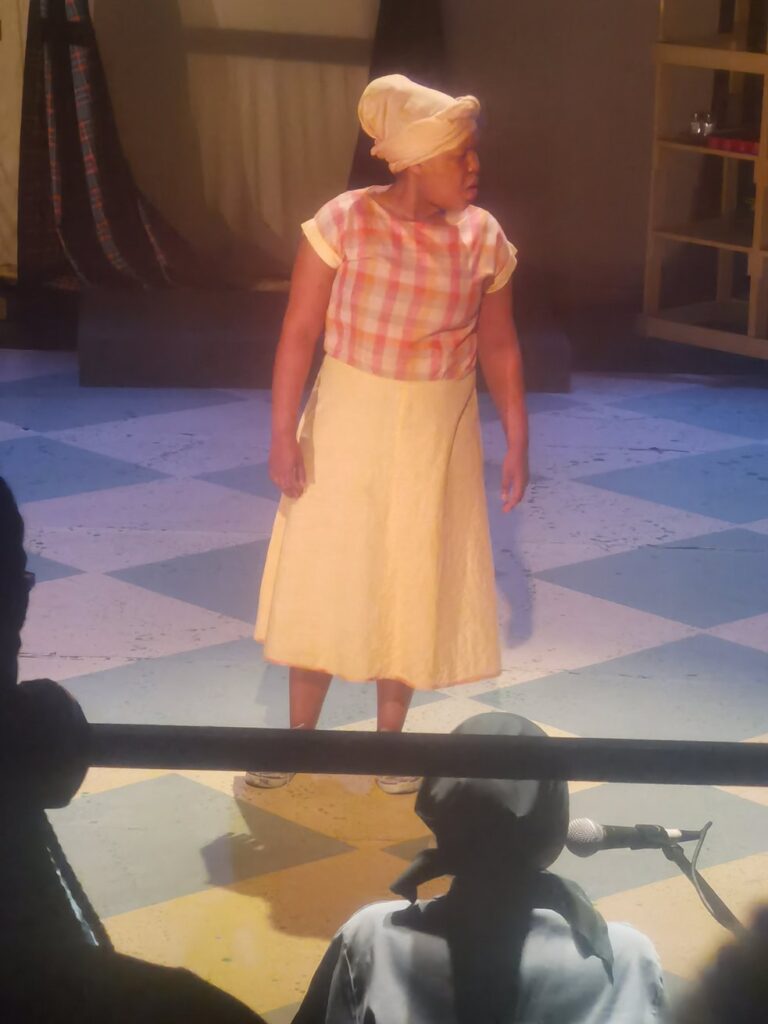
At the beginning of the show, as an audience you will be sucked in by the rumpling character that plays a domestic worker. But just as you are intellectually stimulated, comes in two white characters, clownish and seemingly their shenanigans on stage not making sense. You then feel somehow, betrayed as the bar seems to have suddenly been dropped.
But then wait. Do not judge this play too quickly. More interesting acting is coming, including the clowning characters who start to make sense in the context of the gist of Australopithecus, written and directed by Dr Kagafela oa Magogo, a drama lecture at Wits.
Sharp, incisive and a clean run for an hour, this is a beautiful play that will make you think hard about racism in science and how sometimes research protocols, especially involving ordinary people are conveniently set aside.
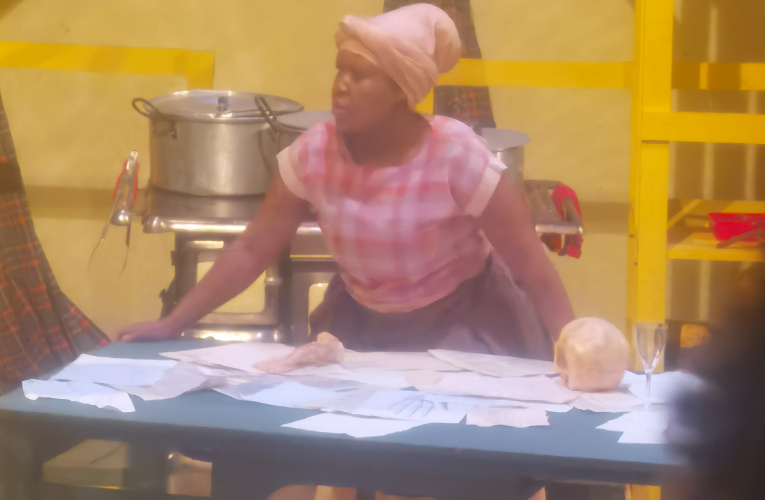
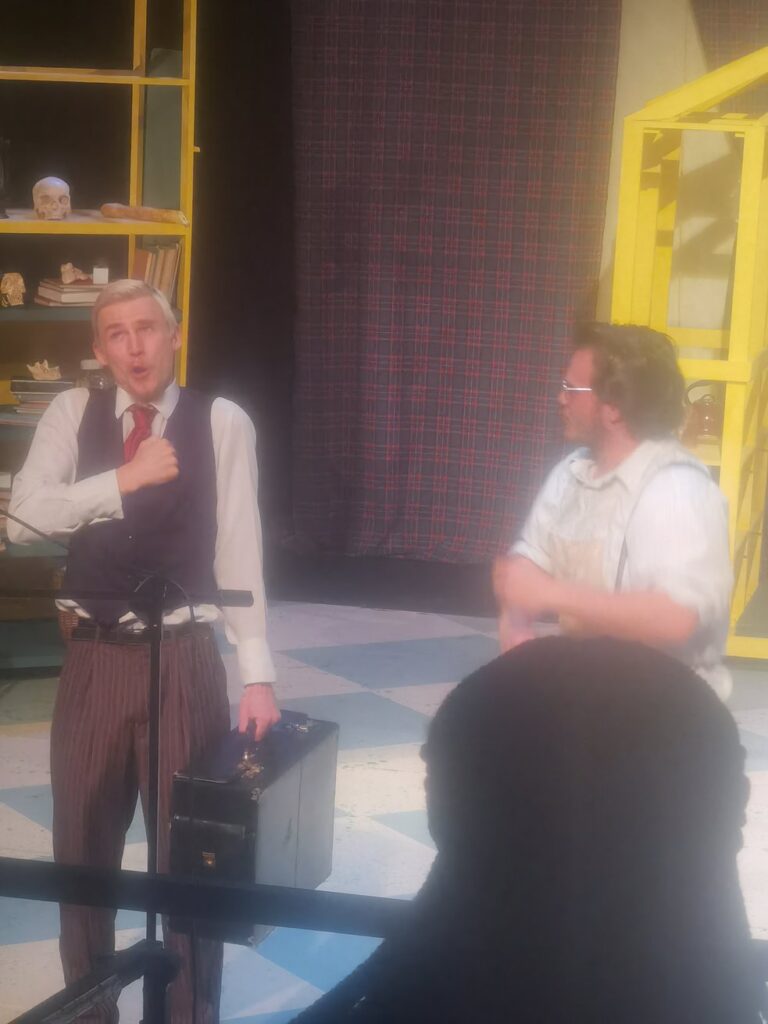
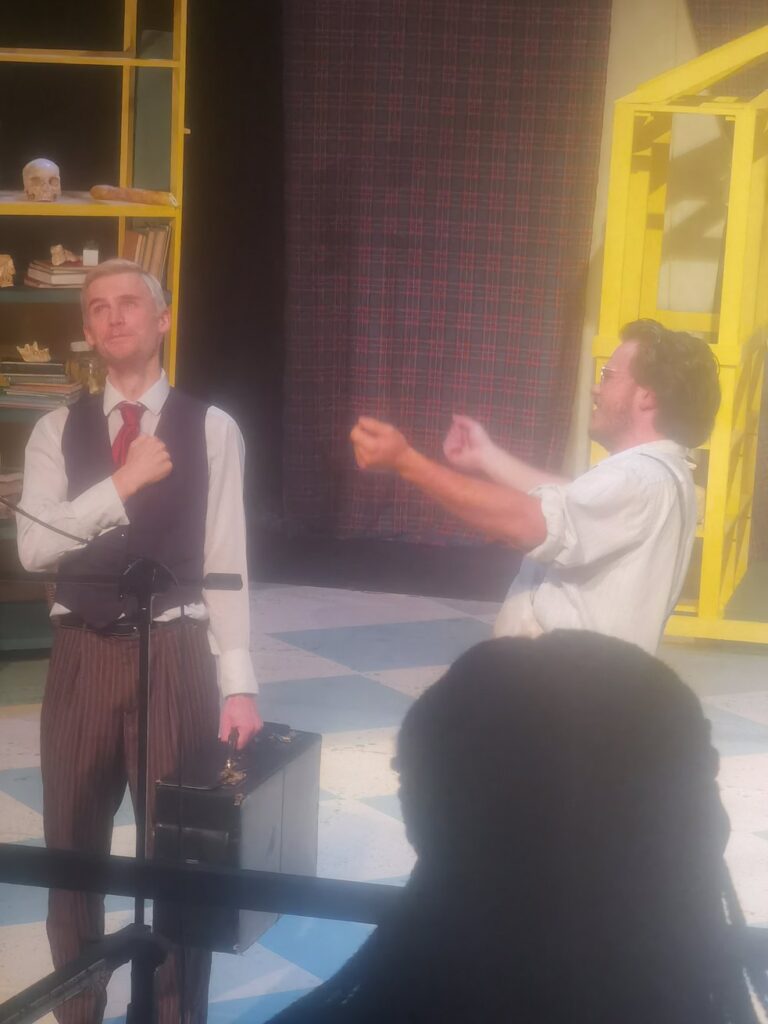
Now back to the clowning white characters, a Prime Minister in Apartheid South Africa of the past, an ambitious professor, and his wife, who are running a scientific research and experiment in the kitchen of their home.
It turns out that the clownish behaviour of the three white characters, is intentional on the part of the writer as he aims at sending out a message about racism in scientific research, which sometimes was perpetrated by researchers in the past. The writer has employed successfully, this literary device of clowning by the characters to create moments of humour.
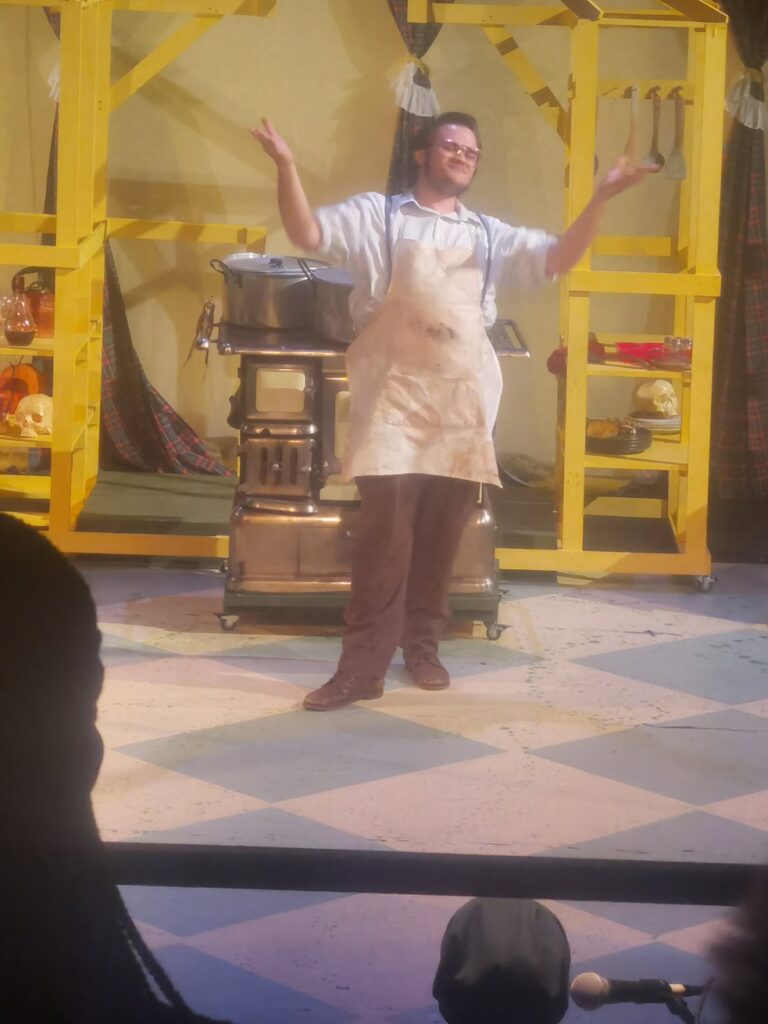
Even as the domestic worker is subjected to inhumane and definitely unethical experimentation, your attention will be drawn to the stupidity of the professor, his wife and the Prime Minister. This forces you to critically think about the question of who is a human being and not human among these key characters –on one hand, the domestic worker being relentlessly abused and used as a form of a subject of experiment without her permission, and clearly feeling humiliated, and on the hand, a Prime Minister, who is keeping a blind eye to the abuse happening literally in front of his eyes -he actually looks the other way as this unfolds in that home, the wife of the professor and the professor himself, who has thrown away the protocols governing how participants should be treated in research.
This clowning will in fact, make you laugh, just as it will make you angry at the same time. Therefore Australopithecus, which unfortunately came to an end on Saturday, May 23, at Wits Theatre, is a beautiful piece of theatre that is engaging and is a subtle critique of research that in the past, used to be carried out by some white academics on black bodies. Often such guinea pig bodies, were unaware of what was going on and no consent to participate would have been given in the first place.
This is probably the reason why universities have tightened ethics around research ethics these days, responding appropriately to this sort of abuse of black bodies that used to take place often within the ivory towers of the academy.
Unfortunately, the show came to an end on Saturday, and it would be great if, it could find a new home in another theatre, for this is the kind of theatre that makes you think hard about issues of racism when it comes to research involving ordinary people, whose permission used to be ignored. Even sadder, the purpose of the research was never explained, and the results only found in sources beyond the reach of the subjects. Mostly in academic journals written in for ordinary people, in an inaccessible academic language and locked up in libraries of higher institutions of learning.
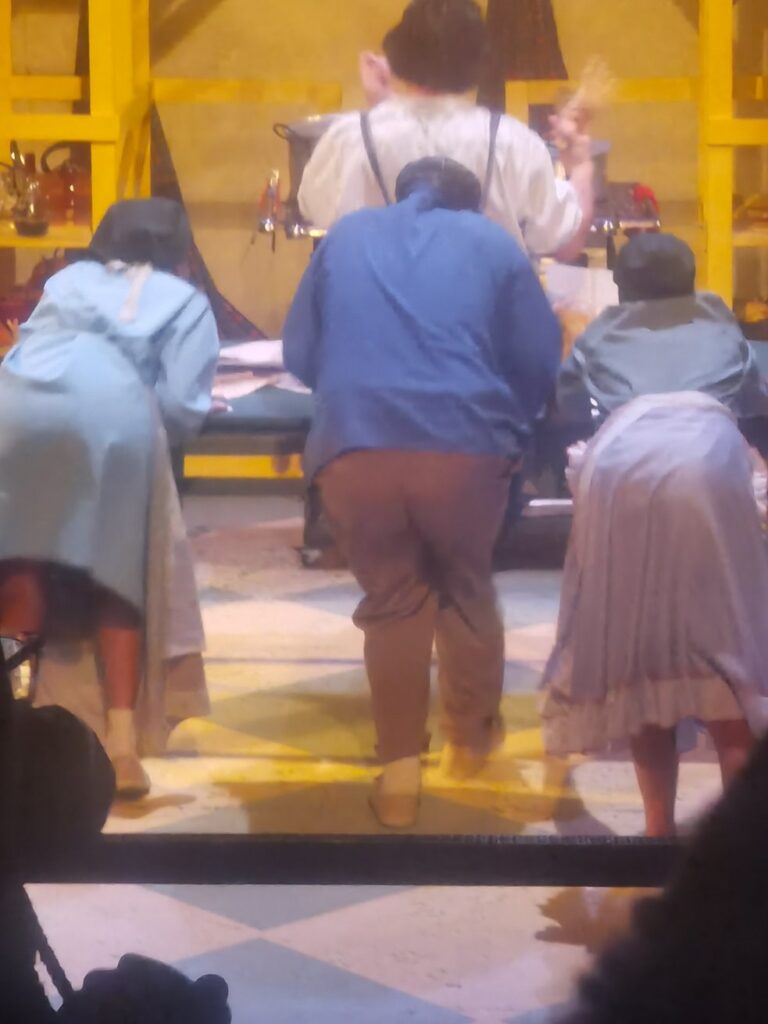
Oa Magogo here, has done well with Australopithecus, as the play will entertain you, as well as educate you, without seeming to be doing so, with regards to how research used to be carried out by some white scientists, involving unsuspecting black bodies as subjects in Apartheid South Africa.
Australopithecus clearly shows that, instead of being treated as participants, whose permission had been sought prior, they were treated just like dead objects, such as fossils. No distinction was made between dead matter and a living human being during some academic research carried out by some academics. The then Apartheid Government is portrayed as an accomplice in such racist experimentation practices.
Oa Magogodi has something to say about his play in his artist statement: “Australopithecus began as an excavation: digging through the sediment of settler-colonial scholarship still calcified in the corridors of higher learning, preserved in institutional amber, and often dressed in the language of science. That is precisely the lingering stink this play is trying to exorcise.
Set in a single Pretoria kitchen on the eve of a government expedition, the play uses the claustrophobic intimacy of domestic space to collapse the distance between “scientific” specimen collection and everyday life. The three pots on a stove became my metaphor for the entire colonial project. In Broom’s gleeful monologuing about skull-boiling efficiency, his “two-pot system,” alongside Smuts’s performative moral outrage, I seek to expose how institutions simultaneously enable and disavow their own brutality. Satire became my chosen weapon, because serio-comical laughter names the thing the institution cannot name about itself.
At the heart of the work is Elisa’s rebellion. Her radical act is not a speech or a confrontation, but a withdrawal. Asked, in a single day, to mind soup beside boiling skulls, offer her hand as a specimen, and watch her living face held against dead bones while men debate the distance between a cranium and a fossil, she does not overturn the table. She completes one final, quiet act of contamination, folds the apron, and leaves. Through Elisa’s arc I set out to eschew victimhood in favour of rebellion: not the loud kind, but the kind that spoils the experiment and walks out the door.
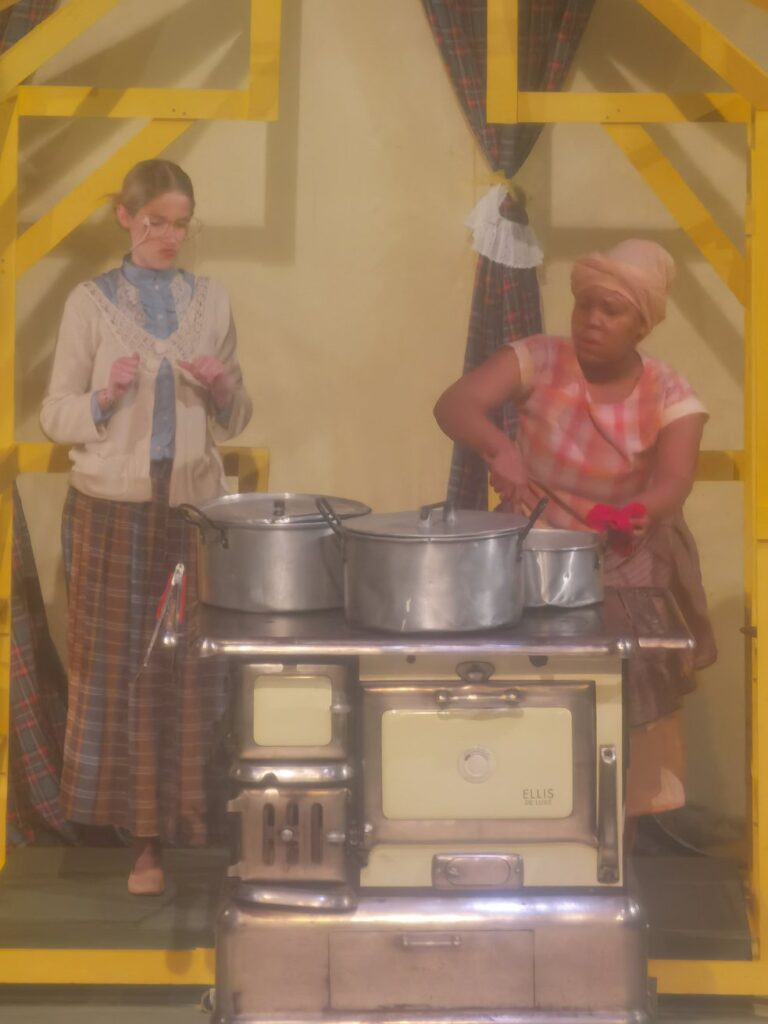
At the height of the drama that unfolds in Broom’s kitchen, the bones awake but only Elisa can see them. What the Brooms of this world cannot fathom is that in Africa, bone is not inert matter. It is the medium through which the living speak to the departed, and through which the departed answer back. Bone reading, ditaola, is among the oldest forms of revelation on this continent: the throw of bones is not divination so much as it is negotiation, a conversation opened across the threshold between worlds. When Broom boils a skull for measurement, he is not merely desecrating a body. He is severing a line of communication. He is interrupting a conversation that was never his to enter. That is the deeper violence the satire is trying to name: not only the theft of remains, but the arrogant unknowing of what remains are for.
This play is in conversation with the work of Cheikh Anta Diop, Christa Kuljian, Allan Morris, and Zeinab Badawi; thinkers who have had the courage to pick the bones of history clean. I am grateful to Dr Motsane Seabela and to Lazarus Kgasi, Junior Curator of Plio-Pleistocene Palaeontology, for introducing me to the Broom Room and grounding this work in its material reality. To Dr Kholeka Shange and Professor Julia Hornberger of the Department of Anthropology: thank you for the intellectual partnership and for opening the Hundred Years of Anthropology series with this play. It was a great opportunity to open our first draft of the stage play to the public and receive notes for its further growth. The discussion that followed the performance was both encouraging and informative.
The rehearsal floor has been my most honest teacher. Those in the know will tell you that the relationship between writer and director is often conflictual in the rehearsal room, even when they inhabit the same body. This contest meant the play underwent a series of iterations, arriving finally at its most recent script. What you will see has chopped and changed numerous times. We had to ask, and sometimes wrestle with, the muses until we discovered the magic we were looking for.
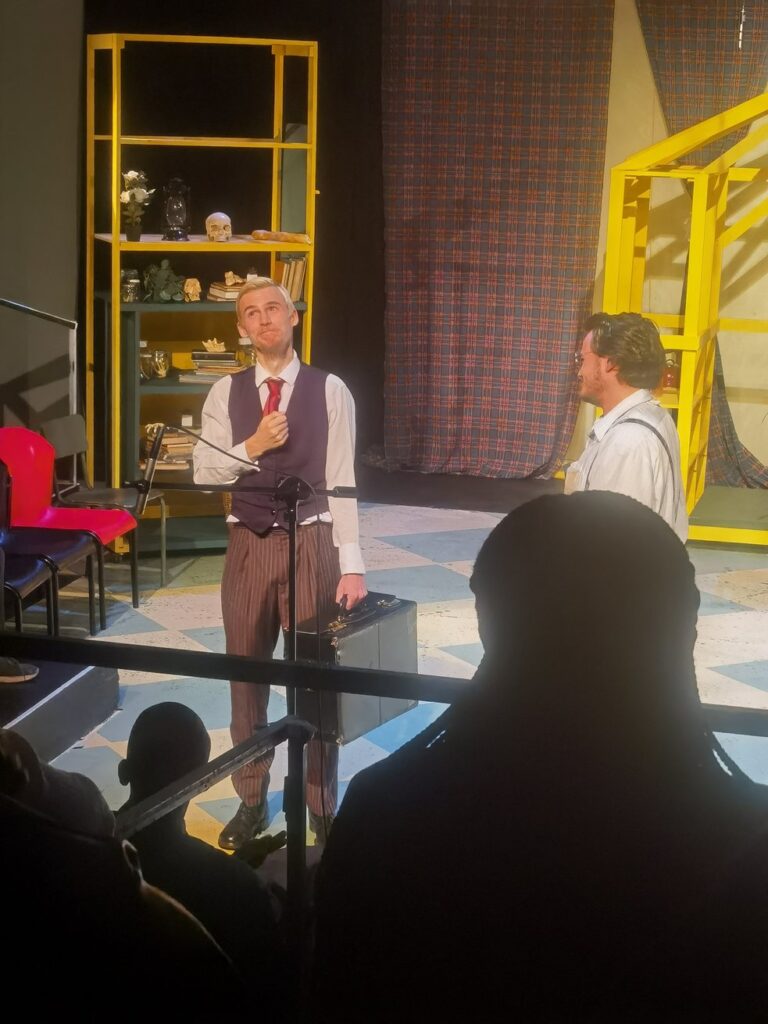
I am reflecting here as writer, director, and producer: three roles that do not always speak with one voice. To hold this balance, I find myself drawn to the figure of Mpja Mokoto, the three-headed dog who guarded the home of the gods in the Bakgatla mythopoetic story of resistance against a tyrannical invader. Like that creature, I must face in multiple directions at once…without losing my footing, and without devouring myself.
This work belongs equally to the creative family who answered every call the spirit of play made upon them: musical director Sibusiso Mkhize, movement director Sinenhlanhla Mgeyi, and set designer Sinenhlanhla Zwane, whose artistry elevated our exploration. To our extraordinary actors, chorus, and musicians, whose offers fed my muses generously, and to the Wits Theatre staff, the stage manager and crew who have held us up from the jump.”
In this production, the music rendition is quite extraordinary superb, creating the right mood for the dialogue expertly rendered by the cast.
The cast
Mokoena: Mbali Goba/Sade Sepeng
Robert Broom: Victor Gomes
Mary Broom: Teya Mansour
Jan Smuts: Trevayne Weber
Chorus: Lungelo Dlangamandla
Chorus: Mukelani Shangase
Chorus: Sade Sepeng/Mbali Goba
Pianist: Sibusiso Mkhize
Bass player: Bafana Ndhlovu
Drummer: Lebohang Moleleki
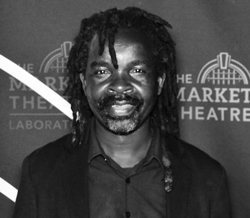
2026/05/24, 15:46 – Lebo: Director: Kgafela oa Magogodi
Set Designer: Sinenhlanhla Zwane
Movement Director: Sinenhlanhla Mgeyi
Lightning Designer: Hlomohang “Spider” Mothetho
Stage Manager: Reamogetse Khunou
Musical Director/Pianist: Sibusiso Mkhize
There you have it. Will a brave artistic director take this play to the broader audience of theatre goers out there, for this is a sad and yet humorous, an important play that is at the intersection of race, history, anthropology, art and science?