



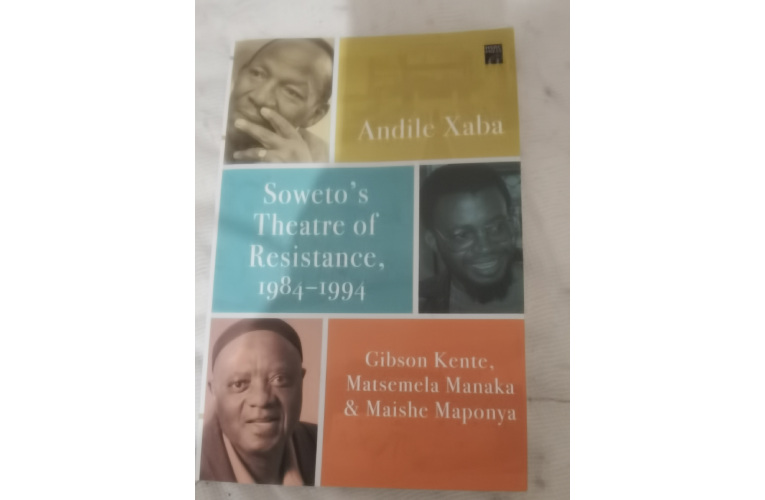
A new book by Andile Xaba elevates role of icons Gibson Kente, Maishe Maponya and Matsemela Manaka in the development of township theatre
By Edward Tsumele, CITYLIFE/ARTS Editor
Art in South African has played an important role historically, resisting the oppressive sistem of the Apartheid. Art forms such as music, visual art and theatre for example, were employed successfully by artists as a weapon in the service of the struggle against Apartheid.
The sprawling township of Soweto, created by Apartheid authorities as a labour reserve to service particularly the mines, became a hot bed for political activities during apartheid, with activists agitating for freedom for black people.
Playwrights from the township played a crucial role in creating works that fought Apartheid. Three of those playwrights are a subject of a new book, written by former Journalist and civil servant-turned academic Dr Andile Xaba.
His book titled Soweto’s Theatre of Resistance 1984-1994, the book focuses on the the works of Gibson Kente, Maishe Maponya and Matsemela Manaka, created and performed while they lived in the township. In the case of Kente, his plays were performed exclusively in township community halls and churches and they filled up the venues as township folk flocked in big numbers to watch his shows, that he wrote, directed and produced himself.
Maponya and Manaka’s plays were also performed in the township as well as elsewhere, including at the Market Theatre in the case of especially Manaka.
The role that these three township icons played in developing and popularising their works in the township, is well captured by this book.
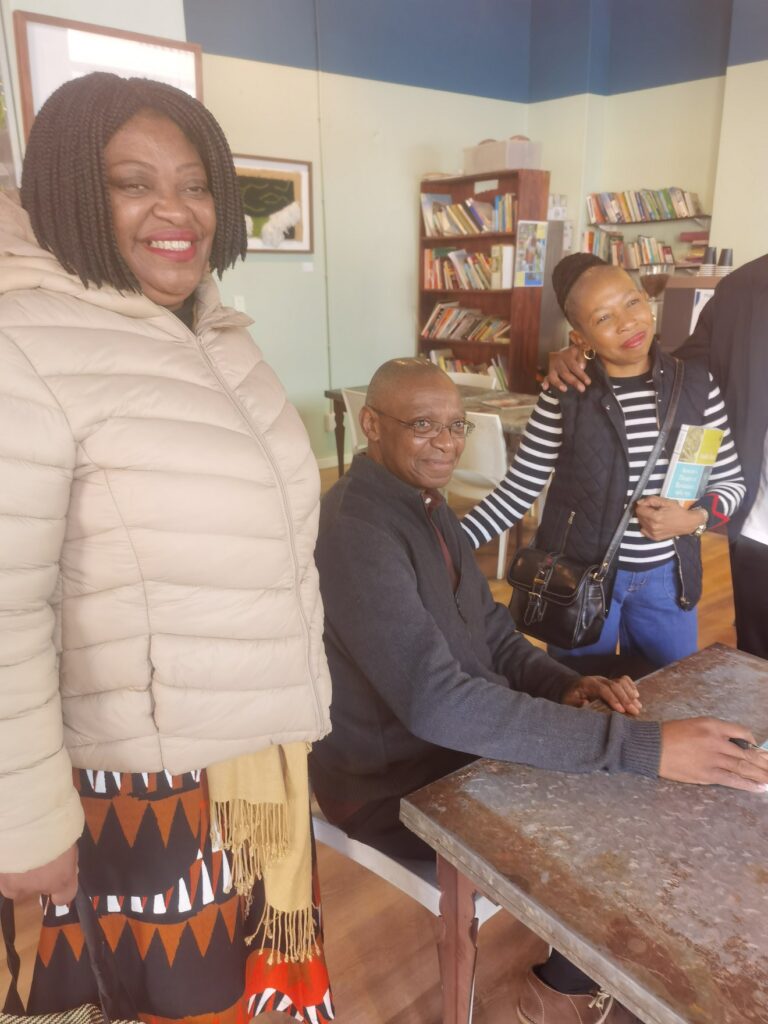
It is a comprehensive book that meticulously tells the historical narrative of the township’s theatre of resistance created from 1984 to 1994.
In the book Xaba indicates that although Kente on one hand and Manaka and Maponya on the other, were a generation apart, all three, contributed immensely to the development of township theatre of the resistance type.
Xaba also notes in the book that although Kente in creating his early works, was informed by the Black Consciousness philosophy, and later, so were Maponya and Manaka, in Kente’s later works, that philosophy was watered down, a factor that led to the other two playwrights to criticise him.
Although the book is about theatre of resistance in Soweto, it could as well be looked at as a history resource in that it touches on the history of township resistance to Apartheid by those who lived in Soweto, such as Kente, Maponya and Manaka, who witnessed first-hand, the diminishing material conditions of black people there. And so reading this book, you will also learn about the delicate and vulnerable political situation of the time in the township, as much as you will learn about the role theatre played in social cohesion, a buzz word now on the lips of politicians, whereas these icons had long played that role in their communities as playwrights. And so, for the most part, resistance township theatre was as much about the product of artistic endeavour, as it was of politics. The plays created and performed were a response to the politics of discrimination and marginalisation as practised by the Apartheid system.
Maponya and Manaka lived in Diepkloof, whereas Kente lived in Dube, both townships divided by the railway line.
However, the creation of this type of theatre did not take place in the absence of the political factor. In fact, politics became a fuel firing up the creation of the plays by the three playwrights as Xaba rightly notes in the book.
“During the 1980s and 1990s, the socio-political context provided a background to the theatre produced. This also underlines the notion that memory-which informs the writing of a historical narrative, is an interaction between the personal and the cultural world. This is a stark contrast to the 2020s, where the plays generally adopt themes that maybe universal (for example gender based violence and mental health), but which are not necessarily specific to the Soweto, the local Soweto situation.”
In putting together this book, Xaba’s research led him to interviewing 14 artists who knew the subjects well, having worked with them in some of their productions, as well as scouring archives looking for the playwrights’ works. He however could not speak to Manaka and Kente, for both had died at the time when he carried out this research. But he did interview Maponya, who subsequently died in 2021.
Therefore, Soweto’s Theatre of resistance is an important resource as a historical narrative of the township, in recognising the contributions of Kente, Maponya and Manaka to the development of township theatre of resistance, as well as putting light on the politics of the time and how the oppressed responded to the Apartheid oppression.
Soweto’s Theatre of Resistance is available at bookshops near you, retailing for R390. It is currently being launched at the country, having successfully been launched at Exclusive Books in Rosebank last week Friday, 8 May, 2026 and at Bridge Books in Johannesburg CBD, at which Yours Truly and Xaba were discussants.
Other launches are planned around the country, including at Exclusive Books in Pretoria and another ne at Soweto Theatre at a date to be announced soon and you may look out for that announcement.