



Hell hath no fury like Jeffrey Rakabe spurned by ritual
By Jojokhala C. Mei

Traditional African male initiation documentaries, or fiction in South Africa is as controversial as Jeffrey Rakabe’s debut 2025 memoir-cum-manifesto Led By Shepherds: An Intimate Memoir gets.
This is an emphatically daring, subjective, existential and gritty 12 year-old boy’s personal initiation experience, called koma. However, the driven eloquent Jeffery puts it down on paper more than a decade later as a Tshwane University of Technology drama graduate in order ‘to self-actualize’. But his results have since been withheld for unproven non-payment.
The product of his mentored writing is an engaging, deeply felt, and deeply considered daily account of ritual in curt, risque prose that is as poetic as:
“Three weeks. That was the promise – or maybe the sentence. Pain a certainty. Suffering, inevitable. Mistreatment, part of the deal. I sat by the fire, my body trembling – not just from the cold but something deeper.”
Later he writes: “In those moments all I wanted was to shout, “I’ll be fine1” But if I said it I’d sound like the world’s biggest liar. It was going to hurt. It was always going to hurt. The koma wasn’t a fan of mercy.”
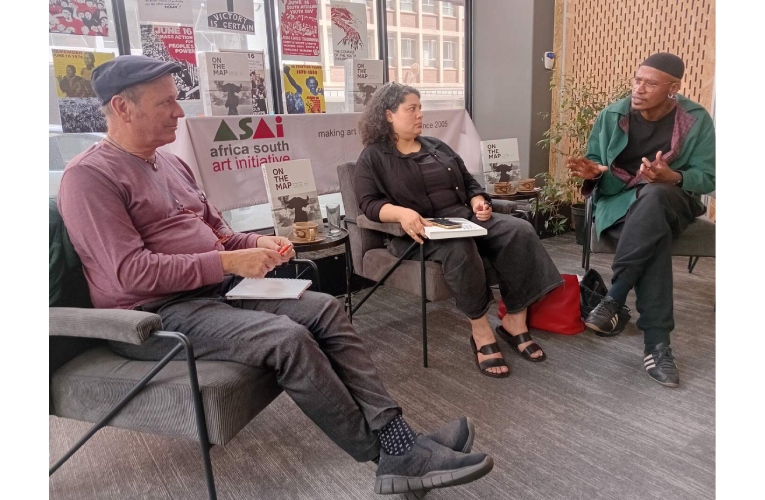
Jacana Publishers hosted the book’s launch on May 6, 2025, to roll-off the ‘printing press’ the first author of its Pitch To Publishing initiative when I was curious to find out what exactly drove Jeffery to spill the beans on his koma experience to a public like me with no experience of his particular tradition. What real research, if any, he’d done on the initiation rituals broadly in other cultures to earn him the gumption of writing his book.
After all, the book launch happened exactly the same time as Catholic holies at the Vatican in Rome were locked for days on end in secret deliberations to select their new Pope. If the world always allows such deliberations to be secret, why doesn’t Jeffery show the same respect to his own traditions?
At the book launch he brought along two women he writes are the most influential in his life so far – his devoted confidante wife Kamogelo, and the extraordinary Johannesburg Central Library’s librarian Sithembile Mkhize, who once struck me on a separate occasion at the library as rarely compassionate by South Africa’s public service standards, to borrow a koma ritual description Jeffery exceptionally uses only once in the book. Sadly, nowhere does he even hint at lessons of the koma ritual- developing the resilience and victory over profound life’s challenges.
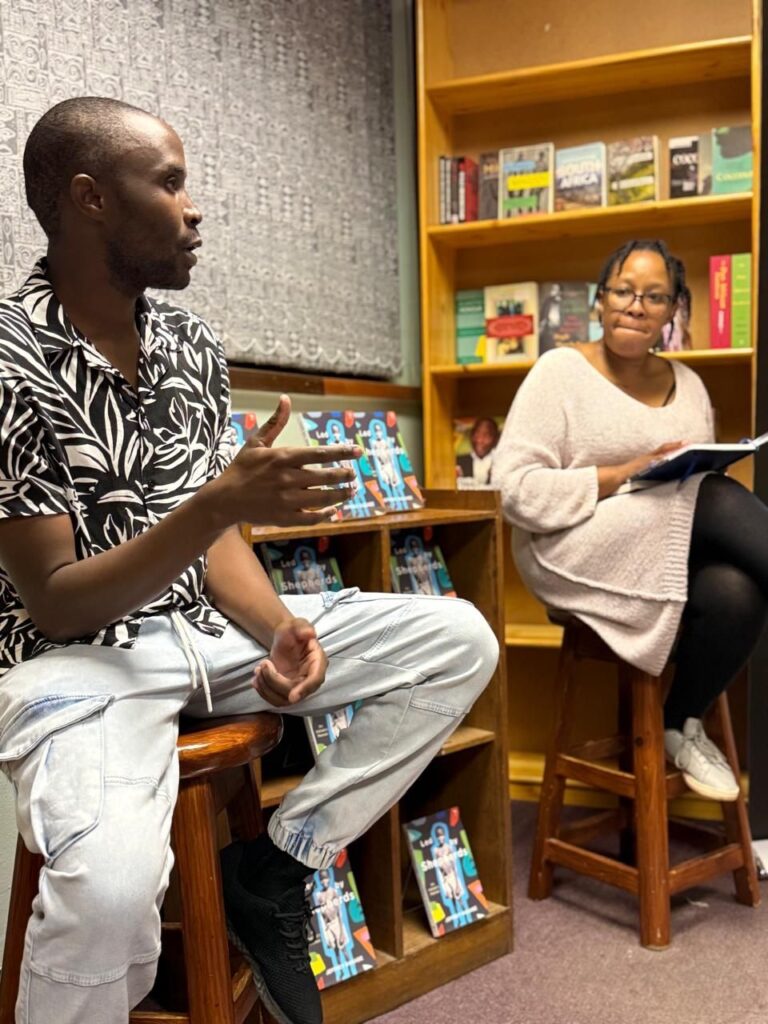
At the book launch I only wondered out loud to the gathering whether the koma ritual was not frankly just like traumatic field army life for adult youngsters called soldiers. Not 12 year old children. Doesn’t anthropology explain that initiation rituals were originally done to also prepare youngsters for the inevitable trauma of regular wars?
Nearly halfway into the book Jeffrey writes that the nub of his book is to show how the koma ritual ‘plants ‘the seeds of Gender-Based Violence’ by debasing women’ through a language of:
“Punch lines at the expense of women. It made me want to puke. Here’s the crazy part: it worked. I hate that it did. I saw the pattern forming right in front of my eyes. It started with the jokes, the casual dehumanization of women, and before long, rape. Femicide.”
Curiously a more casual expose or artistic licence is taken by the celebrated South African academic, novelist and dramatist, Zakes Mda, in his book Sometimes There Is A Void – Memories Of An Outsider:
“I had heard a ceremony called pitiki. That was done a few months after the birth of a child. … while relatives and friends gathered to enjoy the meat, the women locked themselves in a house and performed a theatrical ritual which they refer to as the real pitiki. … I very much wanted to see the ritual, but men are not allowed when it is performed. It is the kind of theatre that is performed by women for women. But only those women who have experienced the joys and the pain of birthing. … On Saturday the day of the pitiki, she gave me an old … seshoeshoe dress to wear, a red doek head scarf…
I knew right from the beginning that there was nothing ethical about it, but I was going to do it all the same, if only to satisfy my curiosity.”
But confusion, not curiosity, is what drives Jeffrey to muse at one point:
“What was a koma? … everything and nothing – a symbol, a riddle, a fact It existed beyond my understanding, a concept too complex for my understanding. A concept too complex for me to grasp.”
Yet on another occasion he adds:
“Undeniable truth: none of us had any clue what we were doing – not the elders, not the drunk men, and certainly not us initiates.”
You cannot beat Jeffrey’s bold enchantment mixed with contempt for his traditions and own elders. He slips on one occasion to observe that ‘If this what adulthood looked like, then I had nothing to aspire to.”
Or elsewhere he notes: “We must’ve looked ridiculous, but in that moment, it felt magical. For a brief second I wasn’t a sweaty kid chanting nonsense around a fire. I was a bird, soaring high …”
“Tears stung my eyes. Probably from the smoke, but let’s call it emotional depth. I sang with everything I had. The homecoming ceremony waited. I had learned the chants. That was something, pleading with the fire or the king or even the elephant.”
This is a challenging book I have not been able to dismiss, because of the writer’s skillful word play, plus inventive and incisive metaphors.
I look forward to more of his writing.
Led by Shepherds An Intimate Memoir by Jeffrey Rakabe is published by Jacana Media (2025).