


Deep Tswana history celebrated at book event at Jacana media
By Jojokhala C. Mei

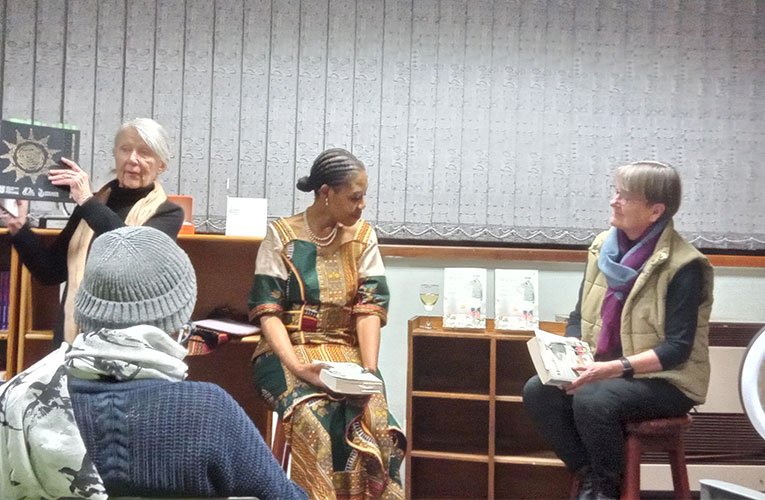
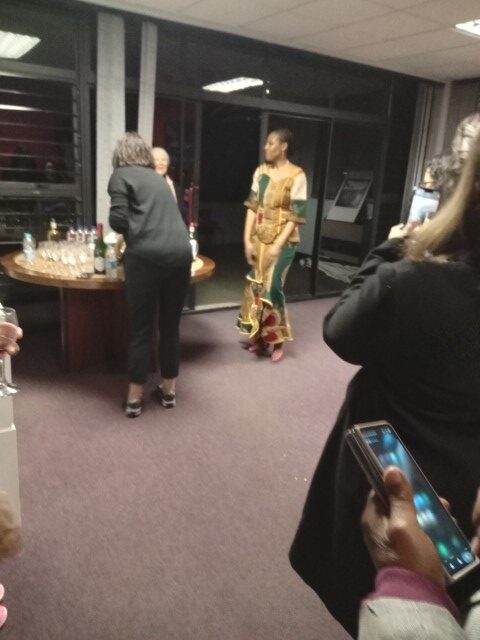
On Tuesday June 3, 2025 Jacana Media celebrated with bubbles and cake Dr Khumisho Moguerane’s hefty established family history book: Morafe PERSON, FAMILY and NATION in COLONIAL BECHUANALAND. It fortuitously coincided with her deceased father’s birthday. The question on everyone’s mind was how possible is it for a scholar to be so stupendously brilliant so daringly vulnerable on the written page.
She revisited the book’s origins and writing process from the rare historical educated and polished indigenous Morafe family archive, with rare historical photographs thatshow that even uneducated Africans wore full stuffy Western dress. The book also exposes the elites’ painful conflict of values because they were enraged by the later. Even activist and writer Sol Plaatjie preferred to look different from the masses.
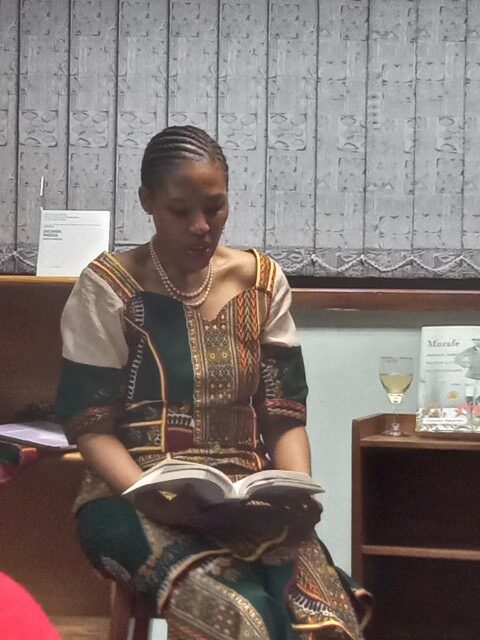
Spurred by the writer’s history doctoral studies, the book interrogates the role of the written archive, and the role of the historian in capturing any given contemporary moment.
Despite being a professional historian, she lapped up the risk of asking the intimate questions like novelists and other fiction writers. For instance, she explores a character’s recovery after heartbreak, as well as intimate dilemmas being resolved publicly. Let alone that the busy historical character Sol Plaatjie shows up, believe it or not, constantly tired (arguably of the debt of ‘civilising’ the masses.
Elsewhere in the book she cites romance as the definitive ‘place of subjectivity’ for real life characters. As well as ‘enclosure’ of those historical men determining their subjectivity, and with a world view putting themselves at the centre, not stuck in the periphery as popular colonisers liked to believe. I think it also didn’t help that Mafikeng was also electrified before Johannesburg.
She says the book is literary divided into three ‘independent’ books, admittedly inspired by iconic writer Milan Kundera of ‘The Unbearable Lightness Of Being Fame’.
She argues that one standout feature of the book are period letters and other documents which capture the stoic, if not stiff, clerical expressive language the literate liked to write in back then.
Eventually she mesmerises and triggers her audience by reading from the middle section of the book a beholden-graduate-son-to-father letter. In a subsequent discussion with the audience she argues that a standout positive feature of the book has been writing it in English, not seTswana; allowing seTswana translations In italics to foreground, or emphasis the importance of seTswana language choice of words.
Between us, I’d be happy for such as magnificent tome to inspire a museum permanent single-family history exhibition, like the one I saw around the 2010 FIFA Football World Cup at the Ditsong Cultural History Museum in central Tshwane/Pretoria. Afterall, Botswana has all the money and intellect in the world to pull it off.
“I knew I was not writing a novel…I wanted to give the reader pleasure…took risks I knew would ignore history.