


The Negotiating Democracy exhibition at Museum Africa gets youth to dialogue with leaders on Youth Day
The exhibition comprises rare pictures taken by retired diplomat Dr Khulu Mbatha about the road to democracy in South Africa 1991-1994, as well as archival material.
By Edward Tsumele, CITYLIFE/ARTS Editor
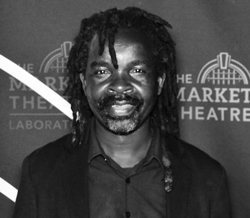
The travelling exhibition Negotiating Democracy which was launched at Museum Africa on Saturday, June 14, 2025, conceptualised by former diplomat and author Dr Khulu Mabtha, is something worth visiting. The opening was followed by a discussionon Monday, June 16, 2025, Youth Day, and saw Grade 12 learners engage with a panel of leaders on contemporary issues defining life in South Africa today.
This discussion was held as part of the June 16 programming of the museum. This was a reflection on the historical event that took place in South Africa 49 years ago. That is when learners first in Soweto, and later elsewhere, took to the streets to challenge the apartheid government, which attempted without success, to introduce Afrikaans as a language of instruction at black schools.
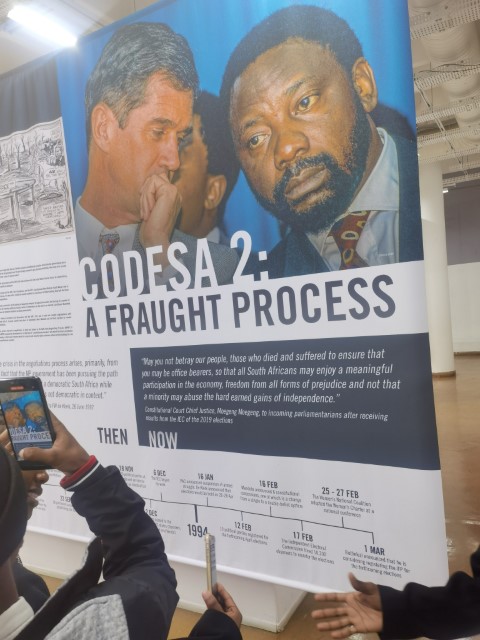
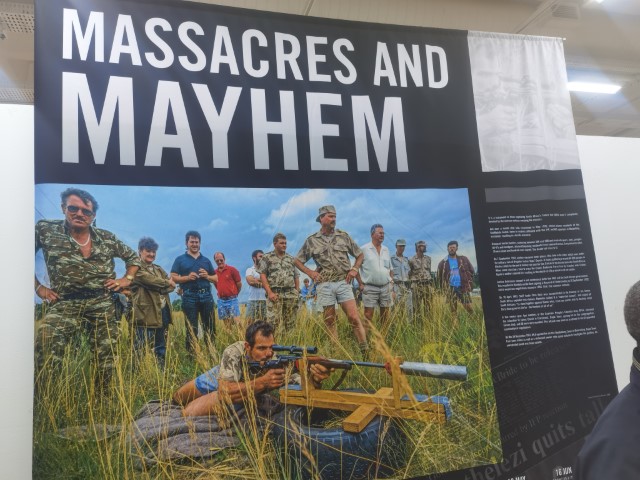
The exhibition was first launched at the Nelson Mandela Centre of Memory in 2020, running till 2022, where a number of prominent people visited to view the exhibition, including Macron, former President of France.
That leg of the travelling exhibition was conceptualised and curated by former freedom fighter and diplomat Dr Khulu Mbatha. Mbatha has written two seminal books Scattered and Why the ANC failed. In the current context in which the ANC has been forced to co-govern with its adversaries since the loss of its majority vote in the 2024 election, perhaps of particular interest is the bookWhy the ANC Failed. This is because it is a critique of the first democratically elected post-apartheid government by an insider. There must be something that the good doctor knows that the rest of us are not privy to about the workings of the ANC to which he dedicated his youth as a freedom fighter forced into exile for 15 years. He is part of the generation of the 1976 himself.
“When the negotiations started, they were planned but nobody knew the outcome. June 1976 came out of planning. The students also planned but they did not know the outcome. The outcome was violence and there were bullets. The outcome was exile, jumping borders and so forth. All this was not planned,” said Mbatha.
He however emphasised that the negotiations with all its weaknesses was the best option available to the country and quoted former President Nelson Mandela when he said that there was no military victory on both sides, and thinking of victory was distant if not a dream, in his seminal biography: Long Walk to Freedom.
The issue of the recent visit to the Oval Office by President Cyril Ramaphosa accompanied by a number of mainly white businessmen, politicians and sports people, came up for discussion. The question was asked by moderator Lesego Mlambo, the museum’s Collections Manager, about the question of representation during that key moment in South Africa’s history. The question specifically pertained to the recent move by some Afrikaaners who took the offer by US President Donald Trump to be ‘refugees’ in the US. This of course did not go well in South Africa. The truth is, there is no such thing as white genocide in the country, but generally, there is crime affecting everybody due to unemployment, poverty and horrendous levels of inequality, with whites and a few blacks very wealthy in the middle of grinding poverty and hunger among the majority blacks.
Mbatha philosophically reflected on the issue but also pointed out that such people (white ‘refugees’) do not know what it means to a refugee as the path is strewn with thorns. Drawing from his own personal experience of being in exile for 15 years, Mbatha said life was not that easy for him and those who were in exile.
He seemed to defend a reconciliatory route that Ramaphosa and his administration took when they included a huge number of white business people, sports man and politicians to make their case before Trump in the Oval Office.
“Without taking the first step to do something, you cannot move. You will not be able to make mistakes, and we should be allowed to make mistakes and correct them. The first step will allow us to make hope. Mandela said there was violence from both sides. Oppression breeds violence. Where there is poverty I can assure you crime will start to build up, and where there is poverty violence builds up. When I look at a recent case of Mitchell’s Plain and Eldorado Park (Where violence took place), it means something has gone wrong.
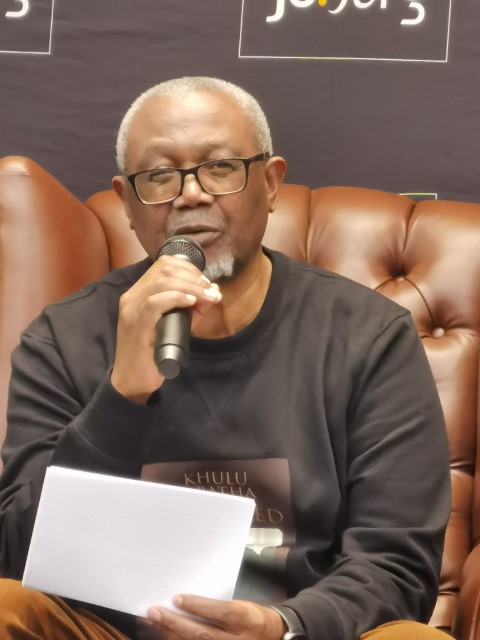
“Mandela said we must cease to be black, white and Indian, to allow us to release the energy to want to do things differently. Somewhere, we have had missteps, things that have gone wrong. We have heard suggestions that these whites do not want to change. I can assure you they do not know what it means to be a refugee. I jumped borders and fences to Tanzania, Germany and other countries. For 15 years in exile, I lived like that and life was tough,” Mbatha said.
The Negotiating Democracy exhibition, which was first paid for by The Nelson Mandela Foundation, apart from images and videos, sourced from archives, comprises rare pictures of the early period of negotiations, as the ANC besides the main forum of the negotiations, where several players were present, including its adversaries, also held its own secret meetings at secret locations around Johannesburg. It is at these meetings where Mbatha took the pictures that are now on display. He held the position of national co-ordinator of the negotiation process, giving him a rare opportunity to document what was going on behind doors in the ANC during those tough years of 1991-1994.
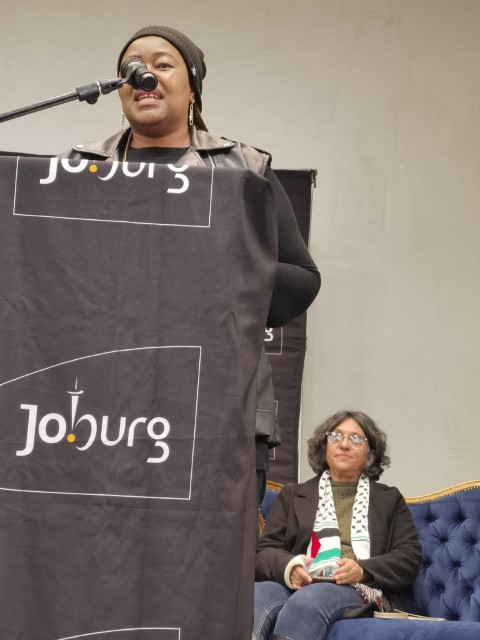
Razia Saleh, who works at the Nelson Mandela Foundation as a research as well as being a board member of the Ahmed Kathrada Foundation, spoke about how the exhibition’s first iteration happened at the Nelson Mandela Centre of Memory in Houghton.
“In 2016 there was a lot of accusations by protesting students of #FeesMustFalland some people that Madiba sold us out, and we were trying to find a way to engage. It was clear that they did not understand the nature of the negotiations. And when the idea of the photographs came, we thought that was the right way of engaging on the issue,” Saleh said.
Veteran broadcaster, former BBC Africa Bureau Chief, and now a media consultant, Milton Nkosi, calibrated his journey of how he became a journalist, but also the pitfalls of social media and how misleading social media can be during this digital age.
“What drove me into the news environment is that I grew up with a grandfather who would send me to the train station to buy newspapers but he never told me to read them. I was bombarded by this information and I knew all the apartheid ministers. When a newspaper was read before we made fire I would then read the newspaper. My father then taught me how to read the paper starting with the headline. And so in the neighbourhood, and among my peers, appeared to be clever. The fact however is was not clever, bust happened to be surrounded by newspapers at home.

The veteran newsmen however warned the learners from Aha-Thuto Secondary School from Orange to be aware of misinformation on social media.
“Do not post everything you see in the family WhatsAPP group. I trained as a journalist in London and they taught me that do not broadcast until you have two sources, the eyewitnesses and the official police confirmation of an event. But today on social media not everything is true. But what we often see on social media is not necessarily true and one needs to verify that information by reading mainstream newspapers. They (people on social media) hear one rumour, in fact half rumour, and they go out and spread that as fact. For example when in 2008 Nigerians heard that South Africans were killing Nigerians in South Africa, Nigerians in Nigeria went out to burn South African properties belonging to South African companies in Nigeria, such as MTN and Shoprite Checkers. Do not trust a guy called Robot A or B who posts something on social media, and you go out and share. Verify such stories with newspapers,” Milton Nkosi advised the young minds who appeared eager to listen and learn from the elders.
Speaking to the issue of Apartheid in the context of the pressing issues affecting South Africa currently, Nkosi dismissed those who claim that apartheid was better than the current status of the country.
“Please do not let anyone tell you that apartheid was better. It was not. People died,”Nkosi said, addressing learners directly.
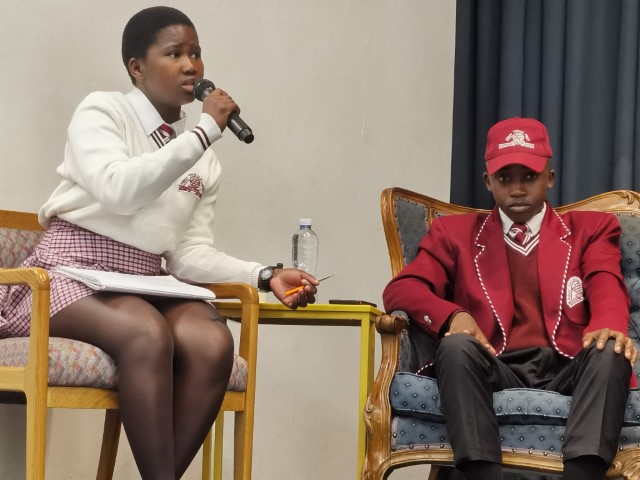
A bright learner from Aha-Thuto School, Busisiwe Nkosi almost plunged the discussion into controversy when she critiqued the culture of laziness among the youth, who she said instead of working hard and taking advantage of opportunities that are available, they play the blame game.
Some youth did not take kindly to her suggestion, but the bright learner stood her ground, fearlessly defending her position.
“I think that we are lazy, we do not take initiatives. Instead we blame other people that we are unemployed and not take initiatives to change our circumstances. Even the people that we rely on do not give us proper guidance in Orange farm where I came from. There are people who like in our communities they instead demotivate us saying that education will not take as anywhere, as atvthye end we will be just like them. But that is not true, and that is why I say we are lazy to think and change our situation,” Busisiwe was adamant.
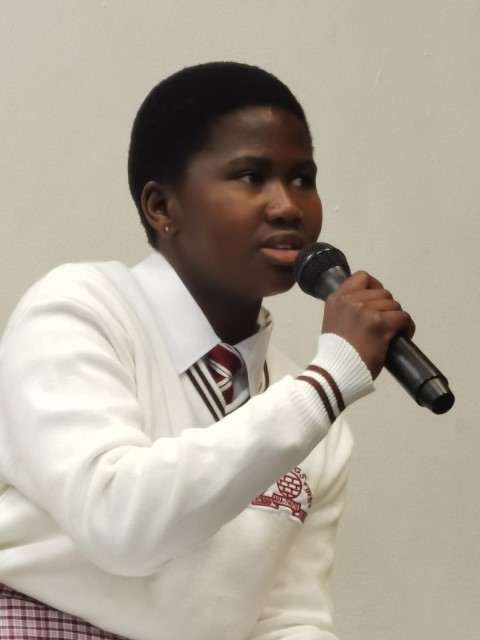
Busisiwe also weighed in on the issue of crime, which is generally a scourge in the country.
“The main cause of crime in the ranks of the youth is mainly because we as the youth we blame other people. Such as government for the lack of employment opportunities. Some blame it on their home situation. But fact is we all have home situations. But some believe that they do not believe that they can change their home situation. I think it is because of the mind-set that we are in the situation that we are in as youth. The way you present yourself is the way you will be in future. They think life is so easy. They want everything to be easy. But the reality is life is not that way,” Busisiwe said.
Loyiso weighed in on the issue of whether the country’s laws are adequate to deal with crime, particularly Gender Based Violence, which has reached pandemic levels.
“Laws to do with Gender Based Violence are there but what lacks are values that we lack as a society, and therefore there is a need to instil values in society. Whenever there is a white sheet the black spot is outstanding. Whenever there is a bad thing it is always outstanding. I believe there is a possibility to change our situation,” said Loyiso also from the same school.
This was indeed a meaningful discussion, and a fruitful day to commemorate June 16, with the learners from Aha-Tutho Secondary School engaging the likes of Dr Mbatha, who has seen it all –fighting for freedom and witnessing freedom, and unfortunately the country’s decent into uncertainty due to corruption and other problems that are a common feature in contemporary South African life today.