

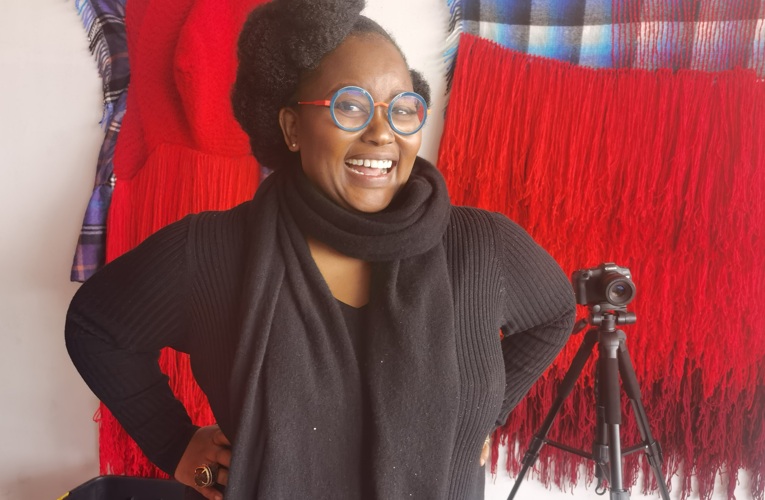
Academic Mpho Matsipa ignites Johannesburg through curating a series of dialogue on soil collaborating with artists, activists and institutions across city spaces
By Edward Tsumele
In the last month, if you happened to have been around Johannesburg, and you are the type that is inclined to seek solutions to some of the most problematic aspects of contemporary life, such as the issue of land and that land is not just a space where you build a structure, but more, and you missed this one, you must feel bad. Very bad.
This is because last month July, there was a series of intellectual engagements that took place around Johannesburg, dealing with the issue of land, in its holistic uses and what it represents to various people, which saw academics, artists, activists and other thinkers bring their collective wisdom under one roof, and shared ideas around the issue.
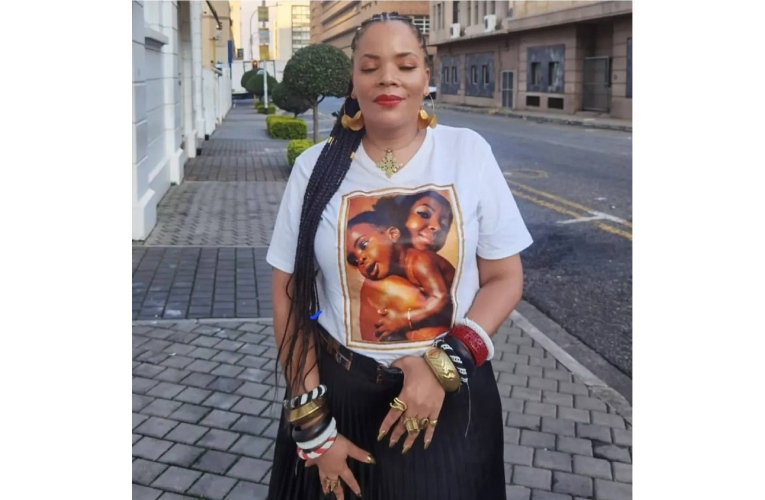
Well, I almost missed this opportunity but was glad that I caught up with this extraordinary initiative, its last iteration in fact at Elis House where I engaged with the main person behind this initiative academic Mpho Matsipa. Her academic background is in the architectural field, but her practice involves curating city spaces in around Africa’s often busy but neglected metropolitan areas as big capital moves out to ‘better” places.
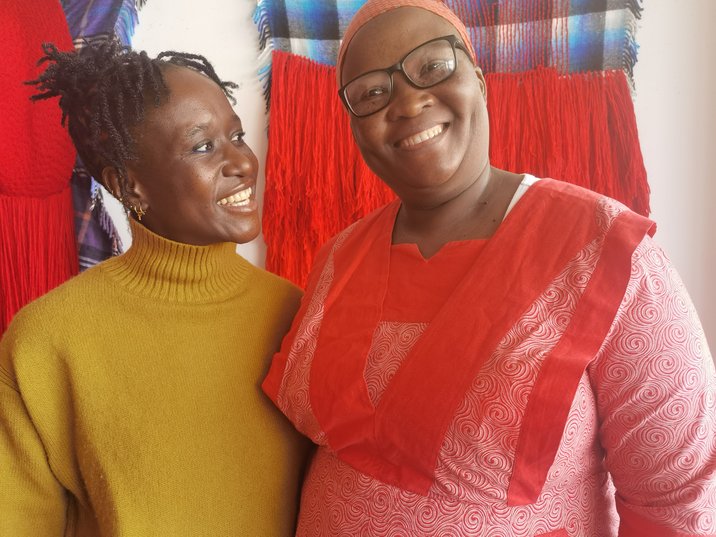
Matsipa, a South African academic who spent 12 years teaching at Wits before moving abroad to the UK where she currently teaches architecture is the person behind After Extraction, a series of events created and executed in collaboration with others, and which she describes as follows:
“After Extraction is an experimental, publication and research-based initiative (by Mpho Matsipa) in collaboration with Chimurenga, exploring intersections between creative practice and environmental science. It extends the African Mobilities archive of pan-African voices as a layered text that holds multiple perspectives on African futures and deep pasts.
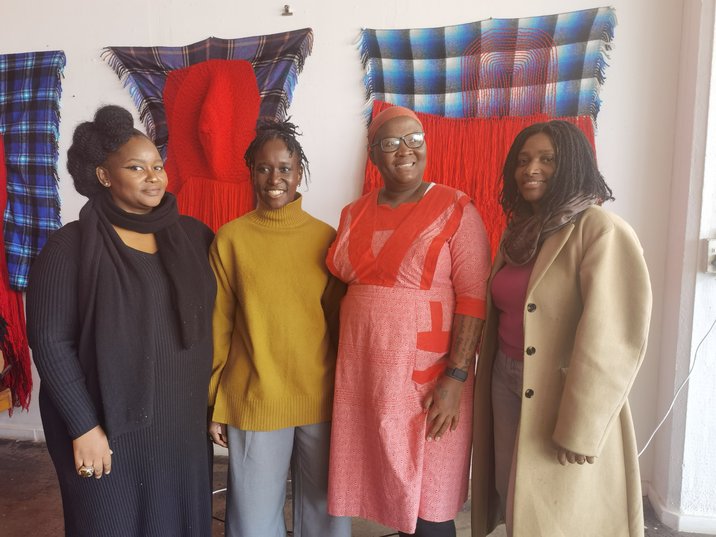
After extraction delves into the legacies of extraction and proposes speculative futures rooted in indigenous knowledge systems and artistic response. The project features the work of Sammy Baloji (Democratic Republic of Congo) and Senzeni Marasela (South Africa)—two contemporary artists whose practices critically engage with environmental degradation and forms of cultural and ecological repair. After Extraction will take place in Johannesburg, South Africa, (on 11 and 18 July 2025). ‘The Library of Things we Forgot to Remember’ at 44 Stanley and in collaboration with Chimurenga, the Bartlett School of Architecture – University college London, (where she teaches and the sponsors of the event), Johannesburg Institute of Advanced Studies – University of Johannesburg, and The Gathering – Salon – a self-funded collective of African and diasporic femme and non-binary built environment practitioners.
This project is supported by the Bartlett School of Architecture Incubator Fund, the Johannesburg Institute for Advanced Study (JIAS), and the Graham Foundation.”
Basically, what this experiment, as Mpho calls it, does, is witnessing practice-based artists and activists collaborate with academics to make sense of the chaos that we often see around us in the cities. Such as crumbling and neglected and abandoned buildings, what happens after extraction for example of minerals under the belly of Johannesburg, where the land that once housed important minerals attracted both invested and the crooked, is left uncovered. Minerals gone and mines remain uncovered only to be occupied by the hungry, hustling Zama Zamas, looking for crumps of gold that may have been left behind by the big boys and girls of big capital that are long gone.
Also, what happens to the lives of those that once made a living digging under the belly of the soil to extract the gold that capital has left now that the mines are decommissioned, machinery packed up and shipped elsewhere where there are better prospects of riches. These were men who in most cases left their wives waiting in the rural areas and in some cases, waiting for their men that never pitch, either dead or swallowed by the often harsh and alienating city life.
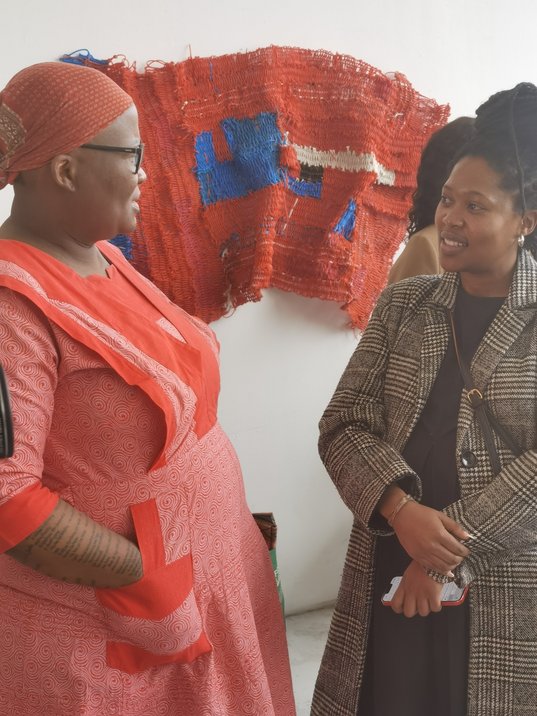
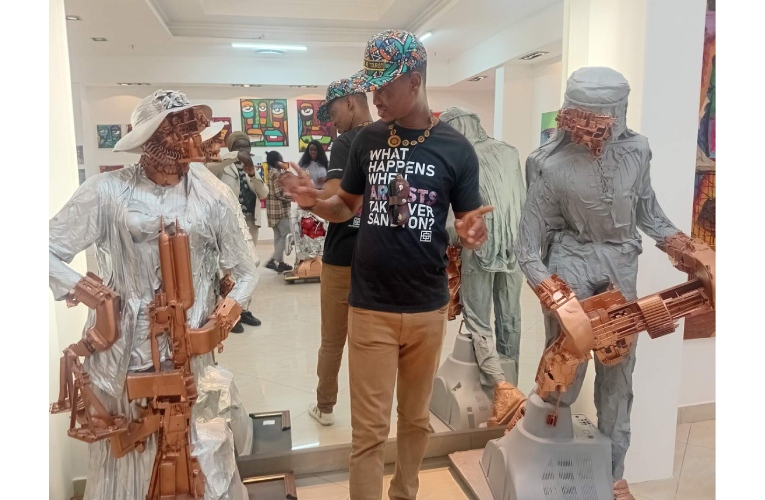
This for example is what informed the idea of Senzeni Marasela’s series titled Waiting for Theodore, which was part of the events that took place during After Extraction at Elis House. This series of Marasela’s is about a woman who waits for her husband who is working in Johannesburg in the mines while she left behind at home, in the rural areas, waiting indefinitely. It is a multi-layered series that involves performance art and photography, creating a coherent narrative that tells the complex story of the connection between mining and African family disintegration on one hand, and on the other what happens when migration and labour intersect conspiring to destroy African families and social fabrics, especially in Southern Africa since gold was discovered in 1886 in Johannesburg, attracting labour from all over Southern Africa and capital from abroad.
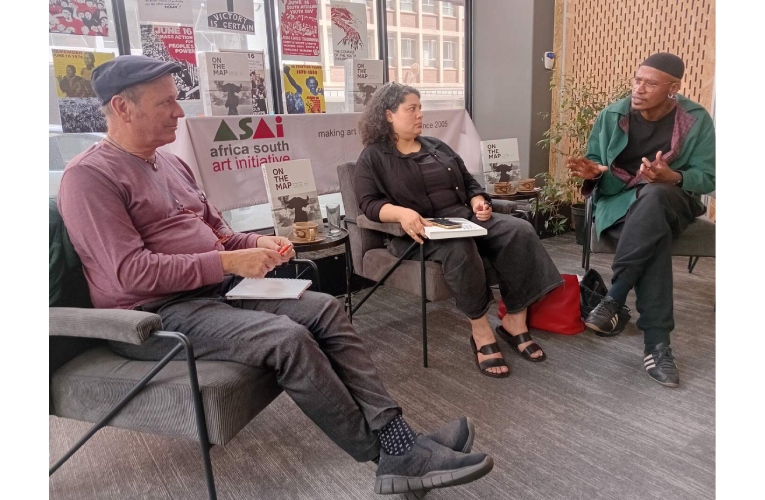
“As a curator I like working with city spaces where creatives, artists often practice in the inner city where capital has long left. These are spaces where practice-based knowledges are being created away from formal spaces such as academic institutions,” observed Matsipa who is Associate professor at Bartlett School of Architecture, where she lectures in architecture. She spoke to CITYLIFE/ARTS at Elis House as she wrapped After Extraction on July 18, 2025.
At the event, Matsipa also collaborated with well-known poet and academic Uhuru Phalafala among other collaborators on the day.
Her university funded After extraction, for which she told CITYLIFE/ARTS that she was immensely grateful. However, for those who have missed extraction, another opportunity to take part will be available in October.
Coming up: Dialogues on Soil IV with Sammy Baloji. 1 October 2025, 6pm and it is an Online event.