




One City, Many Voices,theatre piece speaking to the country’s unspoken past and its unresolved present
Ghosts of the struggle, dogs of the new dispensation; Brave, raw and necessary. In an age of safe storytelling, this unflinching musical drama shoves our failures back in our faces – and refuses to look away. One City, Many Voices Alex Theatre Company and Academy, Alex Sankopano Staged: 17 -18 April 2026.
By Themba ka Mathe

Kgomotso Ntuli, the former liberation movement’s general who once took a bullet for his comrades – is officially a ghost. In the new dispensation, few notice or care, not even his own community. His erstwhile comrades-in-arms have shelved him, casting him into the bureaucratic shadows from which protest movements rarely emerge. They have moved on, to council chambers, posh suburbs, boardrooms, tenderpreneurships, and the spoils of liberation.
Comrade Kgomotso, by contrast, dies again and again for his principles, so often that the stage itself feels like a mausoleum. His ‘demobilisation papers are in line to be approved.’ So, he is told to be patient. Now he ekes out a living as a waste recycler; a General rummaging through society’s scraps.
This is the unflinching tale of post-apartheid South Africa’s emergent protest theatre, created at the Alex Theatre Company and Academy in AlexSanopano, as part of the Joburg Arts Alive 2026 programme.
For two nights, One City, Many Voices, billed as a musical drama – breathed life into a broken promise, while offering newer generations a vital, uncomfortable history. Written by Monde Mayephu and directed by Mpho J. Molepo, on his way to directing Sarafina for a second successive year as part of the Soweto Uprising’s 50th anniversary; this piece is a timely, unapologetic and ambitious work.
It would however benefit from a tighter, sharper sculpting, snipping on the text edges, to secure its rightful place among South Africa’s post-liberation theatre milestones.
In their fifth collaboration, the pair brought protest theatre to Alexandra, giving voice to stories from similar communities wrestling with drugs, crime, service delivery challenges, leadership vacuum, greed and corruption.
The central question – how did we get here? – haunts the show. This new production is a work in progress with a future still to be written. It needs tightening, a stronger steering hand, and a more defined heartbeat around its central character. Above all, it needs a budget.
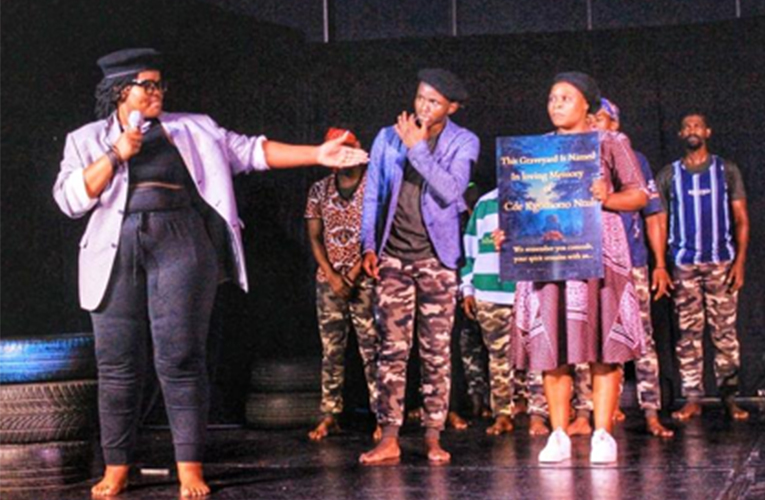
Nonetheless, it still exposes democracy’s raw nerve and flaws, unflinchingly. The opening scene is a gut punch: Comrade Kgomotso’s commemorative plaque is unveiled by his compatriots as part of a campaign roadshow. His wife Thandi, speaking live on television, challenges the narrative, insisting that Comrade Kgomotso’s memory and sacrifices have been betrayed.
What unfolds is a retrospective that reveals a diminished man who sacrificed his youth for the liberation of his people – family, community, and country. He returns back to his community not as the hero he promised to be, but as a figure compromised by the very system he helped create.
In short, he struggles to integrate. The moral centrecrystallises in the contrasts among the comrades. Comrade Zondo returns from exile and never testifies at the Truth and Reconciliation Commission. Comrade Kgomotso testifies, takes the fall, and guards the movement’s secrets. He serves a sentence while his comrades move forward with their lives.
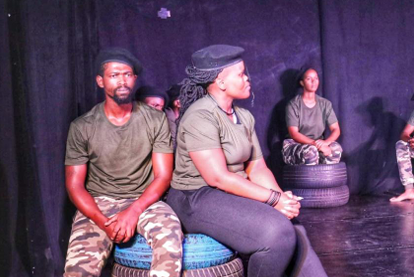
The play asks: can a voice that speaks truth still be heard in a city where power and privilege have rearranged the landscape? For close to 80 minutes, the musical drama, woven with poignant new-age struggle songs created by SaneleMzimela, grapples with a man stranded in time.
Comrade Kgomotso is a man whose present is harsh, whose family is crumbling, and who cannot reconcile the myth of heroic pasts with the grind of now. His home front is broken: he cannot sufficiently provide for his family. His wife Thandi is fed up with his heroic stories of the past and his promises of a future that never arrives. The present is harsh, chaotic and demanding of his financial fortitude, and he is found wanting.
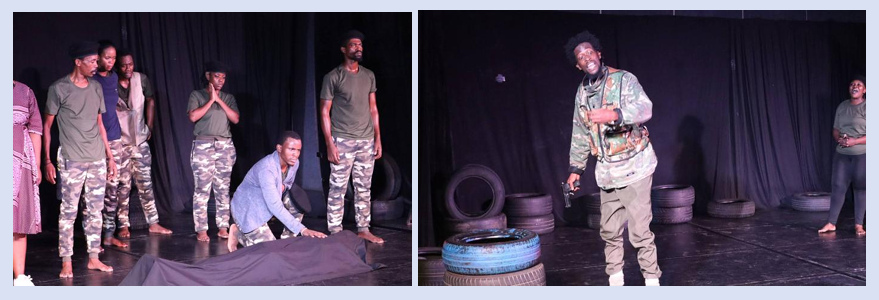
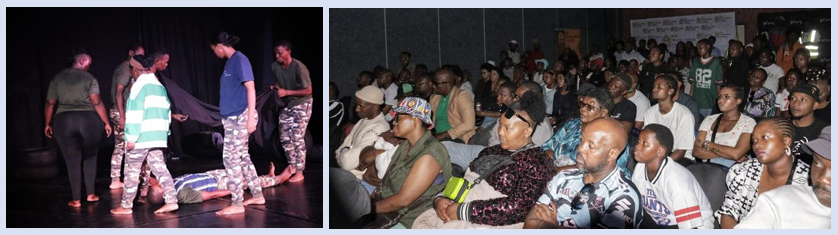
Their son Thato, trapped in the modern-day lifestyle of drugs and crime, simply wants to leave school and fend for himself, because the teachers “don’t listen or understand him”. When the community finds Thato on the wrong side of the law, Thandi cannot believe her son could be a criminal. She dares the community to open a criminal case against the high school boy. But the community has run out of patience. In a scene that lands like a blow to the chest, Thato is necklaced by his own neighbours for being part of a gang that terrorises them.
Comrade Kgomotso’s struggles to stay true to his principles – until the very end – renders him both a tragic figure and a cautionary one. He cannot fathom the transformation around him, and so his moral compass falters, sliding from betrayed liberator to extortionist, and eventually to a self-inflicted ruin that mirrors the fate of his son.
Here is where the play’s moral inquiry broadens: Is loyalty more vital than survival? Can a man preserve his name when his community forgets what it once meant? What makes a comrade a comrade; the bullet they take or the one fired at them?
The ensemble of eleven actors, mostly drawn from the sprawling township of Alexandra bring a palpable urgency to the material. Their youthful energy is infectious, sometimes overzealous, and at times in need of direction to harness its full potential. Director Molepo’s challenge is to temper that fervour so that quiet, intimate moments, like when Comrade Kgomotso grieves rather than fights land with the same devastating impact as the dramatic upheavals.
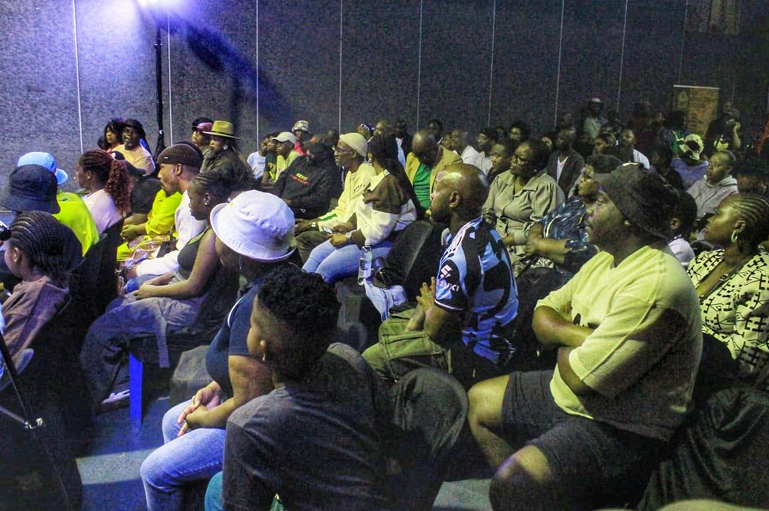
One has no choice but to give it to Mike Dzova (Comrade Kgomotso) for holding the centre against an ensemble that sometimes threatens to run away with the production. Audiences are held spellbound when he transforms from betrayed liberator to extortionist, from grieving father to the very monster his son became, and the tragedy completes its terrible circle.
One City, Many Voices is not a finished work, but a brave and necessary one: a living document of a city’s struggle to contend with freedoms earned and freedoms betrayed. It asks us to listen to voices long silenced and to reckon with the uncomfortable truth that liberation’s promises can become mislaid, even to the extent that those who once bore the fight become the very threats to the people they claimed to defend.
If the play’s tempo occasionally stumbles, its heartbeat remains undeniable. It is a new show that will grow with time, with refinement, and with a bolder shaping of its central figure. Above all, it needs financial investment. In the end, the question lingers: amid the thorny, poisonous fruits of freedom, who signs your papers when the original commanders are long gone? And when the commander becomes the danger, who mourns for a man who is gone, and a movement that cannot fully remember him?
From Alexandar to Zamdela, Dimbaza to KwaLanga, KwaMashu to Seshego thousands of these stories of liberators that were either poorly demobilised, un-intergrated to the SANDF or betrayed play themselves out every day with little triggers in between.
Nobody is there to tell them. For audiences who want theatre that speaks to the country’s unspoken past and its unresolved present, One City, Many Voices is essential viewing. It is a bold, and necessary voice.