






Veteran actor Bheki Mkhwane shares decades of wisdom and storytelling with university students
By Funeka Bambalele

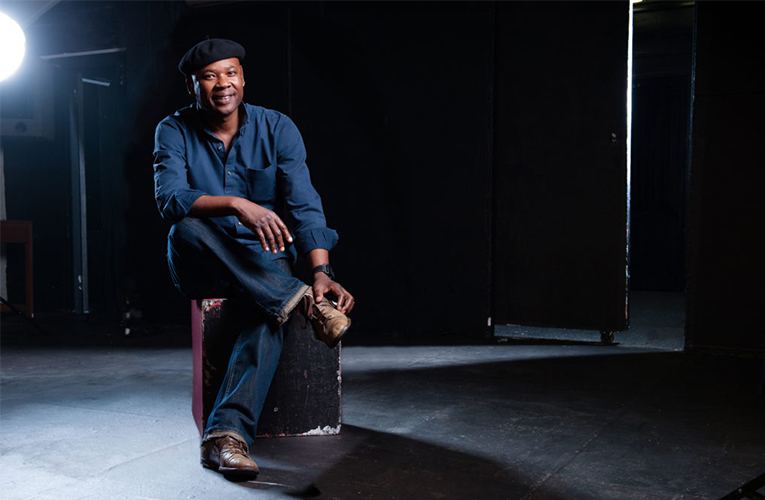
As a young creative, count yourself fortunate to learn from thespians like Bheki Mkhwane, whose mastery of stage, television, and film has earned him national respect and awards.
Mkhwane is one of those rare actors who deliver an honest, fully lived portrayal of a character — often going beyond what is required — while paying meticulous attention to detail.
If you need proof, simply revisit the repeat episodes of Isibaya on Mzansi Magic, where he delivers a commanding performance as Samson Ndlovu — a role that showcases exactly why his craft is so deeply respected.
Beyond his on‑screen presence, Mkhwane dedicates much of his time to nurturing emerging talent across KwaZulu‑Natal. He draws from an impressive 43 years of experience in the acting industry, generously passing on the lessons, discipline, and craft he has honed over decades on stage and screen.
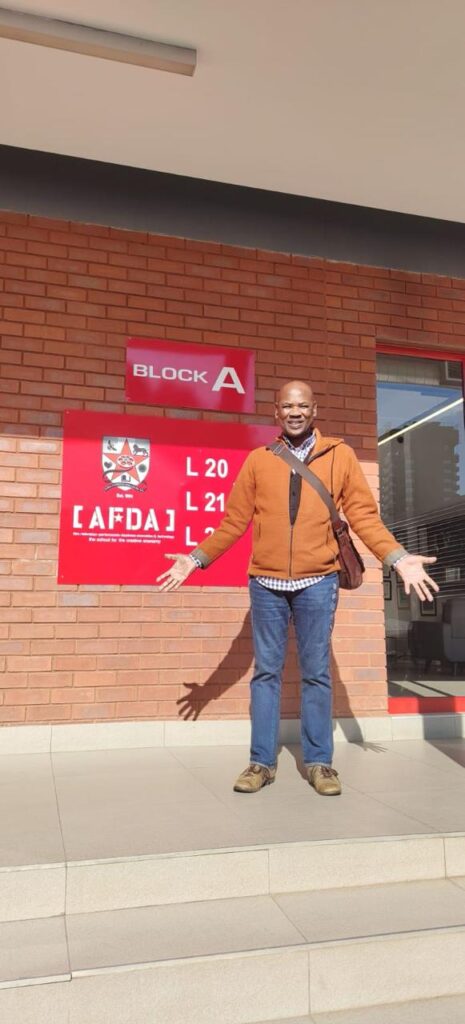
For the past two weeks, he has been a regular presence at AFDA, where he was invited as an external examiner for first‑year students. As part of his role as an examiner, Mkhwane also watched the students’ performances, offering thoughtful, incisive reviews that blended encouragement with the depth of his acting expertise. He assessed their work with the eye of a seasoned storyteller — identifying strengths, highlighting areas for growth, and grounding every critique in decades of lived experience on stage and screen.
From the moment he steps in front of young creatives, he radiates experience, discipline, and generosity. He goes all out, ensuring that the next generation of directors, producers, and actors grasp not only the techniques of performance but the deeper philosophy of storytelling.
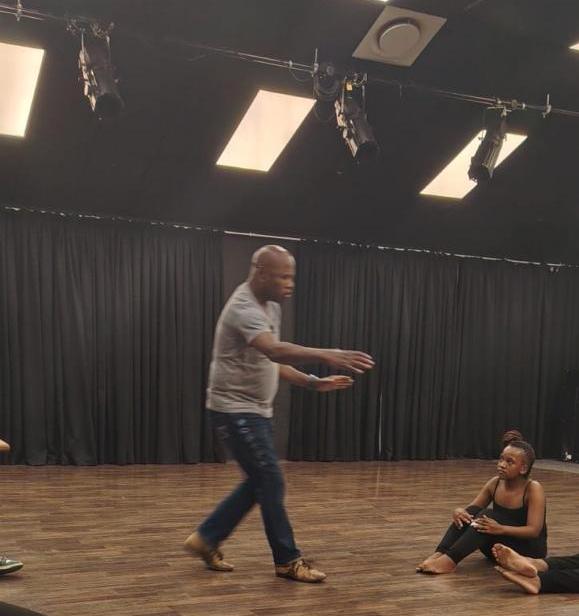
The legendary actor began by grounding the students in the fundamentals of theatre — what it is, how it works, and what it demands of an actor. He shared practical advice on how to hold an audience, how to command the stage, and how to embody a story rather than simply narrate it.
At the heart of his teaching was the diaphragm exercises, which he described as the foundation of vocal power, projection, and emotional truth. Shifting from shallow chest breathing to diaphragmatic breathing helps actors eliminate tension, sustain long monologues, and remain grounded — especially when stage fright threatens to creep in.
“We need to train our diaphragms,” he insisted. “You must do it 100 times until it becomes second nature. As an actor, you must be able to articulate, project, and turn up the volume. Its only then, the story jumps to us.”
From there, he moved into the language of theatre, cautioning young performers against “reporting” the story.
“Young performers tend to want to explain the story,” he said. “But powerful acting is about “becoming” the story. Let us feel its importance. Be in the moment — don’t report the moment. We know when the story is talking to us, not being read to us.”
He expanded this into a discussion on breaking the wall, a technique that invites the audience into the world of the play.
“Conventional theatre used to keep performers inside the box set while the audience peeped through the window,” he explained. “Later, actors began breaking the fourth wall to make the audience part of telling the story. Theatre is not radio drama — find the nuances of theatre language to move forward.”
He also touched on to the triad that anchors theatre: the body, sound, and space. Together, they form a dynamic system that communicates meaning beyond the script. The body becomes the vessel of physical storytelling; sound shapes atmosphere and emotion; and space defines the relationship between performer and audience.

With performance, he emphasized, it’s a full‑body discipline. “It’s about clarity, articulation, and how you use your body,” he said. “You are always in a trance to tell the story. When actors carry the inner conflict of the character, they must connect with it so it can guide their emotional journey.”
To conclude, he reminded students that a script is not merely words on a page but a map of conflict and transformation.
“If you cannot understand the status and conflict of your character, you cannot perform. The actor must take the story and relive it by identifying the inner conflict — that is the emotional journey.”
He is a legend
He is a legend lots
He’s a great man he inspired a lot of people and he motivates guy’s like me
,”If you can not understand the status and conflict of your character, you can not perform.
Very informative, opened my eyes