



The film is deeply personal, a cinematic experience exploring the colonial past
By Funeka Bambalele

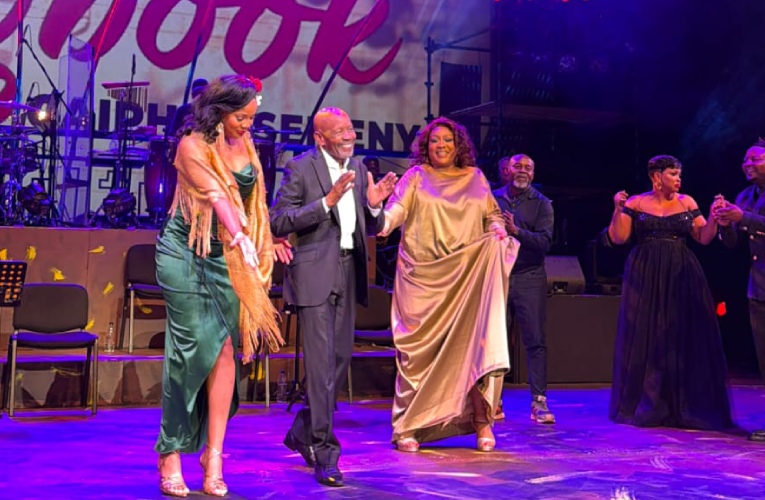
Anele Mdoda and her team walked out of the movie theatre in Monte Casino just before the screening of the movie Don’t Let’s Go to the Dogs Tonight began.
It was the premier of the movie which is written and directed by American-South African actress Embeth Davidtz. While Mdoda, Frankie Du Toit, Trevor Noah are all executive producers of the film. It features several South Africa stars like Zikhona Bali, Fumani Shilubana, Fezile Mpela and Rob Van Vuuren.
Whether the team left because they watched the movie many times or because she was also not sure what kind of reaction she was going to get. I guess we will never know.
Embeth Davidtz mentioned on the premier day that she has been sitting on the script for a while. Maybe that fact contributed to how the film was received, including yours truly. I find the movie having a thin storyline. After watching the film, you cannot stop feeling that the writer was sceptical especially when exploring certain characters.
But let me take you down the storyline. The story is based on Alexandra Fuller’s memoir of the same title, it appears to tackle the complex layers of colonial history, racial dynamics, and personal trauma through the lens of an 8-year-old child named Bobo (played by Lexi Venter). Set against the final days of the Zimbabwean War for independence which culminated with the election of Robert Mugabe, the film depicts the unravelling of a white family struggling with radical change. The audience’s favourite Bobo, a seven-year-old girl struggling to make sense of an environment in flux.
While perceived as foreigners by the locals, Bobo’s family believes they’re intrinsically linked to Africa. They have a large farm and are willing to protect it, particularly Bobo’s mom (Davidtz), who has children buried in the land. Sarah (played by Zikhona Bali) is a kind and loyal friend to Bobo and her family, even though her closeness to them puts her at risk of being seen as a collaborator.
Bobo is curious, observant, perseverant, and bright, though still a child who doesn’t fully grasp her family’s situation. Nicola Fuller struggles with profound grief, mental illness, and alcohol use disorder, making her an example of a parent in crisis.
Her personal connection to the story—growing up in apartheid-era South Africa—gives her an understanding of the complex intersection of innocence, inherited trauma, and the possibility of transformation. This dual perspective enriches the storytelling by combining an intimate character study with broader historical themes.
She pulled a great performance conveying adult themes, but it seems Venter’s portrayal brings depth and emotional honesty to the character. The coming-of-age arc, woven with grief, fractured family life, and race, promises to offer a raw look at a child’s struggle to make sense of an unjust world.
Fumani Shilubana, a familiar face on South African television and also in theatre, did a great job as much as his character was limited. It lacked depth just like that of Zikhona Bali and Rob Van Vuuren. Kudos to Embeth for taking on a complicated character of Nicola for amazingly bringing the character to life.
Both actors brought their experience with them when shooting the film and delivered.
The fact that the story is set during the Rhodesian Bush War, a tumultuous period that led to the birth of Zimbabwe, gives it an intimate perspective on a larger historical conflict.
One of the highlights about the film is great cinematography which is texted with grounded performances. It puts emphasis on the beautiful African landscape. The cinematography, points to the kind of textured, grounded performances that characterize some of the best African cinema. I can imagine the cinematography will emphasize the vast, often harsh African landscape, using it as a metaphor for the struggles of the characters.
The mix of languages, English and Shona, adds another layer of authenticity and cultural specificity, further connecting the film to its African roots. The language choices play a role in conveying the emotional and political tensions of the story.
In short, this film seems to promise a deeply personal and cinematic experience that addresses the colonial past but also speaks to themes of memory, healing, and the potential for change. But I’m still struggling with the courage to urge you to go watch it.