





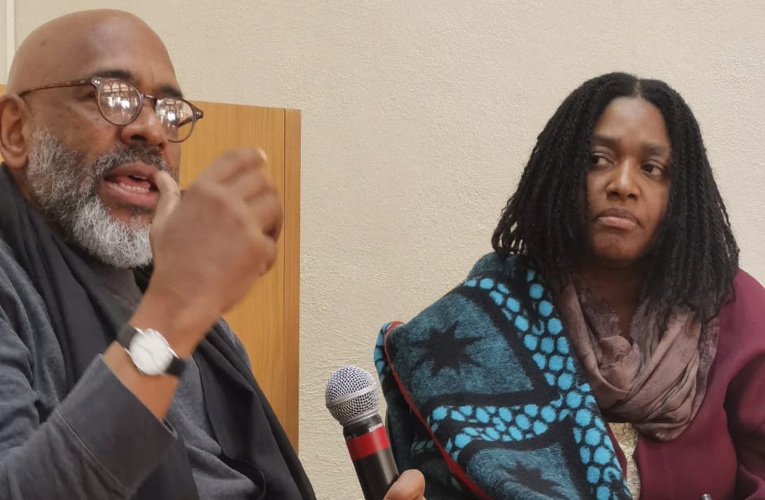
Professor David Scott tells of a humble Tale of Small Axe which has since become the leading intellectual and academic voice of the Caribbean
By Edward Tsumele, CITYLIFE/ARTS Editor
Professor David Scott, a visiting prominent Caribbean academic and intellectual who arrived in Johannesburg on Monday, August 4, 2025 to hold a workshop at Johannesburg Institute for Advanced Study at University of Johannesburg, titled The Art of Journal Work: Small Axe, said that when he started his seminal academic Journal Small Axe, some laughed the idea off and did not give the publication even two years to survive.
But not only did Small Axe survive as it is turning 30 next year, but it thrived. Today it is a leading intellectual and academic journal, not only in his native Jamaica, but the rest of the Caribbean, which is made up of the Anglophone, Spanish and Franco Caribbean, countries of the Black diaspora colonized by the West. This has inevitably resulted in a cultural diversity that has been formed as a result of this complicated history of colonialism and slavery, a legacy that complicates life.
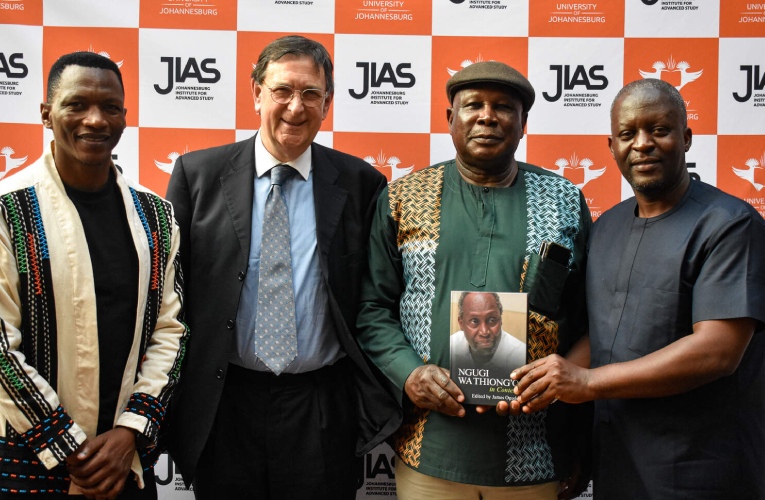
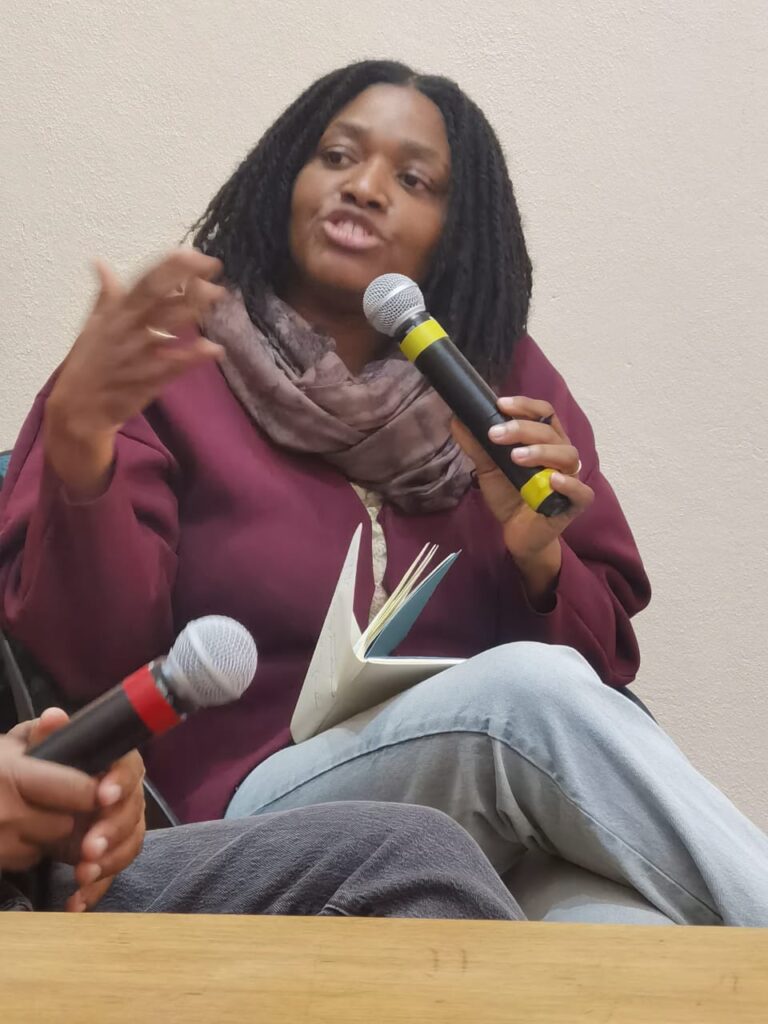
It is however in this context of competing cultural and epistemological traditions that Smax Axe was founded and thrived as a highly respected regional journal featuring leading intellectual voices, representing different, intergenerational intellectual perspectives of the Caribbean, Scott told those of us who attended a discussion between him and the Johannesburg Institute for Advanced Study (JIAS)’s Director Professor Victoria Collis-Buthelezi on Tuesday, August 5, 2025.
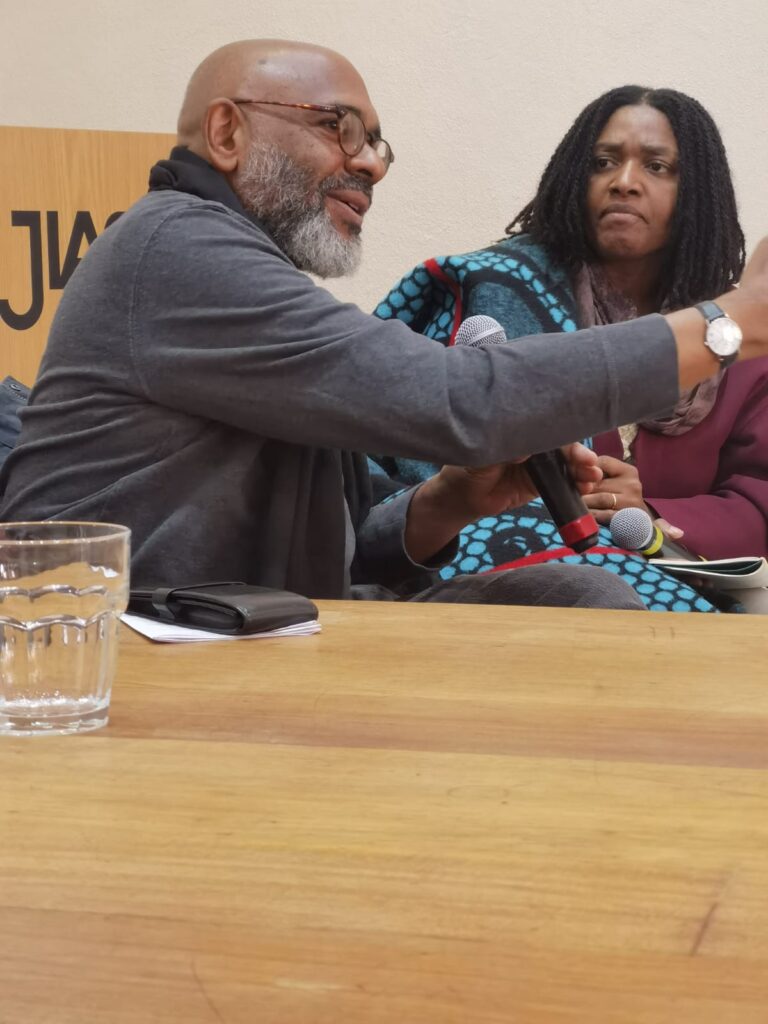
The discussion between the two scholars, both of whom locate their intellectual formation within the framework of Caribbean intellectual traditions, turned out to be an intellectually enriching, robust discussion, which resonated with the broad question of where South Africa’s own contemporary politics and sociology is located. Scott has been invited by JIAS to share the journey of Small Axe and its positionality within the tradition of more or less similar journals that have been previously published at different junctures during the evolution of intellectual growth within the Caribbean group of countries, post-freedom from colonialism.
These journals, which also became authoritative on the Caribbean intellectual thought of the time include New World Order representing dominant cultural and intellectual thought of a transitional period from colonialism to freedom in the Caribbean.
Small Axe features long form interviews in a form of academic essays, with leading intellectuals dominating thought at different stages of the complex history of the evolution of the Caribbean from colonialism to what the countries have become today. In a way it is a journal that speaks of the of now, however linking previous generations’ narratives to the current dominant ideas in the Caribbean cultural, political and intellectual life.
A peer-reviewed journal, the publication today stands out as authoritative on a wide range of Caribbean life, such as culture, politics, history and economics, relying for sustenance partly on its own revenue it generates through subscription for example.
“But because we have a number of people who work on the publication to ensure quality consistency, such as designers, proof readers and editors, this revenue is not enough to produce a journal of this quality. I therefore continuously apply for funding from other sources, such as American foundations, where we are also competing with others, for example, initiatives started by African Americans.
However today, Small Axe is a leading platform that prominent thinkers of today in the Caribbean, including post graduate students yearn their writing to be featured in, to elevate their academic standing in the hierarchy of the academy within the region and beyond.
Having launched the publication in 1996, Scott said, he had published long form interviews with leading cultural theorists, intellectuals and art figures from previous generations, to share their perspectives of their generation on a number of issues, with the aim to connect those generations with the generations that came after, such as Scott’s generation of the 70s and the 80s and the current one. This, at times, he said, creates an intergenerational tension, as for example certain vocabulary that dominated discourse in a different era is no longer part of the current generation’s vocabulary.
“For example, I came from a generation where the ideology of the Left was part of the dominant vocabulary, whereas for example prominent figures of the previous generation such as Loyd Best’s did not subscribe to the idea of ideology even, and so did Stuart Hall, who were born in the 1930s. When I first did an interview with Stuart Hall and Best, they did not know the concept of ideology,” Scott explained.
Lloyd Best is best known for the plantation model theory on which he worked with the Canadian economist Kari Levitt. The plantation model went beyond the plantation to touch on other aspects of the political economy of Caribbean societies.
Scott gave an example of the Ghana conflicts of the 1960s, which the generation of that time understood it to have happened in the context of ethnic conflict and not ideological differences, as Stuart’s generation would have understood the nature and cause of the conflict.
Among other leading cultural and intellectual voices of the past generation is dancer prominent Caribbean thinker Sylvia Wynter, who Scott says during the interview she did not come out as someone speaking about her generation and what would have defined the character of its intellectual life and narratives.
“Sylvia Wynter did not speak in the past, but instead spoke in the present,” Scott said.
Scott also revealed that his perspectives are not necessarily shared by everyone of his generation.
“That would be impossible as there is the question of class, even race and gender.
For example, after that interview with Sylvia Wynter, some people, particularly feminists were not happy as they argued that I did not push her much to speak about feminism. In fact, they argued that I was part of the problem of patriarchy as my views were regarded as conservative and therefore conserving patriarchy, a view I do not share,” he said.
Wynter is highly regarded in feminist intellectual circles especially for her ideas in the essay titled Theory of the Human and the Crisis School of Caribbean Heteromasculinity Studies published in Small Axe (2016).
“This essay traces the rise of the crisis school of Caribbean heteromasculinity studies through a critical reading across popular writing, policy research, and scholarly work on Caribbean masculinity. Mobilizing insights that Sylvia Wynter articulated in “Black Metamorphosis” and developed in later essays, it examines the circulation of knowledge on gender and sexuality emanating from the crisis school. Highlighting the points of convergence found in government-sponsored policy studies, academic scholarship, and the newspaper column of a men’s organization from Barbados, the essay reveals a particular investment in a specific way of being human and questions what such investments mean for black liberation, gender relations, and power/knowledge.”
When the discussion between the two intellectuals came to an end at lunch time, one person in the room was brave enough to ask a question, which I think was on everyone’s lips all along -the unusual name for a journal- Small Axe.
“The name is motivated by a Caribbean proverb that basically says when you are a big tree, I am a small axe that can cut a big tree. However, in today’s context of the current ecological degradation, it has since assumed a new meaning,” the professor said as he laughed, but, noting this coincidence of the rather serious looming ecological disaster due to climate change that continues to worry policy makers, activists and scientists around the world.
However, the publication with a humble beginning, that some did not give even two years to survived, has not only survived the prediction of its certain demise, but has become a leading voice of intellectual and academic thought of the Caribbean.
The Art of Journal Work: Small Axe at JIAS
The Johannesburg Institute for Advanced Study (JIAS) is pleased to announce a special
This workshop was indeed valuable event, especially useful to those in the academy who would want to explore the same path as that followed by the professor and launch a journal of the same quality and character.
Scott is Professor of Anthropology at Columbia University and the founding editor of
Small Axe. He is the director of the Small Axe Project and the author, most recently, of
Irreparable Evil: An Essay in Moral and Reparatory History.
The second half of the day featured a hands-on workshop with Professor Vanessa Pérez-
Rosario, author and managing editor of Small Axe. This session delved into the editorial and production processes behind the journal giving participants the opportunity to gain insight into the mechanics of journal work—from submission to publication—and explore the often-invisible labour that sustains a major intellectual project, inviting scholars, editors, students, and writers to think critically and practically about the life of a journal, its conceptual scaffolding, and the collaborative work that goes into sustaining it.
Unfortunately for me I could not attend this second half as I had to rush to another appointment.
.Prof. David Scott will have another presentation this Thursday at JIAS, August 7, 2025. jiasinfo@uj.ac.za