

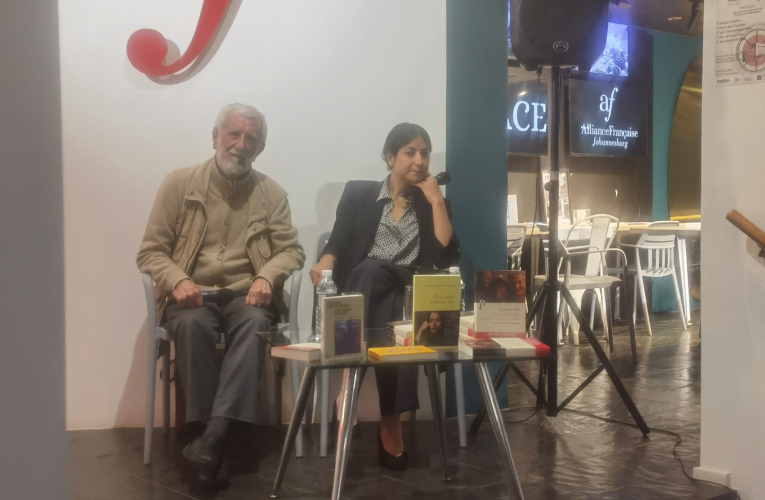
Writers Georges Lory and Daphnée Breytenbach discuss the complexity of translation and the life and times of anti-Apartheid rebel poet Breytenbach Breytenbach
By Edward Tsumele, CITYLIFE/ARTS Editor
Stop for a moment and imagine a novel that you have read recently and enjoyed so much because it is in English, a language you have learned and even mastered, so much so that you even start to recognise the power of language. Even better, the written word in that language.,
But, if you are lucky to have read widely, you may have encountered text in your literary journey, text of a novel that has been translated from another language, and for the purpose of this discussion, its text originally existing in for example French, Spanish or even German, but still enjoyed it.
In fact, that is the reality of a lot of the world’s literatures and their encounters with many readers. The reality though is that these literatures have another life besides and beyond the language in which they are originally written. In fact, I suspect from my own experience of having read, particularly world literatures, whose original language was in other languages, for example, Spanish, Portuguese etc, that some literatures, especially in the fiction genre, are better rendered in the translated version than the original language in which they are written. A lot of times. Not always. Granted.
This effect, that is falling in love with translated text, on you as the reader, can only happen, if the translation is good. Sometimes, so good that it is better than the original. You see, translation does not necessarily mean the translation of the meaning of a word literally. For example, translating a word for word. That is dangerous, if you asked me. You see, language does not exist in a vacuum. It exists within a broad framework of the society which lays claim to that language, including its nuances and contemporary culture and identity prevailing at a particular time and moment in that society.
It is for this reason that on Monday, May 18, 2026, I honoured an invitation to attend an event titled Translating, Writing, Transmitting: Circulations and Legacies in South African Literature with Georges Lory and Daphnée Breytenbach atAlliance Française in Parkwood, Johannesburg, where translation was the subject under discussion. Both Georges and Daphnée are journalists.
I went there curious to hear what master translator Georges Lory and first time novelist and broadcast journalist DaphnéeBreytenbach were going to say about this important subject of translation.
The two writers prevailed. Lory explained how the art of translation is a complex art form that requires one to go beyond translation, and understand deeply the nuances of the original language, particularly the message the original text writer wanted to convey.
“The best way for me to achieve this is to be close to the source language. Try to get to understand what message the writer is trying to convey. I know that some translators never want to speak to the author when they are translating. However, with me, I sometimes send authors questions relating to the text. They never always answer in a straight-forward manner, but in their answers, I get to see what they actually meant,” he said.
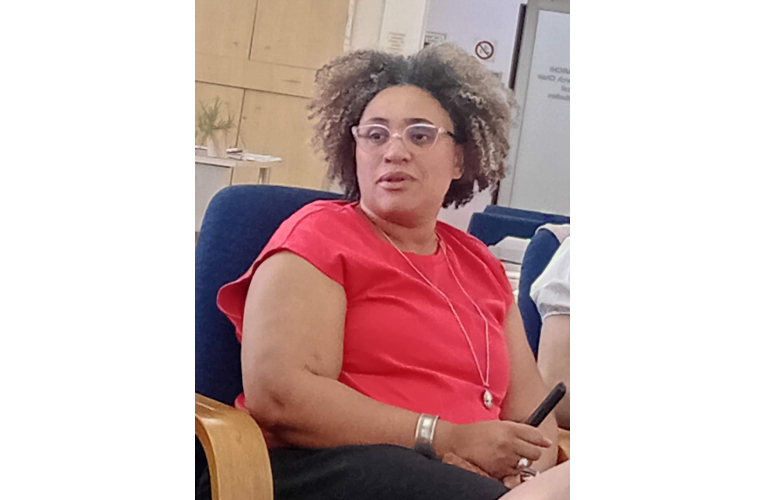
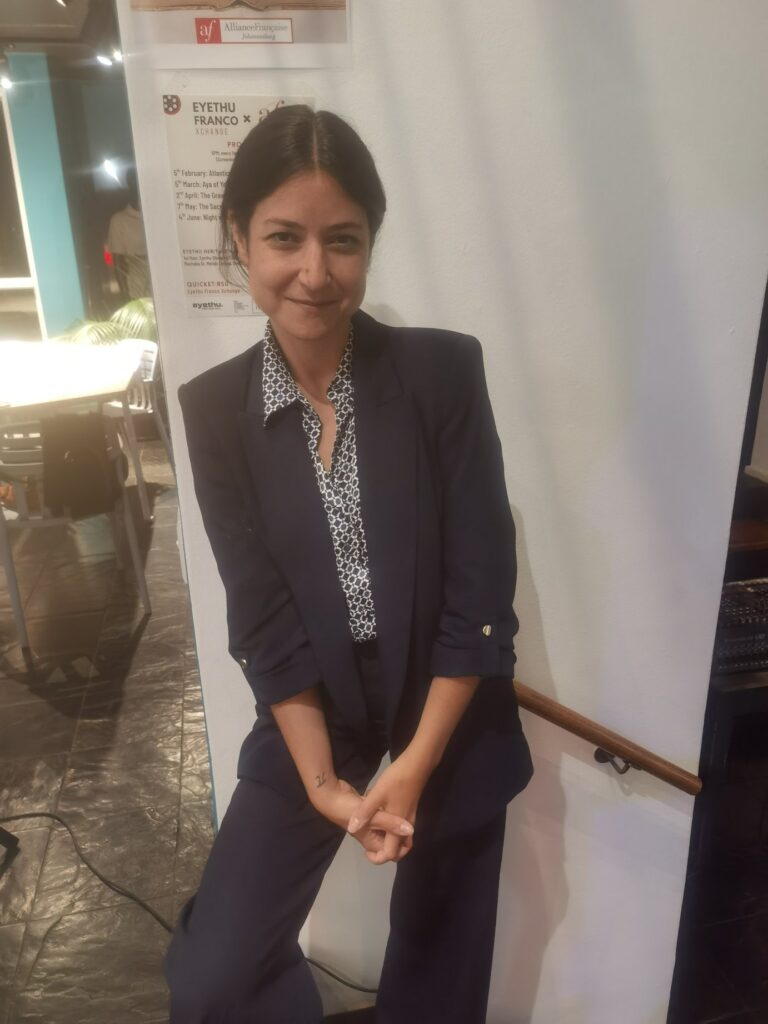
For Breytenbach, if you think the name sounds familiar in South African literature, particularly, the rebellious type of literature that gave the Apartheid architects and followers a hard time, you are not lost. She is the daughter of none other than, the late rebel poet and anti-Apartheid Afrikaaner intellectual Breytenbach Breytenbach. Based in Paris where her full time job is that of a broadcast journalist, she seems to have the literary streak of the elder Breytenbach Breytenbach running through her veins. She has just published her debut novel that is in French, and one hopes that it will be one day, translated into Afrikaans and English, the two languages her father published is works in in his life time. (She is the rebel literary legend’s only daughter born in France).
Daphnéetold the audience how she walked the streets of Paris with her father and how he told her stories about Africa.
“Beytenbach had a brother Jan, who was the direct opposite of him, among the five children in the family. Jan was a soldier and very religious. My father was the direct opposite of him,” she said.
Off the stage and in conversation with CITYLIFE/ARTS, Daphnée admitted that she did not know much about Johannesburg, and is curious to explore more about the city, as whenever she is in South Africa, she is normally in Cape Town where her South African family is.
“I would like to know more about Johannesburg someday. Unfortunately, I am leaving for Parys on Thursday,” she said.
Georges and Daphnée are in South African as part of the French Institute of South Africa-French South African Literature Conversation Tour.