

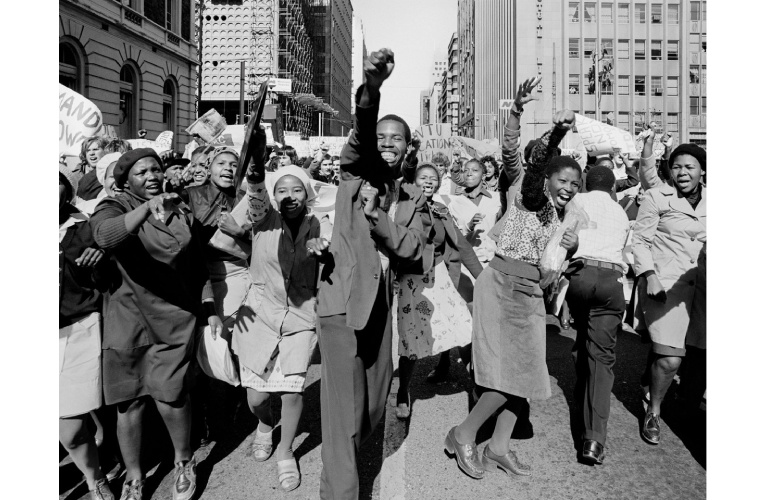
The current exhibition 1976 at 50 at Wits Art Museum adds new knowledge about June 16
White society then reacted to the Soweto student protests differently, as represented by the responses of Wits and Rau students at the time, and new images showing the extent of the impact of the uprising have emerged and are on display, as well as a documentary film.
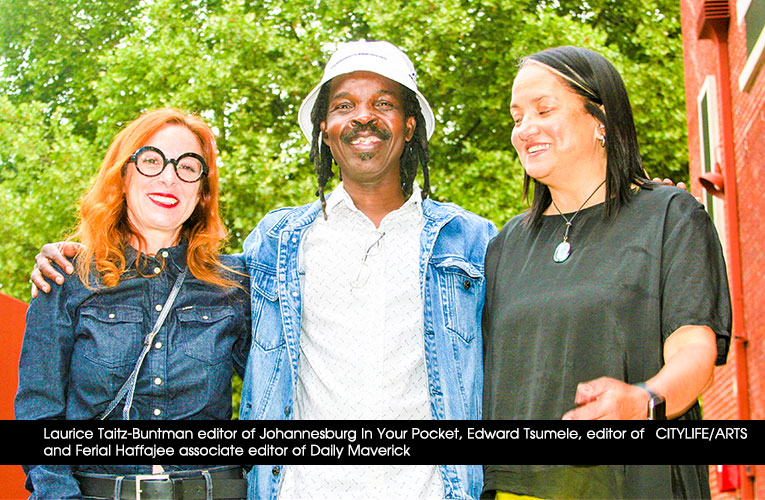
By Edward Tsumele, CITYLIFE/ARTS Editor
What struck me when I went to the opening of this exhibition at Wits Art Museum, are two things: In the first instance, the images are not what we have seen before abou June 16. Having been depicted differently previously by several photographers who were on the ground when the June 16 Uprisings took place in Soweto in 1976.
The second thing is how white society reacted differently to the protest as represented by the reaction to the protest by students from two universities in Johannesburg –Rand Afrikaans University and the University of the Witwatersrand.
But for now, let us look back a little bit and reflect on one particular image that symbolically has come to represent the events on that fateful day in Soweto throughout the world, particularly in June every year.
Of course, we by, now, all know for example the iconic photograph that has done its rounds around the world, and continues to do so today, 50 years later, of an injured and helpless Hector Pieterson being carried by a terror struck, but brave student activist Mbuyisa Makhubu. That iconic photograph was taken by the late Sam Nzima, which has etched his name in history as an important photographer in the struggle against Apartheid.
That photograph is so defining and so iconic to Nzima’s career as a newspaper photographer that people have not imagined the possibility of the existence of other photographs taken by other photographers during those protests that defined a new direction for the struggle against oppression, when the youth of 1976, students, said enough was enough about the forced introduction of Afrikaans as a language of instruction at black schools. That is how powerful that image is in representing the tragedy of June 16, 1976.
The reality though, is that other images, taken by other photographers active during that time, also exist, but somehow, their role in creating a narrative of the Student Uprisings, was somehow, eclipsed by that iconic image created by Nzima.
It is in this context that the exhibition titled 1976 at 50 offers additional perspectives to the extensive existing visual imagining of the Soweto uprisings. Silent Witness, a short film
by independent South African filmmaker Kevin Harris is created from his archival footage and testimonies and is structured through historical interviews with people who witnessed the devastating events of 16 June 1976. In this film, which is part of this exhibition, you will hear testimonies of several figures, such as the late jazz vocalist Sibongile Khumalo, the late photographer Peter Magubane, the late political activist Winnie Madikizela-Mandela, businessman Murphy Morobe and others speak about the June 16.
Then the other component is Wits 76, a substantial photo essay by cinematographer Paul Laufer, who was the Chief Photographer in1976 for Wits Student newspaper, and includes images of schools in Soweto taken for a newspaper assignment in late May 1976, and photographs taken a few weeks later in Braamfontein of Wits students protesting in support of the Soweto school students.
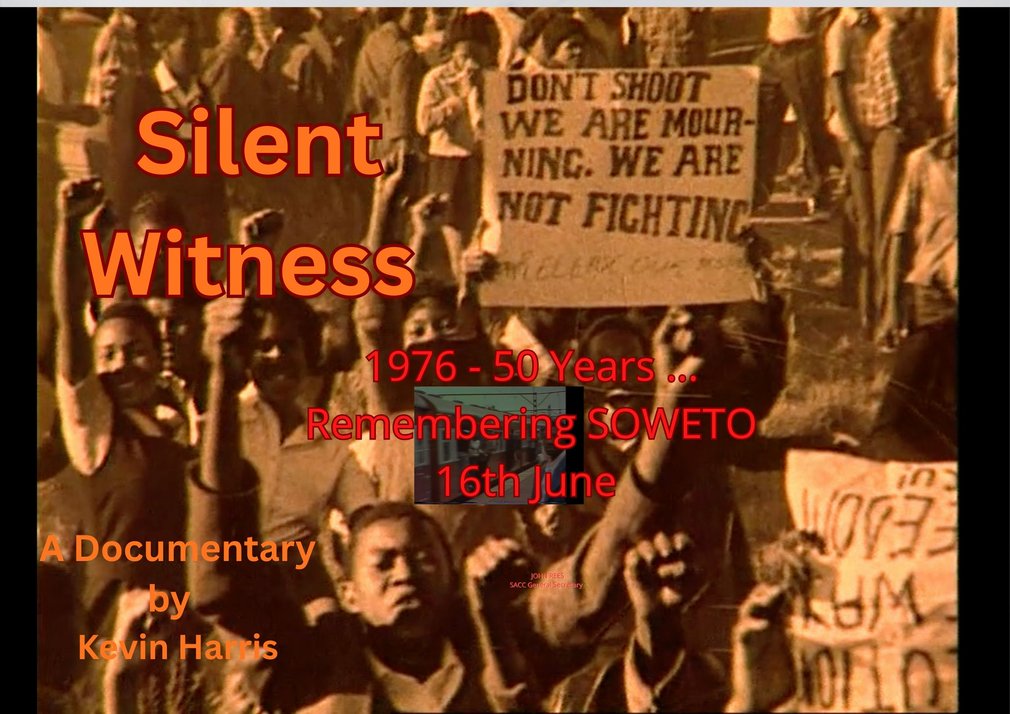
Since the advent of democracy in South Africa in 1994, South Africa has commemorated 16 June annually as Youth Day, in recognition of the vital role played by students as an active force in the destruction of apartheid.
Therefore 1976 at 50, which, opened at Wits on Tuesday, 19, May, 2026, must be read as another addition to the knowledge that is in the public domain about the role of photography and film in documenting the uprisings in 1976. The images are not competing for attention with that iconic image by Nzima, but showing the extent that the impact of the uprising has had far much beyond Soweto, to the rest of society in other towns, provinces and even Ivory Towers like universities.
Wits students of the time in particular, privileged as they were, also took a stand, protesting in solidarity in solidarity with the protesting learners of Soweto. They did so on campus, where the Apartheid police tried to suppress such solidarity protests.
That aspect of the extension of the Soweto Uprising into liberal corridors of the liberal academy, is what is well captured in this exhibition. Therefore, this exhibition serves the purpose of demonstrating how the Soweto Student Uprising was not only confined to Soweto, but spread wide, including in privileged spaces like ivory towers, especially universities like Wits. This is a story that has not been told enough before.
But, there is also a twist to this story that in many respects, demonstrates the fractured state of white society of the time.
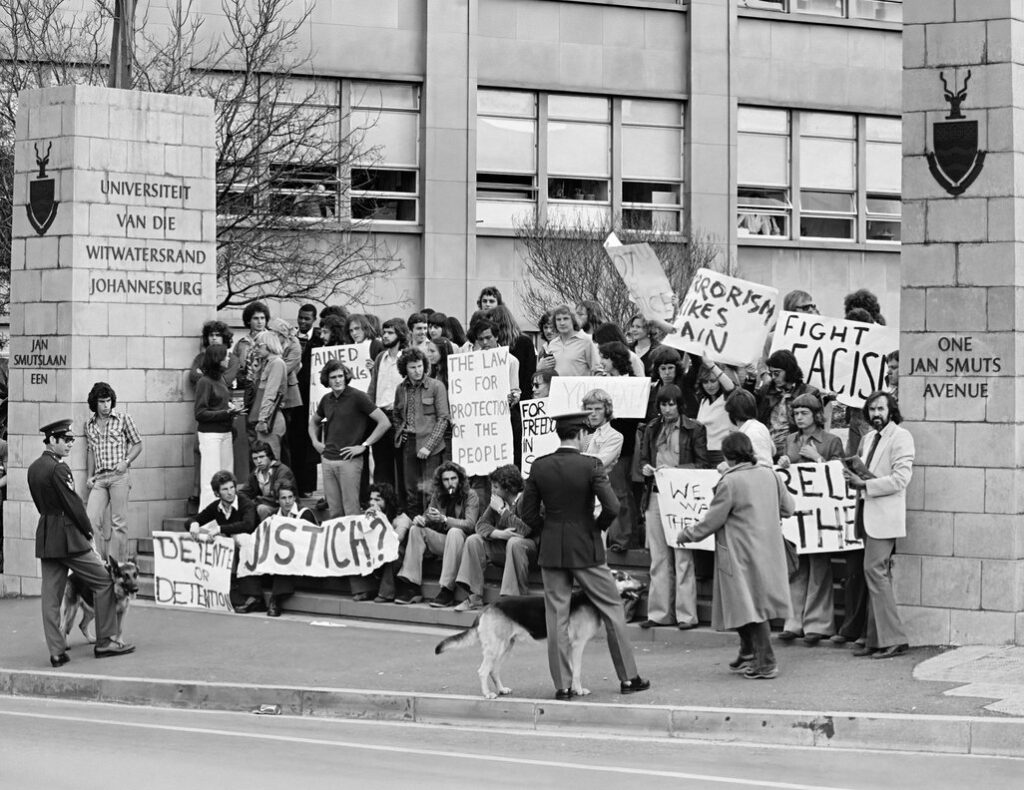
For example, in this same exhibition, there are also images of students from the Rand Afrikaans University then, now redesigned and named University of Johannesburg in post-Apartheid South Africa, which show students from that university protesting against protesting students from Wits. Their protest was however planned and encouraged by the police, to create a counter protest meant to invalidate that of that of the Wits students. Speak of the divide and rule principle at play here. It is therefore, significant to note that these protesting students, protesting against each other most likely held different ideological positions on the issue, with Rau students most probably being conservative and pro establishment, and the Wits students on the other, coming from a liberal tradition, and being left of the centre. The Apartheid authorities, therefore, must have exploited and magnified these differences in the student body to advance their motives.
However, viewing these photographs, and noting the division among the student body of the time, a claim that these student dynamics prevailing at the time inadvertently played into the hands of the police, would not be a far-fetched proposition.
In many ways, this assists the viewer in understanding the impact of the Soweto Student uprising in white society of the time, and that is that opinion, was divided in that society over the protests.
Therefore, this exhibition adds a new perspective into the Soweto student protests of June 16, 1976, which in a big way, changed the trajectory of the struggle for freedom, with students playing a leading role for the first time in agitating for change in the country.
It is therefore, significant that as the country marks the 50th anniversary of June 16, new unexplored photographic archive and documentary narrative of this event has been made available to the public through this exhibition.
Contemporary South Africa’s understanding of the impact of June 16, 1976, beyond Soweto, can only be enriched.
So, what this exhibition does is to make all of us reflect critically on the events of June 16, 1976, and gauge to what that event contributed to the democracy that the country enjoys today.
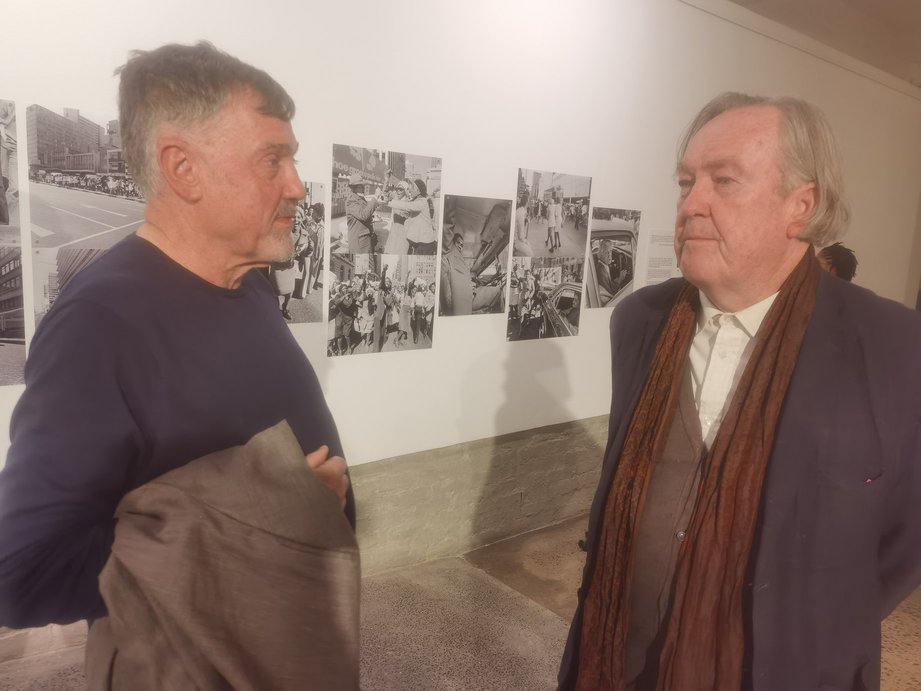
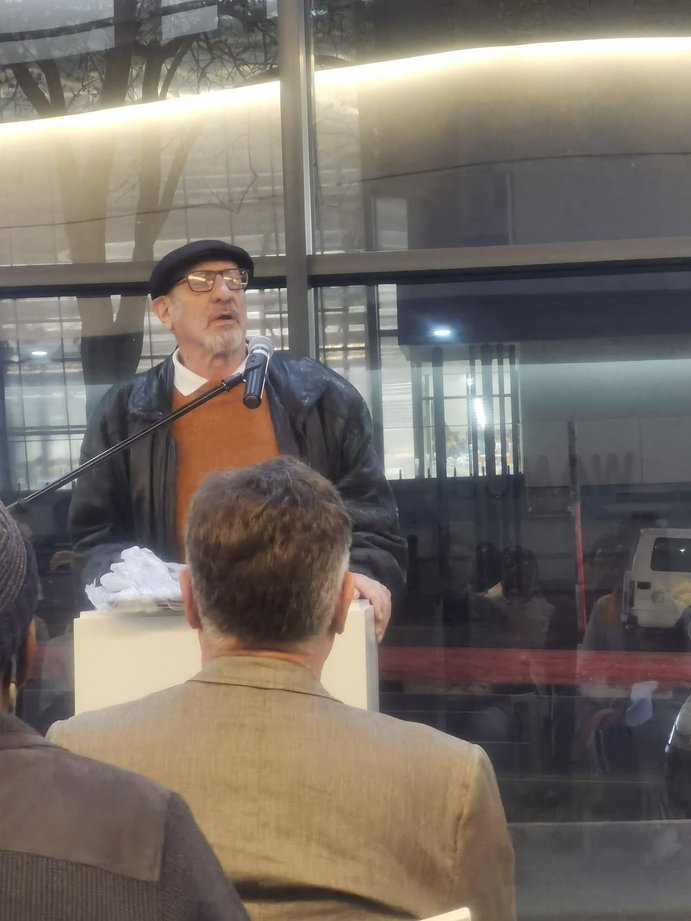
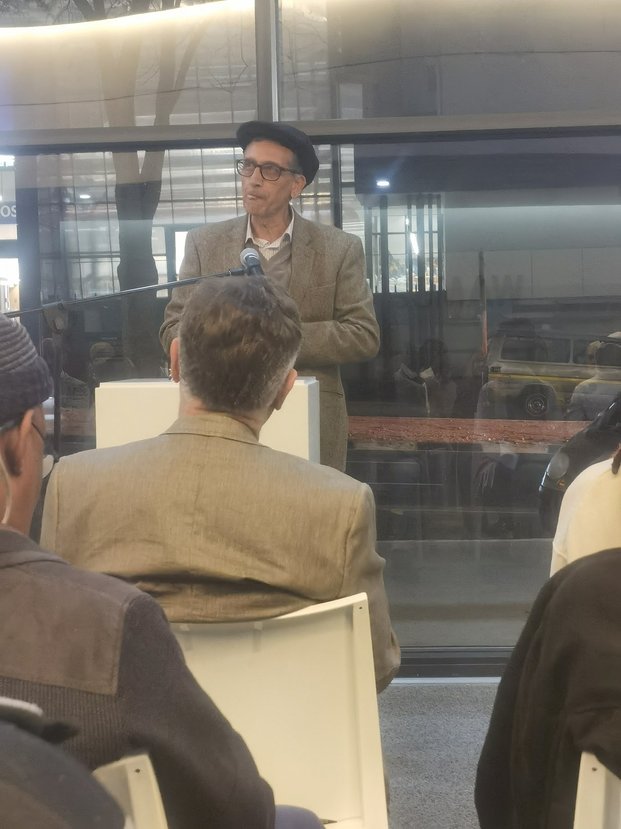
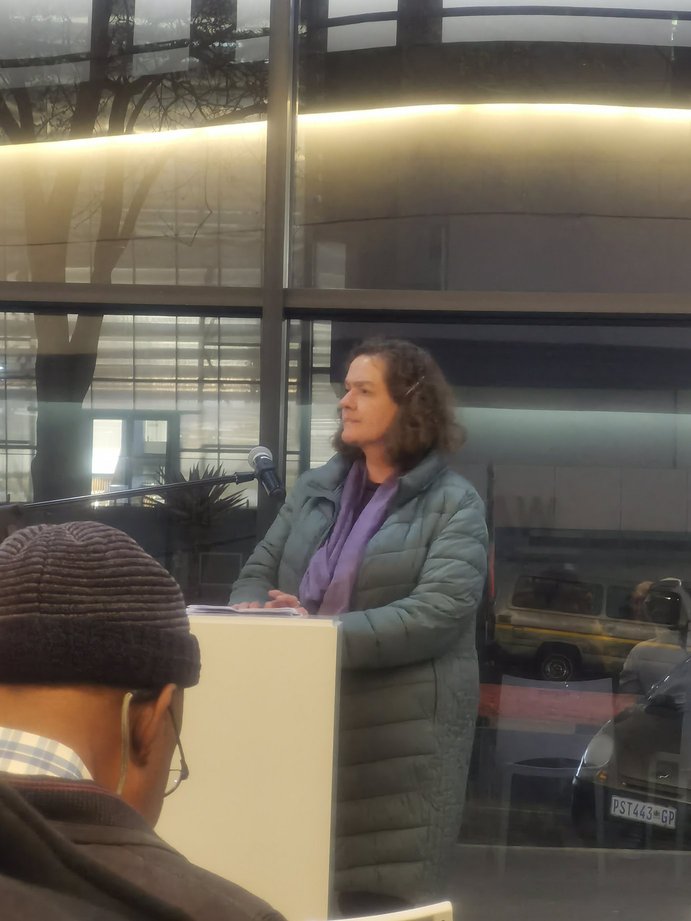
.Both the photographer Paul Laufer and the documentary filmmaker Kevin Harris attended the opening of the exhibition. Professor Yunus Ballim spoke about how as an engineering student at Wits in the 1970s it was difficult for him and fellow black students in his engineering class to fit in. Julia Charlton of Wits Art Museum curated the exhibition. 1976 at 50 runs from May 19 to June 20, 2026. Museum hours are Tuesday to Saturday from 10am.