


Alfred Thoba, the suit dressed artist who remained seized by township life and the erosion of traditional African values
By Natalie Knight
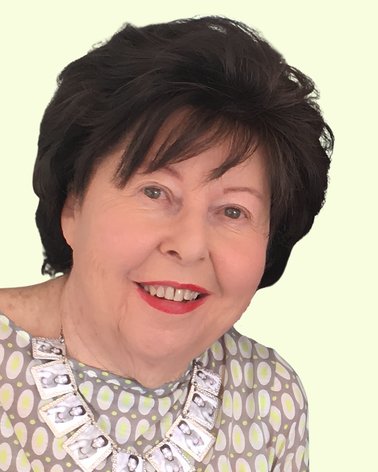
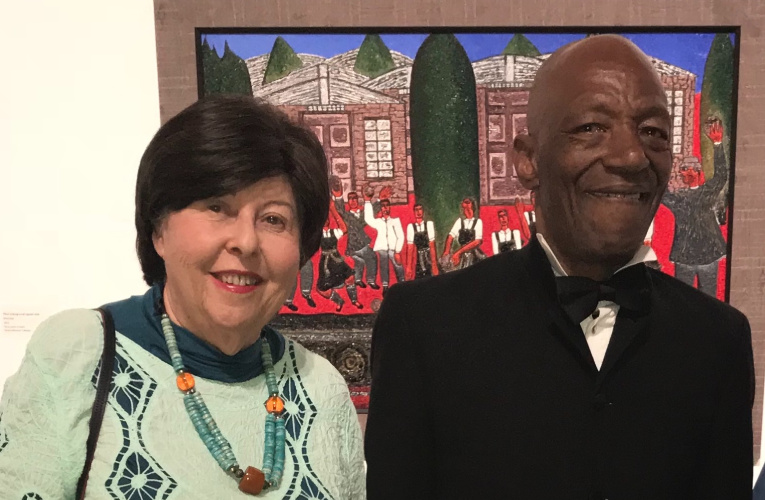
It was 1987 when I first saw Alfred Thoba, (1951– 2022) a mendicant hawker holding up a powerful, ugly work of art at the exit of the Market Theatre in Johannesburg. My husband Zamie and I had just seen Sarafina — a protest play by black schoolchildren from Soweto against the barbarity of the police and ruling power.
I gave Alfred my card — Natalie Knight Gallery, For the Appreciation of Art — and invited him to bring his work to my gallery in the Hyde Park Corner Shopping Centre.
It was an unequal relationship. I knew that from the moment I met him.
I was 49, a gallerist and theatre critic, a white woman in a position of power and privilege. He was an angry, very talented 36-year-old Zulu artist.
Alfred had lived in the black township of Soweto but moved frequently. At that time he was living illegally in a garage in a whites-only area called Yeoville — what he called “The screp yard.” He worked by the light of a paraffin lamp and tried to syphon electricity from the owner’s home until he was caught.
Many black artists at that time struggled to find money for materials, some using plastic bags, discarded cardboard and found objects. Alfred Thoba refused to compromise. He insisted on new canvas, hardboard and tubes of rich oil paint, applied thickly and liberally.
South Africa in the mid-eighties was a desperate time. The architects of apartheid were being challenged by world opinion and a rising wave of rage in the townships. People were executed for treason, jails were full of political offenders, and opposition was being silenced.
Thoba was already on the police radar after a work was exhibited in 1988 at the Market Theatre show 100 Artists Protest Detention without Trial. His large, dominantly blood-red painting, 1976 Riots, was inspired by Sam Nzima’s photograph of Hector Pieterson, the twelve-year-old boy shot by police during the Soweto uprising.
Thoba had received no formal art training. His first exposure to art came through his grandfather, who made clay pots. He shapes his figures in a stylized, stiff manner with no regard for perspective. He learned some technique at the Bill Ainslee studio, but did not respond well to instruction.
“I am a born artist, Miss Natalie,” he told me. “I don’t need anyone to tell me what to do.”
He always arrived unannounced at my gallery, well dressed and scrubbed — formal black suit and waistcoat, clean white shirt and bow tie, exuding a faint smell of paraffin and smoke. No paint-stained jeans for him. He was tall and dark, with a large forehead in a long oval face. Alfred rarely smiled, and when he did it was with closed lips. Once, in an unguarded moment, I glimpsed teeth like grey and white tombstones in a dark cavernous space.
With a mixture of bravado and anxiety he would lope through the brass entrance of my gallery, a bubble-wrapped work under his arm. He examined the Hockneys and Warhols on the walls and told me his prices should be in the same range. The problem was that his work was not readily saleable and his demands were becoming untenable.
I included his work in several group shows and, in 1989, in African Encounters with twelve other artists at the Dome Gallery, New York. His work did not sell. I submitted his portfolio to the Pollock-Krasner Foundation and applied for a grant — they declined, though another artist in my stable, Thomas Kgope, received $7,000.
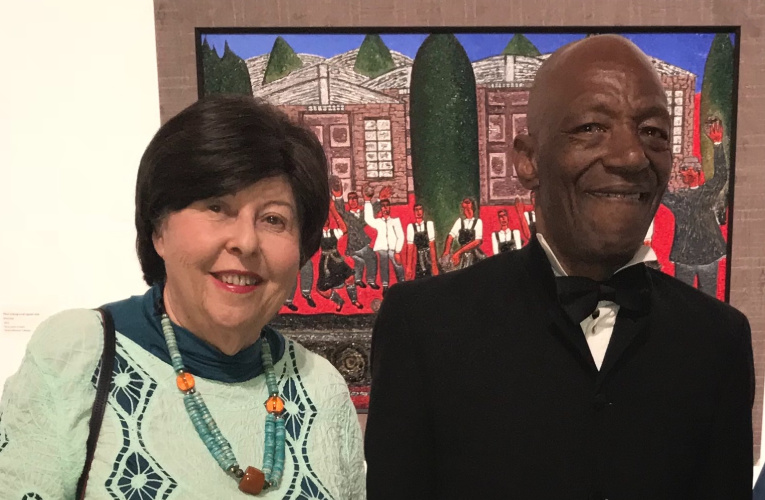
My belief in Thoba never wavered. I exhibited his work in New York, Washington, Chicago, Toronto and Germany. To keep him afloat I lent him money against future works, but he spent faster than he painted. He could not repay me and I found myself obliged to buy paintings at prices too high for the market. The themes — raw, confrontational — were not suited to the lounges of my clients, so I placed his work in national museums and major corporate collections and sought publicity wherever I could find it. His one-man show Sex and Suburbia (1991) attracted the interest of South African Playboy. His iconic 1976 Riots appeared on the cover of Sue Williamson’s Resistance Art in South Africa. He was nominated for the prestigious Vita Art Now Awards in both 1992 and 1994. He did not win.
Over the years we developed a rapport and he shared aspects of his personal life — a first wife’s betrayal, recorded in paint; a son with no interest in his father or his art. His works are deeply personal, expressing his views on sexual identity, immoral behaviour, racism and social injustice.
Then, in 1990, everything shifted. Nelson Mandela was released from prison. The country held its breath — would there be a bloodbath, between black and white, or between the Xhosa and Zulu? Miraculously, Mandela averted violence, forgave his enemies and set about creating a rainbow nation. Like all rainbows, it was beautiful — and ephemeral.
In 1994 Mandela became President. Euphoria engulfed the country.
Thoba responded with a major work: Thank You Mr. FW de Klerk for Handing Over South Africa to Nelson Mandela, Your Kindness is so Handy (oil on board, 123 x 190 cm, 1996).
When I closed the Hyde Park Gallery to start an art consultancy, Thoba was furious. He painted The Message: “help ANC Natalie is closing gallery I must ate.”(sic)
The work was later acquired by Sasol and used on its 2010 calendar.
In post-apartheid South Africa, Thoba remained moved by township life and the erosion of traditional African values. His work grew more aggressive. He began working with other dealers and commanding higher prices. After one successful show he was flush with cash and attracted a young woman intent on marrying a wealthy older man. He spent extravagantly — jewellery, clothes, lobola — then faced heavy lawyers’ bills for the subsequent divorce.
Despite this, he started calling me again. When I refused to help, he turned to Zamie, whom he always repaid and even brought a Christmas present. But word reached me that he was saying damaging things about me because I would no longer buy his work.
Reluctantly, Zamie and I took him to lunch. He was friendly, denied any hostility, and greeted us with a full-frontal smile — he had acquired a complete set of dentures. When his chicken arrived he surreptitiously removed the false teeth, pocketed them, and proceeded to eat. Then, as expected, he pleaded poverty. I agreed to buy one large work for a Mandela show.
Over the years I had organised exhibitions marking milestones in Mandela’s life — from Mandela@90 at the Constitutional Court in 2008 to We Love Mandela at the South African Embassy in Trafalgar Square in 2013, months before his death. Every artist on that London show heaped praise on Mandela — except Alfred Thoba. His work was titled Nelson Mandela Did Not Recognize the Constitution During Those Years 1994, 1995, 1996.
The show was a great success. Among its highlights was an interview I gave live on the BBC, during which I recalled the day Mandela had walked into the Natalie Knight Gallery in 1993.
Professor Rory Bester, Head of History of Art and Heritage at Wits, then began work on a book documenting Thoba’s art. I provided my records and the original letters attached to each work.
Together we discussed a one-man show at the Wits Art Museum to coincide with the launch. Senior Curator Julia Charlton and the committee agreed. The show titled A Step becomes a Statement opened on 13March 2018 — a day before my eightieth birthday.
Thoba has been compared to Van Gogh in intensity of emotion. Unlike Van Gogh, he has survived — and kept both ears. He has an uncanny ability to paint trees that seem to become living forms, lungs or a heart. He can express longing, create a sombre mood, convey horror. His work reflects his desire for love and family, his revulsion at apartheid’s violence, and his disgust at what he saw as the corruption of post-apartheid South Africa. He is inarticulate, ungrammatical, and spells phonetically — none of which stopped him writing long, passionate letters that sometimes bear no relation to the paintings they accompanied.
Alfred’s works are multifaceted and the topics were not a recipe for commercial success.They will, however, be remembered for their honesty and their historic details of apartheid in South Africa and Alfred’s views on the Constitution. Because of the intensity of his technique he painted relatively few paintings. The main themes can be remembered as Love, Protest , Religion and Mandela
I watched him walk around his WAM exhibition — proud, vindicated. His paintings were realising extraordinary prices. 1976 Riots, estimated at between R150,000 and R250,000, sold at auction for just under one million rand.
The story should end there. But this is not a fairy tale.
Sweetness, his young fiancée, dies. Thoba is distraught and suspicious — he believes she was poisoned. Her mother demands he pay maintenance for her child by a former lover, and offers him her second daughter in marriage. He declines: this one has four children. He wants to fly to Cape Town for the funeral.
Will I lend him the money?
Of course I lent him the money. We were not in touch for a long time after that. Covid-19 came and went. Zamie got ill and passed away. And then I heard that Alfred had died – under terrible circumstances. He had died alone in his flat abandoned by those he loved and supported and his body was only discovered days afterwards. It was a sad and tragic death and an end to a life of great creativity and pain.