






Social scientist Pearl Sithole explains why women academic researchers are oftenfound at the bottom of rankings
Prof. Sithole was giving a key note address at Johannesburg Institute for Advanced Study during the launch of the Women’s Month Seminar series, featuring historian and Winnie-Madikizela- Mandela biographer ZikhonaValela.
By Edward Tsumele, CITYLIFE/ARTS Editor
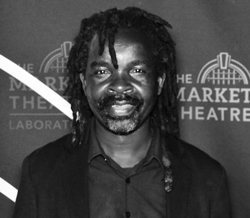
Main Picture: Prof. Siphiwo Mahala and Prof. Pearl Sithole
Social scientists in South Africa face several challenges when it comes to their research output, which are very good in diagnosing problems, but slow in prognosis. But even then, a lot of research tends to use quantitative the method, instead of qualitative method, and therefore missing on capturing critical elements that are important in social research.
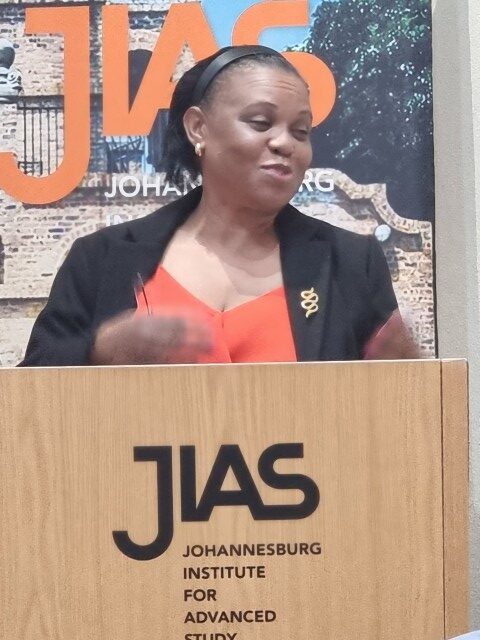
These views were shared by Prof.Pearl Sithole, the CEO of the National Institute for Social and Human sciences, a social science institute that carries out research under the auspices of the Department of Higher Education and Training (DHET).
The social scientist was giving a key note address at Johannesburg Institute for Advanced Study (JIAS), affiliated to University of Johannesburg, on Thursday, 6 March, 2026. Sithole spoke after being introduced by JIAS’s acting director Prof. SiphiwoMahala, whose introduction was preceded by opening remarks by Prof. Victoria Graham. Graham spoke broadly about gist of a series of seminars that will take places at JIAS, celebrating and marking August Women’s Month in the coming days.
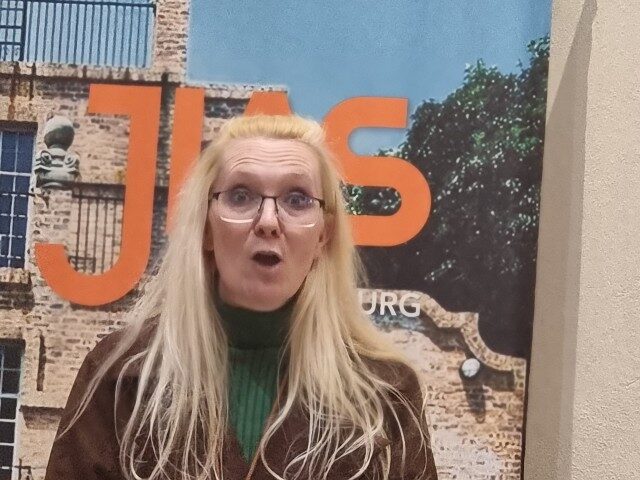
The inaugural seminar hosted writer, historian and biographer ZikhonaValela, who is currently writing the biography of the late struggle hero and activist Winnie Madikizela-Mandela, who would have turned 90 this year.
“At the NIHSS, we sit with a discomfort. That discomfort is the fact that social science research that researchers produce, is good in diagnosis. In fact, it is so good, that it gets better each year. The problem though, is that when it comes to prognosis. There is a need to close the gap between theory and practice,” Sithole said.
She went further to explain that there is also complication when it comes to the expectations of those who hold the key to resources, their agenda and the agenda of the researchers.
“Sometimes, those with the resources, not only provide the resources, but also propose the methodology. And so, what has happened is that in the social sciences, an area that attracts a multi discipline approach borrowing from other sciences, there tends to be a leaning towards using the methodology of quantitative research, when in actual fact, qualitative research would be more suitable,” she explained.
As a result of that, certain nuances are not captured in the research result, she explained. And because of that, measurement instruments employed, do not always produce a result that shows impact.
“The reason why qualitative research is left out, is because it will ask questions such as why. For example, asking women affected by embedded regimes that sustain social inequality in both academia and corporate. Instead, quantitative research will produce a result that relates to numbers.” she explained.
Sithole bemoaned the fact that women in academia are predominantly found in administration roles as opposed to substantive roles in research areas.
“As women academics, we often find the women’s struggle at the bottom when it comes to rankings mainly based on the number of publications in academic journals. Every year, we produce diagnosis when it comes to Gender Based Violence, we even repeat ourselves. What we do not do though, is to recognise Gender Based Violence elsewhere. There is also professional Gender Based Violence hidden somewhere,” Sithole said.
Sithole went on to identify some of the difficulties women researchers in academia experience. Such as raising families, alongside carrying out their research duties, whereas men researchers do not have to worry about that ‘’unpaid work,” work, and therefore, their research output is consequently more than that of women academics.
“Even when it comes to the issue decoloniality, guess who knocks on the door of coloniality –it is men knocking to be allowed in. At that moment, they forget about women,” she said.
After Sithole’s presentation, the stage was open for the presenter of the moment, Valela, whom Mahala introduced as the biographer of Winnie MadikizelaMamndela. The title of her presentation was Nomadabi: Winnie Madikizela –Mandela –a figure Forged in Struggle.
At this stage, it will be improper to say too much about this upcoming book, other than to say, Zikhona delves deep into who Winnie is, tracingthe genesis of her political activism to her rural village in Eastern Cape, way before she met Mandela in Johannesburg. The historian and writer has done a substantial amount of work in digging who Winnie is, looking at her apart from the influence and role of Mandela in her life.
From what she has shared with the audience for the one hour she stood on that podium, this book promises not only to redefine who Winnie was a a woman, but the genesis of her politics.
AlthoughZikhona held back from saying a lot for example, about the circumstances under which Winnie met Mandela, and who eventually became her husband, there seems to be a lot of titbits that readers may find amusing, if not revealing about that encounter. But for now, let us wait for the book, which she worked on as a research fellow at JIAS, to be published.