

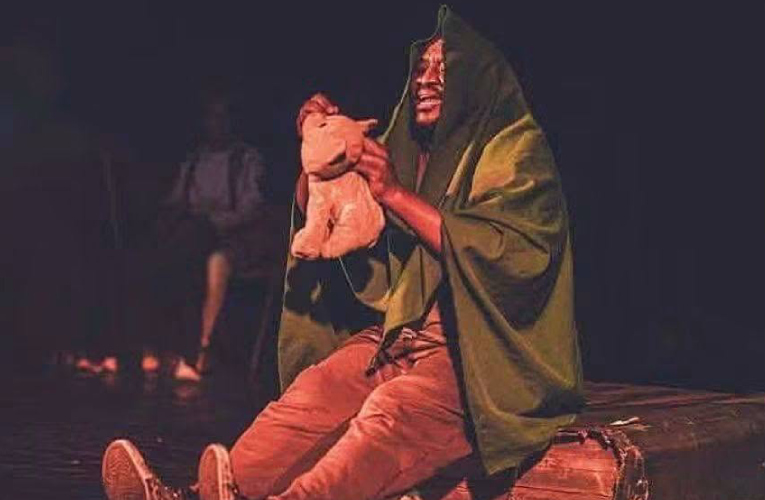
Words & Nightmares: The stories we bury are ventilated in this powerful play
Sandton Theatre on the Square | One-man play by Seiphemo Motswiri
By Sandille Memela
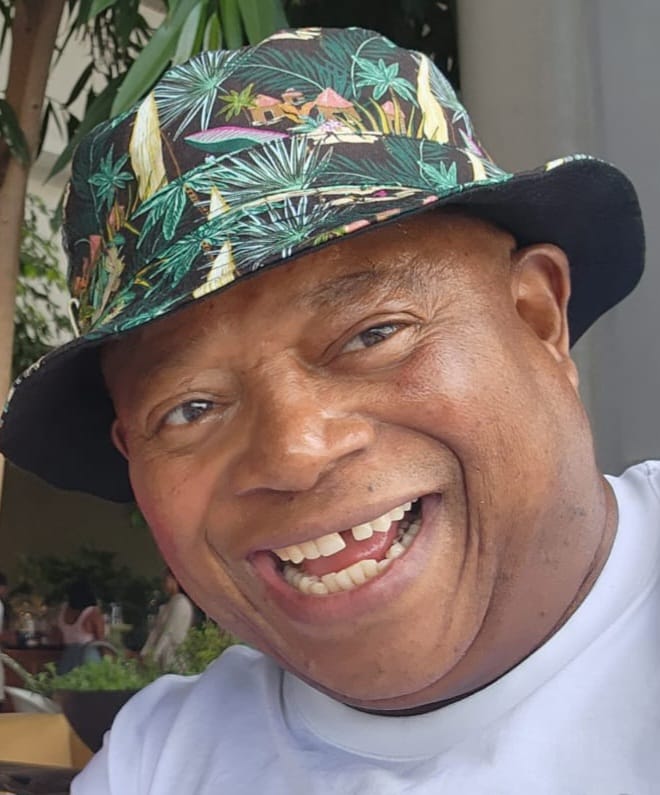
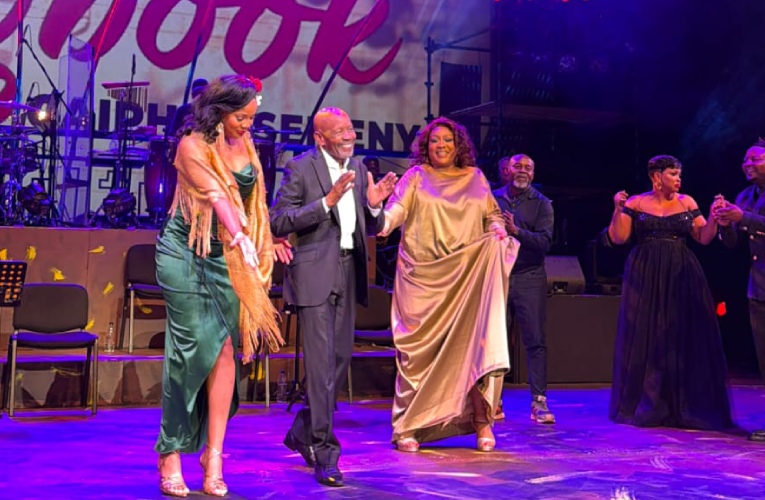
Just about two dozen people in the audience at the last show on Sunday. Good decision that Daphne Kuhn did not cancel due to poor turn-out.
At the end of Words & Nightmares, playwright and actor Seiphemo Motswiri turns to us, the audience that is largely ruled by self-interest and fear and asks a single, searing question: “Whose stories do you bury?”
He does not mean it rhetorically. He hands the mic to someone in the crowd and asks them to read, out loud, the definition of genocide. The room goes still. That is the point. To speak the word is to refuse to bury it.
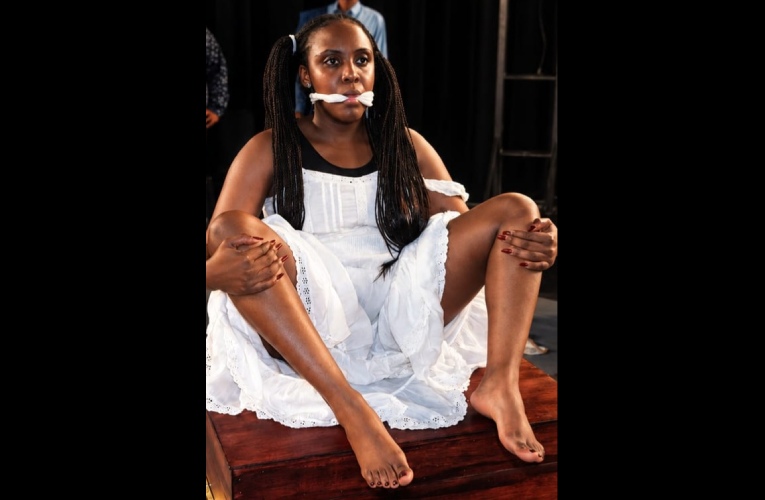
For 70 minutes, on a sparse set, Motswiri takes us around the world without ever leaving the stage. What begins as a meditation on war quickly becomes something closer to home: an indictment of our silence, and a plea for truth-telling as an act of survival.
The correspondent as conduit
Through the eyes of Rapulana Mokgosi, a globetrotting African news correspondent, we are dragged to the coalface of human brutality. Rapulana is not a hero. He is a witness who is breaking.
Part of his soul, he tells us, dies every time a woman or child dies in the crossfire. The question that haunts him — and us — is simple and unbearable: How do you stay sane if you witness evil and do not tell the stories of the dead? How do you let their souls rest if no one speaks truth to power?
The play makes this tension immediate through his editor. The newsroom does not want people stories about human suffering. It wants geopolitics. “Focus on the machinery of war,” the editor demands. “Ignore the human pain.”
That order lands with a thud because we all live it. We look the other way. Every day we are asked to choose between self-interest and truth. Between what sells and what is right. Between looking away and looking directly.
Motswiri uses three global flashpoints to trace that choice.
Rwanda: When neighbours become killers
The first stop is Rwanda. Through Rapulana’s reporting we meet a young boy whose innocence is shattered by the 1994 genocide.
Hutus turn on Tutsis. A family friend, “Uncle Cooper,” becomes an executioner. The boy watches his parents murdered, then is forced to jump over bodies in the street. To survive, he abandons his wounded sister. Later, he too picks up the gun and turned into a killer himself.
The details are delivered without spectacle. A mbira wails. A book is opened, closed, stirred. Two children play in the corner of the stage, and their game curdles into something else.

Rapulana becomes haunted by this story. He tells us he has become a conduit — the dead speak through him because no one else will. These are voices that haunt his soul. When he seeks shelter and safety, even the UN cars abandon him. The message is blunt: when the world looks away, ordinary people are left to become monsters or victims.
UKRAINE: THE COLOUR OF A REFUGEE
From Rwanda we cut to Kyiv, where Rapulana meets Okonkwo, a Nigerian expatriate. Okonkwo has fallen in love with Kateryna at a club — a love that crosses continent and race. Then Russia invades.
What follows is not just war, but hierarchy. They are forced to flee their flat. At the bunker, at the bus station, at the Polish border gate, they are told to “go to the back” because they are African.
“People are always running for their lives,” Rapulana narrates, “but not all lives are allowed to run equally.”
Okonkwo becomes an activist by necessity, leading other African students to the border. They seek shelter. NATO issues statements. The editor wants analysis of troop movements. Rapulana wants to publish the stories of “these people.”
Here Motswiri introduces a chilling phrase: the genocide of the mind. This is where people are bombarded with untruths, lies and propaganda until they stop seeing other humans as human. When truth is buried, he argues, it does not disappear. It explodes.
He defies his bosses who want sales over substance. He traces how war always lands hardest on children, no matter the flag.
Gaza: Friendship under fire
The final thread is Gaza, told largely through the eyes of a child. The through-line is consistent: the impact of war on women and children.
We hear of Ayisha and Amina, friends whose bond survived previous wars until October 7 changed everything. Houses are destroyed by missiles. A hospital is surrounded by soldiers. Amina is killed.
Rapulana’s bosses censor the piece. “Too sensitive,” they say. He tells it anyway.
Words & wounds carry the nightmares, he says. And we, the audience, are implicated. We are indifferent because we are not affected. Nobody wants the truth if it ruins dinner.

The thread that pulls us home
Somewhere past the midpoint, the global story snaps back to South Africa. That is Motswiri’s art. He introduces the theme so gently — through Rwanda, Ukraine, Gaza — that by the time he turns the mirror on us, we cannot look away.
The play asks: when good men and women keep silent, what grows? Answer: evil.
It asks: whose stories are we suppressing right now, in our own communities, newsrooms, and families?
It is uncomfortable theatre. It should be. There are no comfortable seats. The set is bare. The sound design is spare — mbira, wailing, the turning of pages, the sound of children playing that becomes something else. The acting carries everything. Motswiri shifts between correspondent, editor, child, soldier, and survivor with a precision that never feels like mimicry. It feels like bearing witness.
Why this matters now
Words & Nightmares is not about war “over there.” It is about the pattern that replicates itself every hour, every day, everywhere. The way race, power, and fear are used to turn people against each other everywhere — in Rwanda, in Ukraine, in Palestine, and yes, in South Africa.
The editor who wants geopolitics over people? We know him.
The audience that prefers silence? That is us.
The impulse to bury stories because they are inconvenient? That is the habit Motswiri is trying to break.
The play’s power is in its refusal to let us be spectators. By handing the pen to an audience member, asking an audience member to read the definition of genocide, by ending with “Whose stories do you bury?”, Motswiri makes silence a choice with consequences.
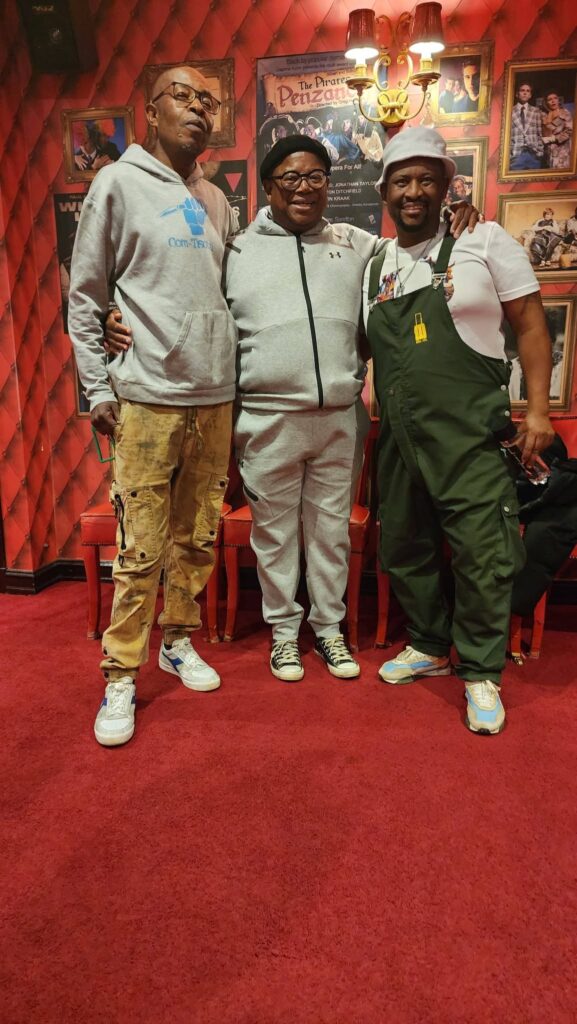
Take away
In just over an hour, Words & Nightmares travels to three war zones and lands in one truth: brutality is global, but so is the responsibility to speak.
It is heavily intense. It will leave you raw. But it is also necessary. In a media landscape obsessed with machinery and metrics, Motswiri insists on people. On women and children. On the cost that does not make the headline.
The final image stays with you: a correspondent who refuses to let the dead be buried twice — first by violence, then by silence.
As you leave the Theatre on the Square, the question follows you out:
Whose stories are you burying?
And more importantly: what will you do about it?