
A new book celebrating the literary output of the late African literary icon Ngũgĩ wa Thiong’o, launched in Johannesburg
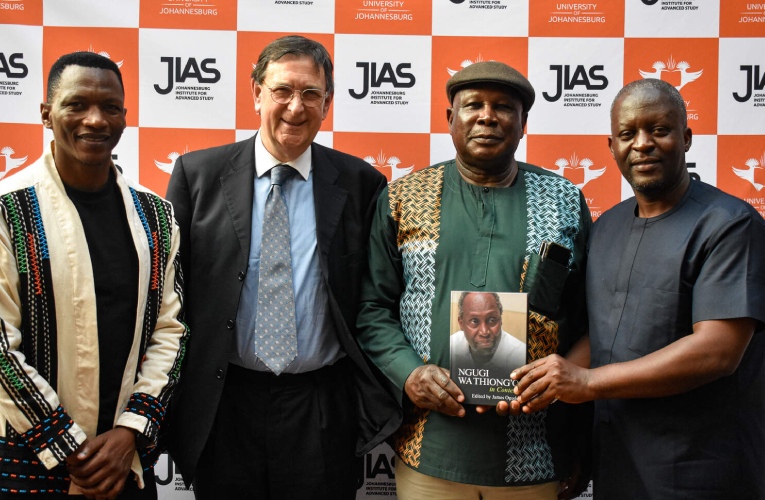
Launched at the Johannesburg Institute for Advanced Study on Thursday, 17 September, 2026, accompanied by a powerful lecture by Professor Simon Gikandi and a screening of an insightful documentary made by Professor Ndirangu Wachanga, Ngũgĩ wa Thiong’o in Context offers a compelling and comprehensive reading of the various contexts pivotal to Ngũgĩ wa Thiong’o’s practice as a writer.
By Edward Tsumele, CITYLIFE/ARTS Editor
Pictures: Courtesy of JIAS
It was one of the rate occasions where some of the best intellectual minds came together to celebrate the launch of a book about a leading intellectual and writer the late Prof Ngũgĩ wa Thiong’o, whose literary legacy is one of the most celebrated on the African continent and its diaspora.
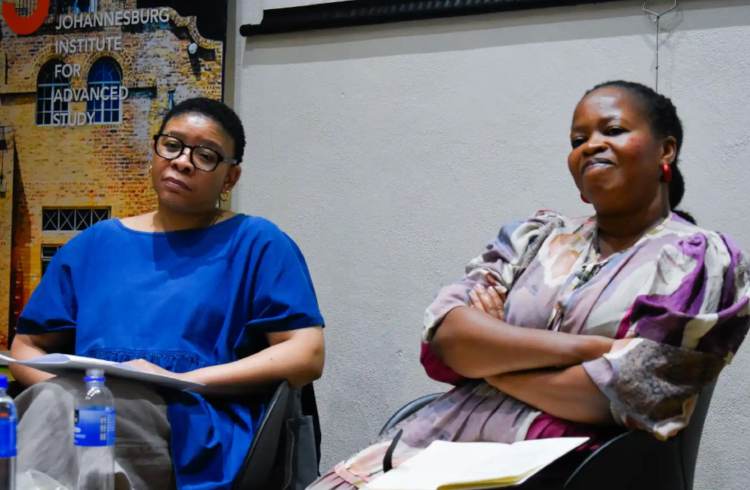
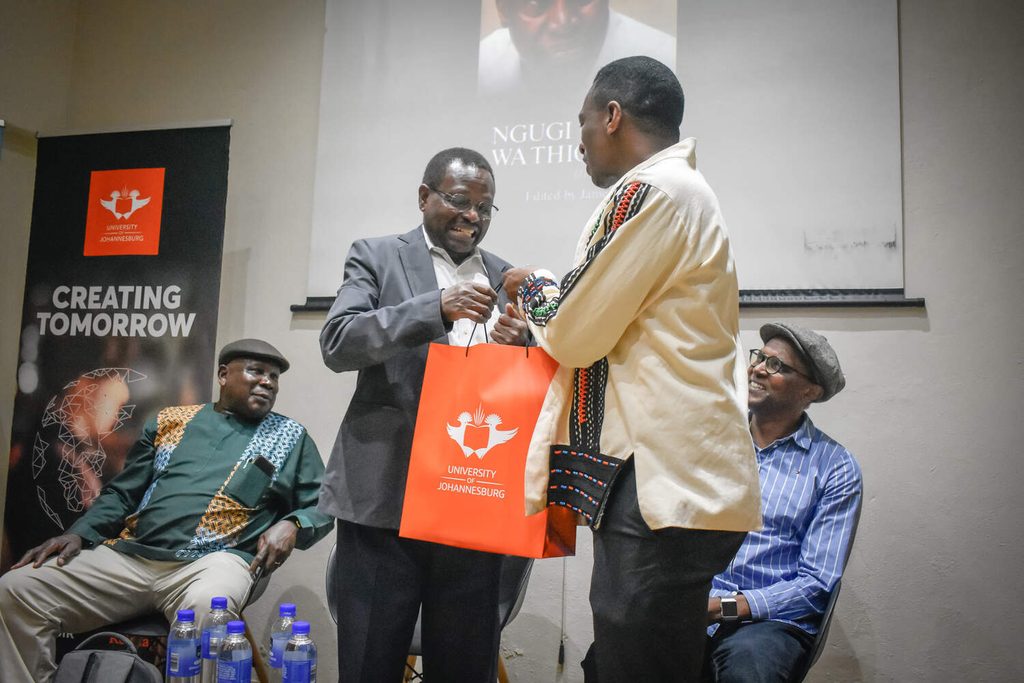
Held at the Johannesburg Institute for Advanced Study in Westdene, affiliated to the University of Johannesburg on Thursday, evening, 17, September, 2026, the audience, small in number, but actively engaged in the conversation, especially the keynote address eloquently delivered by Professor Simon Gikandi, one of the leading literary scholars from the African continent. The book is edited by Professor James Ogunde.
He is a heavyweight when it comes to African literary scholarship and its role in transforming societies. The three academics were introduced by JIAS’s acting Director Professor Siphiwo Mahala.
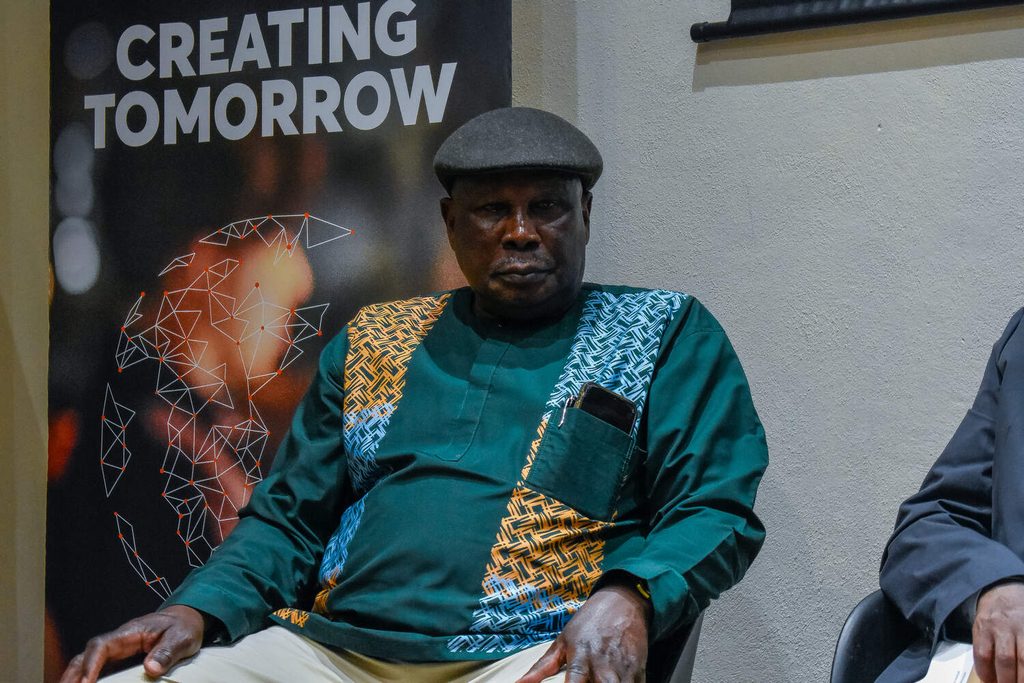
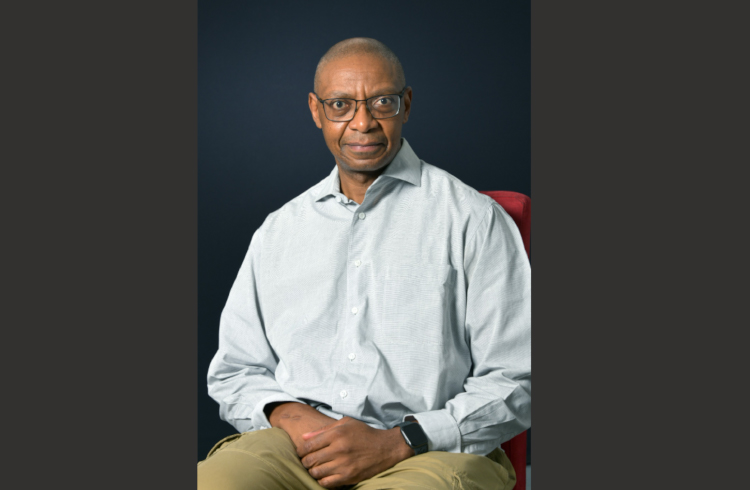
Gikandi is the Class of 1943 University Professor of English and Chair of the English Department at Princeton University. He is also affiliated with the Departments of Comparative Literature and African American Studies and the Program in African Studies. His major fields of research and teaching include the Anglophone literatures and cultures of Africa, India, the Caribbean and postcolonial Britain; literary and critical theory; the Black Atlantic and African diaspora; and the English novel.
Gikandi presented a powerful lecture on African intellectualism, its rise and fall, as some of the best brains left the continent, heading to the US and the UK, where they landed top positions at prestigious universities. This brain drain, the professor explained, happened in the 1970s, at a time when African countries were gaining their freedom from the yoke of colonialism.
The “expatriating” of this African knowledge, has therefore, left a huge gap in African scholarship, which African universities till this day, are struggling to fill.
Instead, Non-Governmental Organisations (NGOS) from mainly the West came in to fill that gap with knowledge of a certain type, aimed at meeting their own priorities that did not always necessarily align with what African societies needed. For example, instead of investing in institutions of higher learning such as university education, the focus was on primary education.
“I have nothing against the NGOs, and a lot of them actually do good work in Africa. It is just that they have their own priorities of where to invest,” Gikandi pointed out.
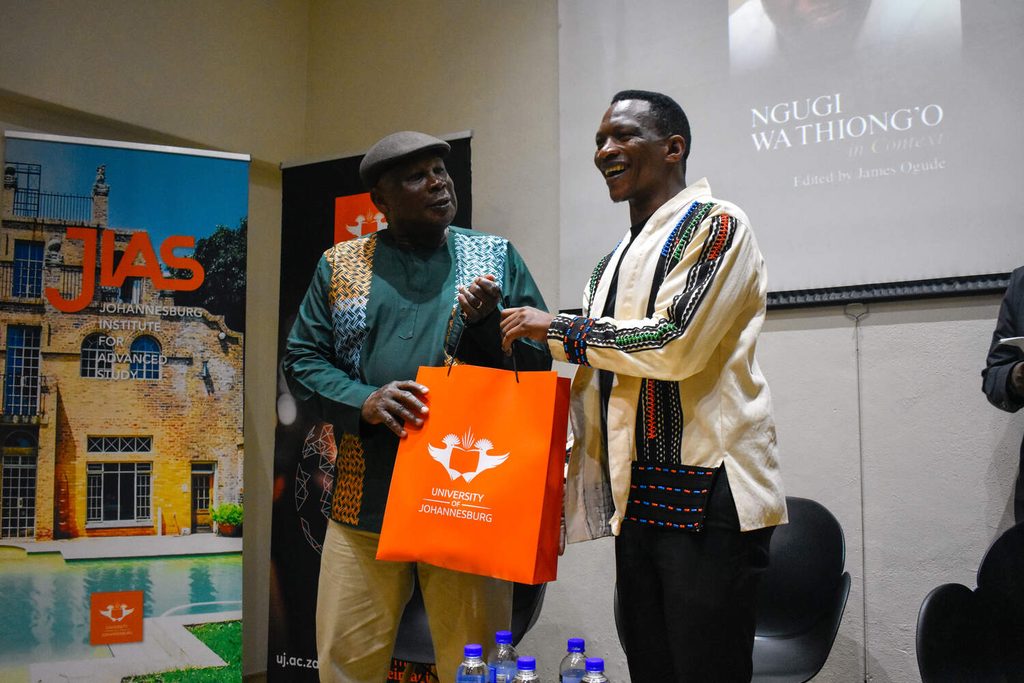
The professor also drew a distinction between theories that emanate from the Global North, and those from the global South, and the role these theories play out on the market of knowledge production in Africa.
He also sketched his close relationship with the late Ngũgĩ wa Thiong’o, who passed on in May, 2025, dating back to the time when a publishing company in Kenya, an affiliate of a giant London based publishing company, hired him to edit manuscripts, preparing them for publication, including those of Ngũgĩ wa Thiong’o, that he had started to write in his Kikuyu language, after dishing English for his original native Kikuyu as a way of decolonising the mind, that he has since become famous for world wide.
“I was young after studying English at the university, and here I was to edit the book of a literary giant. I therefore, worked closely with him, just to make sure. But I edited Ngũgĩ’s books in the manner and fashion I edited the other books written in English,” he said.
Their relationship grew over the years from there, even as both in their separate ways, left Africa to work for institutions of higher learning in the US.
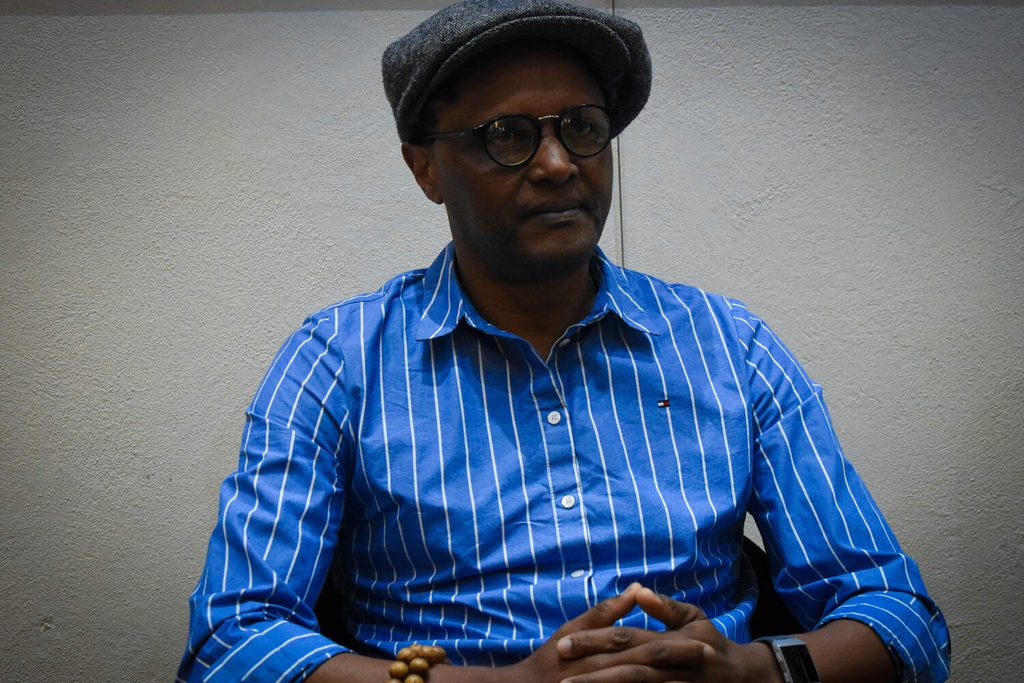
Gikandi’s lecture was preceded by the screening of an insightful documentary film about the humble birth of wa Thiong’o in a rural Kenyan village, before becoming the leading voice of African literature. The documentary, which featured what must rate as the biggest number of leading African and African diaspora literary figures, including Wole Soyinka, Angela Davis, and Ali Mazrui, among others, was created by another top African scholar Prof Ndirangu Wachanga.
He is respected for having easy access to powerful writers from the African continent and its diaspora. For example, among others, he produced the authorised documentary biography of Wole Soyinka, Ngũgĩ wa Thiong’o, Ali Mazrui, Micere Mugo, Willy Mutunga, Abdilatif Abdalla and Henry Chakava.
His documentary, Ali Mazrui: A Walking Triple Heritage, won the 2015 New York African Studies Book Award. His work has been screened at Harvard, Yale, Princeton, Cornell, Rutgers, the London School of Economics and the School of Oriental and African Studies.
About the Book
NgũgĩwaThiong’o in Context offers a compelling and comprehensive reading of the various contexts pivotal to Ngũgĩ wa Thiong’o’s practice as a writer. Ngũgĩ drew a complex link between his role as a writer and the contexts within which his works were produced. The desire to come to terms with the past and the shifting historical processes in his country is evident throughout his work.
The volume shows that, for a writer whose work is steeped in biographical experiences and historical events, context is especially significant. It must be recovered through imagination and reimagined as part of Ngũgĩ’s self-writing. One of the volume’s aims is to challenge the notion of context as a fixed site of retrieval and self-evident knowledge. It also considers how this understanding of context offers readers new and disruptive ways of interpreting Ngũgĩ’s vital writings.
About the EditorProfessor James Ogude is a Professor and Senior Research Fellow at the Centre for the Advancement of Scholarship at the University of Pretoria, where he served as Director from 2017 to 2024. He is an “A”-rated researcher by the National Research Foundation of South Africa (NRF), in recognition of his research leadership and international standing.