



80 years of freedom, one enduring cultural Festival
How India Day became South Africa’s largest celebration of Indian culture — and why 2026 is its most meaningful year yet.India Day 2026 takes place on Sunday 16 August at Sandown High School, Sandton. Entry is free and open to all.
By CityLife Arts Writer
The morning after India turns 80, Johannesburg will celebrate. On Sunday 16 August 2026 — one day after the 80th anniversary of India’s independence from British rule — more than 10,000 South Africans will gather at Sandown High School in Sandton for India Day, the country’s largest annual celebration of Indian culture. They will come for the food, the music, the dance, the colour and the community. But this year, whether they know it or not, they will also come for something older and more profound: the story of a freedom that shaped the world.
It is a story that belongs to South Africa too. India gained independence on 15 August 1947. South Africa’s own long walk — through formal legal sovereignty in 1934 to the final dismantling of apartheid in 1994 — was one that India watched, supported and inspired. The two nations have been bound together for generations by a shared history of resistance, solidarity and mutual inspiration. On 16 August, that history becomes a party. And everyone is invited.
The festival built on bridge
Manish Gupta, President of India Club South Africa and one of the key driving team behind India Day, is not a man who uses grand language easily. When he describes what the festival has become, he reaches instead for something simpler and more durable: connection.
“Our initiative was to connect the Indian community expat and local to each other and to their roots, and to act as a bridge,” he says. “We are extremely proud to say that we have successfully done it.”
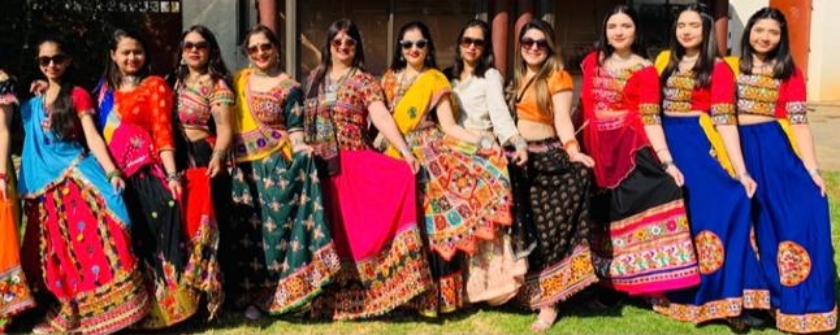
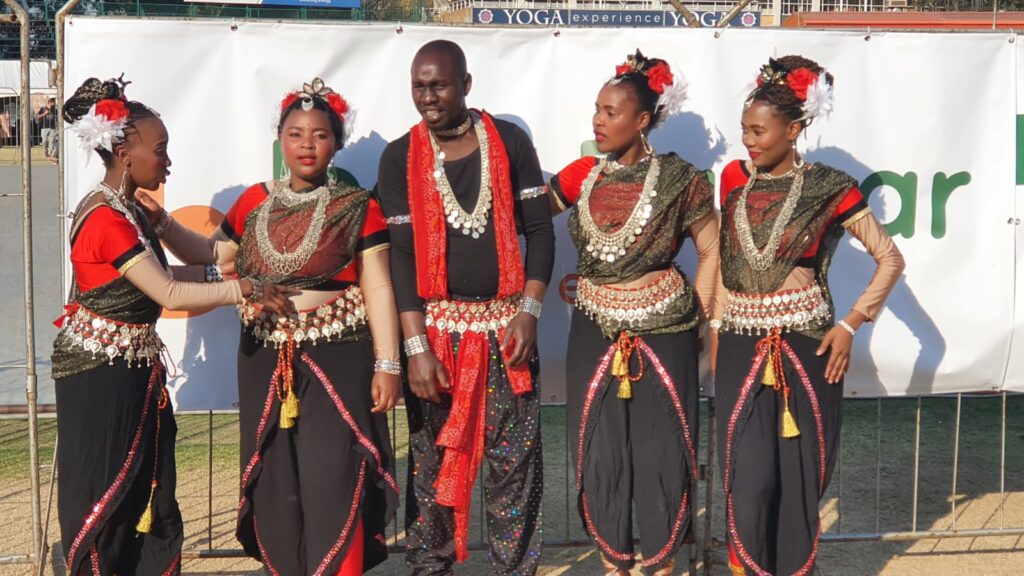
That bridge now spans a remarkable distance. India Day has grown into an event that draws visitors from across every community in Johannesburg, not merely South Africans of Indian descent. Over 50 performances, 800 participants and a programme that spans classical Bharatanatyam to contemporary fusion, Bollywood spectacle to South African cultural showcases the festival has become, in the truest sense, a South African event that happens to celebrate Indian culture. It is the distinction that makes it work.
Timeless tradition in a changing world
This year’s theme “Timeless Traditions, Changing Times, Unchanged Roots” was chosen long before the political temperature around foreign nationals began to rise in South Africa. And yet it lands with unusual precision in 2026.
“Indian culture and heritage is one of the oldest in human civilisation,” says Gupta. “It has evolved from those early days to this modern, urban time. The traditions and culture still remain, but more refined according to modern times.”
It is a philosophy, not just a programme note. The idea that culture endures not by refusing to change but by knowing what must never change is, in its own quiet way, a powerful statement in a year when identity and belonging have become contested political territory. India Day does not engage in that contest. It simply demonstrates, through music and food and dance and laughter, what a culture that has survived millennia looks like when it is alive.
What 10, 000 come for
Ask Gupta what keeps people coming back and he answers the way a man answers when the evidence is simply overwhelming. “On India Day we showcase arts, culture, music, dance forms, food and clothing,” he says. “A different theme every year makes it interesting and entertaining.”
The food alone is a journey. Authentic cuisine from across India’s vast and varied regions —from the coastal flavours of Kerala to the robust spices of Punjab, from the street food of Mumbai to the sweet traditions of Bengal is available under one roof, at one event, in the middle of Sandton. For many visitors it is the closest they will ever come to the subcontinent. For others, it is home.
Entry is free. It has always been free. “We want to connect with everyone and make them part of India Day,” says Gupta. “By keeping free entry it reaches all sections of society.” In an era of increasingly ticketed and tiered cultural experiences, that openness is itself a statement of values.
Two nations, one story
The relationship between India and South Africa is often described in diplomatic language — bilateral agreements, trade corridors, strategic partnerships. The numbers are real and they are significant: Indian firms have invested approximately US$10 billion in South Africa. More than 150 Indian companies operate here, including Tata, Mahindra, Wipro, TCS, Cipla and Tech Mahindra. Those companies employ approximately 18,000 South Africans. Commercial relations have flourished across IT, mining, infrastructure, pharmaceuticals and agriculture since diplomatic ties were established in 1993.
But the relationship between these two nations predates the diplomacy by over a century. It predates the companies and the trade agreements and the bilateral summits. It lives in the communities that have been part of South Africa’s fabric since the first indentured labourers arrived in Natal in 1860. It lives in the legacy of Mahatma Gandhi, who developed his philosophy of non-violent resistance on South African soil before taking it home to lead India to independence. It lives, in 2026, in the 10,000 people who will gather freely in Sandton to celebrate it.
Gupta reflects on this history with the quiet pride of someone who has spent years tending to it. “We celebrated 30 years of the India-South Africa relationship two years ago,” he says, “and had an exhibition showcasing how the relationship between the two great nations evolved, strengthening year on year.” India Day, at its heart, is a continuation of that exhibition — living, breathing, dancing and delicious.
An invitation to everyone
India Day 2026 will also mark the first India Day celebrated under the tenure of the newly appointed Consul General of India in Johannesburg, Hon’ble Shri S. Koventhan, who assumed office in June 2026. The Consul General has spoken of the deep roots of the India-South Africa friendship and of cultural diplomacy as the foundation upon which the relationship between the two nations continues to be built.
The High Commissioner of India to South Africa, H.E. Shri Prabhat Kumar, will also be in attendance, underscoring the diplomatic significance of an event that has grown, year by year, from a community gathering into something that both nations now recognise as a genuine expression of their shared story.
For Gupta, the message to all South Africans is straightforward. “They must join to enjoy the taste of vast Indian tradition — arts, culture, food, clothing, market stalls, big Indian corporates and SMMEs — all under one umbrella,” he says. “India Day 2026, organised by India Club South Africa.”
On 16 August, eighty years of Indian freedom and one hundred and sixty years of Indian South African history will converge on a school in Sandton. Bring the family. Come hungry. Stay for the dancing.
India Day 2026 details
Date: Sunday, 16 August 2026
Time: 10h30 – 20h00
Venue: Sandown High School, Sandton
Entry: Free and open to all