


Sibongile Mkhabela: Odd female, accused No. 6 in June 16 trial, reveals her role at Women’s Festival
My thinking during my activism was shaped by artists. Now in post- Apartheid South Africa especially when it comes to the issue of service delivery, I have noted that some artists in order to perform at government functions align their art to the agenda of government, as those who do not risk marginalisation,” Mkhabela reflected.
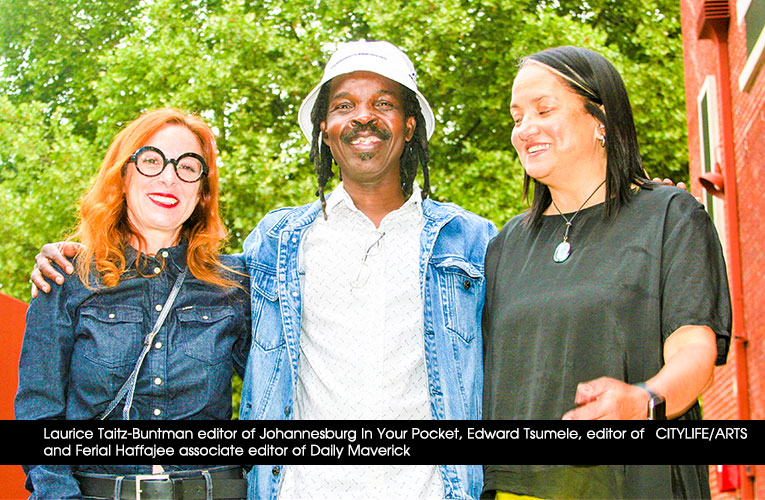
By Edward Tsumele, CITYLIFE/ARTS Editor

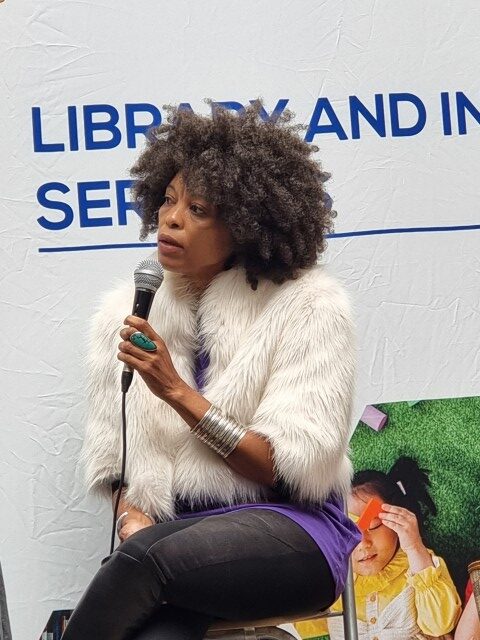
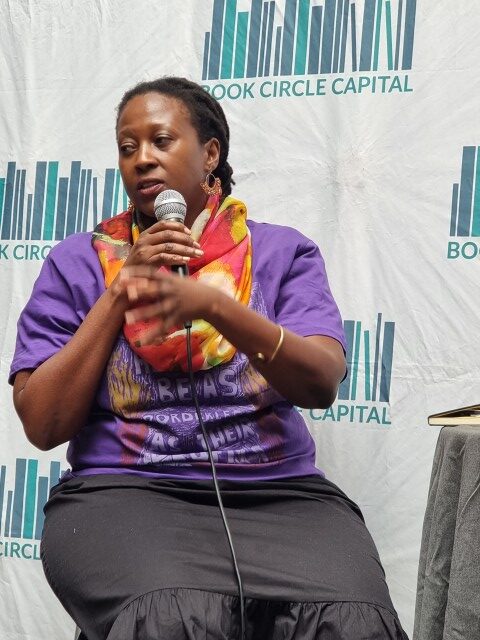
The weather was chilly and unforgiving, forcing many reasonable people to remain in doors under the warmth of their blankets. But not this tribe –the literary tribe, comprising mainly of readers and a huge turnout among the literary crowd, that came together at Book Circle Capital in Melville on Monday, 10 August, 2026.
The occasion was one Day Woman’s Festival: Celebrating 50 Years of a South African woman’s Story, a one day women’s day event adopting a literary tone, featuring Sibongile Mkhabela organised by award winning writer and activist Zukiswa Wanner, in association with Book Circle Capital, owned by Sewela Langeni, supported by Thakgang, one the creative and cultural industries clusters that seems to be actually working, formed by Department of Sport, Arts and Culture. The occasion for all practical reasons, though framed as a Women’s Festival taking into account the fact that August in Women’s Month, with the actual holiday falling on August 9 on Sunday, was felt by the audience as a literary festival, therefore could qualify as a one day literary fair also.
The fair saw a number of prominent writers, reading activists and active readers drawn mainly from Johannesburg’s burgeoning, mainly women led book clubs, engaging each other on everything literary in South Africa, including the ever elusive black reader, the publishing landscape, publishing hurdles and opportunities for marketing books provided by other platforms, such as Tik Tok, adaptation of books into screen.
The last has seen books by for example Angela Makholwa, Dudu Busani Dube, Nozizwe Cynhtia Jele and recently, Sue Nyathi’s Polygamist, successfully transformed from the pages into screen, reaching a new market as well as making reading material to be accessible to non-readers.
In fact, The Polygamist series, a Netflix production, was so successful that it was embraced beyond the borders of South Africa in a big way, connecting with audiences in the rest of the African continent, Europe and North America. That phenomenal success, that saw for weeks, The Polygamist being on the lips of ordinary people in the streets and boardrooms, should build confidence in film producers to adapt more books into screen as some reach stories wait to be mined for the screen in books.

Monday’s event was among other influential literary voices was attended by Makholwa, Fred Khumalo of Bitches’ Brew fame, Wanner, reading activist, book festival founder, Loraine Sithole, who helms the Thakgang literary cluster, Jele, children’s literature activist Elinor Sisulu, sexual matters activist, author and recently announced EFF Mayoral candidate for Johannesburg Dr Tlaleng, University of Johannesburg senior lecturer and writer Prof. Siphiwo Mahala, land reform expert and author Bulelwa Mabasa, novelist and playwright Kagiso Lesego Molope, broadcaster and literature activist Phemelo Motene, among other names.
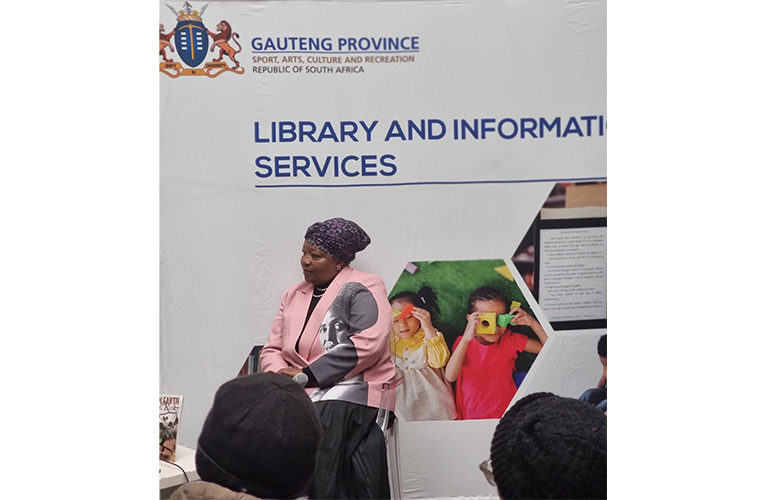
However, it was the conversation featuring development professional, trained social worker and life-long activist Sibongile Mkhabela, who actually helmed the whole book fair, that most who tuned, enduring the cold weather from as early as 9am up to 4pm, when Mkhabela took the podium.
Indeed Mkhabela prevailed as she told her participation during the June 16, 1976 Student Protest as a leader and earning the rather difficult distinction of being the only young female student at age 19, among the 11 student leaders that were arrested and put on trial.
Her meticulous travel back to that day, which has since etched itself into the minds of many when the struggle for freedom and youth’s participation in that struggle is discussed, was metculo0usly delivered with a dosage of wit injected in her narrative.
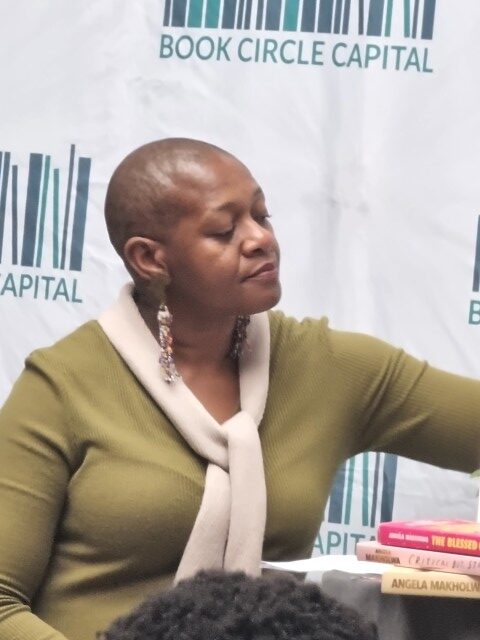
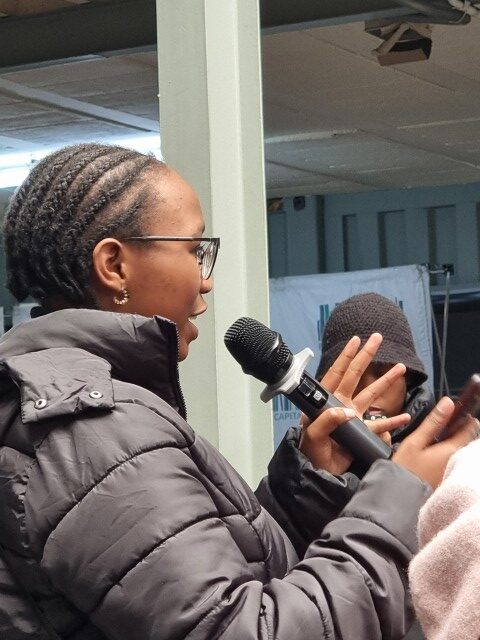
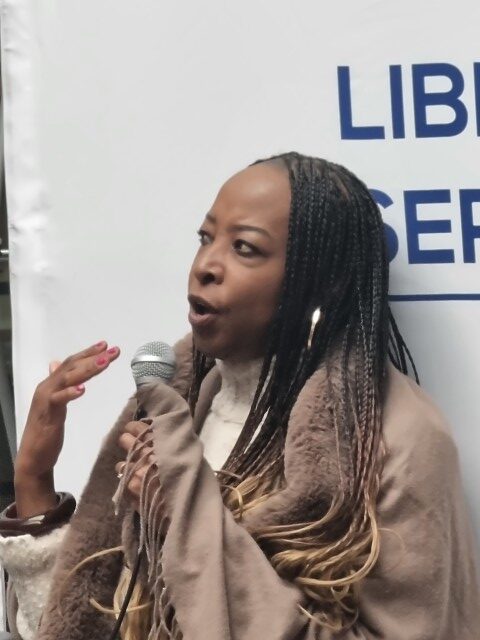
Though the moderation could have been better, as the moderator Wendy Isaack struggled at times, to contain the urge of inserting her views on the discussion, the audience indeed gained insight into the June 16 Protest in general, and the role that Mkhabela played in it. The conversation was important, but could have come out better if, Isaack stood back a little bit, and let Mkhabela’s narrative flow uninterrupted.
Be that as it may, this was a conversation necessary to complete the narrative of June 16, particularly the role of women student leaders in it, as various narratives in the past, tended to emphasise the role of male students, inadvertently marginalising that of female students, such as Mkhabela in it.
“Our trial was not about was not about protesting. It was about leading, influencing. The young white judge who presided over our trial was confessed. He kept on saying that what we were arrested for and being tried for, he himself had done while at university, but he was never arrested or prosecuted for it. He said he did all these while he was at RAU (Rand Afrikaans University and now University of Johannesburg after its historic merger Vista University and Wits Technikon when some South African universities were reconfigured by the post-Apartheid government),”Mkhabela said.
The development professional and activist, painted a picture of how the decks were stacked against her as the lone female voice among those arrested, detained and subsequently put on trial as the aftermath of the June 16, 1976 Student Protest. This is the one trial among others, that captured the June 16 related trials, Mkhabela told the audience.
Ät one stage during my detention, I was taken to my mom at the police station charge office, blooded, bleeding and limping. I still do not know why the police did that. I think they were trying to traumatise her. Of course she must have told them a piece of her mind.
“We should guard against forgetfulness as a nation. We tend to pride ourselves in forgetfulness unfortunately. This must be an intention to bury the past. My thinking during my activism was shaped by artists. Now in post- Apartheid South Africa especially when it comes to the issue of service delivery, I have noted that some artists in order to perform at government functions align their art to the agenda of government, as those who do not risk marginalisation,” Mkhabela reflected.