

World renowned South African photographer Zanele Muholi to celebrate 20 years of photographic excellence at Market Photo Workshop
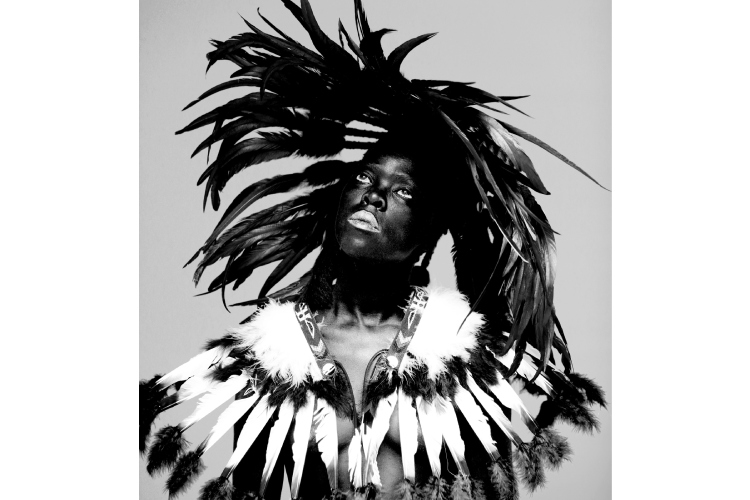
“If they are part of the LGTQ1+ community, I want them to walk away with a profound sense of lineage, knowing they do not come from a void, that they are loved, seen and defended by a community of elders, peers and ancestors. If they are from outside the community, I want them to abandon the prejudice that frames us as un-African, marginal, or deviant. I want them to look at those eyes, those postures, those expressions of quiet, undeniable humanity and understand that we have always been here, we will always be here, and we are not asking for permission to exist. Sibaningi, we are many, and our numbers, like our history cannot be erased.”–Photographer Zanele Muholi about their exhibition titled Sibaningi, opening on October 17, 2026 at Market Photo Workshop in Newtown.
By Edward Tsumele, winner of NHC Heritage Journalism Award 2026
Last month September, 2026, I had a conversation with an art historian and arts writer, about the then raging debate about whether the FNB Art Prize winner for this year, Kelebogile Marope, was on the right track to use iron prints in her award winning art, a practice that in South Africa, is closely associated with that of Usha seejarim. While my interlocutor argued that what the artist had done was ”a text book case of plagiarism,” I however, held a different view. I still do today, in fact.
I hold a different opinion on the subject. At the very least, we could say, well, she lacks originality in terms of coming up with new ideas. However, to just make the claim that she has plagiarised because stylistically, her work is similar to another artist’s, in my view, that is is being disingenuous. After all, artists get influenced by those who came before them, whether they know it or not. Take for example, writers. How many times have you read a young novelist’s book, and feel like stylistically, it reads familiar, with regards to the style of writing, not the story itself. It is text that feels like you have encountered it before.
In our conversation, I had argued and pointed out the fact that in art, creating a body of work that is stylistically similar to someone else’s, with material you sourced somewhere, to suggest that an artist has committed the crime of plagiarism was taking it too far.
In that conversation, I had used the example of the body of work created by Professor Zanele Muholi, highlighting the issue of the danger those who identify as lesbian, face in our communities, including violence and the threat of what is called corrective rape.
There is no doubt in my mind, that is that, currently there is no one in the world known, who has consistently created this kind of photography that has put the issue of the danger lesbians face in conservative communities to the scale that the world renowned photographer have done.
In that process of creating this body of work, they may have definitely influenced some young photographers, who would want to pursue that kind of activist photography in future. If that happened, would we then suggest that the young photographer would have plagiarised Zanele’s photography, I asked my interlocutor.
After a moment of hesitancy, he then said, “Photography is different.”
How different is the issue of two people pressing irons at different uncles and applying different pressure at different pressure points, to create their work, from the scenario of two photographers taking a photograph of one person at different location, who also happens to be a lesbian. Same person, different location and twi different photographers.
The point here, is that Prof. Muholi, has perfected her activist photography, to the extent that it will be difficulty for anyone else to claim that space. Not that if they did, they would be plagiarising anything the world renowned and decorated artist would have created.
It is just that Zanele is in fact, inimitable. Visual activism using the medium of photography is their thing. They pioneered it. Perfected it, and therefore own it. That, I have no doubt. Anyone who would want to follow in their footsteps, will always exist in Zanele’s shadow in the public imagination. But that does not mean that anyone else who will try her style, will be plagiarism their work. After all, two photographs could be taking a photograph of the ame person, at the same spot and at the same time, but the outcome will be different. This is for example, the issue of composition, the angle and timing among other factors that will differentiate the two images. That is why art is so unique, and artists are therefore unique individuals, who create unique art objects.
Rather, it is just that Muholi in the public consciousness, owns that kind of photography because of the hard work and consistency they put in creating this body of work over several years, to an extent that visual activism with regards to raising public awareness about the often precarious lives lesbians face in communities has become a signature work in the medium of photography.
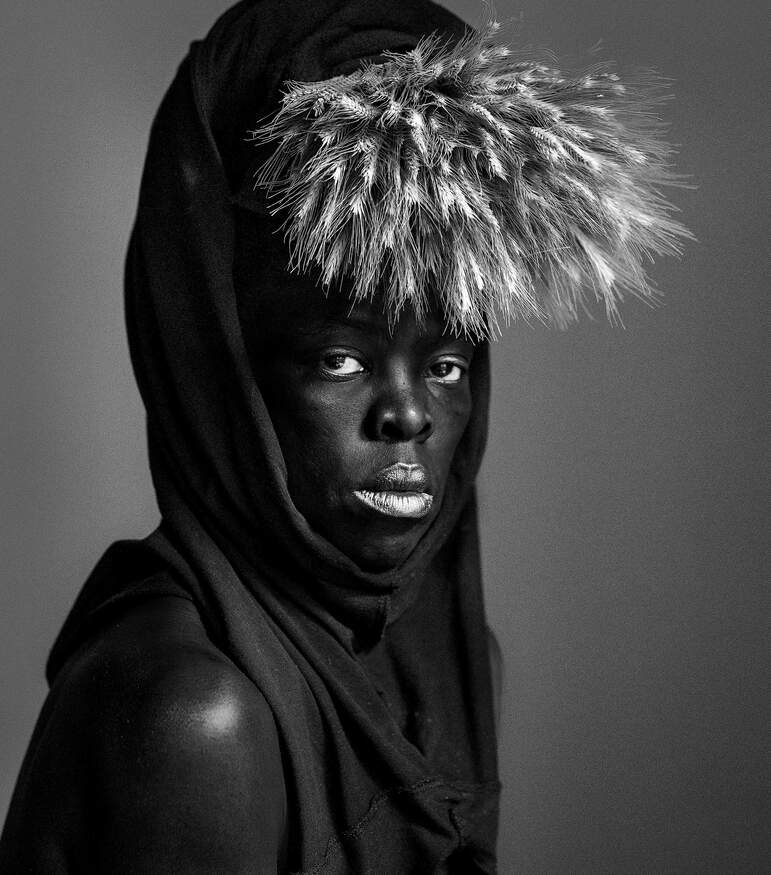
In other words, Muholi used her training at the Market Photo Workshop, while they were a student, to see a gap in activism, particularly when it comes to the vulnerability of the LGPQ+ community in general, and lesbians in particular, and chose to focus her practice on highlighting the danger lesbians face in communities. I cannot think of another photographer in South Africa who has been as consistent as Zanele on the subject.
In other words, Muholi created photography with a purpose, and hence they call themselves visual activist, and not necessarily simply a photographer, and hence that is how they have come to own that space. It would therefore, be very difficult for anyone else to come in in future and try to create that kind of photography, without struggling to create their own distinct identity in the field, different from that of Muholi.
Muholi, without a doubt has become the quintessential activist protecting for queer bodies from harm in South Africa through their visual activism. Their activism, using the medium of photography has had a huge impact in the communities affected globally. For that, they have won numerous awards and lectured at prestigious institutions on the subject over the years.
It is so unbelievable that the body of work that started in Newtown 20 years ago, by a student who had started her training in photography, has grown in stature and its geographic reach and political impact is monumental globally. Collected by institutions around the world, such as museums and by influential individuals, her narrative about queer people is today widely studied in halls of academic institutions.
Achieving all this in the past 20 years is a huge artistic feat. Zanele’s exhibition openings in South Africa have reached the scale of a rock concert, attracting hordes of ordinary people to their opening.
Luckily, their followers are poised to celebrate yet again with Zanele the past 20 years of phenomenal success achieved by that very series that opened doors for them to take their work around the world –originally titled Faces and Phases.
The internationally acclaimed photographer and 2026 Hasselblad Award laureate, Muholi is finally set to present a special exhibition titled Sibaningi ,and a book launch in Johannesburg.
Muholi will open Sibaningi at the Market Photo Workshop in Newtown on Saturday, 17 October 2026. The exhibition runs until 5 December. It marks 20 years of Faces and Phases, the portrait series Muholi started in Johannesburg in 2006, and it includes the launch of a book on the same body of work. Sibaningi is a Muholi Art Institute production, curated by Lufuno Ramadwa.
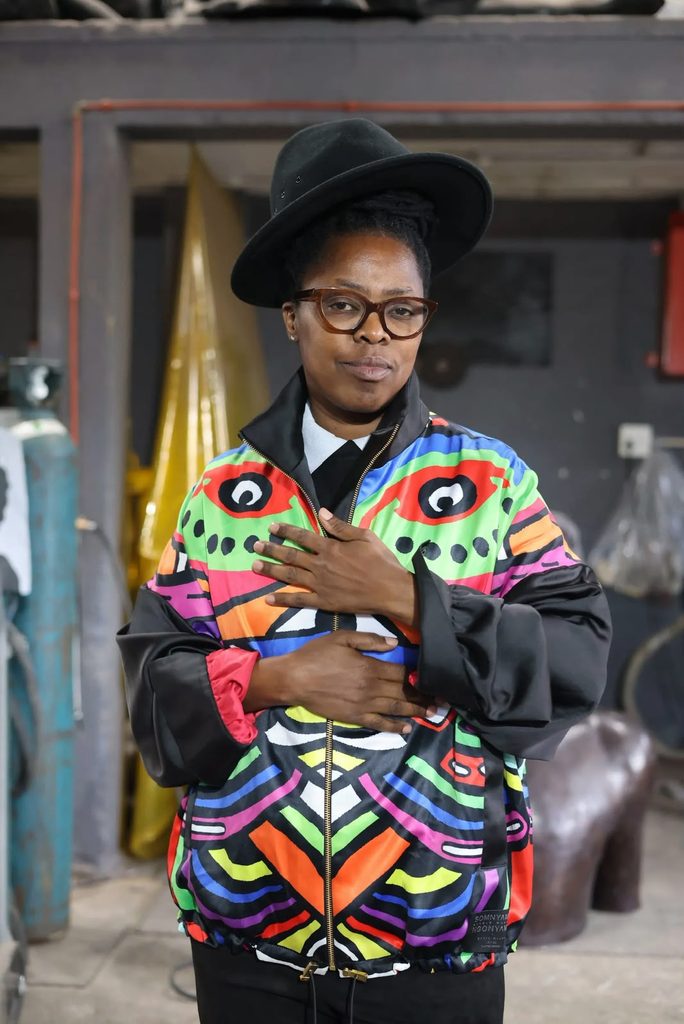
The Johannesburg opening follows the Hasselblad Award ceremony in Gothenburg on 9 October. The Hasselblad Award is the world’s largest photography prize. Muholi receives SEK 2,000,000, a gold medal and a Hasselblad camera, and a solo exhibition at the Hasselblad Center from 10 October 2026 to 4 April 2027. Muholi is the first Black queer African photographer to receive the award.
This a highly respected and sought-after award that has previously been won by among others, Henri Cartier-Bresson, Richard Avedon, Nan Goldin and David Goldblatt.
Faces and Phases
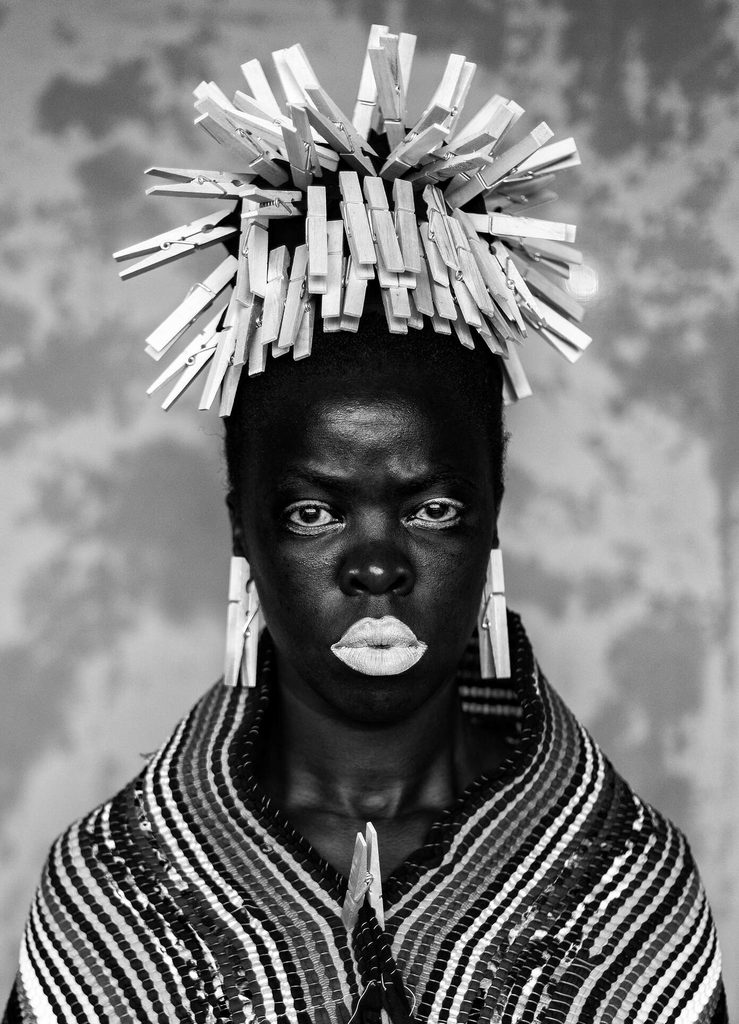
Faces names the person in front of the camera. Phases names what changes with time; gender expression, age, relationships, loss, work, home. Muholi has gone back to many of the same participants over years, and in some cases over decades. The book and the exhibition put early portraits next to later ones. Sibaningi also brings in new faces. The people photographed are participants in a record that is still open.
“It is important to mark, map and preserve our mo(ve)ments through visual histories for reference and posterity so that future generations will note that we were here.”
Zanele Muholi, on Faces and Phases
On opening day Muholi will speak at 12:00 midday, then the exhibition opens. Entry is free. Safe parking is available at Newtown Junction Mall. The show stays up through Pride month, as part of the Muholi Art Institute’s work in archive and photography education. For the Gothenburg exhibition, curators are Louise Wolthers and Dragana Vujanović Östlind of the Hasselblad Foundation.
“I am rewriting a Black queer and trans visual history of South Africa for the world to know of our existence, resistance and persistence. The series is still growing. Sibaningi says we are many, back in the city where the photographs began.
Zanele Muholi, on being named the 2026 Hasselblad laureate
“This prize is not mine alone, Sibaningi. I carry it with the many faces, names, and histories that have trusted me with their stories. From Umlazi to every space where Black LGBTQIA+ people continue to fight to exist freely, this recognition affirms that our lives are worthy of being seen, not as statistics, not as shadows, but as full human beings.”
Sibaningi is an isiZulu word. It means we are many. Muholi is using it as a statement of recognition. I see you, you see me, and we see you, because there are plenty of us. The exhibition is part of Africa Pride month, and it returns the series to the place it started.
Muholi’s humble beginnings
Zanele Muholi was born inUmlazi, Durban, and lives between Johannesburg and Cape Town. Muholi studied photography at the Market Photo Workshop and later completed an MFA in documentary media at Ryerson University in Toronto. Muholi is represented by Yancey Richardson Gallery in New York and Southern Guild in Cape Town.
Muholi studied at the Market Photo Workshop, the Newtown school and gallery founded by David Goldblatt in 1989. Faces and Phases began there in 2006, at a time when the Constitution had promised equality and Black queer and trans people were still living with discrimination, violence and silence. Muholi was part of the community in the photographs. The point was to make a record of people living, working and loving, not only a record of harm.
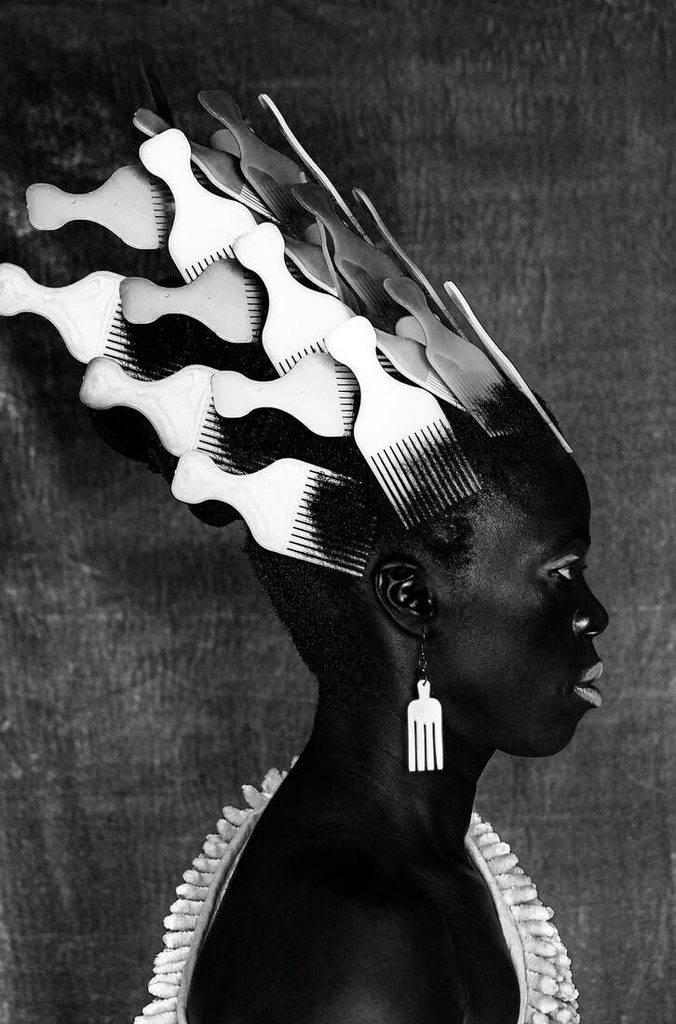
For those who will be at the opening on Saturday, October 17, 2026, the celebrated photographer have the following words, especially for queer attendees:
“If they are part of the LGTQ1+ community, I want them to walk away with a profound sense of lineage, knowing they do not come from a void, that they are loved, seen and defended by a community of elders, peers and ancestors. If they are from outside the community, I want them to abandon the prejudice that frames us as un-African, marginal, or deviant. I want them to look at those eyes, those postures, those expressions of quiet, undeniable humanity and understand that we have always been here, we will always be here, and we are not asking for permission to exist. Sibaningi, we are many, and our numbers, like our history cannot be erased.”
Exhibition details
Title: Sibaningi
Series Faces and Phases, 2006 to 2026
Curator: Lufuno Ramadwa
Production: Muholi Art Institute
Talk and opening: Saturday 17 October 2026, 12:00 midday
Venue: Market Photo Workshop, Newtown, Johannesburg
On view: 17 October to 5 December 2026
Entry: Free
Parking: Newtown Junction Mall.