






History of South Africa told in images made from archival material about Carlton centre
This exhibition definitely deserves a longer season, if not to learn about the history of Carlton Centre and how it was not spared from what was happening in the country during Apartheid, but also to know who dated who there during its height as a popular shopping mecca and top event venue.
By Edward Tsumele, CITYLIFE/ARTS Editor

I have a personal connection with the Carlton Centre of the early 1990s, when the place was pumping hard. Events, such as beauty pageants used to take place there on weekends, and so did talent shows, such as dance competition and fashion shows. It was also a mecca of shopping, whereone could buy cool stuff, including high end designer fashion in the several boutiques that shared the story of Carlton Centre.
In short, Carlton Centre was a place to be seen and heard among young people, mostly coming from the townships. So, in short, white young people of the time, black and white, and who considered themselves happening, must have a story to tell about the Carlton Centre of then, right in the CBD.
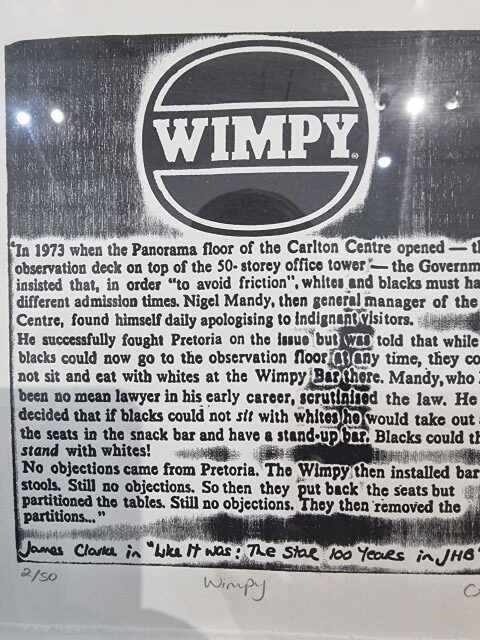
Well, I have mine to tell. I once dated a young woman there, around 1992. Both of us were from Mzimhlophe Township in Soweto. We were obviously young and we thought we were happening. At least I thought so, as I thought it a perfect date to take her to a Wimpy downstairs, where we had lunch, before heading back to Mzimhlophe.
Of course, when I look now, I am ashamed to ever have thought that out of all the top places that we have now,to date someone, I actually thought Carlton Centre, right in the heart of Johannesburg CBD, was going to win me the heart of that young woman for ever. You may laugh, but I can bet with my last cent, that I am not the only one who tried to win the heart of a young woman by taking her out to Carlton Centre during that time. There are certainly others who were young then, and if they are honesty, they will tell you that they too datedone or two young love interests there.
This is simply because hailing from the township, and taking a young woman to Carlton Centre was a big deal then.
Well, over the years from time to time, I very well remember that episode of my life, with some kind of shame in hindsight. The shame of innocence that made me think that was a cool place to date a love interest. Whenever that happens, I want to quickly forget about it as soon as the thought comes up.
But this Saturday, I was confronted yet again by my past demons. This time, it is through an exhibition, titled Colleen Alborough: 50 Storeys. Basically the exhibition featuring the work of visual artist Colleen Alborough which I went to on Saturday at Street Gallery at 27 Boxes in Melville tells beautifully, the history of South Africa and how somehow, in drags in the old good Carlton centre into it. Anyhow, at the exhibition, I came face to face with a past I am trying to forget, and it simply refuses to go away. Captured in black and white, there is Wimpy at Carlton Centre. An image that immediately reminded me of that episode of dating a young lady there 34 years ago. We were both young, yes, but still young people these days, do not date their love interest to Carlton Centre, and without judging, Wimpy as a date venue. They certainly, do not take them to Wimpy, but rather to fancy places such as for example, the Bioscope at 44 Stanley or some cool place in Rosebank or Parkhurst. The passage of time can really expose you.
On a serious note, Colleen Alborough’s exhibition, titled Colleen Alborough: 50 Storeys, is more than about just a sentiment involving some young lovers dating in Wimpy, 34 years ago. Rather, it is about history, depicting a strong sentiment about place and time in South Africa’s evolution, from Apartheid to a democracy.
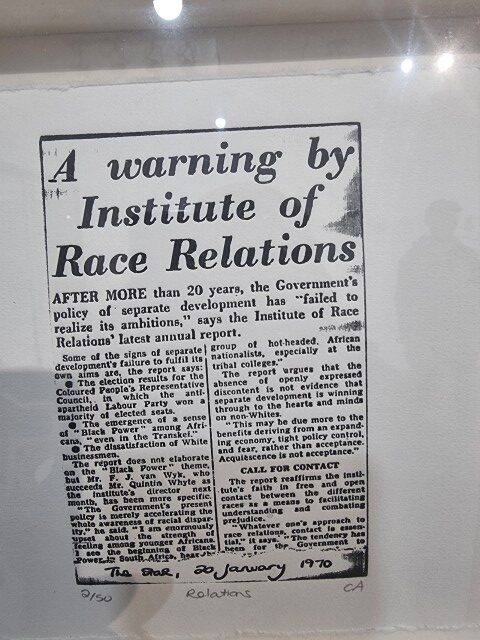
Through these art works, which have been created from archival materials, such as newspapers cuttings about the Carlton Centre over the years, some dating as far back as when the centre was built in the 70s, becoming the tallest building on the whole continent at the time.
Through these images, one can piece together South Africa’s complicated history, and how for example, people, both black and white tried to navigate the segregation laws created by the government then.
The Carlton Centre, somehow, managed to circumvent some of the rather idiotic and impractical laws. For example, black people and white people during apartheid in the 1970s and 1980s, could visit the Carlton Centre. But only at different times specific to each racial group. However the manager of the centre, found way of running his centre for all racial groups without breaking the law.
For example, on the 50th Floor, there is a nice deck on which one can have a great view of the city, which was popular with a lot of visitors to the centre. Black and white. Problem is, they could only take their position separately. Same place but separate spots to view the same thing. And so, because the law was later relaxed to say black people can also take their position there, provided they do so standing as they were not allowed to sit down. But whites in a separate partition could sit down. Instead, the fast thinking manager, simply put a dividing line separating the two groups in Wimpy, where both groups could sit on their sections, but still have a view of Johannesburg in the Wimpy bar (Wimpy later on relocated to downstairs where I had a date in 1992).
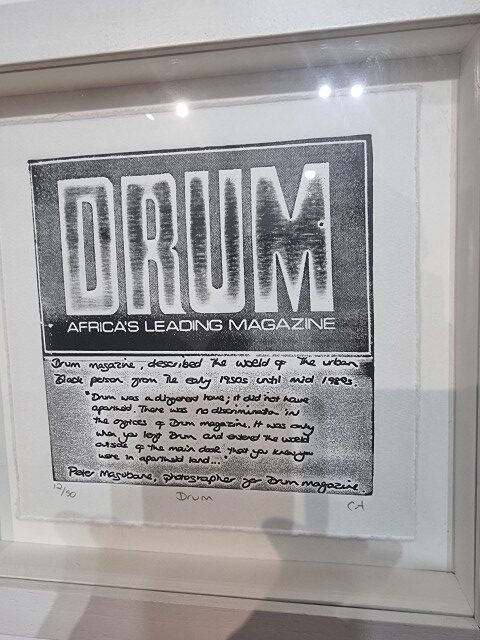
“’In fact, that plan was so successful that he never heard from Pretoria. He had succeed in bypassing the law of segregation,” Alborough told CITYLIFE/ARTS as she took us around these powerful images, that manage to capture a good part of South African history in these images, created from archival material from several South African newspapers publishing at the time. Such as TheRand DailyMail, Sunday Times, The Star, Drum and others.
“What happened is that there was a hotel that was established in Maboneng in 2016, and the owners commissioned artists to create art works that were exhibited in each of the 12 rooms. And so ,these art works are exactly the ones that were created during that process and once adorned the 12 Decades Hotel’s walls,” explained Aborough, who was accompanied by her young son during Jack Townsend, as she took us through the exhibition.
In short this exhibition will take you on a South African journey, summarised nicely into these art works, depicting important events in South African history around Carlton Centre as captured by popular media of the time.
It is a pity that ColleenAlborough: 50 Storeys, had a short run at Stokvel Gallery, Friday 14-Sunday 16 August 2026. This exhibition definitely deserves a longer season, if not to learn about the history of Carlton Centre and how it was not spared from what was happening in the country during Apartheid, but also to know who dated who there during its height as a shopping mecca and top event venue.