




Jeanne Zaidel Rudolph’s life: Echoes of several other people she has touched as a composer and scholar
By Edward Tsumele, CITYLIFE/ARTS Editor
During the registration process at security control point at University of Johannesburg, on my way to the launch of Sound Me Out: A Lifetime of Music & Memories, by veteran music composer Professor Jeanne Zaidel-Rudolph on Thursday, 13 August, 2026, a security guard said something that stayed with me for sometime.
Upon hearing that my visit to the university was to attend a book launch, he abruptly stopped wiring, looked at me as if surprised, and with a serious face said: ”Books makes people go hungry,” I looked at him with a face that suggested that I expected him to explain himself, and he quickly got it.
With a naught smile, he continued. “You see my brother, books at university teach people to read and theorise, but not to make money, which is necessary in this world,” he volunteered his perspective.
What he actually wanted to say is that a career in the humanities in general and the arts in particular – such as literature, theatre, visual art, music, and so forth and so on, is tough, and only a few make actual money, while the rest will make do with living average lives, while the rest live financially precarious lives.


Of course his statement is partly true, but not the whole story. If I had time, which I did not, I could have debated further with him, and even telling him that actually, artists tend to live a fulfilling life, and yes, several of them, struggle financially, especially at the beginning of their career. But the lives they live and their experiences of interaction with other human beings, both ordinary and influential as practicing artists, leaves them with a certain kind of wealth money cannot buy. Let alone the healing power of their art. In fact, the few lucky ones make not only a big name for themselves in the imagination of the public, but also get to enjoy life fully –both financially and spiritually.
And so when people choose to pursue art, it has more to do with their purpose, some sort of calling beyond personal financial achievement and self-gratification. I wish I could tell him this. These are values that money cannot buy. I wished, I had time to tell him all these things.

Actually, the very successful ones achieve both and therefore can live decently, travelling, seeing new places, encountering different cultures and people as they practice their art around the world, whether performing, exhibiting or attending literary events and e3xcahing ideas with fellow artists.
However, after listening to the story of Jeanne composer and music educator Prof. Jeanne Zaidel-Rudolph, a few minutes later, I actually wished that that security guard was in the room, to witness someone who has lived a life of fulfillment. A life that money cannot buy. It simply not enough. I mean besides sitting on influential music related boards, including SAMRO Music Foundation for 10 years, she is the one person that government of Post-Apartheid South Africa turned to arrange the new National Anthem of South Africa, combing the old Apartheid anthem Die Die Stem with Nkosi Sikelela Africa, a tough task that sought to recognise the past while looking into the future, for example.

For years Jeanne has worked at Wits School of Arts as Professor of Composition and Theory, supervising several doctoral students now based all over the world.
She told the audience that growing up in Pretoria, in a Jewish family that followed Jewish traditions, including by surrounded by music, some of it performed by her father, traditional songs such as those sung in synagogues, she was regarded as some sort of genius, at an early age because of her grasp of music notations.
“Atthe age of six, I was regarded as some kind music prodigy due to my grasp of music notes. At the time, I thought it was normal for everyone to do so. It never occurred to me that I was different,” she told the audience.
But her journey enriched careers of fellow musicians, her scholarship benefitted music students and her composing skills benefitted South Africa immensely.
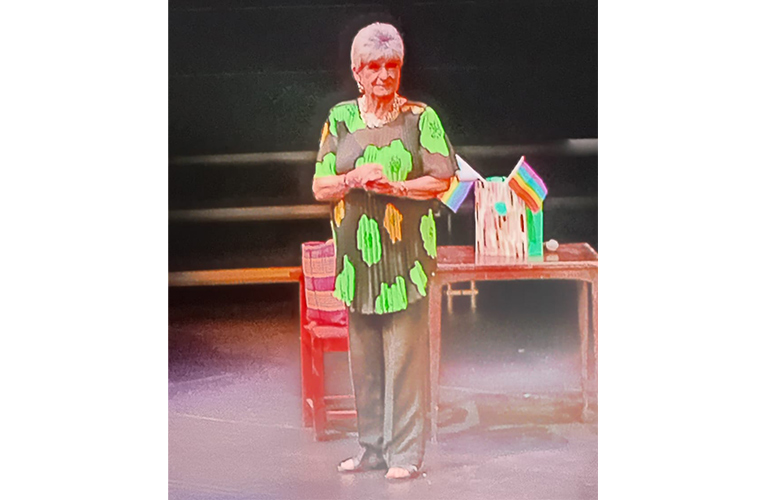
“My life is not a solo journey, but echoes of several voices of others, such as students and many others I have come across in my life,” said the classical music composer and performer on the occasion of the launch of her much awaited memoir held at the UJ Library, University of Johannesburg on Thursday, 13 August 2026.
The room was packed with people in the arts and academia, who converged to witness the launch of a book by one of the most talented South African classical music composers and educators, whose life has been widely decorated in recognition of her talent and contribution to South African music as a performer, composer and scholar who has seen many a student at various stages of their student life, benefit from her scholarship.
Hers is a life well lived, and well rewarded, as not only did she get accolades over the years, but contributed to the South African song book at the highest level.
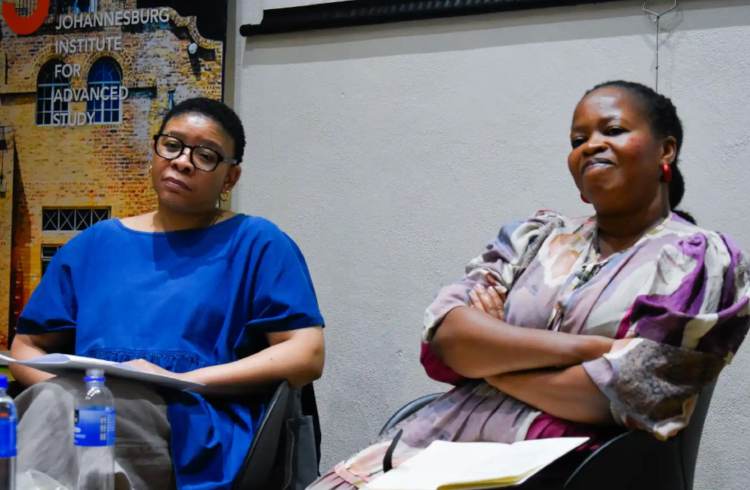
The book launch, which was held with the dignity that it deserved, with her husband, Professor Michael Rudolph, holding forte as the programme director, who first introduced Prof. Siphiwo Mahala, the acting Director of Johannesburg Institute for Advanced Study (JIAS), to say his opening remarks, in the context of Jean having written a substantial part of her book while she was a fellow at JIAS.

Mahala said that Sound Me Out: A Lifetime of Music &Memories, was published by UJ Press, the new imprint that is fast making a name in both academic publishing under Open Source, and now, increasingly in general publishing, according to Vikus van Zyl, was published under the auspices of UJ Vice Chancellor Prof. Lethlokwa Mpedi’s African Biographies Project.
At the launch, veteran journalist Gillian Anstey also had a one to one question and answer session with Jeanne, which threw light on how in her book, she is able to recall some of the smallest but essential details from the early age.
“Fortunately I had a mom who wrote down and compiled everything about me from the young age. Everything that was ever written or said about me she recorded. I was fortunate that way,”Jeanne told Gillian.
Music scholar Prof. Hendrik Pienaar Hofmeyr also had good words to say about the book, at least the parts that he had read by the time of the launch.
Sound of Me Out offers readers, not just a record of Jeanne’s achievements, but a glimpse into the heart and mind of an artists whose teaching and friendship have left an indelible mark on so many lives –mine included. Her reflections on gender, faith, family and the intetwini9ng of African and Jewish musical traditions reveal the many layers of her creative world: one that is deeply personal and profoundly universal,” writes Alexander Johnson, composer and professor of Music, University of Free State.