



Life in Grahamstown in the absence of the arts festival
The town’s colonial legacy becomes more visible in its Victorian architecture.
By Edward Tsumele, CITYLIFE/ARTS Editor
The name Grahamstown has been relegated to the dustbin of history, but that does not mean that its ghosts are also banished with the renaming of this town that has the pretence of an old English village.
In fact the name Grahamstown is very much in existence many years after the town was renamed Makhanda and this presence of Grahamstown has many layers and levels.
Though this town in the Eastern Cape, known for hosting the famous National Arts Festival, which during its prime, before the arrival of Covid-19, on official documents is known as Makhanda, its English colonial legacy is very much present. What with its very much visible Victorian architecture, best represented by the prominent Anglican Church cathedral on High Street, the main street in this town.? What with the Magistrate and the High Court buildings also on High Street loudly shouting English? What with the several heritage houses that look like they could easily be placed in St Alban’s in England and would not look out of place there?
If all these symbols of the town’s colonial past do not convince you that you are in fact in a small village in England, the Settler’s Monument, which represents the arrival of the settlers in 1820, will certainly remind you of this town’s colonial legacy. In fact someone I know who works at Rhodes University told me of an incident that made sculptor and poet Pitika Ntuli to remark in 2020, that African ancestors of the people in Makhanda had not forgotten their children. This is because, what could have been celebrated as 200 years of that colonial past did not happen as it coincided with the outbreak of Covid-19. Some sentimental people wanted to celebrate the settlers’ arrival there in style in 1820, in 2020, on what could have been 200 years of the settler’s arrival there.
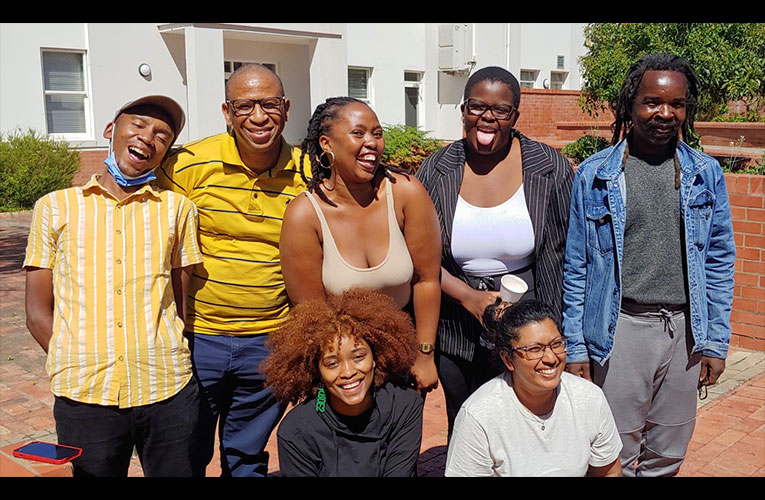
Well, I was reminded of this town’s English colonial past last week as I spent a week in town, as I was at Rhodes University for academic reasons where I met fellow writers who were also there for the same reason.
I must state upfront that it was quite interesting to observe the behavior of this town when there is no festival. Until in recent years when the festival could not take place in town due to Covid-10, I had been a regular at the festival over many years, and therefore until now had only known Grahamtown’s behavior in the context of the festival. With arts festivities taking place at its several venues, eateries teaming with the hungry and its drinking holes hosting the thirsty, I had only known Grahamstown during the madness of the festival and not when it is as normal as when I was there last week.
This time I saw a Grahamstown that I had never known existed, and that is a quiet and slow town whose English heritage becomes even more visible in the absence of a huge crowd that crowds out its other physical features such as its architecture. If there is one thing you will not take away from this small town, it is its tasteful Victorian architecture, which becomes better observable during its quiet periods, such as this time.
However be warned though that Grahamstown is not for visitors with shallow pockets. In fact the town is hostile to those with shallow pockets as restaurants, and places offering accommodation to visitors are quite expensive. You will be lucky, very lucky even, to get an accommodation place that costs R600 per night. Rather budget to pay between R800 and R1200 per night If you ever think of going there. And here we are not talking about luxury accommodation such as hotel standard. These are mere B&Bs.
However there are good places to dine, wine and chill in this town and some of them, for example. a place called Major Fraisers, tucked on the corner of the main street, High Street, is in fact a stylish place to enjoy a drink, coffee and a delicious dish. However like I said, it is quite pricy, for example with a beer going for R45 and a cup of coffee going for R35. But this is the place where you will find the high society of Grahamstown, such as academics from Rhodes University across the road, enjoying their early morning coffee before classes. Major Fraiser’s, which became my favourite place while I was there, is a collection of cottages in one place offering specialities to its discerning crowd. For example you will be served decent coffee by The Barista Coffee, mouth watering desert by Lola’s and good food by Major Fraisers’ Eatery, which also serves alcoholic drinks.
However for those that come from fast paced places, such as Johannesburg, where people are always busy and life is generally fast paced, may find Grahamstown to be rather too slow for them during this time.
There are also two small matters to be aware of. Grahamstown has a problem of water and a problem of homelessness, the last one a too visible fame for a small town like this one. There are just too many people living rough in the streets, some with their dogs.
For example a fellow student on the Creative Writing Programme, a lecturer from the visual art department and I, decided to take an afternoon walk to a well known and popular Chisa nyama known as KwaMandisa, in a nearby township called Fingo. On our way there we were confronted by a trauma causing scene, a small dog which faced its violent demise in the streets. The dog, seemingly from nowhere wreathed in pain as it violently smashed its head on the rocks in the street, bleeding from the mouth and nose as it faced its violent end. One minute of this macabre performance of death, it was gone. All the three of us were traumatized by this encounter of a dog performing a death scene in front of our eyes. As you can imagine, several theories were offered by all of us as to what had just happened, and believe me you would not like to go there.
Anyway, away with the death performance by this helpless dog. The water issue in Makhanda is a big irritation in this town. Sometimes the whole day there is no water. You are also advised not to drink water from the tap as the water whenever it is available needs to be heated and distilled I am told. Selling bottled water in Grahamstown is current big business. Perhaps Grahamstown is taking its taking its English tradition too seriously as there too it is not advisable to drink water from the tap because its simply not safe for drinking.
However for those that love English literature produced by Africans, will be happy to know that there is a lovely place for them in town as fellow writers and I from Rhodes discovered one afternoon.
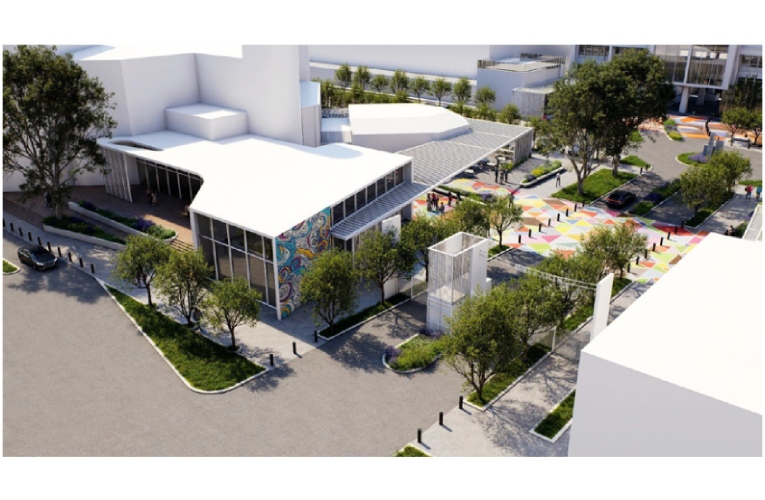
On Thursday after a free writing session and feedback on our portfolios, we were taken by the university Creative Writing team to Mazwi Museum, at a building off campus. This museum focuses on preserving manuscripts by African writers writing in the English language, including comments on changes of manuscripts recommended by publishers to writers before the manuscripts are published. We were also taken through a permanent exhibition of African literature as well as on a tour of rooms dedicated to preserving manuscripts with controlled air conditioning to preserve the quality of the manuscripts, an official explained to us.
We were told that this museum, now housed in a new building after being housed in a building that had become old and crumbling, was established in 1973, is an institution that belongs to the Department of Sports, Arts and Culture.
The museum we were told by an official, buys manuscripts for the use by researchers on African writing in English. The rights though belong to the author and the museum uses the manuscripts according to protocols that have been agreed to between the author and the museum.
The museum also stores art objects such as old type writers, theatre posters and art objects in the visual art discipline. There are also literary Journals, such as Timbila, Chimurenga Chronicles and Kotaz that are also part of Mazwi Museum.
We were told that the museum has important correspondence between authors, publishers and editors pertaining to book changes that are suggested and that are never part of the final printed book, and these recommendations and correspondence are especially important in showing the process of the development of the script before a book is published.