



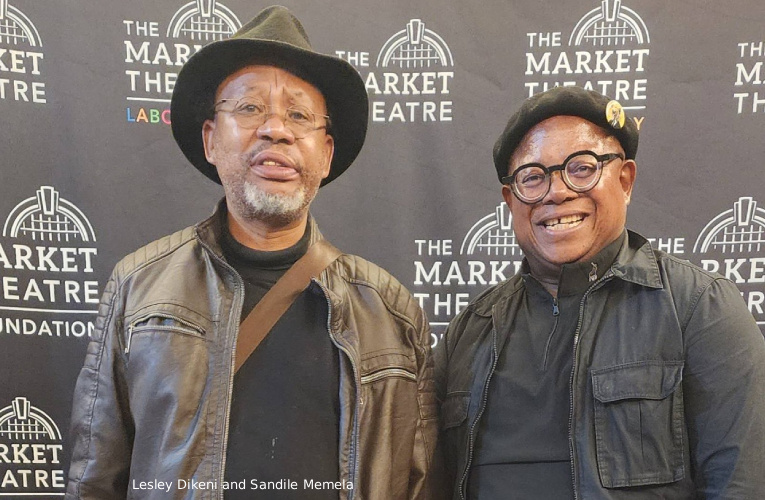
Leslie Dikeni an Intellectual pioneer publishes a new book Music, Agency and Power
Music, Agency and Power is not a conventional academic monograph, and that is precisely its strength.
By Sandile Memela
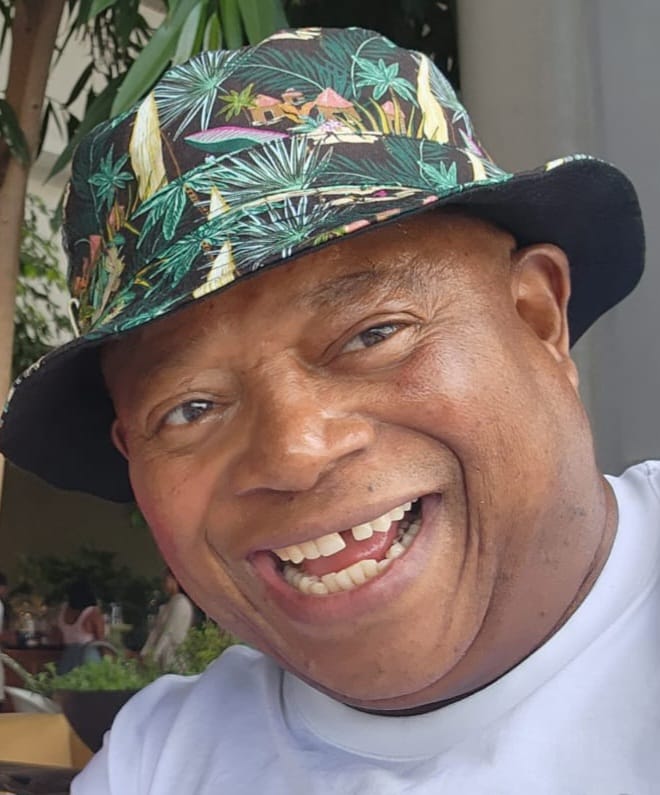
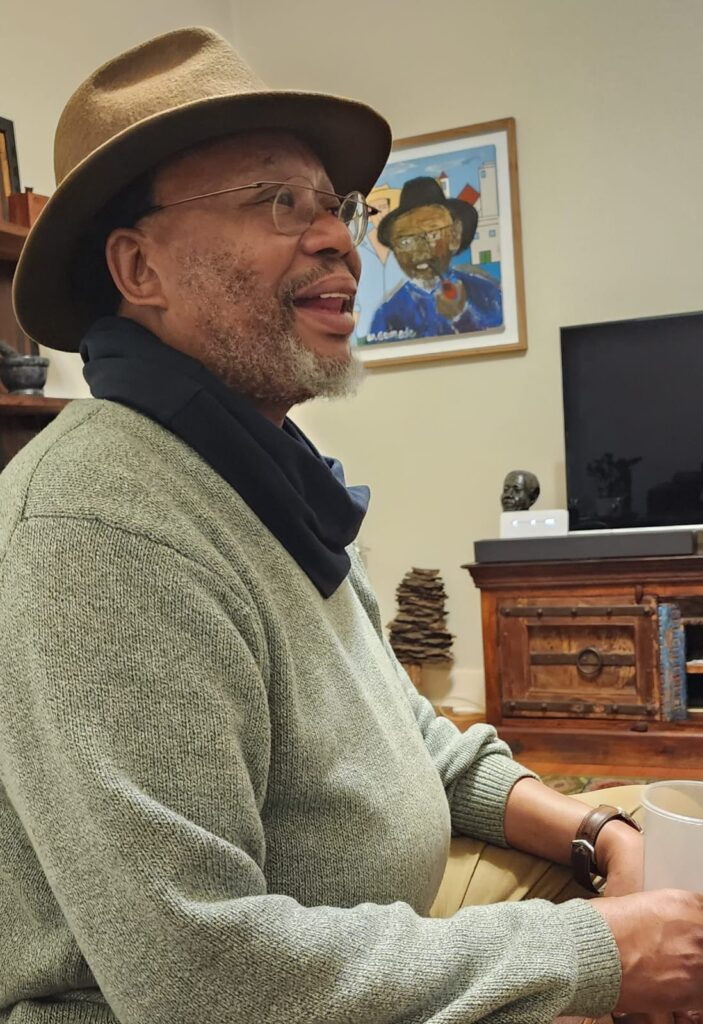
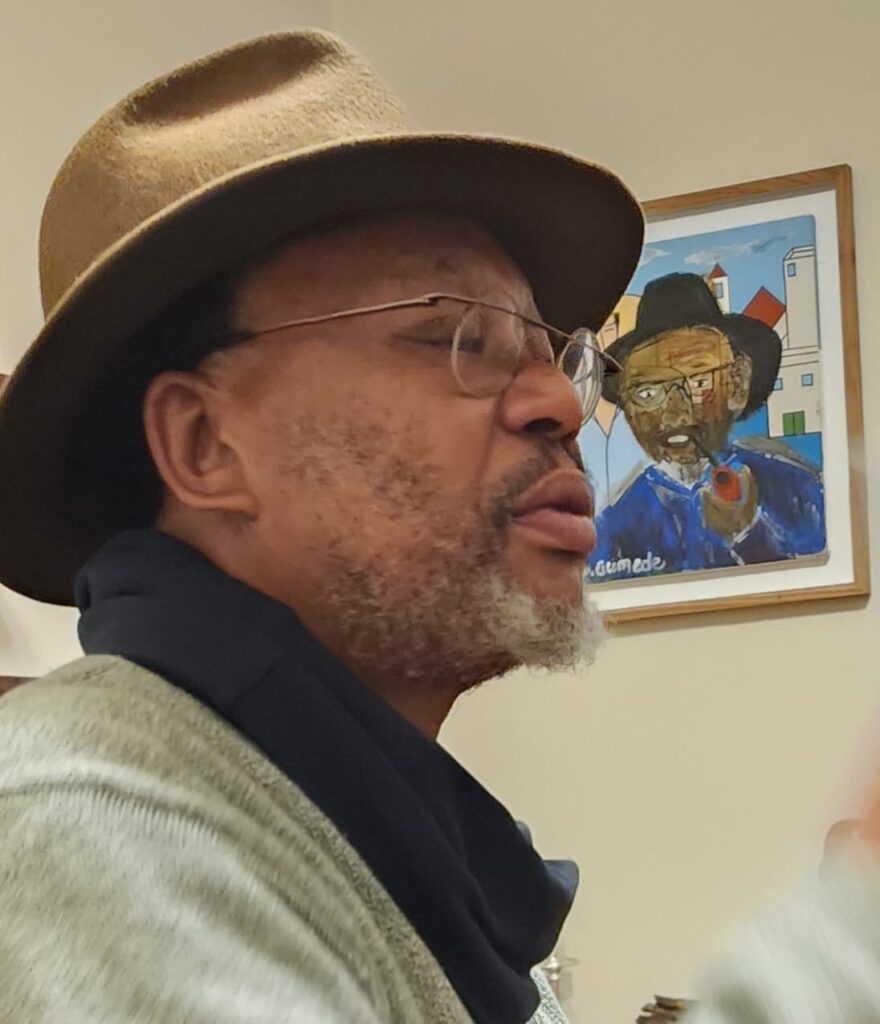
Leslie Dikeni is a highly respected researcher and public intellectual.
My understanding is that his ambition is to raise the standard of critical thinking in South Africa.
Much as he is humble and self-effacing, for years he has been a sharp voice in debates on politics, culture, and knowledge production.
He refuses the easy comforts of slogan and consensus.
Over the last couple of years, he has channelled that same rigor and restless curiosity into a single focus: jazz as an instrument of agency. The result is Music, Agency and Power, a groundbreaking multimedia project that repositions music, particularly jazz, as a serious site of intellectual and political work.
The latter is a continuation of his vision to carve a niche for himself in the South African intellectual and literary tradition.
He first co-authored Poverty of Ideas – the Retreat of Intellectual in New Democracy. He was deeply concerned about dearth of critical thinking in society in 2010.
And he soon produced South Africa Development Perspectives in Question in 2012 where he interrogated methodologies and strategies to confront national challenges.
This just propelled him forward to be followed by Habitat & Struggle – the case of the Kruger National Part in South where he explored land dispossesion, the rise of organic intellectual and development of indigenous knowledge system in 2016.
But a year before, there was a collaborative book project, Nation Formation & Social Cohesion – Inquiry into the Hopes & Aspirations of South Africans in 2015.
Dikeni is obsessed with research and intellectual rigor.
Thus in his latest work, this saw him do underground work with artists like Zim Mgqawana and Lulu Gontsana, among others, to explore the soul of creativity and jazz knowledge production.
The book is not a conventional academic monograph, and that is precisely its strength. Music, Agency and Power weaves together autoethnographic narrative, in-depth interviews with a plethora of established artists, and multimedia elements to create an immersive investigation into how music functions as both personal expression and socio-cultural force.
It is scholarship that you can read, listen to, and feel—a deliberate blurring of the line between the archive and the lived moment.
Purpose and Meaning: Music as a Site of Power
Dikeni’s answer is clear. Music is not mere entertainment, nor is it a decorative add-on to “real” politics. It is a critical agent of power that raises consciousness, shapes identity, mediates politics, and records the memory of a people.
Jazz, with its history of improvisation under constraint, becomes the central case study.
Through Music, Agency and Power, Dikeni traces how musicians have used sound to assert autonomy when political and economic structures sought to silence them. The work examines the complex relationship between music, identity, and culture in a society still negotiating the legacy of apartheid and the pressures of global capitalism. It argues that every note, every improvisation, every choice of repertoire is a negotiation with power.
This is not an abstract claim. Dikeni grounds it in the voices of the musicians themselves and in his own trajectory as a thinker who came of age in a country where culture was a battleground.
The project insists that to understand South Africa’s present, you must listen to its music. The voice of jazz is the voice of …er, the people and thus God.
Autoethnography: The Scholar as Witness
What gives the work its emotional weight is Dikeni’s use of autoethnography. He does not write as a detached observer. He places himself in the narrative, tracing his own relationship to the artists’ lives, to jazz, to intellectual life, and to the question of agency.
This approach does two things at once. First, it makes the theoretical discussion tangible. When Dikeni writes about the struggle for self-definition through sound, you feel the stakes because you see how it has played out in his own life.
Second, it models a method. He demonstrates that rigorous scholarship does not require the erasure of the self. On the contrary, critical thinking is sharpened when the thinker is willing to be part of the analysis.
By grounding the project in lived experience, Dikeni avoids the trap of treating musicians as mere “data.” They become interlocutors, and the reader becomes a participant in an ongoing conversation about struggle, determination, freedom, form, and responsibility.
The Interviews: An Oral Archive of a Living Tradition
The centerpiece of Music, Agency and Power is its series of in-depth interviews with established jazz artists. Dikeni has sat with a range of voices across generations and styles, drawing out reflections on creative process, inspiration, constraint, and purpose.
These conversations are a highlightly sought-after source because they do what few academic texts manage: they preserve the texture of thought in real time. Musicians speak about the discipline of improvisation, the politics of the gig economy, the burden and gift of representing a community, and the act of teaching the next generation.
The diversity of perspectives is deliberate. Dikeni resists the temptation to flatten “the jazz community” into a single narrative. Instead, he showcases disagreement, complexity, contradiction, and evolution.
One artist might speak of jazz as a form of spiritual resistance, another as a craft to be perfected beyond politics. Together, these accounts build a layered picture of music as a site where power is both contested and exercised.
Multimedia as Method
Scholarship on music that does not let you hear the music is incomplete. Dikeni understands this. A major strength of Music, Agency and Power is its multimedia architecture. The project will, hopefully, integrate podcasts featuring the full interviews. This will allow readers to hear the cadence, laughter, and emphasis that text alone cannot capture.
If all goes well, QR codes will be embedded throughout the text to link directly to recordings and performances on popular platforms.
This is more than a convenience. It is a methodological choice that collapses the distance between analysis and experience.
You read a musician describe a particular phrasing, and thirty seconds later you may be listening to it. Scholarship and lived experience bleed into each other, and the argument becomes audible.
This approach also addresses a problem of access. By using open platforms, Dikeni ensures that the work does not remain locked behind academic paywalls. It meets audiences where they already are: listening.
Relevance: Art in the Age of Cynicism
Music, Agency and Power arrives at a moment when South Africa is fatigued by politics and skeptical of culture’s ability to matter. Dikeni’s intervention is timely because it refuses that cynicism. The project makes a case for the ongoing relevance of art in social justice movements without romanticizing it.
But it creates the imaginative space in which new political possibilities become thinkable. It sustains people through repression. It names what cannot yet be said in parliament. It trains a kind of listening and responsiveness that is essential to democratic life.
In a time of manufactured outrage and short attention spans, Dikeni’s focus on the slow, disciplined work of jazz is a corrective. Improvisation, he reminds us, is not chaos. It is structure and freedom held in tension—a metaphor for the kind of society we claim to want.
Music, Agency and Power is more than a book. It is a methodological provocation and a cultural intervention. By combining rigorous analysis, personal narrative, oral history, and multimedia, Leslie Dikeni has created a model for how intellectuals can engage with living culture without reducing it to an object of study.
The project will have a significant impact on music studies, cultural studies, and South African intellectual life more broadly.
It will give students a way to think about methodology that is rigorous and human. It will give musicians a record of their own thought and practice that they control. And it will give the public a reason to listen more carefully.
Dikeni’s ambition has always been to raise the standard of critical thinking. With Music, Agency and Power, he has done exactly that—not by lecturing, but by listening, questioning, and amplifying the voices of those who have been using sound to think, to resist, and to imagine otherwise for decades.