

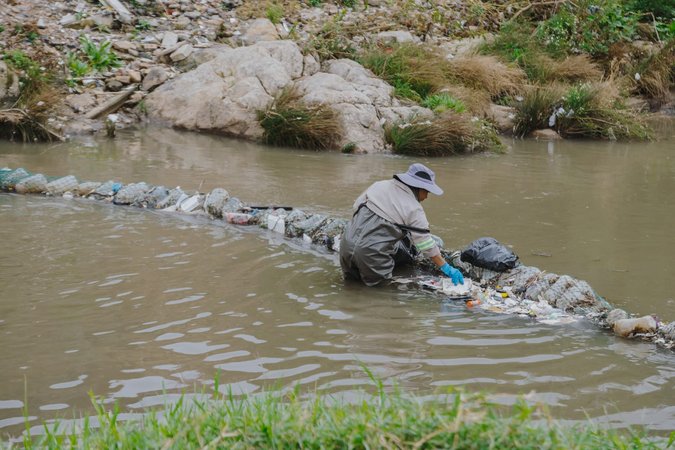
Magic happens in Jukskei River in Alexandra as waste is turned into art
By Funeka Bambalele

In Alexandra Township, north of Johannesburg, visual artists have joined forces with the local community, environmental scientists, and various stakeholders to transform waste from the infamous Jukskei River into breathtaking works of art.
Through the SUNCASA Litter Traps and Art Project, waste discarded in the river by community members has been retrieved and repurposed for an environmental science experiment. This initiative has not only created jobs for the unemployed residents of Alexandra but also fostered the creation of art.
On Wednesday last week, a CITYLIFE/ARTS team joined scientists, artists, the Alexandra Water Warriors, and the community for a tour of the once-feared Jukskei River, marking the official launch of the SUNCASA Litter Traps and Art Project.
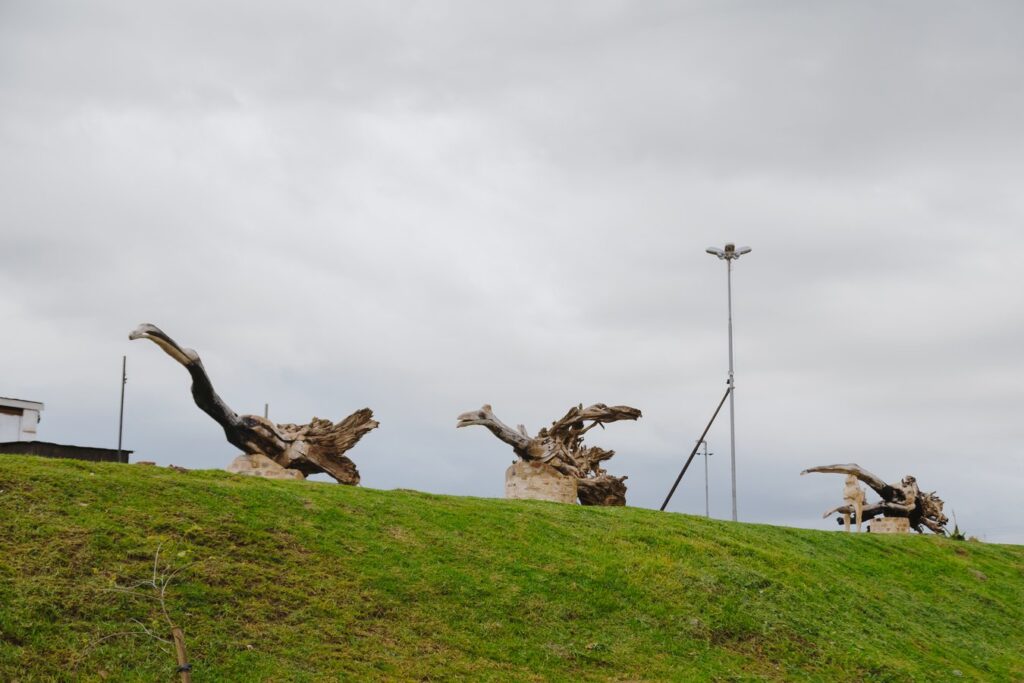
The riverbank, which a few years ago was polluted with heaps of garbage, has been transformed into a picnic area adorned with art sculptures made from waste collected from the river.

The Jukskei River, one of the longest rivers in South Africa, originates in Johannesburg, just beneath Ellis Park Stadium. The tour began at the Kula Marolen Foundation, which aims to preserve and promote the history of Alexandra Township.
The foundation is located next to the Alex Heritage Centre and across from the Nelson Mandela Museum Established by an enthusiastic Thato Mary-Ann Marolen Ngcobo, the foundation collaborated with artists and community to create five litter traps which are installed in the river. These traps are designed to prevent waste from scattering throughout the river.
Speaking to Citylife Arts, Marolen Ngcobo said when they started the whole initiative, they used plastic material recovered from Jukskei River. Upon realising that plastic gets worn out overtime, they changed and used a stronger material.

With visual artist Hannelie Coetzee guiding the group, the next visit was around the Jukskei River where we found women and men removing waste in the river. The waste includes rubble, old tyres, dead animals, dead infants, plastic bags and plastic cups. In cleaning the river, the workers are assisted by the installed litter traps which trap waste and allow only water to pass through.
The found waste like tyres and flood debris like trees and rubble has been turned into huge public art sculptures which are placed along the banks of the Jukskei River near the Alexandra cemetery. Seasoned and award-winning artists like Collins Maswangwanyi have been roped in to assist in turning typical flood debris into engaging sculptures.

According to SUNCASA (Scaling Urban Nature-based Solutions for Climate Adaptation in Sub-Saharan Africa) the transforming of solid waste into public art does not only cleans the river but also it reduces flooding, improve biodiversity.
CEO of the Johannesburg Inner City Partnership (JICP), David van Niekerk said that the 3-year initiative is aimed at revitalising the Upper Jukskei River catchment through nature-based solutions that address flooding, erosion, manage urban heat, improve water security, and enhance biodiversity protection—ultimately increasing climate resilience for over a million people.
Van Nierkerk added that trees have been planted along the banks of the river and around Alexndra.
“It struck me that we could turn the rather unsightly litter traps into vibrant community spaces by activating them through public art installations. They could then be used not only for river cleaning, but also to involve the local community in the activation process, as well as places where locals and tourists could learn about the river and nature-based approaches.”
Apart from turning waste into art, it has also opened job opportunities for the unemployed people of Alexandra. Over a 1000 people are employed by the project.

“Hundreds of community members have already engaged with the dynamic litter harvesting devices and the process of waste transformation. The next phase involves a co-designed plan for the riparian zone of the Jukskei River Park, activating participation from thousands more who live along the riverbanks.
“The educational component of the project translates science and creativity into accessible resources for learners. Community-focused lesson plans cover topics such as biodiversity, including the mongoose’s role in managing rat populations, and goats being a more sustainable livestock choice, offering an integrated understanding of ecosystem health.”

In Johannesburg, the project intends to restore more than 450 hectares and plant 46,000 trees in strategic sites. Local partners include the City of Johannesburg, the Johannesburg Inner City Partnership, Johannesburg City Parks and Zoo, Zutari, Gender CC, Water for the Future, and the Alexandra Water Warriors.

The SUNCASA initiative is funded by Global Affairs Canada and delivered by the International Institute for Sustainable Development (IISD) and (WRI.