

Reverse Futures exhibition at Joburg Contemporary Art Foundation: Weaving together the past, present and future through technology lens
This exhibition is a curious collision of three dimensions as concepts of human experiences – the past that has been experienced, the present that is being experienced, and the future experience, that is being imagined into existence. These three concepts, have been collapsed, and in their wake, a new something, a reversed future is revealed.
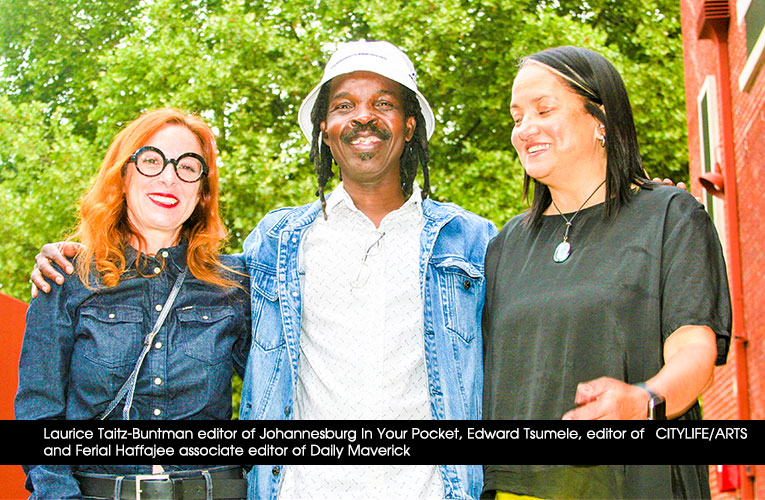
By Edward Tsumele, CITYLIFE/ARTs Editor
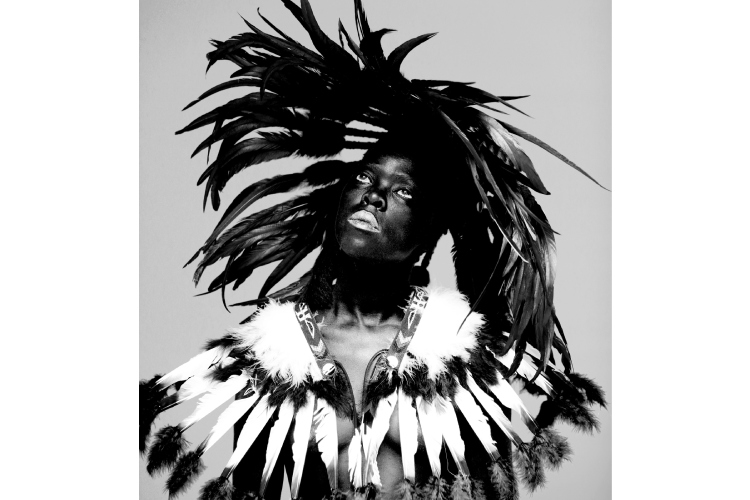
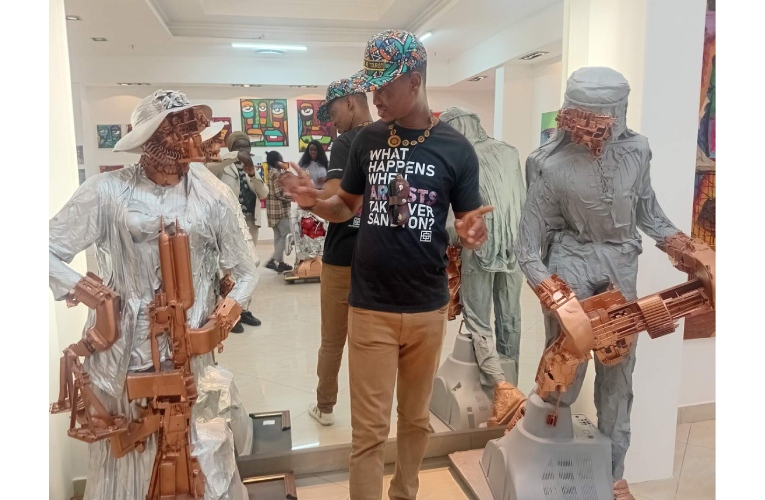
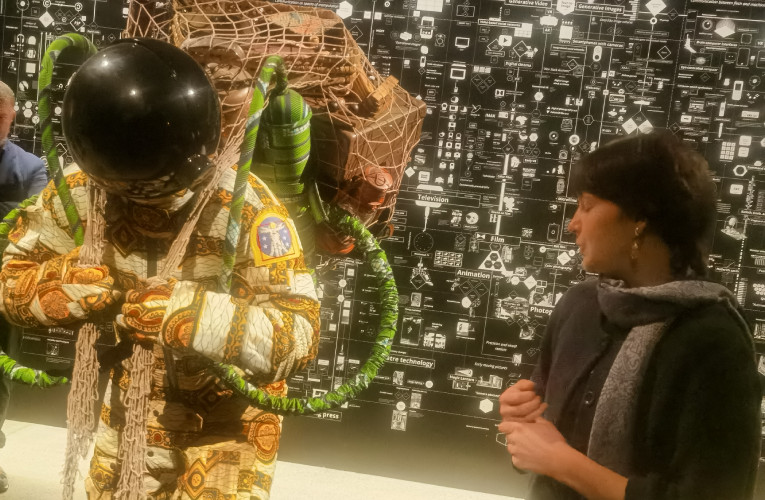
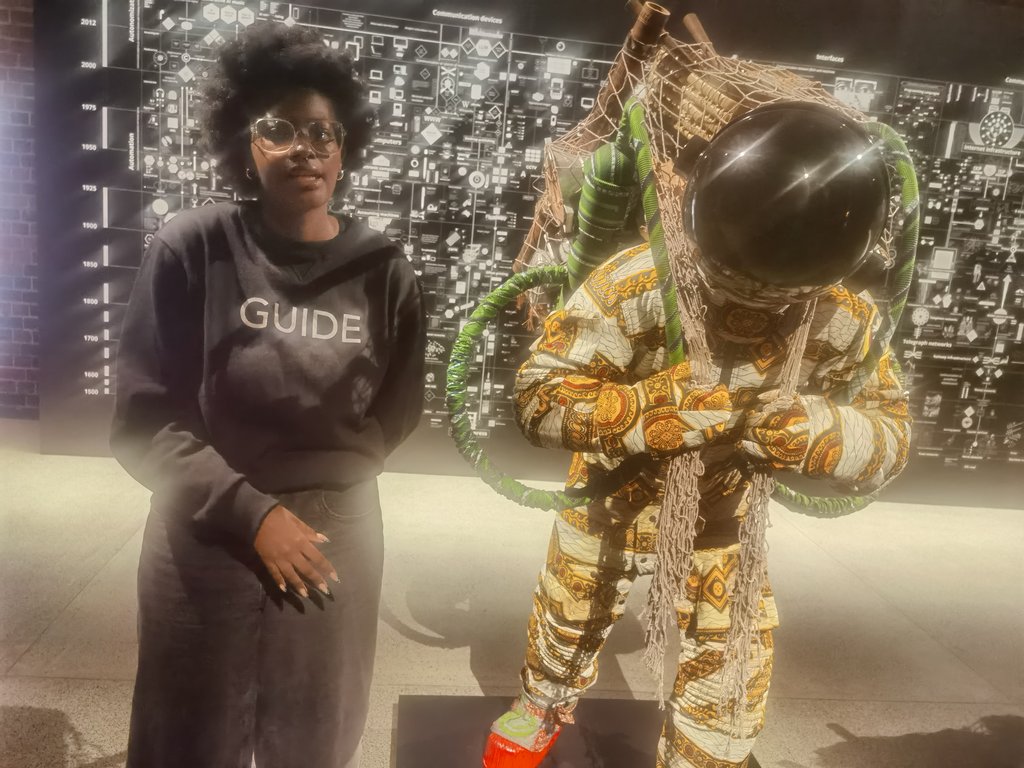
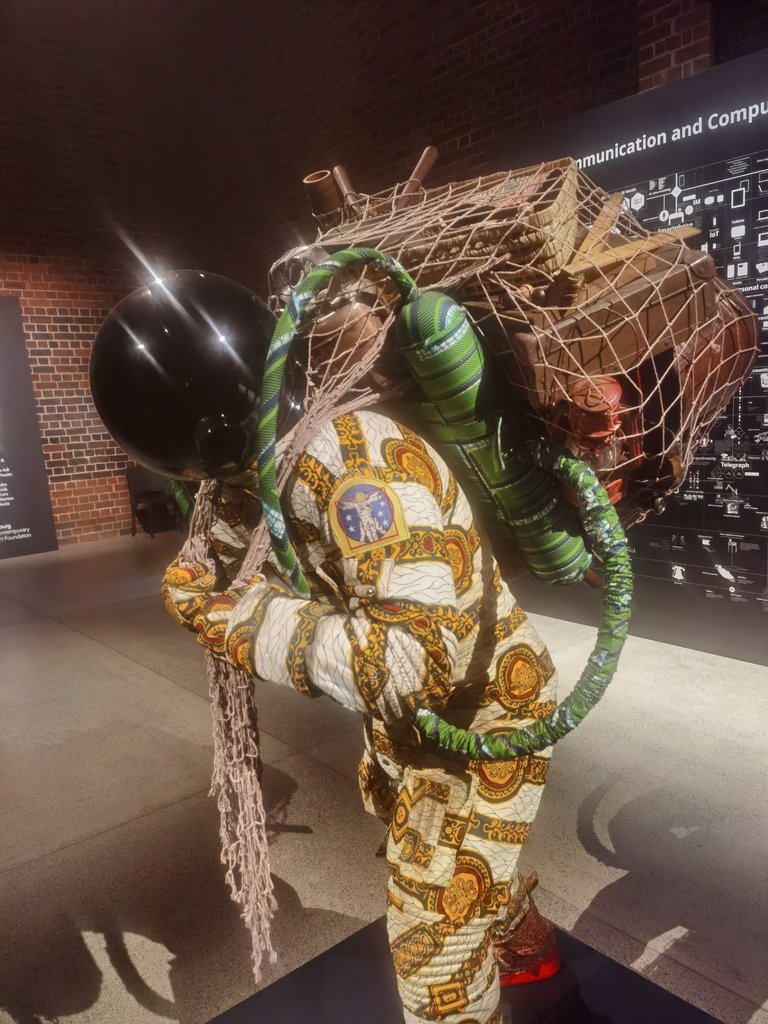
This sculptural work stands with grace and confidence, as it greets and welcomes you into this exhibition. It is also unapologetically Afro-futuristic. The figure of an astronaut, rather more appropriately, Afronaut, cannot be mistaken for anything else. Looking elegant in African attire, with organic material draped neatly and elaborately on its back, reminding one of a familiar sight on Johannesburg streets –the recyclers carrying thrown-away recyclable material, heading to recycling centres dotted around Johannesburg, to exchange their retrieved cargo for cash.
This is work exudes magic realism through and through. It gazes straight into a future seen and defined by African eyes. It is a perspective that lends itself neatly into the broad current conversation by the Global South collective. This is currently where thinking about the state of our current world, including issues of climate change and the future of the earth, are on the lips, and minds of thinkers and activists.
You would not be far off the mark, when you look at this work, and suddenly, get reminded of the work of Spanish photographer Cristina de Middel. Or the fictional character in Zambian-born writer and US based, Namwali Serpell’s novel The Old Drift. The novel is critically acclaimed for especially, its narrative style, shifts between historical and science fiction, exploring various themes, such as racism, technology and generally, the human condition.
Middel is essentially a photographer, who has worked as a photojournalist, but then, in later years, started exploring more areas in her art practice, resulting in her famous series, The Afronauts in 2012, that “explored the history of a failed space program in Zambia in the 1960s, through staged re-enactments of obscure narratives, challenging the traditional depiction of the African continent.”
However, the thinking in terms of these two artists’ work in comparison to Yinka Shonibare’s, ends there. This work, that is Shonabare’s sculpture, is silent and yet loud. It is an innate object, true, and yet alive and loud at the same time. It is also organic as well. A sharp contrast that constantly plays in the viewer’s mind as the reality of its multi-dimensionality hits you. It definitely has a layered complexity. The work engages one’s senses in a profound way –the gazing and wondering and wandering eyes as you try to make sense of it. Trying to have a proper look from all its angles. The hearing of a sound that is silent. The feeling that this object is of us –the people in the Global South. The smell that is hard to ignore. Not being felt, but discernable, nevertheless.
Welcome to the new exhibition at Joburg Contemporary Art Foundation’s (JCAF) 2026, curiously titled, Reverse Futures.
In this latest exhibition hosted by JCAF, there are outstanding art objects –installations, sculptural works, audio narratives, film and a few paintings, added for effect.
A technology intense exhibition, at first, you may struggle to weave the pieces together in your mind, to formulate a comprehensible idea of what is going on here. However, you will be able to follow the narrative created here, that is, if, you gave yourself enough time to observe, engage, dispute, agree and think contemplatively about the threads. That is that, when they come together, construct a certain reality. A reality that since the existence of human kind, technology, has been mined by the human mind, perfected and evolved for its benefit. Most of the times anyway. But there are other times, when it serves other darks sides of humanity. You will get this from Reverse Futures, anyway.
And when you think of it, the constant creation of technological tools, has always been meant to assist us as humanity in our daily existence. To make our lives better. For example, the telephone and the telegraph, when they were created, made our lives certainly better. Especially when it came to communication. Definitely, the arrival of the cellphone technology, has certainly closed the gap that the telephone and the telegraph as tools of communication, had left open.
These modern times, however, our lives have certainly become better. This is as one can literally communicate with anyone around the world in real time. You can communicate with such a person while you are on the move, which you cannot do with a fixed line telephone. And also, with the arrival of email technology, one no longer need to go to your local post office to receive your telegraph. It would also be not an exaggeration to claim that young people today, will out-rightly dismiss the idea of sending a message through a fax machine.-
All the above tools of communication were important to humans when they were invented. But in the contemporary world, technology keeps on evolving, making it easier to navigate our lives. Personally or professionally.
However, technology, sometimes, can also be used irresponsibly by individuals, institutions, and even, scarily by governments, which are autocratic. For example, spying on unsuspecting citizens deemed ‘problematic.’ Such as critics of government excesses. For example, governments can eavesdrop on citizens’ cell phone conversations, and can commission It experts to hack citizens’ emails, despite the existence of passwords.
I am sure you are by now, getting my drift about the essence of Reverse Futures exhibition.
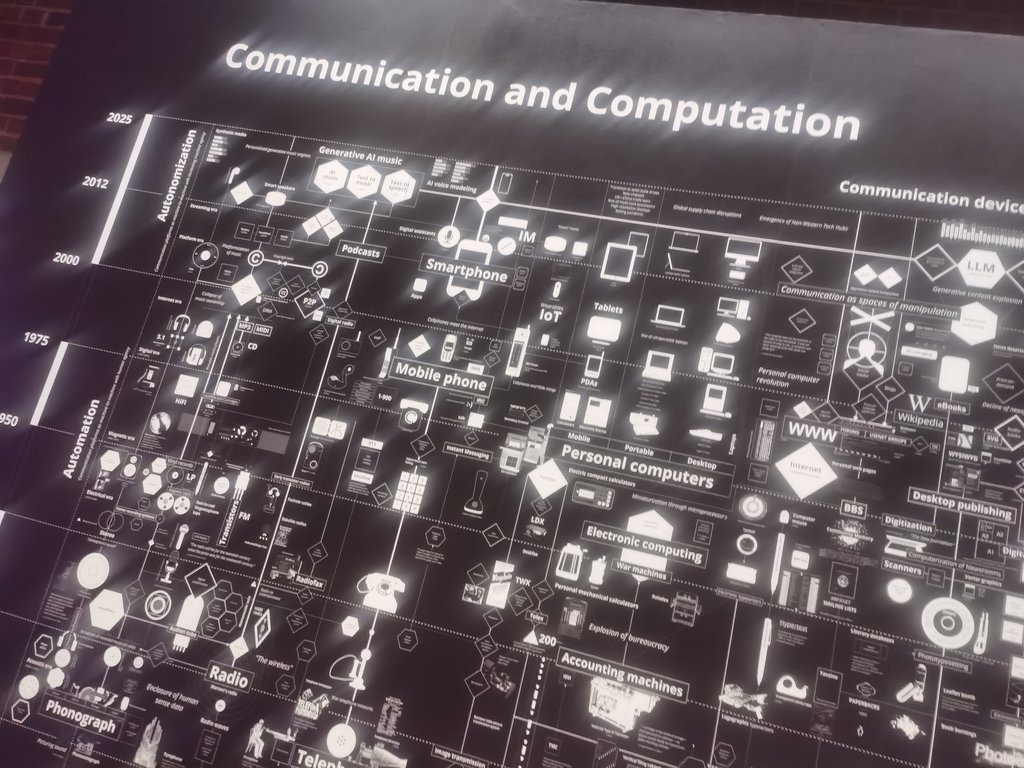
The part of this exhibition to particularly take note of, in order to make it easy to navigate its complexity, I would suggest, is to sit for a while with an installation that is directly behind the Shonibare Afronaut sculptural work. This is as this spreading installation behind the Afronaut figure, has several sections that depict the technological evolution in human existence –ranging from the creation of the press to biometric technology, among other technological creations this installation carries.
And what is clearly important in this section, is the fact that you will be able to see both sides of the coin. That is as far as technology is concerned –that is its useful side and its insidious side –especially, when technology is in the hands of people with a nefarious intent on other humans. In fact, technology’s duality in use, sits uncomfortably with this awkwardness -its dual contradictory application co-exiting next to each other at any given stage of human existence.
For example, when the printing press was created, it enabled humans to do great things-publishing books and newspapers. But, sometimes, the very same books and newspapers were, often hijacked by those with an insidious agenda. For example, to disseminate propaganda. You will be able to clearly discern this duality in technology use in modern societies in Reverse Futures, should you be patient and spare enough time to do some mental dance with the exhibition.
What I particularly like about Reverse Futures, is that technology has been successfully employed as a work of art, and according to JCAF director, Clive Kilner: “For us Reverse Futures represents the past, the present and the future.”
In other words, this exhibition is a curious collision of three dimensions as concepts of human experiences. The past that has been experienced, the present that is being experienced, and the future experience that is being imagined into existence. Now. In fact, these three concepts, have been collapsed, and in their wake, a new something, a reversed future is revealed.
In fact, it is a collision and intersection of these three dynamics in human existence and experiences –the past, the present and the future, that have informed the conceptual frame work of this exhibition, using technological advancement as its pieced-together thread that formulates the cohesive narrative of the good and bad, that technology represents in our contemporary lives.
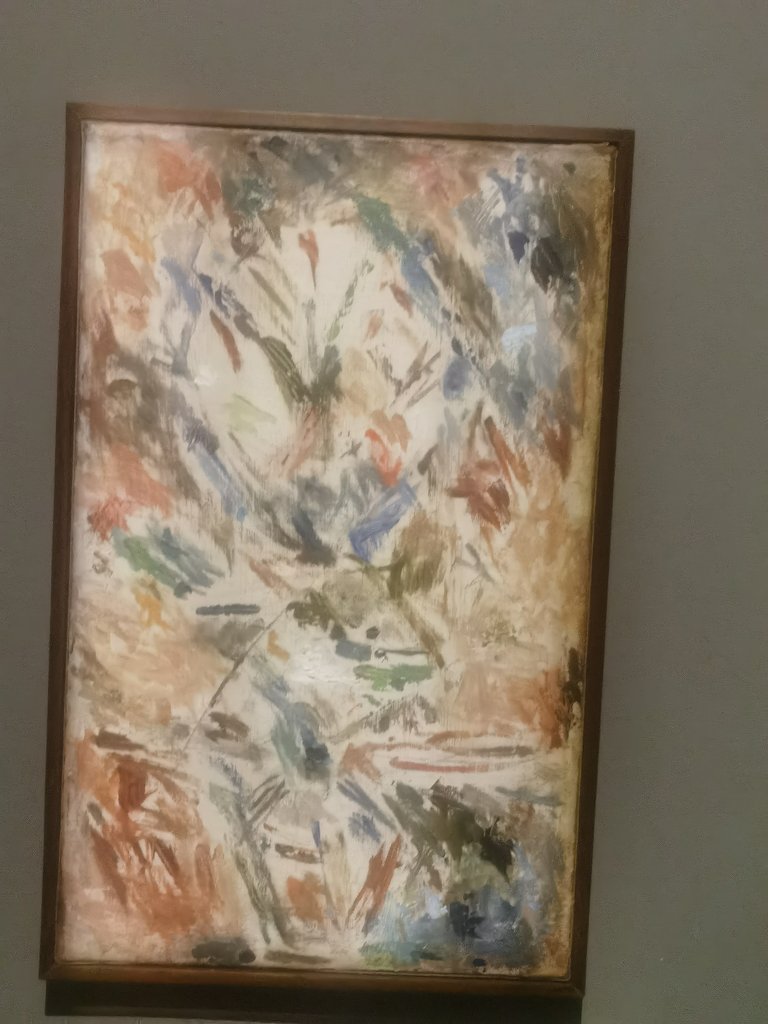
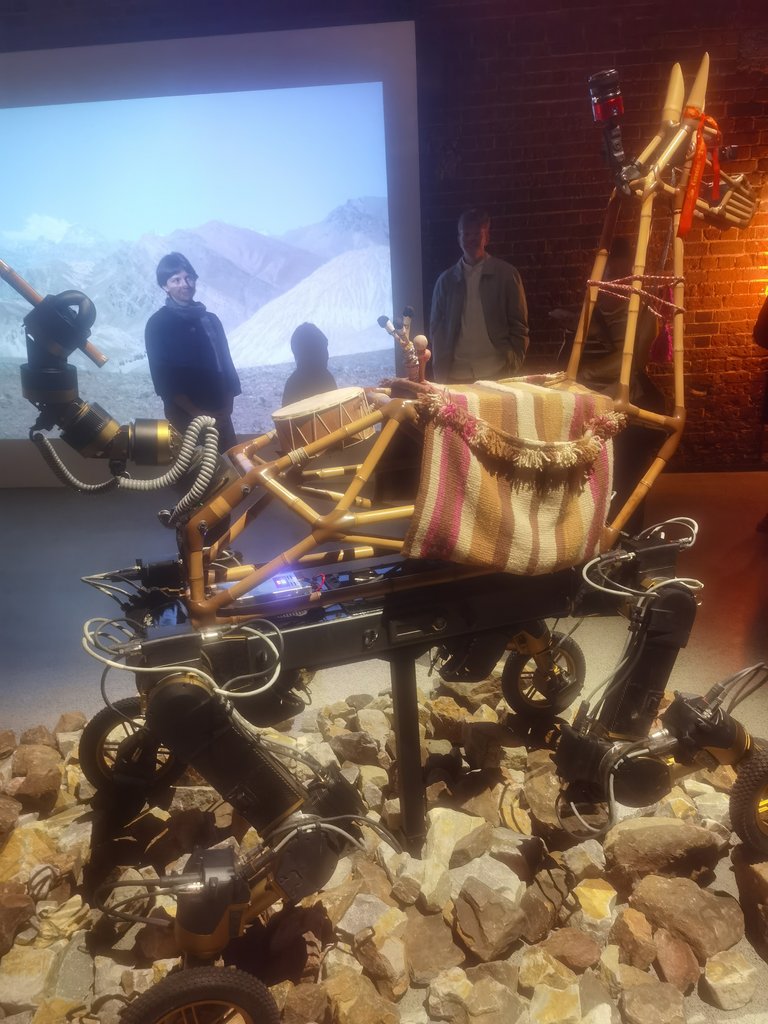
Other notable concepts and art objects in this exhibition include, a painting by the late South African painter, Ernest Mancoba. It is a surreal, spiritual abstract. You also need to spend time at the ‘human’ robot created by an Argentine artist Paula Gaetano Adi, inspired by an indigenous mythical figure that is said to have lived on mountains in ancient Argentine, as a guard that made sure that animals are not molested by humans.
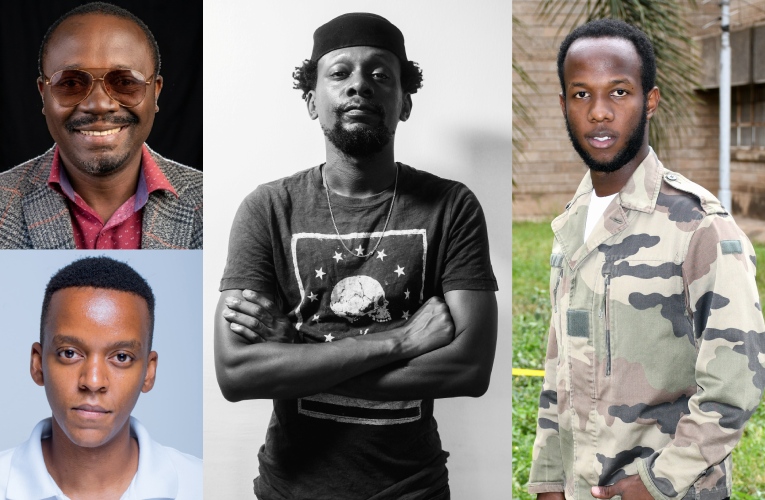
Another notable sculptural piece, is a life size sculpture with an accompanying replica, which represents the caves in Kenya, where slaves were kept, pending their forced shipment to overseas human markets. This one is hard to look at without feeling blood pressure swelling up in your strained veins. This piece graphically demonstrates the dark side of humanity. This work was created by the UK-Kenyan duo of architects Cave Bureau, co-founded by Kabage Karanja and Stella Mutegi.
In fact, it is this piece that inspired the name Reverse Futures, the title of this exhibition. The duo is currently one of the most talked about architectural artists from the African continent, creating futuristic architectural art. Among other prestigious art events, the duo, has in recent years, exhibited at Venice to critical acclaim.
Consequently, this piece of art work, can be said to represent most appropriately, the spirit of Reverse Futures –unapologetically centering the global South, standing in stark parallel, to the often dominant Global North view of the contemporary world.
In essence, and according to a curatorial note accompanying this exhibition, “The exhibition centres on ideas of the future from the Global South, where past, present and future are interconnected. Grounded in historical research, artists’ lived experiences, community narratives and Indigenous knowledge systems, the exhibition examines how the effects of colonialism, migration and technological change continue to shape both the present and our visions of what lies ahead.”
Welcome to Reverse Futures. Be welcomed by Shonibare’s life size sculptural piece.
The artists whose work constitute Reverse Futures are Etal Ednan, Cave_Bureau, Kate Crawford &Vladan Joler, Paula Gaetano Adi, Kamil Adam Hassim, Traci Kwaai, Ernest Mancoba, Georgia Mannik, Yinka Shonibare, Rebecca Potterton and Wolff Architects.
.Reverse Futures is at No.1 Durris Road, Forest Town, Johannesburg, 27 (0) 10 900 2204
info@jcaf.org.za
The exhibition opened on Friday, June 25, 2026, and runs till December 5, 2026. It is free to the public. However, booking is absolutely necessary as demand is likely to be high. You can book through info@jcaf.org.za