


Sibaningi, a solo exhibition by Zanele Muholi depicts precarious existence of the LGBTQ+ community in South Africa
Indeed here, it is clear that there is such collaboration. But what is missing is the typical smile, suggesting at face value, that these faces seem not to have been a result of a collaborative effort. In fact, one could even argue that the subjectivities seem to have been coerced into posing for the image. This is because the faces are telling the story of the risk of violence, marginalisation and general hostility queer bodies often face in communities around the country.
By Edward Tsumele, Winner of NHC Heritage Journalism Award 2026
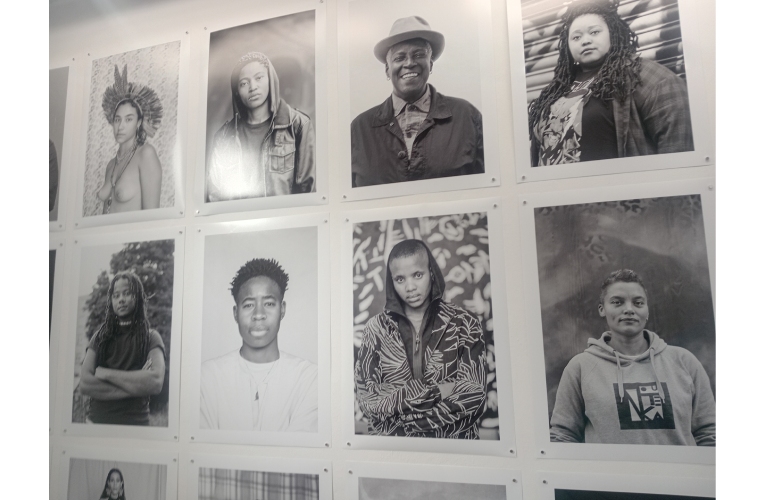
The faces on the wall, are all not smiling. All the portraits on the walls show faces of individuals that come from diverse backgrounds. However, what will most probably strike you as you view these photographs, is that unlike most portrait usually taken of people, the absence of a smile, something that nearly collaborate between the photographer and the subject of photography always defines contemporary portraiture. Particularly the type where there is a willingness to.
Indeed here, it is clear that there is such collaboration. But what is missing is the typical smile, suggesting at face value, that these faces seem not to have been a result of a collaborative effort. In fact, one could even argue that the subjectivities seem to have been coerced into posing for the image. This is because the faces are telling the story of the risk of violence, marginalisation and general hostility queer bodies often face in communities around the country.
That is exactly the intention of the photographer. This posture, tells the deep story behind these portraits. These are images of bodies that are clearly collaborating with the photographer minus the smile.
The reasons is simple and will soon emerge as you linger longer gazing your eyes around the room, focussing on the images adorning the walls of the Market Photo Workshop in Newtown.
These are images of people whose photographs were created as an instrument to raise awareness about a particular and dangerous situation these bodies often encounter in their interaction with ironically, their immediate communities daily.
The point being driven here is that the South African Constitution, inaugurated in 1996, hailed globally as one of the best constitutions in the world, protecting the human rights of all the people who live in South Africa through The Bill of Rights, has indeed gone a long way in mitigating the dangers, vulnerable communities face. Such as the LGBTQ+ community.
However, more work still needs to be done, to raise awareness about the presence of this community around communities, particularly members of the community that are conservative and at times pose a danger to those that are different from them.
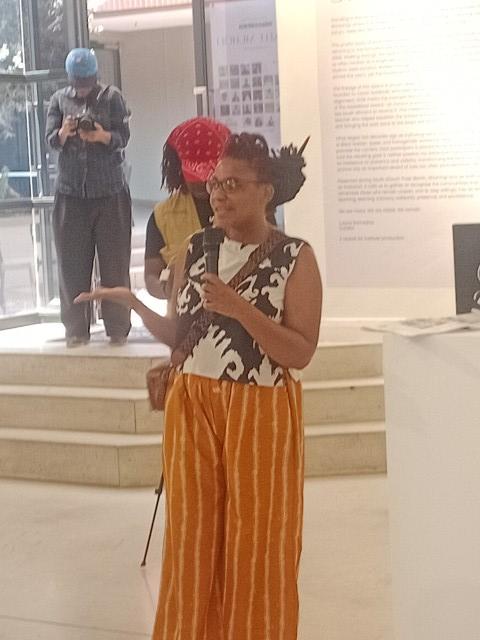
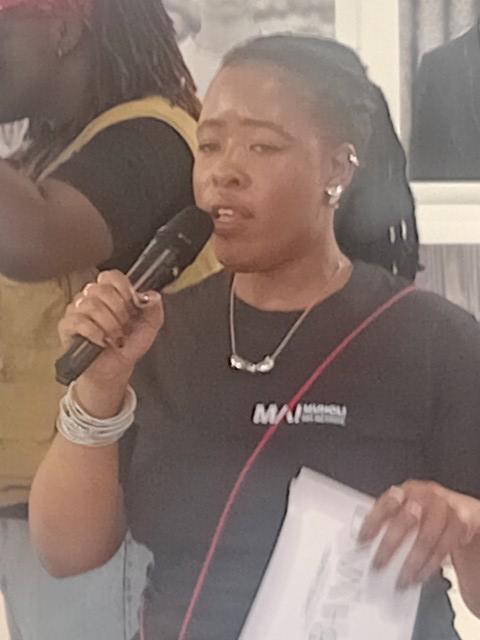
Welcome to Sibanging, the latest exhibition by world renowned South African photographer, Professor Zanele Muholi, which opened on Saturday 17, October 2026, at the Market Photo Workshop, in Newtown, Johannesburg, the multi-award winning visual activist and photographer’s alma mater.
The images tell the story of the danger that the LGBTQ+ community constantly faces in communities around the country. These are a body of work that Muholi has created in the past 20 years of their visual activism, raising awareness around the danger this community constantly faces in their immediate communities.
This danger includes marginalisation, prejudice, discrimination, and even violence by a society struggling with the idea of accepting that when it comes to the intimate issue of social orientation, this particular community is different.
Muholi worked on this series immediately after graduating from the Market Photo Workshop in the early 2000s, having found her space within the competitive photography space by pursuing with determination and deep commitment, visually representing the lives of the LGBTQ+ community, using the medium of photography effectively.
In this journey that has won her accolades around the world, over the years, Muholi started off by focussing on the lives of especially black lesbians, but as the images in this exhibition show, eventually morphing this series into apowerful body of work that actually puts a spotlight on the LGBTQ+ community as a whole in South Africa, and the dangers they constantly face.
Muholi, having enjoyed a successful career as a formidable and brave photographer profiling a vulnerable section of the South African community, has become a popular pin-up figure at conferences dealing with broad issues of humanrights as well as hosting seminars on the subject at universities around the world.
Their photographs sit in some of the most prestigious institutions around the world, such as universities and museums. In a way, Muholi has managed to take a subject that for years, existed on the periphery of major discourses around human rights, into a regular item as part of the mainstream discussions on human rights.
Muholi as a result, has lived in a suitcase, travelling around the world to hosting seminars and lectures, as well as holding exhibitions at some of the most important art spaces around the world.
On Saturday, Muhloli was not able to attend, instead,they addressed a diverse audience who honoured the invitation to the opening through a live-streaming platform. They addressed the attendees while in Paris, France preparing for yet another international solo exhibition, scheduled to open in November in that country.
Sibaningi, which is curated by Lufuno Ramadwa, opened against the backdrop of Muholi receiving the major prize in Sweden. The Johannesburg opening follows the Hasselblad Award ceremony in Gothenburg on 9
October. The Hasselblad Award is the world’s largest photography prize. Muholi received
SEK 2,000,000, a gold medal and a Hasselblad camera, and a solo exhibition at the Hasselblad Center from 10 October 2026 to 4 April 2027. Muholi is the first Black queer African photographer to receive the award.
“The faces you see on the walls, represent several others that are out there, and who have not come out. Among the women who in 1956 marched to the Union Buildings in Pretoria, as well as among the generation that protested in June 16, 1976, were queer women.
“Out of the population of 60 million, that is documented, there are also queer people out there. The number could be as huge as 1 million in this country. So, sibaning,” said Muholi. This series has been so widely exhibited globallythat it has in fact defined Muholi’s art practice throughout their career.
And on Saturday, the images that have been selected for this major solo exhibition in South Africa for the artist, will fill the downstairs gallery as well as the upstairs gallery.
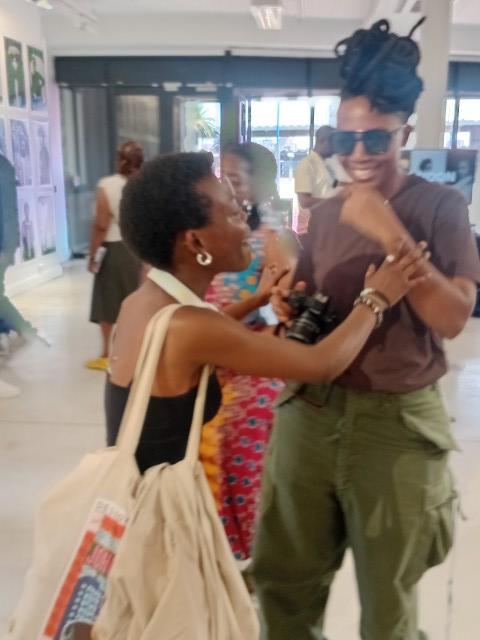
However, on the opening day, only the downstairs gallery was open, with the upstairs gallery yet to be opened to the public once the installing was completed. All in all, an estimated 200 images will be up, and the public is especially invited to view this free exhibition.
“Through this exhibition, we are inviting the public at large, not only those who are part of the LGBTQ+ community, to work with us to raise awareness. We have reached a point where just tolerating us is not enough, but accepting that we are here, and sibaningi, we are many,” Muholi appealed.
The exhibition was what one would expect of Zanele’s work, raising in an effective way, the issue of the risk that that the community they have dedicated their entire professional practice to, who often face several challenges in communities, such as prejudice, marginalisation and not being accepted as they are.
There is no doubt that this exhibition achieves its mission. It however could have more appealing aesthetically if the curator had set time aside for framing this excellent body of work.
The atmosphere at the opening, was relaxed, compared to the usual Zanele Muholi openings, which often could be mistaken for a rock concert as they attract huge audiences who go all out. This was different, but throughout the afternoon, the event indeed felt like a celebration of visual activism that clearly had had an impact on changing the public’s attitudes towards those who are different.
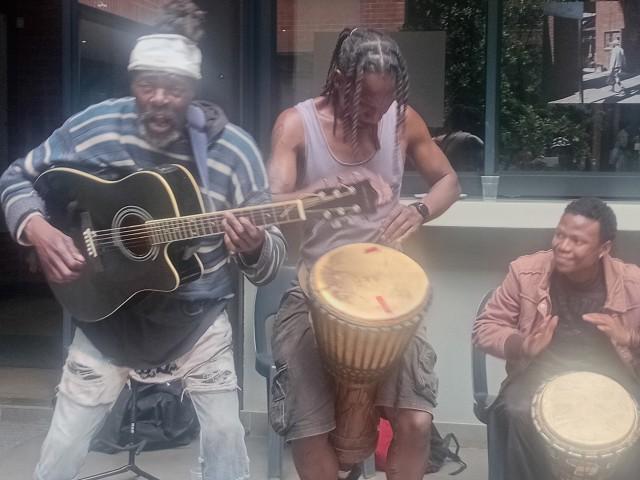
Prince of Newtown provided entertainment in the form of a musical set as guests imbibed on food and drinks provided for the occasion.