

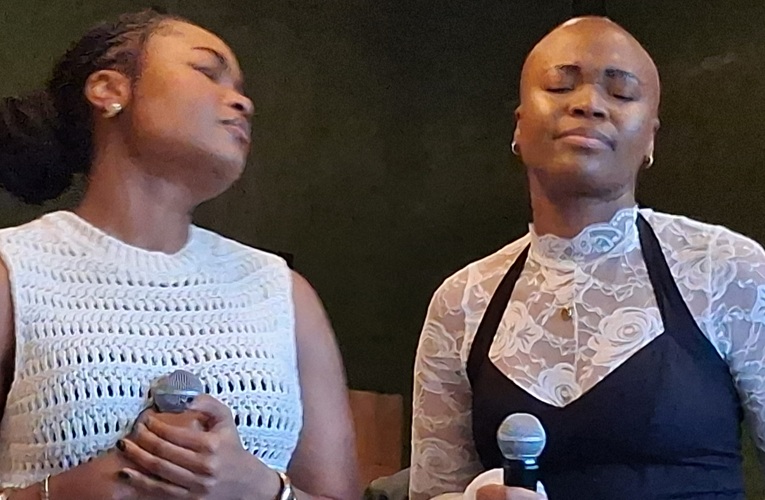
Sultry sound of Thesis ZA reminiscent of Miriam Makeba’s dominates at debate over the future of the Reserve Bank of South Africa
This is as economist Duma Qubule and guests robustly engage at an Oxfam event at Breezeblock in Brixton over the soul of the central bank.

By Jojokhala Mei
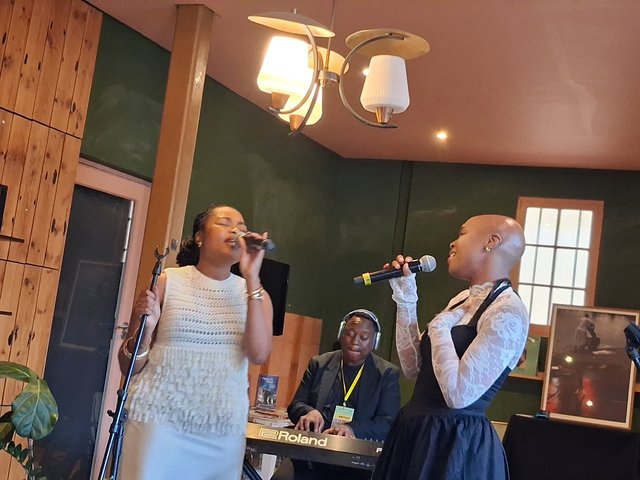
Acclaimed folk music vocalist duo Ondela Simakuhle and Ayanda Charlie of Thesis ZA echoed the New Economic Hub’s hard debate with a soulful ‘Uyavimba umam’ alapha; Uyavimba utat’ alapha / This mama’s a miser; This papa’s a miser’ lament in their mother-tongue to a packed Breeze Block Café and bookshop in Brixton, Johannesburg on Sunday 05th October 2025.
Thesis ZA are University of Cape Town graduates hailed by the South African Cultural Observatory itself for taking ‘pride in being independent artists who are not driven by financial demands, but by the love of their art. … Ultimately, they hope to play an active role in the creation of a stronger song-writing landscape in South Africa.’
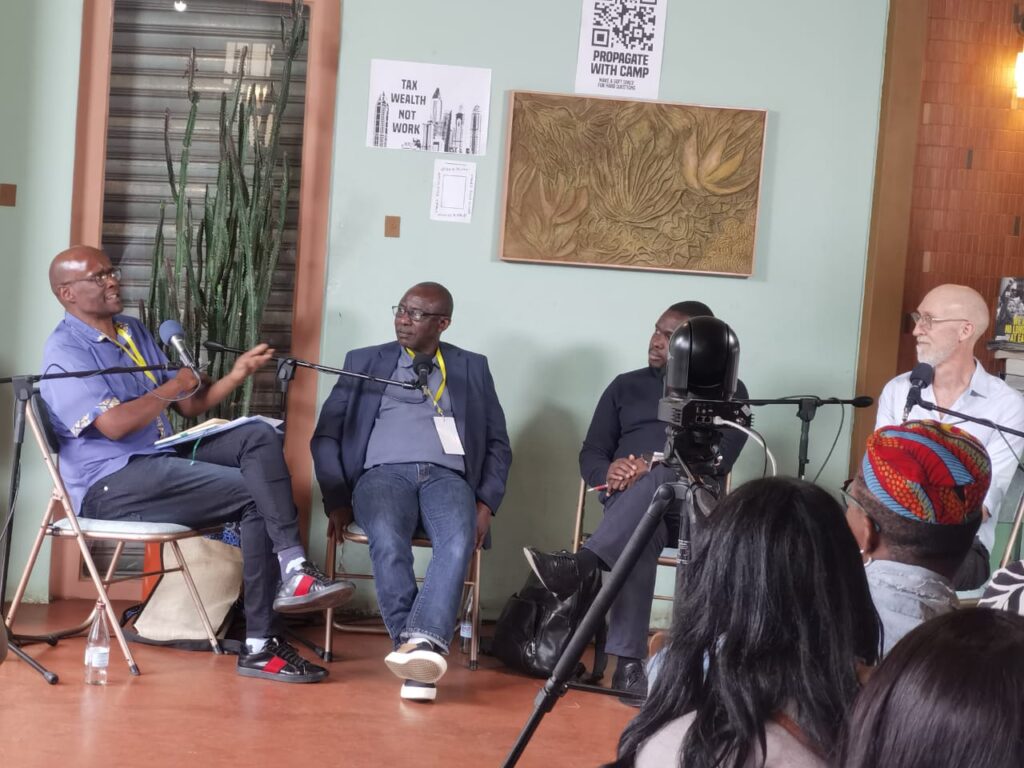
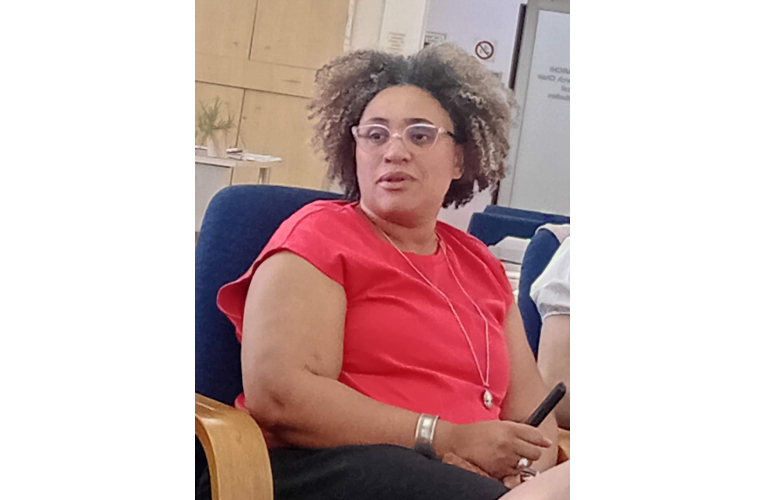
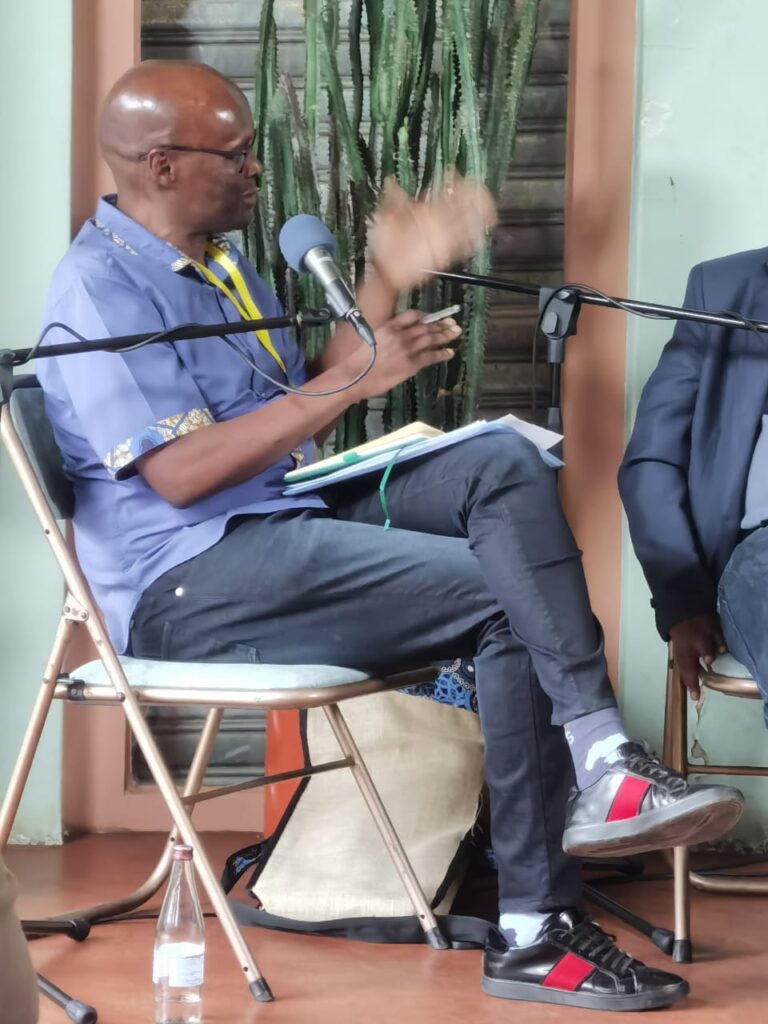
None other than well-known economics commentator Duma Gqubule facilitated veritable panelists Dr Gumani Tshimomola – Parliamentary Researcher, Economic Freedom Fighters; Redge Nkosi – Executive Director, Firstsource Money; and Buddy Wells – Public finance activist
The debate was titled Money Power: Who Pulls the Levers?
While the debate spun on contrasting the South African Reserve Bank (SARB) and the government’s Treasury Department, the New Economy Hub elaborates that it is ‘debates over the South African Reserve Bank’s mandate, ownership, and independence, and informed by global examples from Brazil to India, … it asks who really steers the money supply, and to what end? What is Monetary Policy and who gets to decide it? Could the South African Reserve Bank be doing more to rescue the economy? And will calls by politicians and popular figures to nationalise it deliver the results they promise, or create new risks?’
You could say leftist economists were preaching-amongst the converted, but the government had been invited and didn’t pitch.
The New Economy Hub went on to note that ‘Monetary Policy often feels remote, but its effects are deeply personal. Every interest-rate hike ripples through bond repayments, food prices, wages, and the survival of small businesses. And will calls by politicians and popular figures to nationalise it deliver the results they promise, or create new risks?
Questions and comments from the floor prompted, amongst many, noted that exorbitant bank profits are allowed by the SARB; THE 2017 ANC political party decision to nationalize the SARB was never followed up as European countries with some central bank nationalization jealously guarded that South Africa doesn’t follow them; the private sector can’t maintain its runaway profits amidst an economic and unemployment crisis; the 1990 Banks Act deliberately excluded the state from applying for a Banking Licence; and ‘SARB can’t be independent of national priorities’, like SA’s general unemployment second only to Swaziland, and a youth unemployment rate that is second after Djibouti in the Horn of Africa.
Finally, Thesis ZA’s sultry moves had successfully raised from the dead the spirit of the late Mama Africa, Miriam Makeba, and they smoothly belted their own Sondela tune that is strikingly different from Ringo Madlingozi’s famous one, and ‘vinyl DJ sets by Riki Jinx continued to ring in the ears long after closing.