


The becoming of Barbara Masekela and Makhosazana Xaba as literary figures in South Africa discussed at Johannesburg Institute of Advanced Study
By Edward Tsumele, CITYLIFE/ARTS Editor

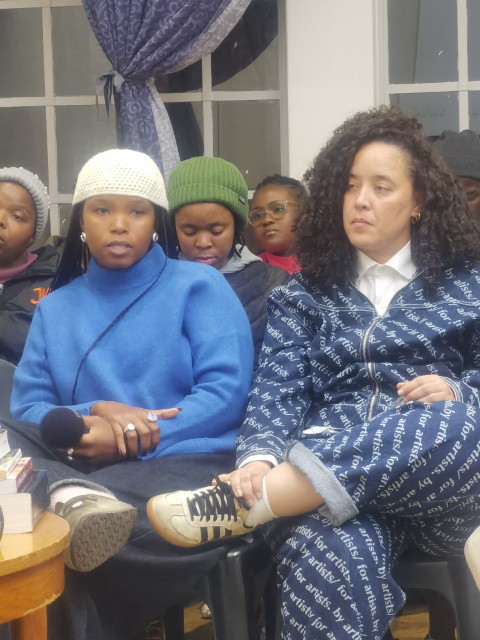
We gathered in one of Johannesburg Institute for Advanced Study (JIAS)’s seminar rooms and the audience was mostly young. Perhaps aspiring writers, experienced writers, students and a few could have been academics. A few odd media types perhaps were also in attendance. We were ready and even eager by the time the proceedings started around 6.10pm to imbibe the wisdom of the two writers in the house, so to speak.
To hear the two women writers speak about writing, something that is often easier said than done. Both poets and non-fiction writers billed to share the world they inhabit as writers with us. The world of a writer is a lonely world granted, but also fascinating to share with others on those rare occasions when one gets such an opportunity. Such as this one.
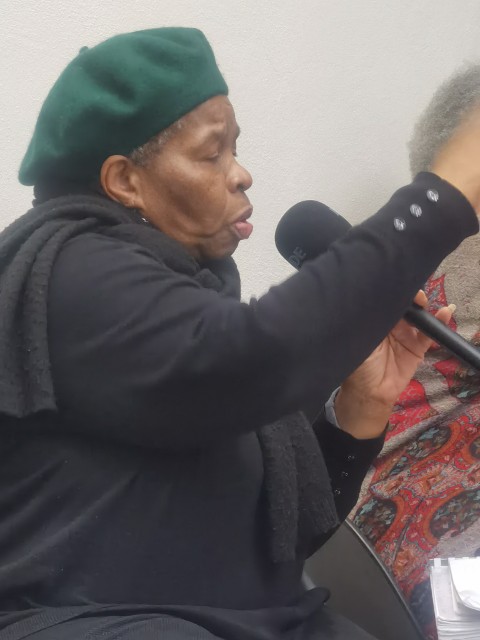
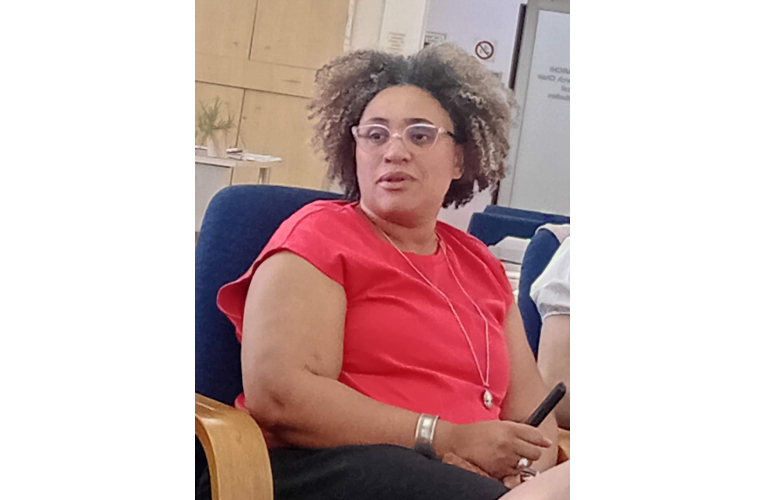
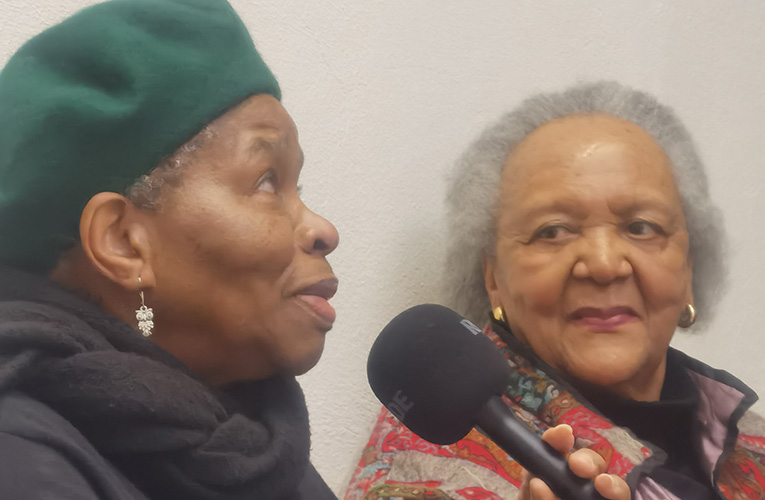
And indeed celebrated writer, cultural activist, founder of Johannesburg Women Writers Festival and former Ambassador Barbra Masekela, and Makhosazana ‘’Khosi’ Xaba, celebrated poet, biographer and currently senior researcher and convenor of the JIAS Creative Writing Workshop, took us into their confidence about their writing process.
Prompted by the facilitator, each of them delved at length into various aspects of their literary journeys. At times jocular, funny and anecdotal in their approaches. Both painted a colourful, and yet complex trail of how they became who they are today. In the case of Xaba, centring and celebrating women, and in the case of Masekela, writing at the intersection of the personal, political and cultural.
They both spoke about their childhood experience of the family and societies they intersected with in their lives, and how those experiences shaped the trajectory of their individual literary journeys.
For example, Masekela, whose life is a complex tapestry of politics, culture, exile and home, apartheid and post-apartheid, the complexity of which is well captured in her book, Poli Poli, a memoir (which I actually personally enjoyed reading) her journey as a writer was ignited by the presence of books in her family in Witbank, (a coal mining town now called eMalahleni) where she grew up. That is before her family relocated to Johannesburg, living in a number of places, including Alexandra Township, near Sandton.
“I grew up in a family in Witbank where in our family we had books. My grandmother sold alcohol in our home. The men who came to drink there always came with newspapers. They would talk about what they had read, where we could even hear them talk openly about apartheid coming. At school, we were also introduced to literature, and most of that literature was colonial literature written by manly British men,” Masekela told the audience.
Her talk was humorous and of cause a bit naught at times.
“But, of course because some of the men were working far away, I ended up also writing letters for some elderly people to send to their loved ones working far away. But of course there came a time when we also started writing letters to our boyfriends, including when we wanted to dump them,” she said. That was a spontaneous bust of laugher in the room. Most were shy, and responded by a muffled giggle.
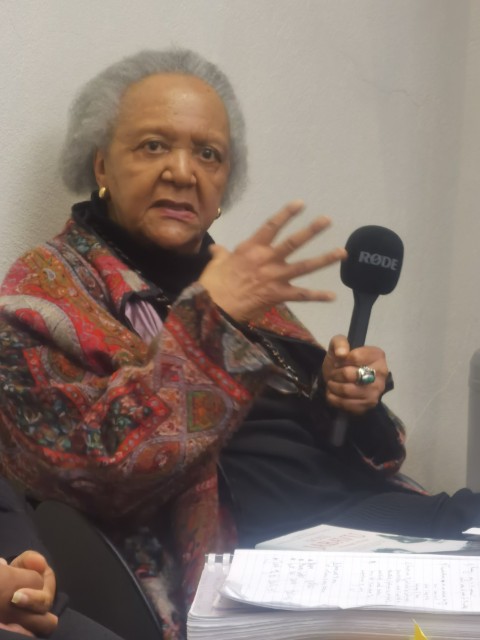
But also the culture that intersected with her life, including being multi-lingual, being able to speak several languages as a way of life, such as Afrikaans, English, Ndebele and Sepedi, part of her complex heritage, these assisted her in capturing the nuances of language.
“People during that time, in fact spoke in poetic forms, and not always literally. For example, if an elder wanted to say they were going to the toilet, they would rather say they are going either to a small room or outside. And never to the toilet,” Barbra explained. A giggle this time greeted her.
Xaba on the other hand, growing up in the then Natal Midlands, had a mother who loved the Zulu language, complete with its nuances, such as intonation, and insisted that her young child needed to speak isZulu, paying particular attention to the specific dialect of the area. She believed that to be proper for her girl child.
“”Mama was particular about what you would read in the house, which always had books. However, one day, I asked if I could pick up any book on the bookshelf, and she said yes, of course, yes. I choseJock of the Bushveld (a true story by South African author Sir James Percy FitzPatrick). That book, is in fact, the first English book I ever read. Several times actually.
“But when I went to high school where there were books in isZulu in the library, I read Zulu books, mainly novels,” and she revealed, “but now I read English books for children and books in Zulu for adults.”
But then, it is that initial contact with books in their youth that has moulded the two writers not only becoming loyal readers, but celebrated writers that they have become today.
But of course as adults, their individual writing styles have been shaped by various variables, including places that they have called home as they traversed the world. Experiences that shaped both their literary trajectories and their lives. It is those experiences that are embodied in their body of work today. We were told.
“Although my first encounter with literature was mainly English colonial literature, I also had access later on in life to newspapers. Such as the Rand Daily Mail, The Golden City Post, and writers such as E’skia Mphahlele, Can Themba and Lewis Nkosi, who had different perspectives from the colonial English writers.
”And when I went to America, where I lived for 27 years, I was introduced to poetry at university. In the US I was influenced mainly by black American writers. Their speech and poetry I found to be lyrical. Very poetic. Because we (exiles) came from a place of oppression, and Americans were also people whose ancestors were enslaved, taken there from Africa, they understood suffering, just like us. In the context of poetry, society is important, but when you write, it is very personal. However you are writing, you are writing about a collective experience actually. That is why society is very important in writing,”Masekela said, as a way of explaining her becoming a literary figure and educator.
Xaba’s trajectory into poetry happened late in her life when she was studying for a Master’s Degree in Creative Writing (at Wits.)
It happened in an unusual way in a reading group she was a part of.
“Moving into poetry was interesting. What happened is that each time I would write something, and thought it was prose, several members of the group kept on pointing out to me that actually what I was writing was poetry, and not prose, “Xaba said.
However today, her writing straddles multi forms –short story, poetry and non-fiction (biography) as well as translation.
Xaba has researched the biography of Noni Jabavu, an important black voice in Journalism in the 20th Century, if not somehow controversial due to her class sensibilities or lack of thereof in her writing. Xaba has also translated the seminal book by Franz Fanon The Wretched of the Earth into isiZulu. These are only two of her growing literary out, distinguishing her as a literary voice of substance on South Africa’s literary landscape.
On the other hand, Masekela is lauded for her memoir, Poli Poli, her debut book. However she is understood to be writing her second book that will reportedly give more light about her colourful life in the past sixty years.
And so, those of us who gathered at Johannesburg Institute for Advanced Study, 1 Tolip Street, Westdene, on November, 18, 2025, got more than what we had bargained for from these two significant women literary voices in South Africa.
The two hours, often long enough in a literary discussion for some people to either dose off or sneak out and never to come back, were so interesting to the extent that no soul left the room. Giving more opportunity to audience to engage with the writers on the part of the programme directors, could have added a perfect conclusion to an otherwise lovely presentation though. After all the audience are part of a literary performance, for events of that nature are after all, a literary performance of which the audience are part of the cast.
More talks are on the cards as part of this series. You better check out who and what is next by visiting the institute’s website. JIAS. Cool, engaging talks happen there.
.Masekela and Xaba’s presentation titled The Poetic Imagination: Writing. Memory, and Freedom, is part of the ongoing series titled Constituting a Black Archive, a five-part series of events foregrounding current work at IAS under the directorship of Professor Victoria Collis-Buthelezi. Presented as part of the JIAS at 10 celebrations, the series takes its name from Collis-Buthelezi’s forthcoming book, Ends of Empire, Black Liberation, and draws inspiration from Stuart Hall’s seminal essay, Constituting an Archive.