



Visiting academic Antony Bogues connects Haitian art practices to history and their African diasporic roots at University of Johannesburg seminar
It was therefore curiously intellectually triggering to learn that African religious practices formed a huge part of the schools of art which emerged particularly in Haiti. If anything, this demonstrated the resilience of African culture even in the most difficult of circumstances, such as slavery and revolutions.
By Edward Tsumele, CITYLIFE/ARTS Editor
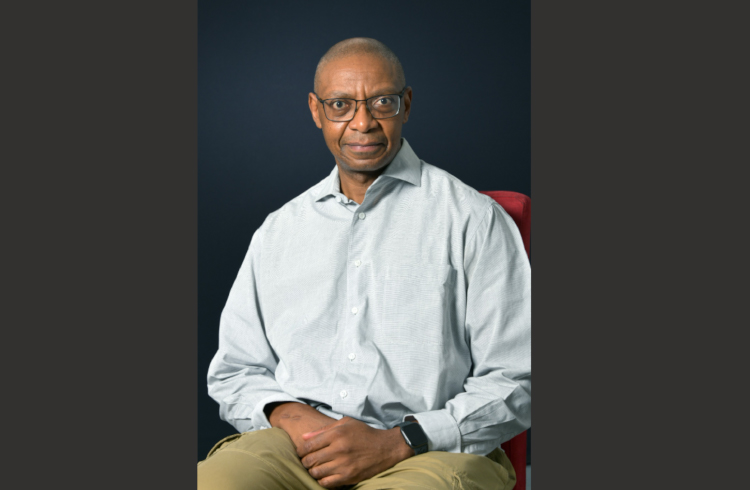
Main Pic: Prof. Antony Bogues
I have always wondered if, in this fast-passed world, where everybody is moving fast to somewhere not well defined, we as human beings in general, and African on the continent in particular, have ever wondered what happened to their cousins taken into captivity and transported to foreign lands during slavery.
I mean a huge number of African were taken to be sold as slaves, where they were exploited and treated like half human beings at best, and at worst, as animals treated in the same way as the animals that live in the bush. They were possessions to be exchanged and sold by those with power, just like goods. The Caribbean, as it were, became a location for a lot of these slaves.
This kind of cruelty, would completely break those not that are strong spiritually.
However, the Africans that were made slaves, did not only rebel against their masters to regain their human dignity, but they managed to preserve that one thing that reinforced the power inherent in one’s culture.
And so last week, when I heard that Professor Antony Bogues was in the country to give a seminar to an audience made up of mainly post-graduates students at University of Johannesburg, I made sure that I did not miss that seminar.
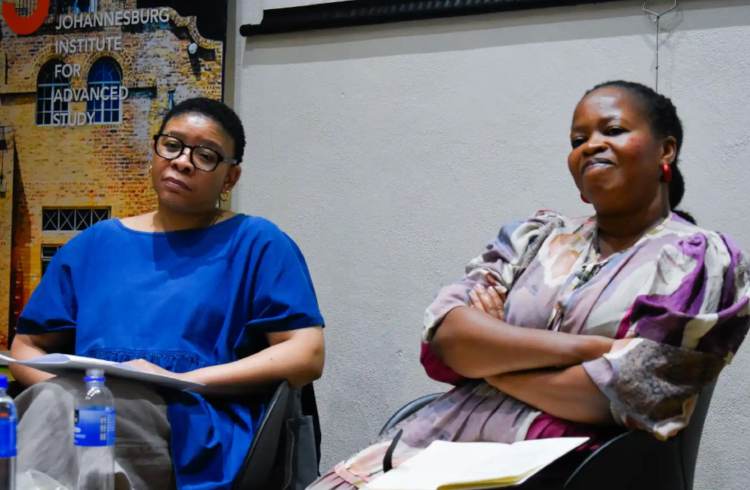
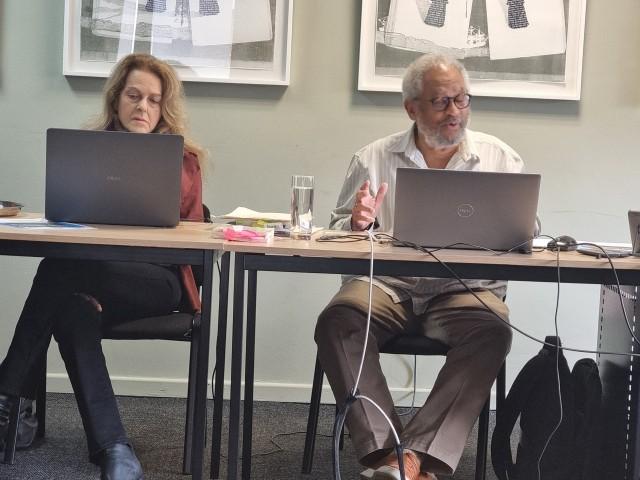
The seminar aptly titled Archipelago of Rebellion: Caribbean Art History, Culture and Imagination was hosted by VIAD’s Radical | Others and the SARChI Chair in South African Art and Visual Culture focussing on Caribbean histories of art. Thinking through the politics, histories and culture of Caribbean life, Professor Anthony Bogues reflected on Caribbean art histories, drawing connections between African and African diasporic art.
The seminar was framed by the professor as the cultural practices of Caribbean art as sustained, ongoing dialogue between history and the present. He drew on the writings of Édouard Glissant, Wilson Harris, and Syliva Wynter. Professor Bogues framed Caribbean culture as an oral and visual language; a culture with its own structures of thought that rework conventional Western practices of history rather than simply respond to them. Central to this framing is the concept of the marvellous as an aesthetic regime embedded in Caribbean life, and the debates that continue to surround it.
The seminar took place at the Visual Identities in Art & Design at the SARChi in South African Art, and Visual Cultures, 33 Twickenham Avenue, Auckland Park, Johannesburg, on Thursday, 27 August 2026. The seminar was also attended by Professor Brenda Schmahmann.
I am glad that I made this decision. You see, Prof. Bogues, is a leading intellectual in the art of the Caribbean countries, and has produced extensive quality research in the artistic practices of the descendants of a people forcibly uprooted from their culture and artistic practices into foreign lands.
However, while there, irrespective of the environment they found themselves in, they remarkably salvaged over several years and several generations of artists, whatever African culture they could, embedded it into whatever else was inculcated in them by their encounter with the new cultures. For example, the intersection of Christian and African traditional culture, became a catalyst for artistic practices that emerged in the Caribbean, especially from the 1930s, onwards.
The Caribbean countries’ art history, was very much shaped by major events that took place in the region, such as the Haitian Revolution.
“Ärt practice in Haiti has been called a “vocation” of refusal. The Caribbean thinker Edouard Glissant wrote that Haitian art was a practice of visual orality, one where the “painted symbol coexists with the oral sign.” There have been various schools, and traditions in Haitian art. The Haitian Revolution as a founding event loomed large in all of them,” the academic said.
Another school, was very much influenced by a religion, whose roots can be located within the African traditional religious practices. The professor pointed out.
One school is composed of mainly self-trained artists associated with vodou, a syncretic religion drawing from aspects of distinct African spiritual practices and French Catholicism. As a religion, vodou can be understood in part, as an embodiment of historical stories and experiences,” Bogues said.
He also went further in his lecture to show how history of the region shaped art practices of artists creating at the time.
“The work of history has been so strong in Haitian art that critics have identified a tradition in which history is a thematic deployment. The artist Andre Pierre (1916-2005) belongs to this tradition as well as the artistic tradition that that was identified in 1956 by Jacques Stephen Alexis as “marvellous realism,” the art historian said.
He said this tradition draws heavily from history, but at the same time influenced by “Afro-diasporic spiritual interventions.”
As an example, the Prof. cited Pierre’s 1990 painting Retour Des Espirits Guinen Apres La Guerre d’independence d’Haiti (Return of the Spirit of Ginen After Haiti’s War for Independence).
“Thus, The Return of the Spirits of Ginen, is part of both the vodou and and the historical schools of Haitian art,”Bogues concluded.
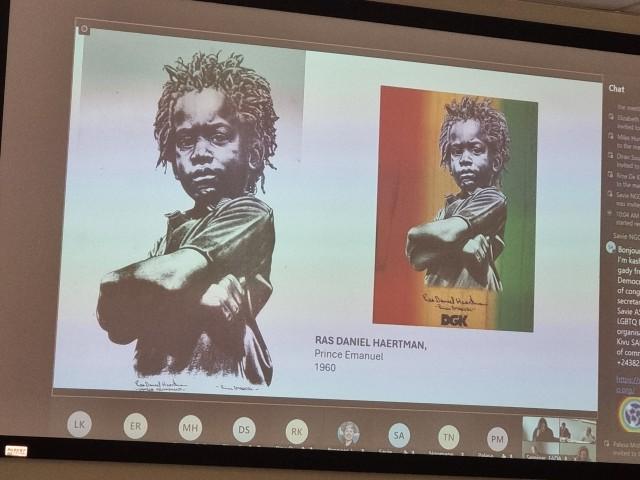
During the presentation of these insights into Haitian artists of the period’s praxis of Prof Bogues, brought with him, some photographs of some of the artists’works, who did not only define that art practice of their generation, but also became influential figures within the art history of the Caribbean countries, such as Haiti, Martinique and Cuba, to name just a few of the countries where artists of African descent created art that was defiant, unapologetically influenced to a big extent by their African cultural and religious practices, that they melded with for example, their adopted religion, particularly Catholicism.
This seminar was as informative as it was illuminating on Haitian art history, dating back to colonial and post-colonial periods. Through studying the various schools of art practised at the time, as explained by Bogues, one also learned about the major events that shaped the art practice and traditions of the island as well as the art figures that influenced the histories and art trajectories of the region.
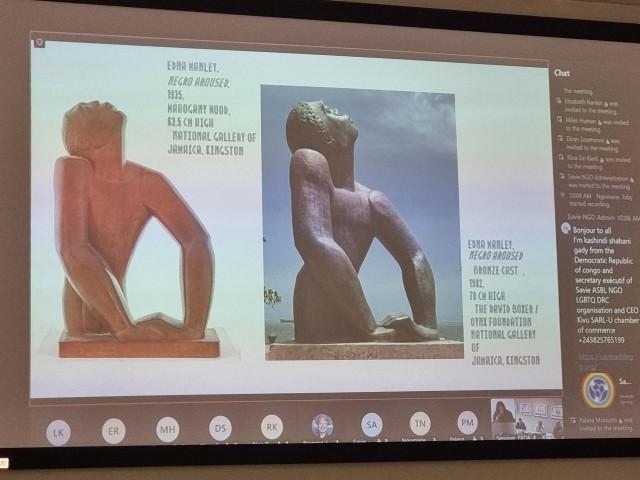
Besides Pierre, others include Wilfredo Lam, ATessa Mars and Edouard Duval Carrie.
It was therefore curiously intellectually triggering to learn that African religious practices formed a huge part of the schools of art which emerged particularly in Haiti. If anything, this demonstrated the resilience of African culture even in the most difficult of circumstances, such as slavery and revolutions.
It is a pity that I did not linger to attend the second segment of Prof’s presentation, as I had to rush to another appointment in Newtown. However, I am sure those who remained must have left the seminar with a deeper understanding of Haitian art traditions, and the events that shaped them.
About Prof. Antony Bogues
Antony Bogues is the Asa Messer Professor of Humanities and Africana Studies, an affiliated professor of History of Art, and the inaugural director of the Simmons Center for the Study of Slavery and Justice, Brown University.