






Wits art academic Zen Marie reignites debate about distinction between craft and art at major ceramic exhibition
Therefore, the 2026 Ndebele Mining Ceramic Exhibition, 30 August – 6 September 2026, at Shepstone Gardens, has to be understood within the context of a changing environment, in which craft is starting to be accepted increasingly, as a category of art with real value to society beyond its functionality and aesthetics.

By Edward Tsumele, CITYLIFE/ARTS Editor
It once was a much talked about topic in art history, dominating conversations among the art tribe.
However, conversations about whether human creations such as weaving, design and ceramic work, could be referred to as art, took a backseat for years now. In the meantime, Crafters, weavers and ceramicists continued to do what they have done for centuries. Almost as if oblivious of the previous raging debate about what they do.
Those who specialised in this form of artistic innovation, kept on working, improving on what they do. Even getting exhibited alongside what has been generally regarded as art, and in some cases, doing well over the years. Collectors fell in love with the objects. Reality is they continue to do so even now, creating beautiful ceramic art objects.
That somehow, made those that have been following this form of art, to think that the debate was over. The issues that previously divided what is generally called art and craft, had been settled.
Well, the reality is, one of the longest running conversations in art history, is still very much alive. That lull, was just what it was – a break.
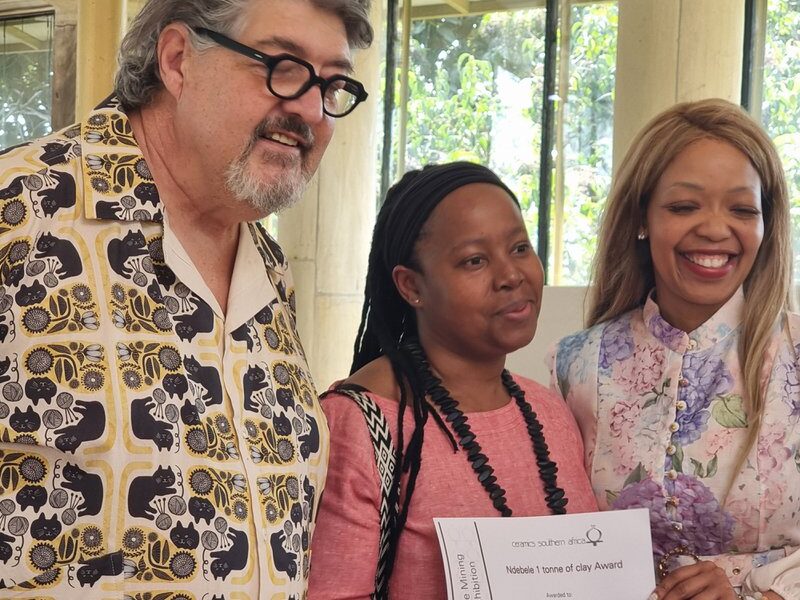
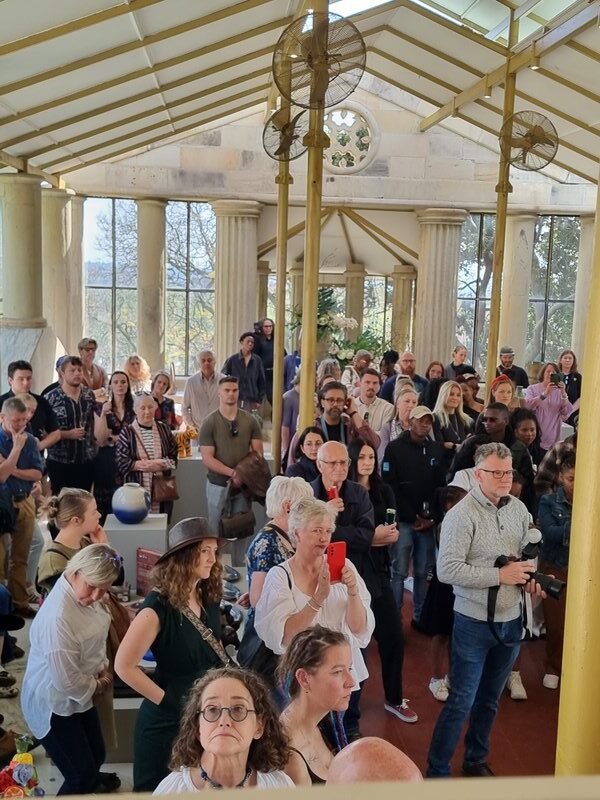
This debate resurfaced at the launch of a major exhibition on Sunday, August 30, 2026, in the lush and rock sprawled Shepstone Gardens, Mountainview, East of Johannesburg.
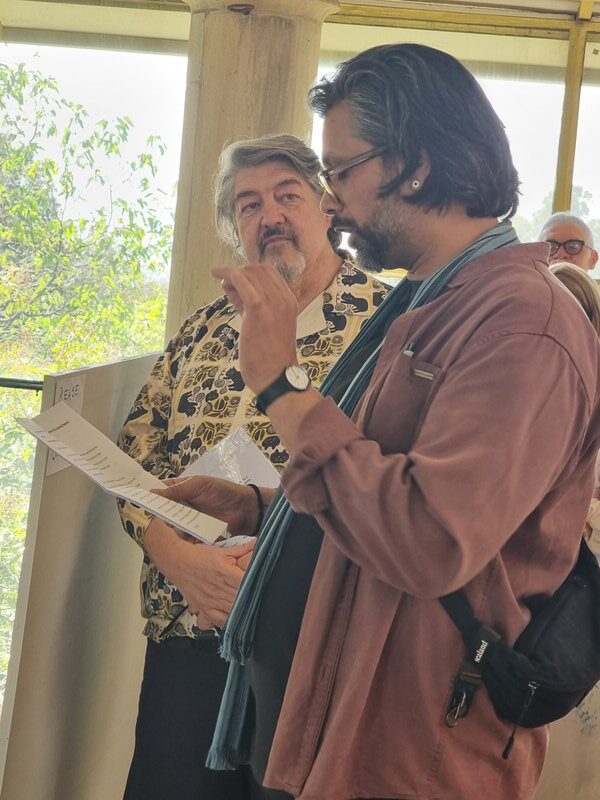
The debate about whether or not, ceramic art is actually art, was reignited by Dr Zen Marie, Head of Fine Arts at Wits University, when officially opening the 2026 Ndebele Mining Ceramic Exhibition.
Marie spoke after an introduction by Kevin Collins, and a brief speech by Nonhle Nkosi.
In his remarks, and as a way of provocation, clearly an attempt to make the audience aware that, the debate about the distinction between art and what is called craft, is still very much alive today.
Generally in the past debates, Western conventions of defining art, other areas of artistic endeavour, such as ceramics, were left out of that definition. Somehow, Western academic conventions of what is art, excluded this way of creating, as neatly falling into the broad definition of what art is.
What this restrictive definition of what art is, and what it is not, resulted in excluding a large number of artists working in ceramics, design, basketry and weaving, among other categories, for example.
There are several reasons advanced for this clearly controversial exclusion, one of which being that, the practice that produces these objects does not have a theoretical grounding. The practice is usually based on uncoordinated informal networks, where young emerging practitioners, learn the craft practically from an experienced master, who also learned in the same way. No formal learning. Certainly no theoretical ground informing one’s praxis.
This act of exclusion became even more controversial, because it excluded many African artists, most of whom, did not have formal training in art, as educational opportunities in especially art, were not accessible to would-be artists of colour, particularly in South Africa during Apartheid. Formally art institutions, such as then white universities did not generally enrol black students in their faculties.
Forced to look elsewhere in order to acquire skills in art, accessing informal networks, such as being an understudy to a more experienced practitioner, became the route to acquiring art knowledge and practical skills of making among blacks. There were also art initiatives that were created as epistemological intervention, where black could learn art outside the formal system.
While that practice of acquiring knowledge informally, resulted in young artists learning the skills, questions remained on the lips of those with the power to decide who is an artist and who is a crafter.
Conversations about who should be an artist morphed into the issue of whether someone who can make art objects, such as a ceramic piece, could also be called an artist in the absence of theoretical training as a mode of knowledge acquisition.
This question lingered for a long time in art history, even as some of those creating with hands, in some cases, demonstrated excellence in the finished product.
Such artists, despite their superior practical art making skills, remained at the bottom of the Western epistemology influenced hierarchical structure of recognition and ranking. This meant that those regarded as crafters, as opposed to those defined by the system as artists, were regarded as inferior.
Being at the bottom of the hierarchy for those defined as crafters had real consequences for such artists, with regards to accessing privileges that pertain to being an artist.
Exhibitions remained elusive. Collectors were not properly exposed to what the so called crafters created. Curators in this segment of art practice, were far and few in between. In situations where curators got exposed to really good artists in this category of art, the prices for the art objects were often knockdown, as they were not properly evaluated.
However, though what is regarded as craft, has traditionally suffered from these exclusionary practices by art power brokers, this enduring art form, has firmly remained resilient. Connected to immediate communities within which they were produced.
In fact, academics are now having a change of heart, when it comes to what has been traditionally regarded as craft, previously regarded as lacking the qualities that would attract academic research into the practice.
The Corporate is also starting to see the value in investing in this category of artistic activity. Curators are also coming on board to curate exhibitions focussing in this category of art practice, including organising competitions that attract talented practitioners, in for example, ceramic art. Even young students in formal art training at some of the most prestigious art schools in South Africa, increasingly feel confident to choose ceramic art as a major.
Therefore, the 2026 Ndebele Mining Ceramic Exhibition, has to be understood within the context of a changing environment, in which craft is starting to be accepted increasingly as a category of art with really value to society beyond its functionality.
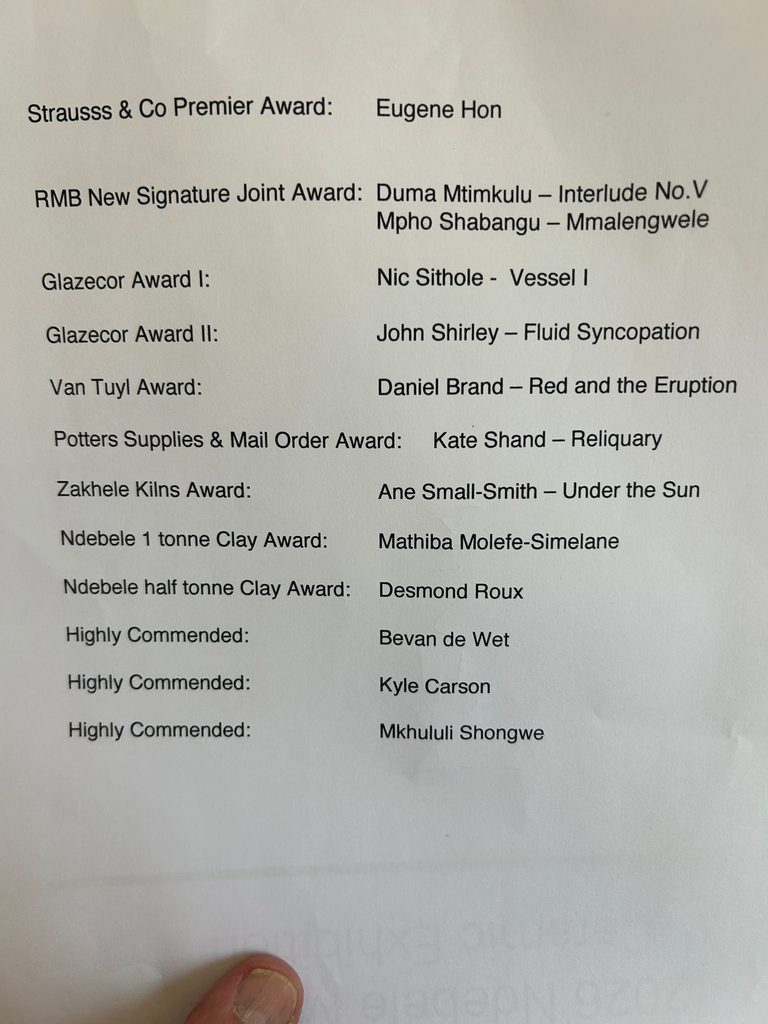
The exhibition, has in fact drawn record entries as new generation of Gauteng ceramic artists entered the competition. On Sunday, some of the best visual minds in ceramic art in the country, were handsomely rewarded.
In fact, the 2026 Ndebele Mining Ceramics Southern Africa Gauteng Regional Exhibition, attracted a record 226 entries from 73 ceramic artists, with an extraordinary 107 works submitted by artists who have never exhibited before.
Now on at Shepstone Gardens, the exhibition has brought together some of the best ceramic work being produced across Gauteng, from established artists to students and emerging ceramicists exhibiting for the very first time.
And some of the ceramic pieces are not just there merely as works of beauty, but actually grapple with contemporary issues in the world or in history.
For example, my attention was drawn to one piece, which titled Venus was her name, created by Belinda Mendes. This is clearly in reference to a Khoikhoi woman, whose unusually large genitalia, invited an unwelcome Western gaze and unnecessary curiosity, resulting in her being shipped from colonial South Africa to overseas, where she was used as a human display for profit by her white handlers. That story of Sarah Baartman is a haunting tale that clearly showed the dark side of human beings.
Sarah Baartman, also known as Saartjie Baartman and the Hottentot Venus, wasexhibited in 19th-century Europe as a freak show attraction. Taken from South Africa around 1810 by promoters under dubious consent, she was displayed in London and Paris, her body objectified for its steatopygia and subjected to invasive scientific scrutiny by figures like Georges Cuvier.
She died in Paris in 1815 at about 26 years old, but her remains were kept and exhibited in France for over 150 years. Following a campaign led by Nelson Mandela, they were repatriated to South Africa in 2002, making her a symbol of colonial exploitation, scientific racism, and the fight for dignity and restorative justice.
And so, the ceramic piece Venus was her name, has not been created for aesthetic appeal, but to tell a story of exploitation, colonial greed and deceit. Who says ceramic art’s reason for being created is for functional reasons only.
Youthful inspiration
The enthusiastic response to the exhibit represents a significant increase on previous years, when around 150 works would typically be submitted. It also reflects a growing interest in ceramics both as a contemporary art form and as a creative practice. Particularly encouraging has been the response from younger and emerging artists, such as students from Wits University and Tshwane University of Technology (TUT). What this means is that what has been traditionally regarded as an art practice, outside formal structures, is slowly getting into the academy. It is closing the gap between what is regarded as art and what is regarded as craft according to Western epistemological traditions.
This is the point that Marie argued in his keynote address.
“It sometimes gets confusing to make a distinction between art and craft. Often intellectual work has been elevated above labour. In reality, intellect exists in making as it does in theory. The more than 200 works that are on display here, challenge that distinction between art and craft.
“These works carry a deep connection with communities in regards to spirituality,” Marie argued.
Kevin Collins, National Chairperson of Ceramics Southern Africa, says the numbers point to something far more important than simply a successful exhibition: “There has been an extraordinary, renewed interest in ceramics, but what excites us most is seeing who is coming into the field. More than 100 of the works entered this year are from people who have never exhibited before. That is hugely encouraging.
“Ceramics brings together art, design and craftsmanship in a very immediate, tactile way. At a time when so much of our lives happens on screens, people are rediscovering the pleasure of working with their hands and creating something tangible. We are seeing that reflected not only in people taking up ceramics, but in the quality and ambition of the work being produced,” he says.
A global resurgence
The resurgence of ceramics is not unique to South Africa. Internationally, handmade and studio ceramics have moved increasingly into the worlds of contemporary art, collectible design and interiors, while pottery studios, courses and popular culture have introduced the medium to new audiences.
In South Africa, this growing interest builds on a long and rich ceramic tradition and an increasingly diverse community of artists producing work ranging from functional pieces to sculptural and conceptual art.
World-class panel
The 226 entries were considered by a selection panel led by Wilhelm van Rensburg asenior art specialist and curator at Strauss&Co, Nindya Bucktowar and Sonwabiso Ngcai, with the selected works forming this final exhibition at Shepstone Gardens. Renowned South African master potter Digby Hoets, who won the first Gauteng regional exhibition in 1972, judged the selected works and determined this year’s award winners.
Importantly, the exhibition is also creating tangible support for artists entering the field.
A R10,000 New Signatures Award sponsored by Rand Merchant Bank has been established specifically to recognise and encourage emerging talent. Additional prizes were supported by Strauss & Co and Glazecor, while the exhibition is sponsored by Ndebele Mining, which has supplied ceramic raw materials, including milled kaolin and pottery clays, to the South African market for more than 30 years.
Opening minds to a growing ceramics movement
Collins says making ceramics accessible to a wider public is an important part of the exhibition. “You don’t have to be a collector or understand the technical side of ceramics to come and enjoy this exhibition. We want people to walk in, see exceptional work, meet the people who made it and ask questions.
“There is something very special about understanding the person and the process behind a handmade piece. We hope people come and discover just how exciting, diverse and sophisticated contemporary South African ceramics has become,” he says.
The public will have a further opportunity to meet and hear directly from participating artists during a free artists’ walkabout at 10:30 on Wednesday, 2 September, when exhibiting ceramicists will discuss their work, inspiration and techniques.
The exhibition is free and open to the public, with works available for purchase.
Exhibition details
Venue: Rooftop Chapel, Great Hall, Shepstone Gardens, 12 Hope Road, Mountainview, Johannesburg
Opening: Sunday, 30 August 2026 at 10:30
Exhibition dates: 30 August – 6 September 2026
Opening and awards: Sunday, 30 August
Public Artists’ Walkabout: Wednesday, 2 September at 10:30
Daily exhibition hours: 09:00–16:00
Entrance: Free