




Young women photographers of Merafe Hostel in Soweto capture both their grim existence and an imagined better future
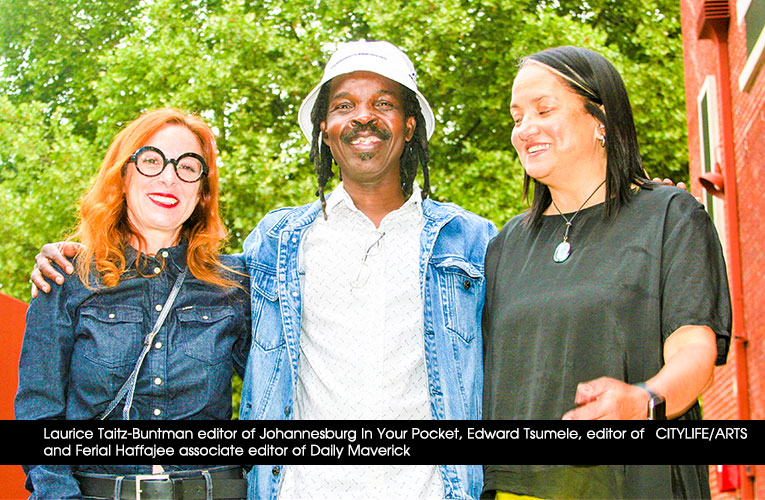
By Edward Tsumele, CITYLIFE/ARTS Editor
In Dube Soweto, just next to the Dube hostel, there is an apartment block of two bed rooms. These modern housing units we constructed to house Sowetans.
At least those who could afford rent. Funded by the Department of Human Settlement to give first, hostel dwellers an opportunity to live a more decent life than the one in the overcrowded hostels, established by the Apartheid government to house migrant labour, today the units are empty, and are now a haven for tsotsis and drug abusers. Nobody dares live there, even if one can afford the rent. The units were supposed to be allocated to hotels dwellers of Dube, giving them an opportunity to live a more dignified life in these new decent housing units funded by government.

The question that arises is: why are these units empty. Certainly, more decent than the precarious hostel existence. A legacy of the cruel capitalism system and apartheid spatial planning policies that prioritised profits over people, colour of one’s skin over an inclusive spatial planning policy.

The story is that the hostel dwellers refused to occupy the units, reason being that they thought these units were going to be some sort of RDP housing that they could afford. Not accommodation that charges commercial rates, that anyone who can afford could rent and live there. And now those who can afford and are willing to pay the rent are not allowed by the hostel dwellers, who promise to break limb. So there is a standoff running into several years.
And so these units are a white elephant, getting more and more derelict by the day. They now pose danger to the whole community of Dube. It is therefore easy to then assume simplistically that the hostels dwellers are selfish and unreasonable. But in reality the matter is more complex than simply blaming the hostel dwellers who will not allow anyone else to occupy the units that they clearly cannot afford. Most of them are unemployed as mines and factories that attracted them to Johannesburg in the first place–at least their forebears in some cases, are no longer operational. They are closed and capital has moved elsewhere. But the capital’s legacy is haunting the current generation of both the hostel dwellers and the whole community of Dube.
The point is life is hard for people in the hostels. Unemployed, hungry and really poor.
Therefore when I was invited on Saturday, September, 27, 2025, to the Market Photo Workshop, where young people from Merafe Hostel, were equipped with cameras, trained and mentored to document the life of their community, I looked forward to the event.

You see Merafe Hostel is another one of a collection of hostels that used to be a place of fear and loathing in Soweto just before 1994 dawned because of political violence between the hostel dwellers and township people.
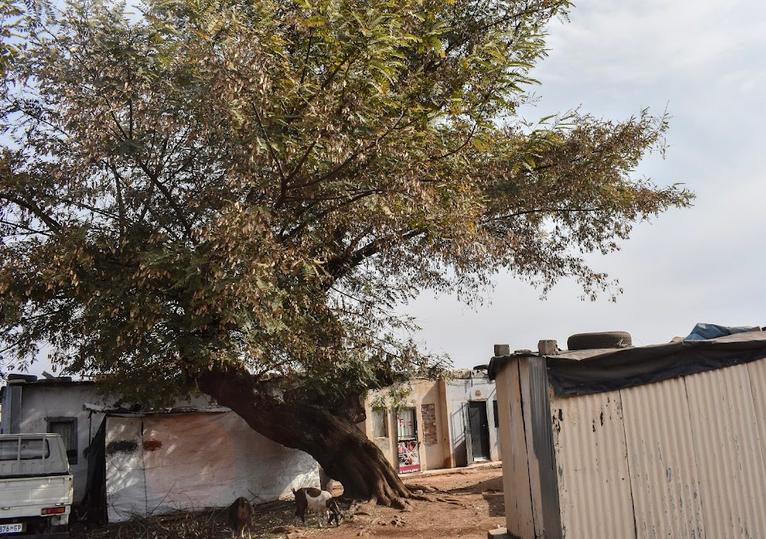
I was therefore curious to find out firstly how these kids would use the art of photography to mirror the life they witness in their own community, and secondly to see if they are able to use this opportunity to imagine a better life for themselves. A life much better than their condition, as life in Merafe Hostel, is just as hard as life in any of the hostels that have now been converted, and in some cases poorly so, into family units the Reef. Poverty is a big blow to the community in Merafe hostel and its surrounds. This becomes clear in the visual narratives painted by these young people.

But again, some of the images clearly show a determination by these young photographers to imagine a better life for themselves and their families who live at Merafe hostel and the surrounding communities.
So even as one sees the grimy side of hostel existence where poverty is clearly excruciatingly well captured by these young photographers, some images point to the fact of the human spirit’s ability to be resilient. The ability to dream beyond the existing stifling circumstances.
For example there is one photograph that shows the grim life of hostel existence- a space that is supposed to be a communal kitchen, which has small cabinets where families lock their food and utensils for safe keeping. Complete with numbers belonging to individual families sharing this kitchen, it is hard to imagine that 30 years after democracy, some people in this world famous city still live such lives.
But as you struggle and grapple with the idea that we actually live in a democracy where clearly there are better opportunities for everyone than before and compare the paradox to what is captured by this young photographer of Merafe Hostel, the heavy weight of conscience, is lifted immediately by another image.
This one is a photograph of a group of goats that are playing on top of what looks like abandoned cars. The young photographer who took this image explained that she wondered as she took this picture, what would the owners of those cars think to find happy goats playing on the rooftops of their cars. The point is this young photographer, saw a moment, a moment that is rare to witness in an urban and highly sophisticated metropolitan place like Johannesburg and captured it so well. Clearly this photograph tells more than some bored goats playing on top of abandoned cars in a township.

The story told by this particular image is multi-layered. It is a story depicting inequality that exists in this country. It is a story of disparities among people living in the same country, living different worlds and experiencing life differently. It is a story of the paradox of existence in South Africa, whereby the rich live lavishly, while the poor struggle to survive.

But on a lighter note, this photograph tells the story of the ordinariness and almost innocence of life in our townships, irrespective of the poverty that clearly poses an existential threats to people that call townships home.
How this happened
Over the past months, over 30 young participants from Thokoza and Soweto’s Merafe Hostel have taken part in workshops conducted by the Of Soul and Joy photography programme. These workshops were led by acclaimed women photographers and supported by OSJ alumni mentors. Through these sessions, the students explored identity, belonging, and self-expression – creating striking visual narratives that challenge stereotypes and tell authentic stories of “home” and community.

And therefore this This is Home exhibition is showcasing of the powerful voices and perspectives of township and hostel youth through photography.
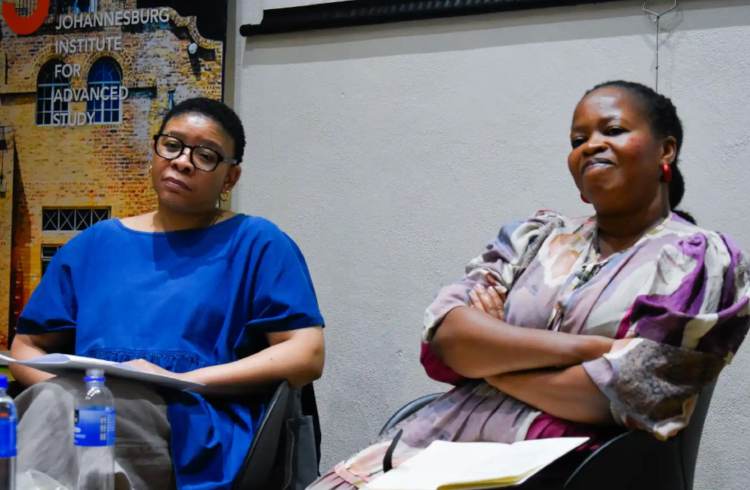
I had mixed feelings when I left the discussion whereby the youth explained their practice and the choices they made with regards to what they shot. On one hand, it was one of the most difficult conversations I have attended in months, especially when one was constantly reminded of the fact that it is not yet Uhuru. On the other it was also enlightening to witness the sharp imagination of the young women photographers in how they represented life at Morafe Hostel and the surrounding areas mentored by among other photographers by Tshepiso Mazibuko and Tshepiso Mabula, themselves emerging visual voices from Thokoza currently making waves internationally with the power of their visual narratives of where they come from.