

Busi Mhlongo’s love for music was so strong she defied parental authority, reveals her biographer Ncebakazi Manzi
Essentially this seminar exploredthe Busi Mhlongo’s pursuit of music and how it intersected with questions of parental authority, mobility, home, exile and safety.
By Edward Tsumele, Winner of NHC Heritage Journalism Award for 2026
Many would remember her as the maskandi queen whose album Urban Zulu was so huge it became almost a national anthem on the lips of music lovers when it was released. But the reality though, is that Busisiwe Mhlongo has been the queen of everything.
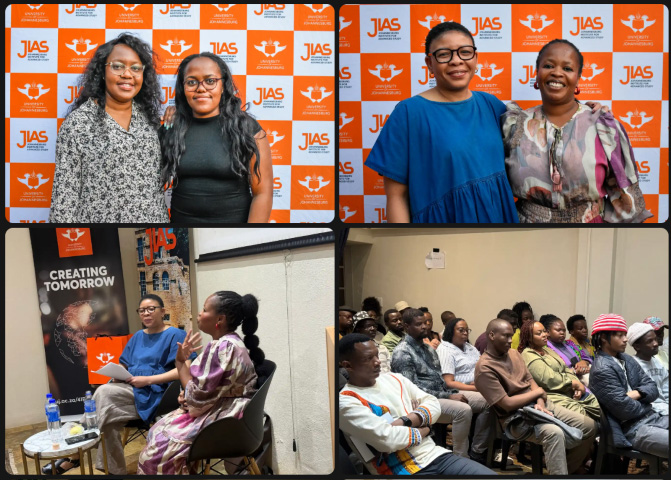
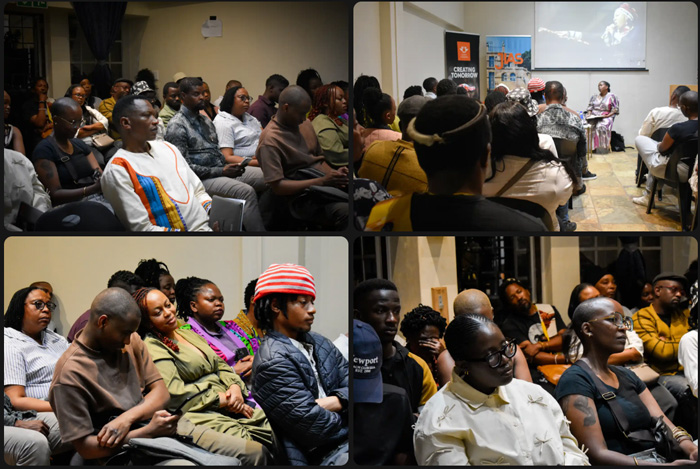
This is the view her biographer Ncebakazi Manzi shared with the audience that gathered at a seminar held on Tuesday, 20 October, 2026, at Johannesburg Institute for Advanced Study (JIAS) in Westdene, where the researcher, herself a musician, has been based for a while, as a research associate, digging into the life and times of the late Busisiwe Mhlongo, for the purpose of producing the biography.
Though Busi Mhlongo as she was popularly known in recent contemporary pop culture, before she passed on, was generally referred to as a maskandi artist, her musical journey was though, rich and diverse.
Busi Mhlongo as early as the 60s, had hanged around, performed and recorded with marabi artists, exponents a brand of South African jazz that was influenced by American jazz, but remained rooted in the South African authentic jazz traditions.
Ncebakazi, who goes by the stage name of Ncesh Nonxishi, spoke mainly about the early years of Busi Mhlogo’s music genre, and how the artist’s hunger to sing and perform, was so huge that she became rebellious in her teens.
Mhlongo for example, would defy parental authority, disappearing for days, without informing her mother, Flora, where she was, only to reappear after a while, for a mandatory punishment, reserved for truant children by parents who cared.
She frequently disappeared to Johannesburg where she fulfilled her quest for performing and recording music with fellow musicians at Gallo. She also worked with the late legendary playwright Gibson Kente, appearing in one of his theatrical productions.
However, Mhlongo’s frequent truancy, was not an act of mindless defiance and teenage mischief, but motivated by the desire to sing and record music, something she believed was the reason why she was on this earth in the first place.
The picture the biographer painted of the teenager Busi, was that of someone who believed her singing was part of the big design at the core of her existence. The musician succumbed to cancer in 2010. Last week Wednesday, she would have celebrated her 79th birthday.
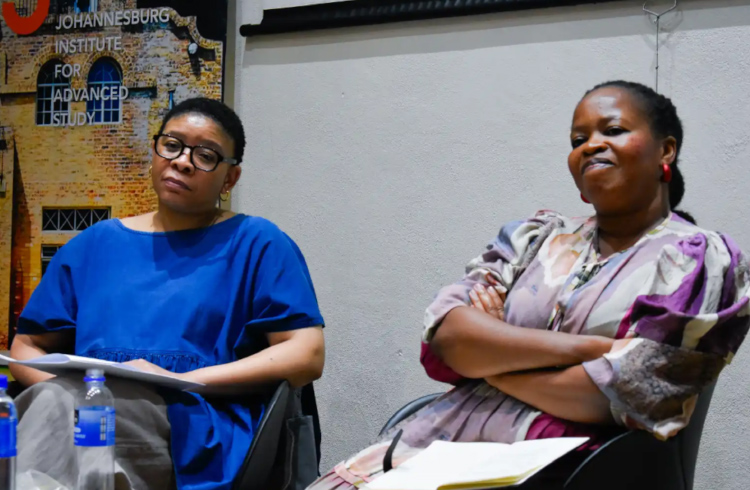
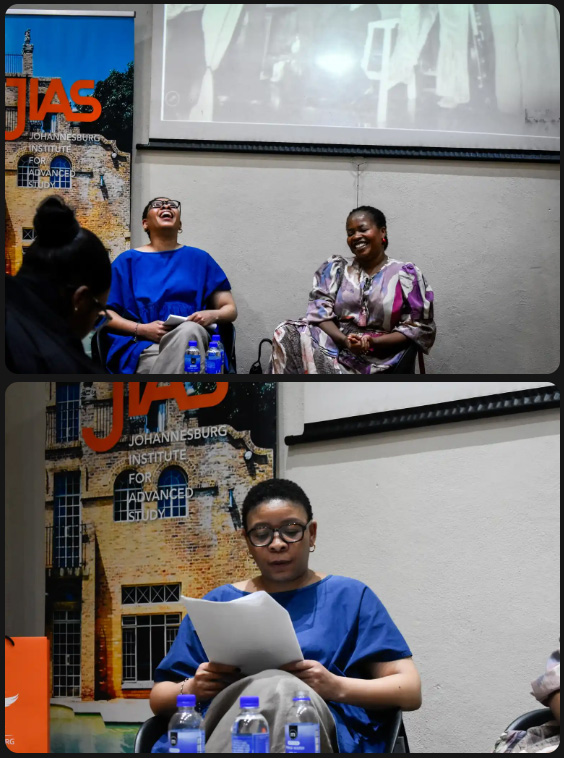
Busi Mhlongo’s Flights of Escape to Musicseminar presented by Ncebakazi Manzi and moderated by Dr Boitumelo Tlhoaele, avoided presenting Busi Mhlongo in the mould of freedom fighters who left South Africa in the 60s when the ANC was banned for exile.
Even though indeed, Busi Mhlongo left during the same period as the flight of political activists for exile, her case was presented as mainly motivated by a musical quest, instead of a political motive.
Essentially this seminar exploredthe Busi Mhlongo’s pursuit of music and how it intersected with questions of parental authority, mobility, home, exile and safety. Drawing on two songs one recorded during her teenage years and another thirteen years later, when she was 27, Manzi reflected on Mhlongo’s early musical journey and the insatiable hunger to sing that drove her.
“When Busi Mhlongo left the country in 1969, she first went to mzambique, then Portugal where she performed in a band comprising mainly of musicians who originally came from Angola. She by that time was in fact a widow as her husband drummer Earl Mabuza had died in 1969. Then in 1974, Busi left for London, where she found other South African exiked musicians that she had known from Johannesburg. She joined South African musician Julian Bahula, with whom she released a song,” said Manzi.
About the speaker
Ncebakazi Manzi is a singer-songwriter and self-published essayist whose music and writing reflect on history and politics. Her debut album, Apho Kungenje (2024), earned her a Best New Artist in Jazz award at the Mnzantsi Jazz Awards and nominations for Best Jazz Album and Best Newcomer at the South African Music Awards. She works full time in digital media and has experience producing television and radio content. Her upcoming biography of Busi Mhlongo will be her first full-length book.
About the moderator
Dr Boitumelo Tlhoaele is a lecturer in the Curatorial, Public and Visual Cultures department at the University of the Witwatersrand and a former Doctoral Fellow at Stellenbosch University’s Africa Open Institute for Music, Research and Innovation. Her research explores the intersections of jazz and art, working with music and visual archives within curatorial practices. She holds an MA in Heritage Studies from Wits and a PhD in Visual Arts from Stellenbosch University. Her curatorial projects include Leeto: A Sam Nhlengethwa Print Retrospective (2019).
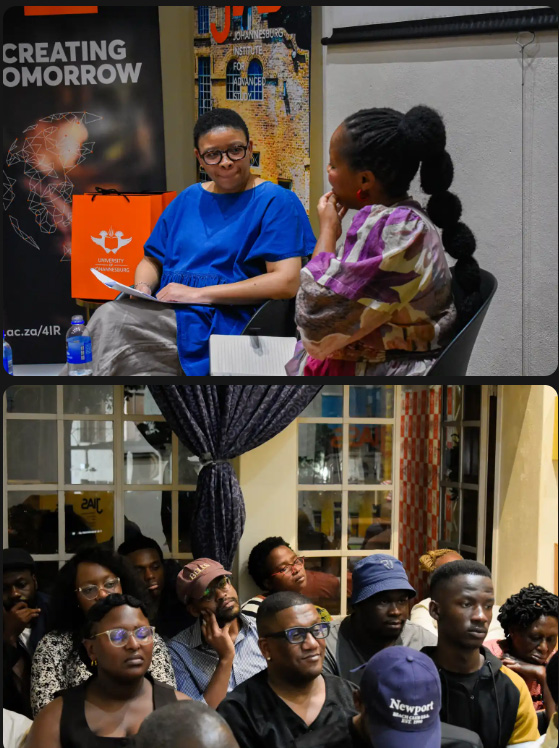
Prof. Siphiwo Mahala, Acting Director for JIAS, who introduced both Boitumelo and Ncebakazi, said that the forthcoming Busi Mhlongo’s biography was part of University of Johannesburg Vice Chancellor and PrincipalProf. Letlhokwa Mpedi’s African Biographies Project.