


Wits Institute for Social and Economic Research researchers reflect on the rich history and character of Johannesburg
This is as this internationally respected research institute attached to the University of Witwatersrand, turns 25, and Johannesburg itself, turning 140 years this year.
By Edward Tsumele, Winner of Heritage Journalism Award 2026

A group mainly comprising academics, media and those curious enough about understanding the complex metropolis that Johannesburg has evolved into since gold was discovered in 1886, were told about the city’s complex journey from its early days to what it has become today, last week, Thursday, 13, October 2026. The occasion that took place at Wits was to mark and celebrate a research milestone and a resilient city.
This is as highly Wits Institute for Social and Economic Research (WISER), attached to the University of Witwatersrand turns 25, and Johannesburg itself turning 140 years this year.
However as those whose research has shaped what the leading research institutes in South Africa, which is at the forefront of research in investigating what Johannesburg’s social and economic architecture has become over the years, the discussion took an interesting turn in that it became clear that (WISER) has in the process, shaped these researchers themselves.
Most importantly, the role of the Wits Institute for Social and Economic Research, in shaping knowledge that constantly seeks to understand Johannesburg, right from its humble beginning as a veld that happened to have gold underneath it, to become a modern city with a complex network of commerce, politics and sociology, became clear in deepening knowledge about the city.
So far WISR has hosted 750 seminars, 430 public events, 150 collaborations, 130 book launches, published 1000 books, and 50 doctoral fellows have graduated from there, making it as one of the most impressive institutes with an impressive volume of research output.
The research output produced by these researchers attached to WISR over the years is akin to telling the stories that reflect this centuries old journey as much back to itself, as it is to the outsiders. Such as tourists and immigrants that have been attracted to this city for centuries. They first came to this city as gold speculators, fortune seekers, migrant labour and even crooks, all hoping to change their life for the better.
That promise of changing their lives for the better in Johannesburg still remains the pull factor for immigrants today. Their faces and demography may have changed, just as the reasons have too, but still people are still coming here.
One way of understanding the journey, the past, present and future trajectory of this city, is to review the literature that has been produced by writers and researchers coming from diverse backgrounds. Such as novelists, non-action writers, academics and anthropologists. You follow this knowledge trail, then you get to understand fully the story of Johannesburg.
Researchers attached to WISRR are inextricably part of Johannesburg. They have shaped the city’s narrative just as the city has also shaped their own careers.
WISR was started in 2001, but the research scope straddles the city’s deep past, its present and its imagined future. The institute therefore is marking its 25t anniversary through the reflections of its researchers affiliated with it over the years, up to the present.
Listening to different accounts of how they encountered the city over the years as researchers, novelists, economist, architects, historians and journalist, is more than a portrait of how individuals encountered the city, that some have come t love, hate and hesitant towards, but a story of Johannesburg itself and its widely studied evolution to what it has become today. A city that exists singularly because of the gold underneath. Starting off as rough settlements on the reef, remarkably revolving to become Africa’s centre of commerce and other infrastructure, it is also a city today that has transformed into a remarkable residential city.
It is today a city where informal settlements, ever present potholes, mainly unannounced load-shedding, corrupt city fathers and officials, crime and grime.
But to reduce Johannesburg to that picture only, is certainly not telling the whole story of Johannesburg. Johannesburg of today is a city of huge, posh houses with their manicured monumental gardens in tree lined suburbs, exclusive luxury estates, home to prestigious centres of learning, such as universities and private colleges, top financial institutions, bi-ways and highways, top malls and expensive restaurants, theatre and bookstores, galleries and museums,
In short, Johannesburg is a city of both stress and healing. Love and heart break. Saints and criminals. Opportunity and misses. All these features co-exist as it they are naturally meant to be that way. Not man made. Not man planed. But naturally meant to be cousins. These contradictions are there for everyone to see.
It is these issues that researchers have mined over the years and continue to mine as they investigate this city full of myths. Truth and lies. The literature is there in academic papers, books, films, plays and in art objects created by the city’s vibrant visual artists and story tellers.
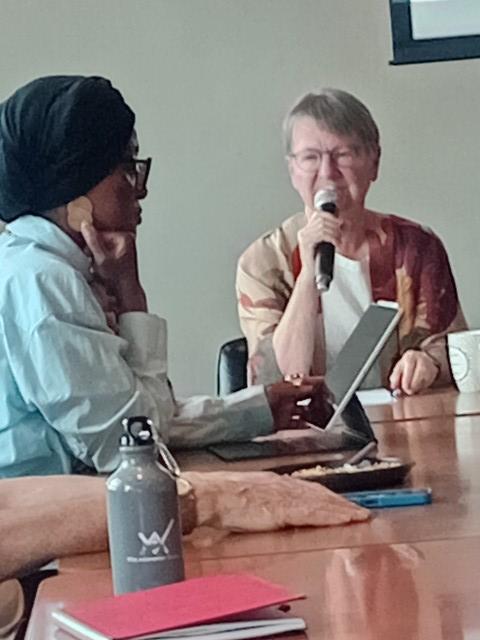
“Yes Cape Town and Durban for example are well studied, but those two cities are nowhere near the scale of Johannesburg. Johannesburg is the most written and studied city in South Africa,” declared Professor Sara Nuttall, a pastor director of WISER.
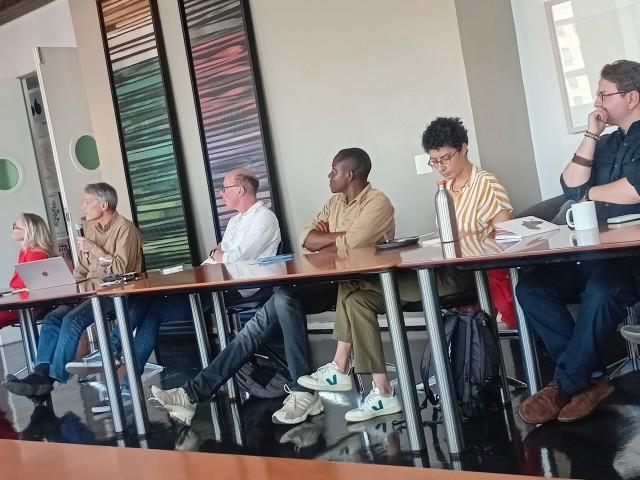
I meticulously looked around the table andnoticed the eyes of those close to me. I could tell that they were agreed with Nutall, in their silence when she made such a bold statement.
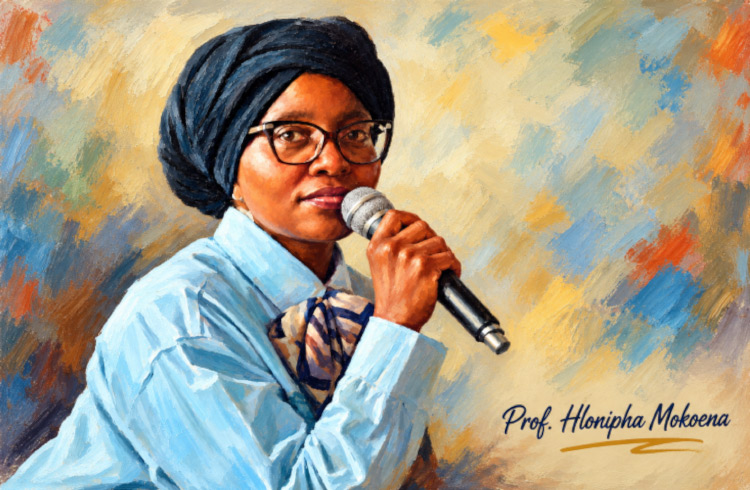
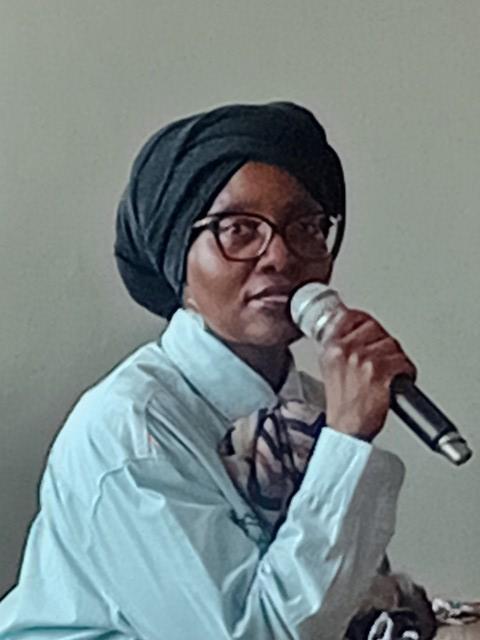
Professor HloniphaMokoena, the current director of WISR told how she over the years so Johannesburg, through a number of short stories, that felt more like a page he was reading from a novel, than an oral narrative of her encounters with the city and its characters.
She told us of intrusive Uber drives driving her from OR Tambo to Johannesburg, and how they could not control their urge to comment about her choice of “sophisticated music typically enjoyed by the rich and powerful.”
She told us about how she could bargain the price of items in the high streets of Johannesburg. She told us about how contrary to the experiences of the rest of us those living in the suburbs where load shedding is a constant feature of daily life, how her experience in Marshall Town where she lives is the opposite.
“In my part of town, when you log a complain, literally within a minute, you get someone from the city calling you to tell you that someone will becoming to look at the fault right away. Indeed within less than an hour they will be knocking on your door to assist you.
“The area is so quiet that in the night there is no one walking around the place. The only people you will see are the security guard guarding the area,” Mokoena said.
Mokoena however also revealed the strange side of Johannesburg in general and South Africa in general.
“For example, one day I had just gotten out of my apartment getting to an Uber in the night, when a guy seeing me carrying a bag said: “So this is how you guys transport drugs?” There was a burst of laugher. Clearly whoever that guy had no idea that he was talking to one of the highly regarded academics, authors and researchers in South Africa. To him, she fitted the profile of a wealthy drug dealer delivering drugs to wealth customers in the night, using the convenience of a taxi e-hailing service.
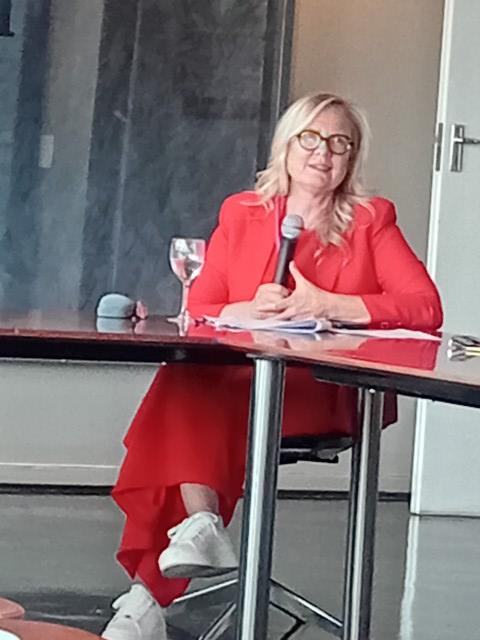
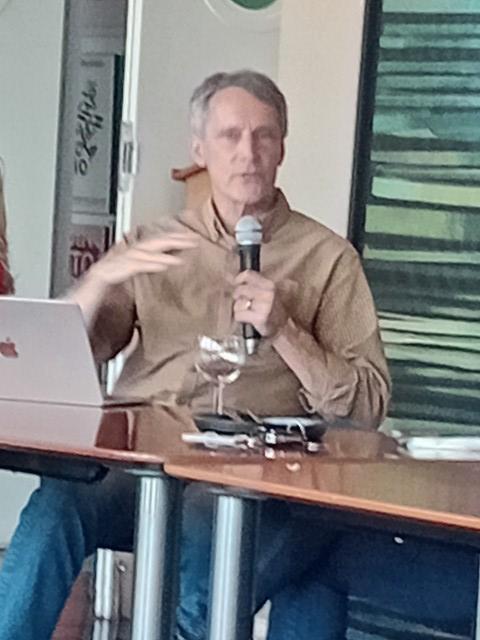
Nuttall and Mokoena, were part of a panel of current and former WISER researchers who kick-started this series of conversation marking the 25th years of the existence of the institute. On the day others on the panel were Isabel Hofmeyr and Jonathan Klaaren. Keith Brickenridge chaired the seminar.