




Cloud hangs over newly appointed National Arts Council board as its legality is questioned by parliamentarians
By Edward Tsumele, CITYLIFE/ARTS Editor
This is a meeting that the creative and cultural sector has been waiting for days, if not weeks. And they hoped that it was going to finally give clarity to a number of issues they have in relation to how the Department of Sport, Arts and Culture (DSAC) handles their issues. The highly expected meeting took place on Tuesday, June 10, 2025 when there was almost tangible tension among the participants, simply because of what had transpired preceding the meeting between the Members of the Portfolio Committee, National Arts Council Board and DSAC officials, regarding the question of the legality of the NAC board.

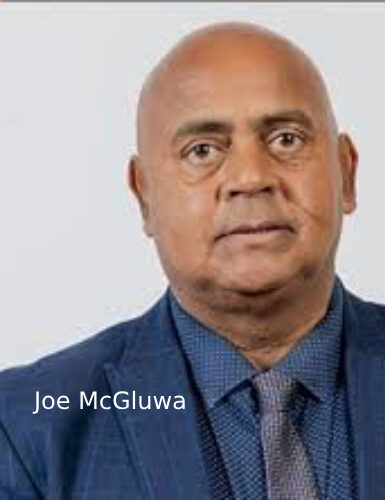
Tuesday’s meeting between Minister Gayton McKenzie accompanied by top officials of DSAC led by Acting Director-General Dr Cynthia Khumalo met the Portfolio Committee on Sport, Arts and Culture, chaired by Joseph McGluwa in Parliament. Through this meeting called for by the Portfolio Committee, it was hoped that it would provide answers on several issues that need to be fixed in the sector. Such as the appointment of panels to adjudicate applications for funding and those aqppointed to interview those who are nominated to sit on the boards of entities that operate under the auspices of DSAC.
These state agencies which are crucial to the health of the creative and cultural sector and are a catalyst for its vibrancy if run in an effective and enabling environment, include the National Arts Council, the National Film and Video Foundation and the National Heritage Council, among others. These are the engine of public arts funding in the country, and their work is therefore closely scrutinised by both the sector and the Portfolio Committee in Parliament. However unfortunately for the longest time, some of these agencies have been associated with wide reports of corruption and in efficiencies when it comes to disbursing funds equitably and fairly to qualifying creatives and organisations operating in the sector.
And therefore this Tuesday meeting took place against the backdrop of a series of complaints by artists unhappy with how the department handled funding issues. McKenzie had also missed a number of recent meetings with the Portfolio Committee where he was expected to account, and instead had sent officials. Some artists recently marched to the department in frustration, where they handed over a memorandum that contains a litany of complaints directed towards DSAC for the attention of the Minister.
However in the latest no show, the minister as it was revealed by the Portfolio Committee’s chairperson Joseph McGluwa, had earlier sent his apologies as he had to attend a crucial meeting of the BRICS countries (Brazil, Russia, India, China, South Africa) of which South Africa is a member and this year will host the G20 Meeting in Johannesburg.
And so when the Tuesday meeting took place, it was as expected heated, with a number of issues brought to the Minister’s attention by Portfolio Committee members, and the discussion indicated that not everything is rosy in the creative sector.
However the biggest issue, and in a way, the elephant in the room that should occupy the mind of artists and even give them sleepless nights, is whether or not the newly appointed National Arts Council is legally constituted. This is because this is the board that is responsible for administering funding for the arts sector through its annual funding call, and in the wake of the outbreak of Covid-19, the Presidential Economic Stimulus Package (PESP) running into hundreds of millions of Rands.
However some members of the Portfolio Committee, including former Trompies group member- turned Parliamentarian, Eugene Mthethwa suggested that as the NAC board is currently constituted (minus four provincial members representing Northern Cape, Mpumalanga, Eastern Cape and Northwest), its legality as per National Arts Council Act of 1997), is possibly questionable, and therefore the decisions it may have taken ever since could be open to litigation. The Council commenced its work on January 1, 2025.
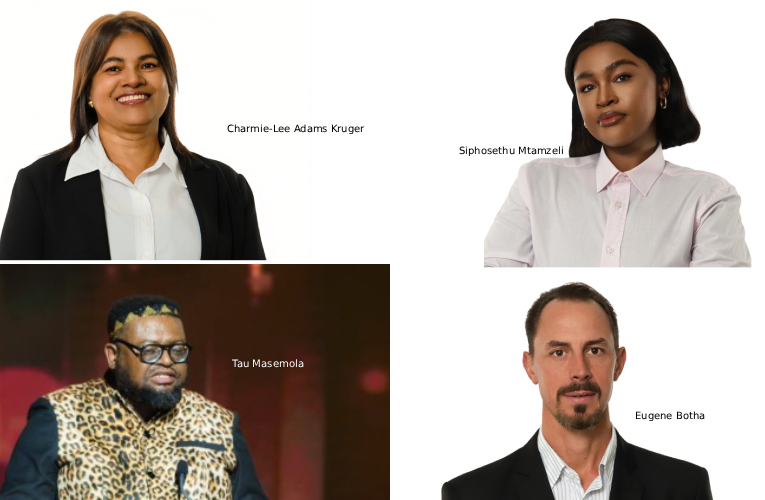
The Chairperson of the NAC board however, Eugene Botha, told the parliamentarians that the new board had since sat four times, and has indeed taken decisions. It is their belief that they were properly constituted and the meetings they held were quorate. Botha however did not say how many such decisions were taken when asked by Mthethwa as he said, he still needed to check.
Mthethwa however did not buy into this argument of the quorum as he insisted that without the four representatives from the provinces, (Eastern Cape, Northern Cape, Northwest and Mpumalanga), the legality of the council remains questionable.
He quoted Section 4 (2) of the NAC Act, which states the following as his rationale for questioning of the legality of the NAC board:
“Every province shall be represented by a representative who shall within the province in question be elected by a public and transparent process which shall be determined and overseen by the responsible member.”
Mthethwa went further in his rationale of arguing that there could not have been a quorum in the meetings so far held by the NAC board, as suggested by Botha, by quoting Section 4 (1) which states the following:
“Subject to section 20(1)(a), the Council shall consist of nine provincial representatives and no fewer than nine and no more than 18 other persons.”
The issue of possible complicit by officials with beneficiaries who may have unjustifiably gotten funding in the previous calls of the Mzansi Golden Economy (an annual funding programme of DSAC) also came up during the meeting.
McKenzie told the Parliamentarians that it has indeed come to his attention lately that there were allegations that some officials of the department may have been complicit with those that got funding unfairly, and has therefore launched a forensic investigation going back five years.
“We will soon draw the terms of reference and indeed a panel of external auditors has been appointed. In the next meeting I will reveal as to who is being investigated. I have heard that there maybe people in the department who are trying to protect friends or so,” said McKenzie.
The Portfolio Committee expressed their support for the forensic investigation.
“I support a full forensic investigation for the past five years of the Mzansi Golden Economy. But must look at those who have benefitted, but also officials who have colluded with the beneficiaries. But also the panel must be from independent outsiders,” said Committee Member Gaolatlhe Kgabo.
McGluwa also wanted clarity on the three members that sit on council brought from the previous council for continuity reasons.
“Section 4, Sub-section (6)(b) of the NAC Act, reads as follows: At the end the end of the members’ term of office, three members who are not from provincial representatives, one of whom shall be an Executive Committee member, shall be re-elected by the Council to serve for a further four years, after which they shall not be eligible for reappointment until a further four years have elapsed. There is currently three (3( Executive Committee members from the previous council who have been re-elected to the new Council instead of one (1) member, as prescribed by the NAC Act, these individuals being HRH Princes Celenhle Dlamini, Mr Bongani Tembe and Ms Stephanie D’s Silva,” McGluwa pointed out.
The department agreed that indeed it was the case that the three returning members of the new council were nominated by the previous board, raising the question of whether or not the Act allows the election of three members, all of whom are former Executive Members of the previous board.
In the meantime the NAC has announced the opening of the annual call for funding, but that of the PESP has been put on hold.
Those that have applied for shows they intend taking to the National Arts Festival have been promised to get their outcomes on June 16, 2025 under a Special Funding call for shows on the Fringe Programme of the National Arts Festival.
However the outcomes for the Mzansi Golden Economy’s call are still pending after the first call was scraped.