


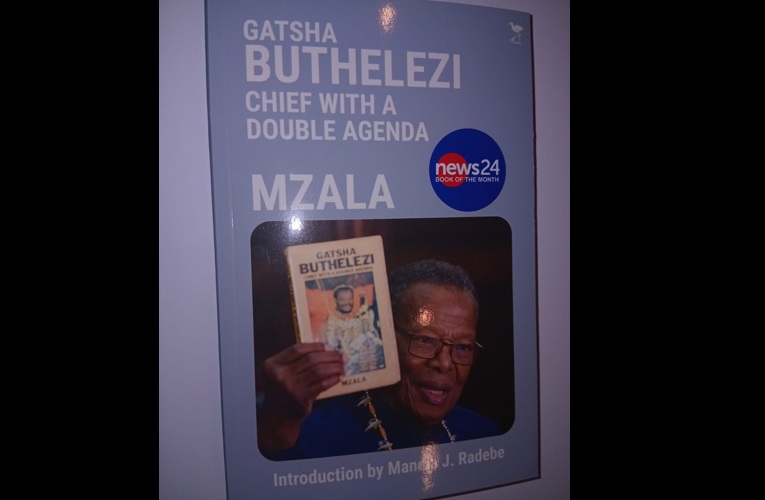
Did the late Chief Mangosuthu Buthelezi have a double agenda or not as claimed in Mzala’s controversial recently republished book?
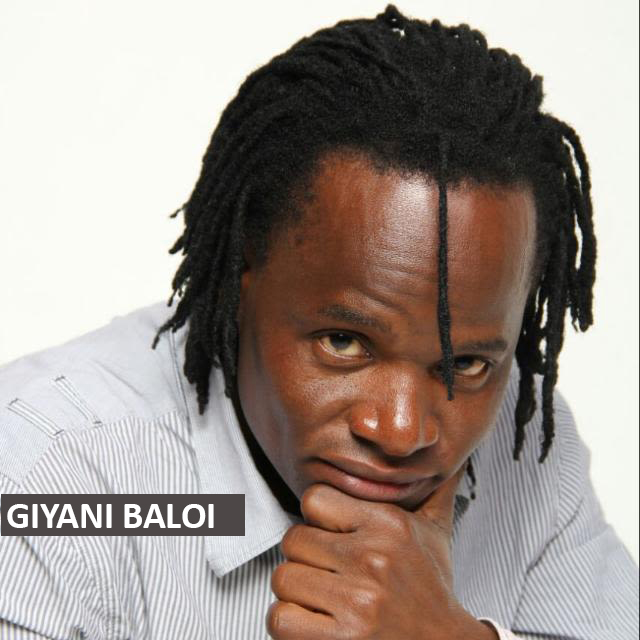
By Giyani Baloi.
Title: Gatsha Buthelezi: Chief with a Double Agenda
Author: Jabulani Nxumalo “Mzala”
Publisher: Jacana Media
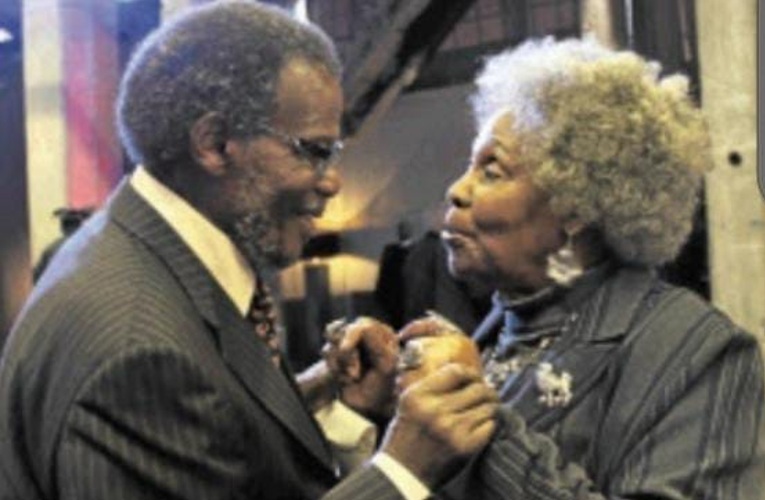
I first met Chief Mangosuthu Buthelezi in person on the 27 of June 2012 at Turbe Hall in Newtown, Johannesburg. He had gone there to receive a musical award on behalf of his mother, Princess Constance Magogo ka DiniZulu. The awards were supported by the South African Music Rights Organization (SAMRO). I took a picture of him hugging the late veteran singer, Dorothy Masuka. She was giving him emotional support after he had just lost his son. The picture I took was published by The Sowetan newspaper on the front page the following day. It gave me goosebumps. I had heard of Buthelezi so many times, though.
I also had once seen a copy of a book written by Mzala Gatsha Buthelezi, titled Gatsha Buthelezi: A Chief with A Double Agenda, from this guy who used to sell second-hand books to me somewhere next to Park station. Unfortunately, the day I saw the book, I had no money. I came back after a week to look for it, and I got the sad news that the guy I used to buy books from had just passed on in a car accident going to Natal that weekend. May his soul rest in internal peace. I needed to somehow understand who is this man who was an enigma to me.
Since then, I have been looking for Mzala’s book, and it was difficult to find because of the threat from Buthelezi and his supporters. So, on hearing that, the book is now available in some bookshops. I couldn’t wait to go put my hands on it.
Jabulani Nxumalo “Mzala” himself is related to the Zulu Kingship, so sometimes, it can be a contested space. But, as long as the interest of unmasking Gatsha Buthelezi is not personal, then all is well. Take nothing away from the book, though.
It is well written and researched. It unpacks Buthelezi, as one of the first black students to get a university degree at Hort Hare University, those years back. It also sketches his rise to become a chief of Mahlabathini, his home village.
There is also his battle with his half-brother Mceleli Buthelezi for the chieftainship of Mahlabathini and his use of the cordial relationship he had with the apartheid administration to out manuovre his half-brother and take the chieftainship of Mahlabathini.
The book meticulously portraits his rise to be the Prime Minister of Kingdom of Zululand, using his friendship with the then Zulu King Cyprian Zwelithini Zulu his fellow collaborator and supporter of the apartheid government’s ill-conceived idea of trying to divide South Africa into Homelands (Bantustan). That is when the apartheid system relegated some parts of the country to the fringes of the country for black people on a tribal basis so that, they can “self-govern.” Practically this meant that such homelands became a conveyor belt for cheap labour for the needs of the white South Africa industrial complex
Buthelezi joined the Bantustan arrangement, under the pretext that he is joining it, so he would have a chance to fight the apartheid system from within. Whether he used the Bantustan system to fight the apartheid -system or not is something else. And I think Mzala’s book is trying to answer exactly that.
But what seems very clear is that, as the Bantustan Chief Minister in the KwaZulu homeland, then, Buthelezi managed to use his position to usurp the Zulu Kingdom of its powers, something that caused some ruction in the Kingdom.
He also formed a political party, Inkatha Freedom Party (IFP). Again, he used his political party to oppose and frustrate the black revolutionary parties like the ANC, UDF, etc, for his endless double agendas. But the question is, is he the only one? Or did he indeed have a double agenda? This is a contested terrain, just like most histories. Of course, there will be those who will agree that Mzala succeeded in his mission, that is his claim that the late chief had a double agenda in the context of South African’s difficult path to freedom. Equally there will be those who will strongly not agree. Therefore, go read the book and figure it out for yourself.