

Gcina Mhlophe’s call to action: Why reading corners are a win-win for a reading nation
By CityLife Arts Writer
When reading corners opened in every classroom at Mxhaka Senior Primary School in Ngqamakwe, audiences beyond the Eastern Cape were watching too not for a ribbon-cutting, but for what happens when a storyteller becomes part of the infrastructure of a child’s education.
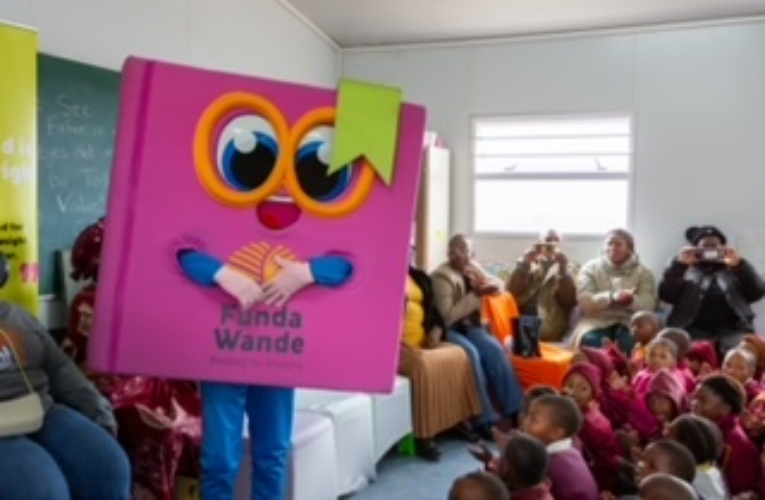
Funda Wande, the literacy organisation behind the initiative, has spent three years building reading corners in Foundation Phase classrooms as part of its Mandela Day work. This year, for the first time, the programme expands to every grade Grade R to Grade 7 at a school where, until now, a child wanting a book in their own language had almost nowhere to turn.
A gap most people never see
For Fundi Sayo, Funda Wande’s Eastern Cape Programme Lead, the need at Mxhaka is not abstract. The Eastern Cape was where Funda Wande rooted its very first intervention, and Mxhaka is one of the schools already part of the organisation’s ongoing programme in the province, currently being rebuilt, and, Sayo says, presenting a unique opportunity to honour Tat’ uMadiba by setting up reading corners in celebration of Mandela Day.

For Funda Wande, reading was never meant to stop at the classroom door. Teachers are trained and supported with quality learning materials, but Sayo is clear that reading for meaning also requires something less measurable: a space where a child can read purely for enjoyment.
“81% of children being unable to read for meaning is a staggering number,” says Sayo. “It means that the majority of our children as a nation are lacking a critical skill that enables them to be active participants in society. Although we train our teachers and ensure that high quality learning and teaching support materials are being effectively used in the classroom, we cannot ignore that reading is not just a classroom activity for learning purposes only.”
“Children need to have little corners in the comfort of their own classrooms where they can read for enjoyment and get to imagine a life far better than their own, and see what is possible in the world around them,” Sayo continues. “If we want children to read for meaning, we also need them to have access to the books we speak of — and that is why this project is so close to our heart. It’s all about leaving behind a legacy where a culture of reading can be cultivated.”
Sayo is candid that the reading corner activation itself was designed as a once-off, tied to Mandela Day. But being at the school changed that. “We noticed that there is more that needs to be done, and we are actively engaging with the principal to deliver even more books — hopefully to fill the reading corners for all the children at the school.”
Which schools benefit is decided in collaboration with the relevant education department, Sayo explains, and resource constraints mean Funda Wande cannot reach every school that could benefit. It’s a limitation she hopes to close over time: “There is quite a good appreciation and appetite for reading corners, and moving forward Funda Wande seeks to collaborate with sister organisations Nalibali, Ulwazi Lwethu and Book Dash among them in hopes of impacting more children.”
Beyond Mxhaka, Funda Wande’s presence in the province continues through its Foundation Phase Instructional Coaches, who train teachers and provide ongoing in-classroom support to improve teaching practice and, in turn, learning outcomes.
A storyteller’s call to action
It would be easy to treat storyteller Dr Gcina Mhlophe’s involvement as a celebrity appearance a well-known name lending visibility to a good cause. But speaking on SAfm about the partnership, Dr Mhlophe made clear this is personal, not ceremonial. Her work has taken her from Tokyo to Buenos Aires and countless places between, but it is the small, rural reading corners like the one now open at Mxhaka that she says matter just as much, if not more.
“Creating reading corners in small rural corners, helping teachers with more resources, and making schools in small areas matter that’s what excites me about coming to the Eastern Cape,” she said.
Dr Mhlophe, who is celebrating 25 years of her own publishing imprint, Nozincwadi, this year, has partnered with Funda Wande on reading corners in communities well beyond Mxhaka. “What I find in going to these reading corners like last year when we went to the Cape Flats with Funda Wande is it’s wonderful to see not only the children read, but also the teachers so excited to have these resources available,” she said.

She is also unequivocal about language. “Very often when people say children can’t read for meaning, often you’ll find they battle to read in English and given access, these same students read far more fluently in their mother tongue. Until we push all boundaries to make that happen, we won’t get there. I encourage people to read in their mother tongue. Empower the little children to help share the stories their grandmothers used to tell them it doesn’t cost any money to share stories in your mother tongue.”
For Dr Mhlophe, reading corners do more than hold books they change when and how children choose to read. “Reading corners encourage children to read at all times of the day, even before school starts. That’s how you build a reading nation.”
She also had a practical challenge for anyone listening with a bookshelf of their own: “Have we thought of unboxing the books we have, to pay it forward to platforms like reading corners, rather than just letting them sit?”
A call to action beyond Mandela Day
Dr Mhlophe was clear that this can’t stop at a single day of giving. “This crisis reminds us to become active participants in a call to action where all of us can contribute. Older people, many of them retired, going out to ECDs and schools to share and read, to give back. Young people feel poured into by that experience, and the older, retired professionals feel valued too. It’s a win-win for everyone a pipeline that feeds into itself.”
She sees reading corners as a catalyst for far more than literacy alone. “This is the kind of stimulus that reading corners can become — a catalyst not only for language in the mother tongue, but for numeracy, for understanding business, entrepreneurship, even money matters. Because all of that comes back to reading. How do you research on Grandmother Google if you can’t read?”
What changes on the ground
For the school’s principal, the value of the reading corners goes beyond simply having more books in the building. It is about what children see and don’t see reflected in the stories they read.

“For children to see narratives where the characters inside the story look like them means everything,” says Mr P M Botha, Principal of Mxaka Senior Primary School. “But it also matters that these books allow them to travel to distant lands, to explore the world through authors who bring that world into our classrooms. That is what makes this project so meaningful, and why it will be long-lasting and enduring it isn’t just about giving children books, it’s about turning our classrooms into reading hubs, bringing libraries with high-quality books, written by authors proud to tell their own stories, right to our children.”
Mxaka Senior Primary School is a public, co-educational no-fee school serving 291 learners taught by seven educators — a small school, but one where a shelf of the right books can reach nearly every child in the building.
Reading for meaning, not just reading
Underlying all of this is a simple, evidence-backed idea: children read best, and read for meaning, in the language they think and dream in. Funda Wande’s broader mission is to see all South African children reading for meaning and calculating with confidence by age ten — and reading corners, stocked with African children’s literature that reflects learners’ own languages and lives, are a direct, practical expression of that mission in the classroom.
At Mxhaka, that means a shelf of books is doing more than filling a gap. It is quietly building the habit — and the belief — that reading is not something done to a child, but something a child chooses, again and again, because a story once made them feel at home. As Dr Mhlophe put it, it doesn’t cost anything to share a story in your mother tongue — it only takes someone willing to pass it on.
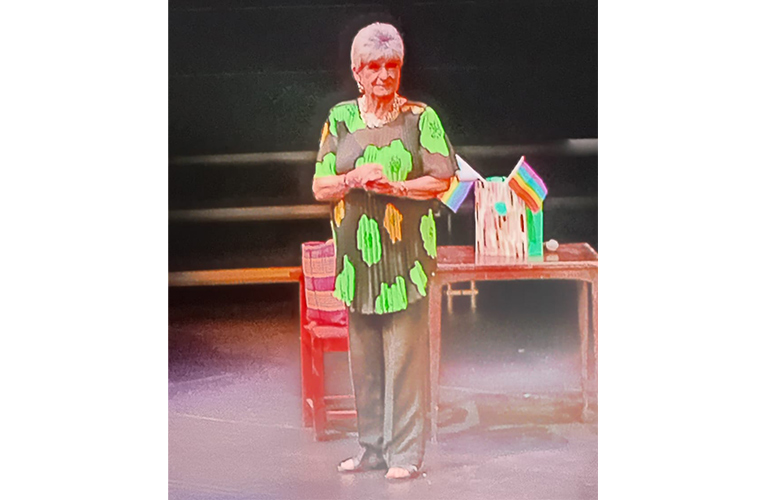
..Reading corners opened at Mxhaka Senior Primary School, Ngqamakwe, Eastern Cape, on 24 July 2026, led by Funda Wande with storyteller Dr Gcina Mhlophe