



How the late theatre producer Zodwa Shongwe changed my life from homeless teenager to a budding academic and actor, says Majesty Mnyandu
By Majesty Shalom Mnyandu
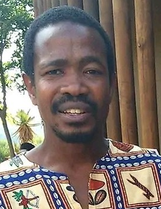
I am the son of Odysseus Bangukufa Mnyandu the son of Cijimpi Mnyandu (a liberation hero) and Khonjiwe Khuzwayo from eMkhazini area in eMbumbulu under the king of KwaMakhanya. My mother is Zakheludumo Sithole the daughter of Mkhuleko Buthelezi and Bekeyakhe Sithole. After giving birth to me my mother handed me over to my father to be raised by his two wives uMaNdlovu and uMaMseleku. The most influential person in my life is my father Bangukufa Mnyandu, a genius beyond measure.
This guy worked in many industries gaining experience and stories that he passionately shared with us when ever he came home. At home he had a vast number of business operations that included poultry farming, a furniture manufacturing workshop, a vegetable farm, rental cottages, a tuck shop, and an mechanical engineering workshop that produced homemade guns known as ‘oqhwasha’ that were used during the political violence in KZN in the 1990’s. Beyond these he was also a priest of the Zion Church that was inspired by the Ethiopian Orthodox Church hence he named me Majesty, as he said I looked like emperor Haile Selassie of Ethopia when he saw me for the first time.
My father conducted church services every Sunday at our home in a rondavel that was built by my grandfather before he was executed by President Hendrik Vervoed in the sixties. This is where my artistic nerve was first tingled when I saw my own father with a big drum tied with ropes bouncing on his pot belly, on his hand held a piece of wood that had pieces of metal that he also played as an instrument.
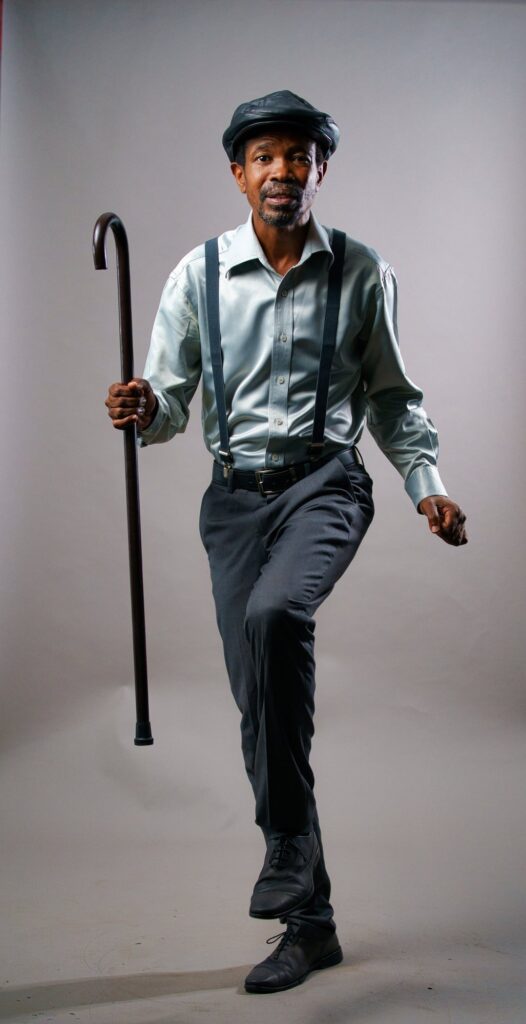
All this pandemonium happened while he was singing in the most enchanting voice as he ran around in a circle followed by his wives, congregants and us the children being the last ones in the line. My father’s love for music went beyond the church services as he went as far as accommodating Thokoza Sithole a jazz musician that had nostalgic memories of eMkhumbane a community that was demolished by the apartheid government as it was a multiracial settlement like Sophiatown.
Thokoza played guitar and taught me to sing the music of the sixties from the tender age of 9. By the time I turned 13 I was so inspired to become a professional musician that, I decided to escape home and travel to Johannesburg to become a music star. My first stop was the inner city of Durban, where I lived in the streets sleeping next to the steps at Durban station. One day I saw a street children rehabilitation project on TV at the bar inside Durban station, where I used to watch the news before going to sleep. This is where noticed that I would be able to survive in Johannesburg. In the evening of 17 November 1996 I decided to board a train to Johannesburg without a ticket.
After slipping through security guards at Durban station I stepped inside a train and asked the passengers to hide me behind their suitcases that were stored above the beds of the Shosholoza train. Twice during the journey I was discovered by ticket examiners who kicked me out at Petermaritzburg and Ladysmith but when the train began moving, I jumped in again and the passengers that hid me behind their suitcases allowed me back in due to the entertainment that I was providing in the train, telling the super stories I heard from my father and singing the music that Thokoza Sithole had taught me.
When the train arrived in Park Station I disembarked and told the security guards my story and they gave one smack on the chicks and kicked me in the but and that is how Johannesburg welcomed me. I later walked into the police station at Park Station and told the officers my story and asked them to take me to a street children’s shelter, they were amused and bought me some food and promised to take me to the street children’s shelter as soon as the next van was available.
I stayed in the police station the whole night where a white lady police officer bought me some food. In the morning the police officers took me to Rhema Paradise for Street Children’s. A shelter that was run by Rhema bible Church. The shelter took me back to school. Part of the rehabilitation programs included us being taken to theaters.
My love for the arts inspired one of the residents of the shelter Mr. Arthur Mpendulo Ndzube took me to the Windybrow theatre to attend a poetry session that was hosted by Bra Raks Morakabe Seakhoa. I was so inspired that I also registered to perform as it was an open mic session. As the years went by, I turned 18 and I was told to move out of the shelter.
On this delusional day as I was frustrated by homelessness once more, I decided to go to the Windybrow Theatre to enquire about the poetry session, as I knew that this was going to be an institution and program that would introduce me to the professional industry.
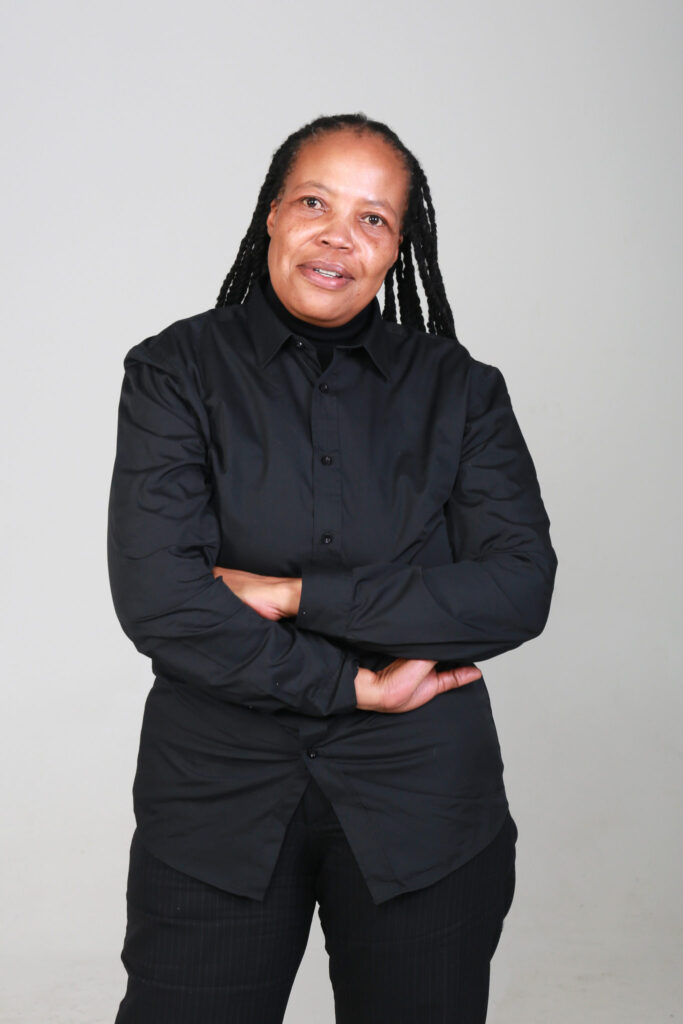
Arriving at Windybrow I noticed Zodwa Shongwe standing in front of the building enjoying a cigarette. I remembered that this is the lady that I saw at the poetry session a few years earlier.
I asked Zodwa if the poetry session was still there and she said; “yes it happens on Wednesdays at 6pm”. I thanked her and went away exiting. I only remembered when I reached the gate that I was homeless again as my heart was warmed by having an artistic home. Miraculously I noticed that BG Alexandra, a nursing college in front of the Windybrow Theatre was a dilapidated building that was occupied by vagrants.
I walked in without hesitation. As I was walking around the building I came across Issac Morake a former resident of the shelter that was kicked out of the shelter before me. He welcomed me to stay with him in his room. I could not wait for the next Wednesday to attend the poetry session. I arrived early and the security guard told me to wait at the veranda.
Soon the poets started arriving, chatting about the arts and creativity. A tall man speaking with a baritone ( a guy that I would later discover that he was Masoja Msiza (Pictured with me here) who now plays Nkunzi on uZalo). He told everyone to go inside the theatre and the session began. I also registered to perform and when my turn came. I recited my signature poem “Listen to Jozi” I was acclaimed and felt a sense of belonging. The next session I attended, and the MC was not present and Masoja asked for anyone to volunteer to be the MC. I Jumped to the opportunity and presented the show with all my zeal, zest and zen for the arts.
At the end of the show Masoja told me that my energy reminded him of Kansans City Mchunu a famous radio presenter. This boosted my self-esteem in an amazing way.
The following Wednesday I attended the poetry session again. After welcoming everybody Masoja asked; “uphi uMC wa last week”
I jumped to the stage and the crowd applauded. This was the beginning of my artistic journey as the MC of the poetry session from 2004 to 2013 when the Windybrow closed down for renovations.
This marked my 10- year relationship with Zodwa Shongwe. As I was the loved and the acclaimed MC of the poetry session I think Masoja told Zodwa about my life story and homelessness. This is because she always made sure that I am included in any project that had money involved.
Because of her my living conditions improved. I was able to buy nice clothes and food for myself. In 2004 when South Africa celebrated 10 year of freedom she put me on a program to perform my poetry and my strange music. When I got off stage, I was approached by a man that introduced himself as Vusi Mhlongo who asked me to present a television documentary tiled ‘Umgababa from the Ashes’.
What a super coincidence because since my father had two wives I also had a home in uMgababa where MaNdlovu lived and raised me at her house. This means I had witnessed firsthand the political violence that the documentary was chronicling. Again, Zodwa Shongwe was the first person to place me on TV. It was not the only TV opportunity that she provided for me, she also invited Take 5 to cover the poetry session where I appeared on TV performing three poems.
She also invited SABC 2 to develop a poetry program that was produced by Masoja Msiza. When the Department of Arts and Culture had financial problems and the Windy brow had no money to fund programs, this did not deter my commitment to the theatre, I availed myself to wash the cars of the staff.
Again, sister Zodwa Shongwe was the first person to offer me the opportunity to wash her car, a silver VW Passat. When I was busy washing the cars of the staff she called me from the parking lot to come to pick a pamphlet that advertised an audition opportunity for Themba Interactive Theatre. Themba interactive was a theatre company funded by Sir Elton John and patronized by Bishop Desmond Tutu. The organization was aimed at HIV education in schools and a partner of the University of Witwatersrand school of drama.
My excellence at Themba interactive led to the management organizing me an opportunity to study at Wits. Part of this opportunity required me to get reference.
letters from organizations that know me and my work. I ran to sis’ Zodwa with extreme excitement. She was also overjoyed that the street kid she once assisted was now becoming an academic.
Without hesitation she ran into her office and wrote me the reference that I took to the National Arts Council and I got the scholarship to do my undergrad degree, all the way to a Masters degree.
When I struggled to get funding to complete my master’s degree, she was the first person I thought about and she planned for me to get some income.
She created a training program for me to train the youth of Hillbrow in the skills of poetry performance. She paid me R30 000 rands for this activity. It was the first time for me to receive this amount of money. Realizing that it was not enough for my studies. I chose to use this money to solve my homelessness. I went to a community of Lawely which was still a squatter camp at the time and built myself a shack and ran youth development programs in that community.
In no time I was the most popular man in this community as my company KASMEDIA had produced 28 low budget films in this community. This led to a young girl Nomawethu Gxabhalashe, who was 20 years at the time to bring herself to my house without me even approaching her.
I did not hesitate but threw her into my bed and fulfilled the desires of nature. Today I have four children with this lady and I am now a Community Leader, a TV producer and an Academic that works with Wits University, UJ, University of California and Missouri University in the USA.
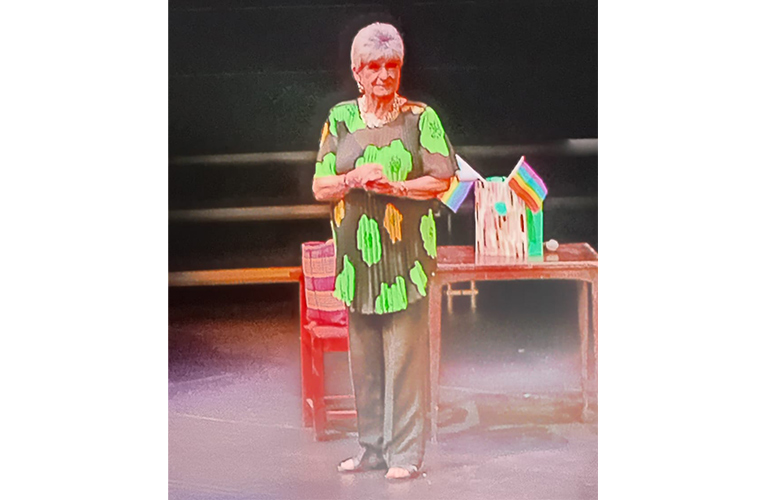
My last encounter with Zodwa Shongwe was a scene of her generosity doing a full circle back to her. When I was doing my recent lecture at Wits University, I spoke of my life experience and the help that Zodwa gave me. The head of department said this was a great story and she asked me to meet Gerard Bester the current director of the Windybrow Centre. When I met Gerard and spoke about my history with the Windybrow Theatre he decided that we meet at the Market Theatre. After our meeting where we were planning to do the reunion of the Windybrow Poetry Session he insisted that we go to Zodwa Shongwe’s office where I greeted her, then me and Gerard told her that we were planning to do the reunion of the Windybrow poets. She said this was a great idea and guaranteed me that if I work with Gerard Bester I am in good hands.
Today I look back and I say Thank you Zodwa Shongwe!!!
. Majesty Shalom Mnyandu is a Wits trained drama graduate and currently a lecturer at the same institution.