

Khoi-San and Aboriginal artists weave together the cosmic mystery at The Wits origins Centre
By Edward Tsumele
If your idea of thought provoking exhibitions, the kind that make exercise your imagination and in fact cross boundaries of the mind about what constitutes good has all along been confined to commercial galleries, you have to think again.
This is because The Origin Centre at Wits, is increasingly becoming an important place to view at that one would not ordinarily find at commercial galleries. I realized this in the past two months, when I went there to attend the opening of a historically important exhibition that looked at the life and times of a new generation of San Khoi, and how they fit in within a post=apartheid South Africa.
That exhibition looked at the immediate environment of the a community of Khoi and San people that have been resettled in Flatfontein, about 15 Kilometres from Kimberley in the Northern Cape Province, through the eyes of young people from that community trying to come to terms with the reality of the complicated history of their forebears. That generation now find themselves having to navigate life in their community in relation to other communities of mainly Tswana speaking South Africans, which treats this community at best with suspicion, and at worst with contempt.
There is a historical reason for that, beyond the control of both the local communities of on one hand Tswana speaking and Xhosa speaking communities of the region and on the other the Khoi and San neighbours. The Khoi and San communities are descendants of people who were conscripted into the South African boarders, fighting alongside the South African Defence Force. The Khoi and San mainly came from the then South West Africa, now Namibia and Angola. But shortly before South African became free in 1994, they were quietly resettled in Flatfontein, next to the communities that had long made those parts of the world their home.
The idea of the apartheid government then was that the new arrivals would adapt well quickly especially because the4 area near where they were settled was once a home to the San and Khoi people several years ago, as attested to by the stone engravings around the area. Now let us leave it there and instead go back as to why I love what is currently on the walls of The Origin Centre. Therefore Tammy Hodgskiss, Acting Director of the centre and her team are doing a good job of not only showcasing thought provoking exhibitions that evoke a viewer’s imagination, but also curating shows that take away the stigma of university museums being steeped in the inaccessible and elitist Ivory Towers of the academy but bringing this kind of art to the general public.
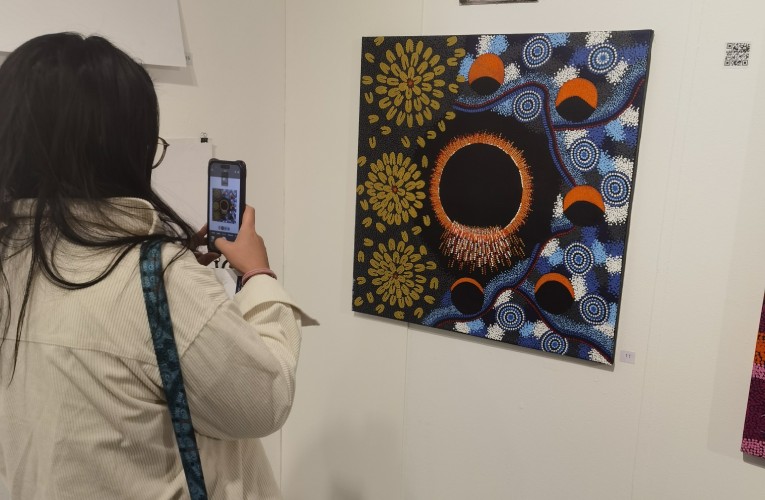
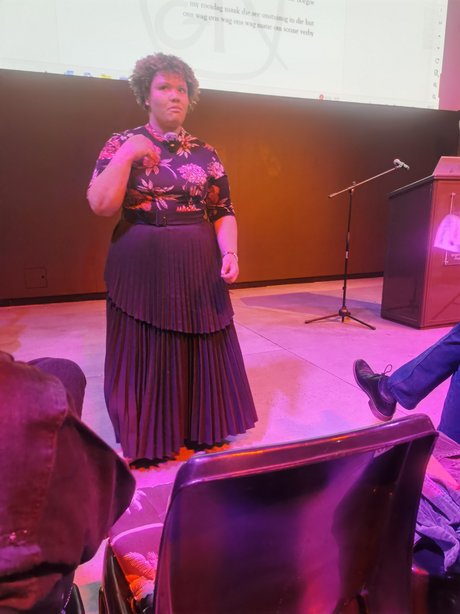
A week ago some mates of mine and I were back there. This time we were attending another exhibition whose theme was not that much different to the last exhibition I attended there. Cosmic Echoes: Shared Sky Indigenous Art’ exhibition which opened on May 23 and will run till July 5, 2025, is an exhibition which looks at the life and times of indigenous people, and how they understood and interacted with the Cosmic World – the world of the stars, the moon and the sun, The Heavens.
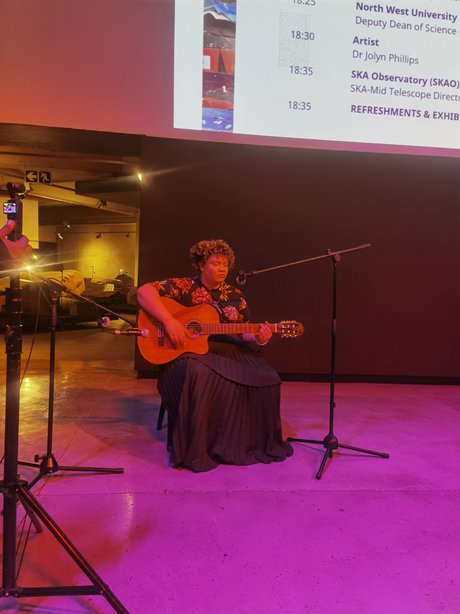
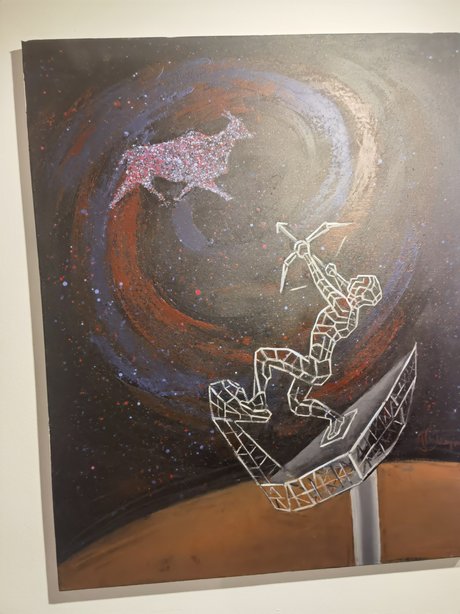
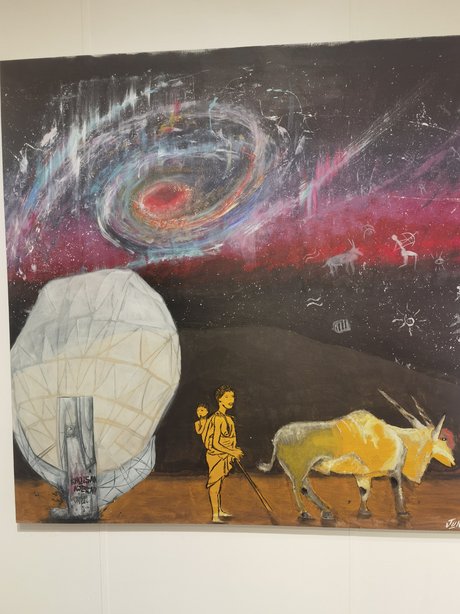
This, the curators of the exhibition believe speaks deeply to the idea of the ancient people’s knowledge about astronomy. This exhibition was expertly curated by academic and filmmaker Sylvia Vollenhoven who workshopped the Northern Cape artists, sharpening their minds and fine tuning their art making skills to create this great body of work on display there. The participating South African artists are Pierre Cloete, Garth Erasmus, Hendreas Vaalbooi and Junior Oliphant, while participating artists from Australia are Carlieen Dingo, Noeleen Harmlett, Mauretta Drage, Godfrena Gilla, Dawnmlet, Gail Rose Simpson, Vanessa Kelly, Leean Kelly-Pedersen and Susan Merry.
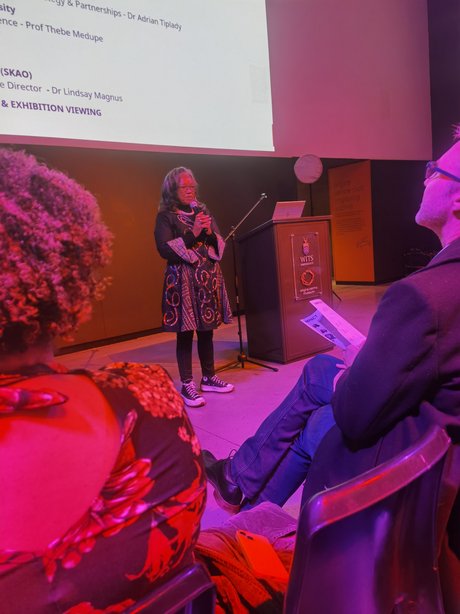
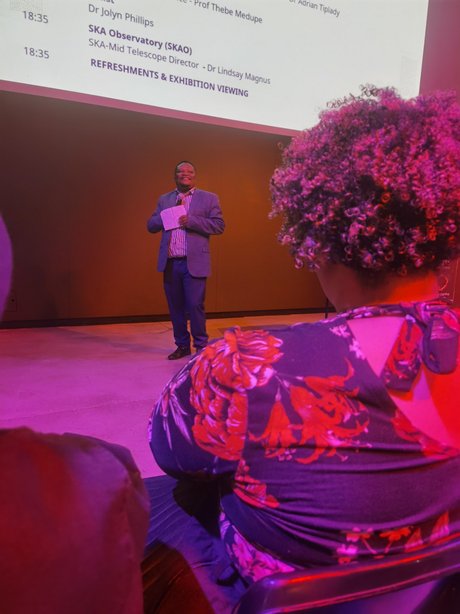
It was interesting to hear academics, experts in the field speak about how these ancient communities used the knowledge of the cosmos to assist them navigate life, such as understanding the cycle of seasons crucial for example for knowing when and where to move for ‘greener pasture’ so to speak.
It is this understanding of the cosmos by the indigenous people of both southern Africa – the Khoi and San –and the Aborigines of Australia that is delved deeply into by the Cosmic Echoes Exhibition, in which South African artists, selected mainly among the Khoi and San people and their Aborigines counterparts have collaborated.
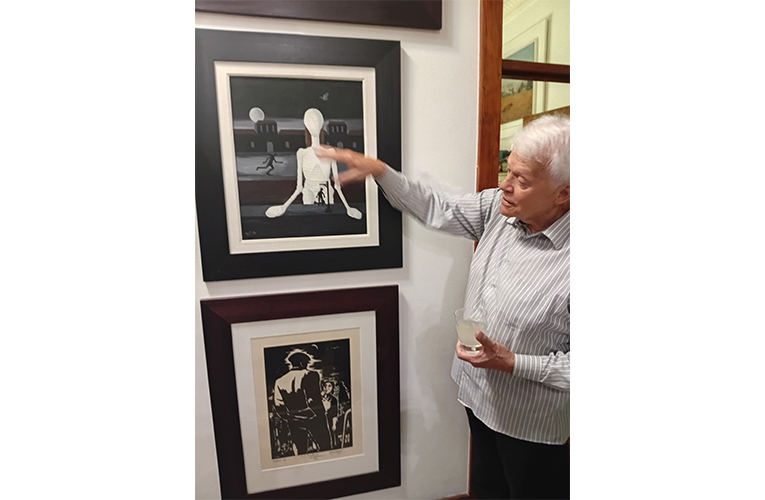
What one sees on the walls are fascinating perspectives of how these artists attempt to reimagine how their forebears would have interpreted and understood the complex subject of how humans and the Cosmos interacted with each other.
The exhibition has been made possible by The Wits Origins Centre, the SKA Observatory (SKAO) and the SA Radio Astronomy Observatory (SARAO) and is highly recommended The exhibition features work of Indigenous Artists from the Northern Cape and Australia, connecting cutting-edge science with ancient wisdom and understanding of the heavens.
The exhibition is made possible by SKAO, SARAO and the Wits Science Faculty, with the Wajarri Group and CSIRO.