

Motown in Joburg and the dream we never had
He understood what Steve Biko would later say: Black man, you are on your own. Gordy did not wait for white America to validate him. He built his own empire and made white America come to him.
By Sandile Memela
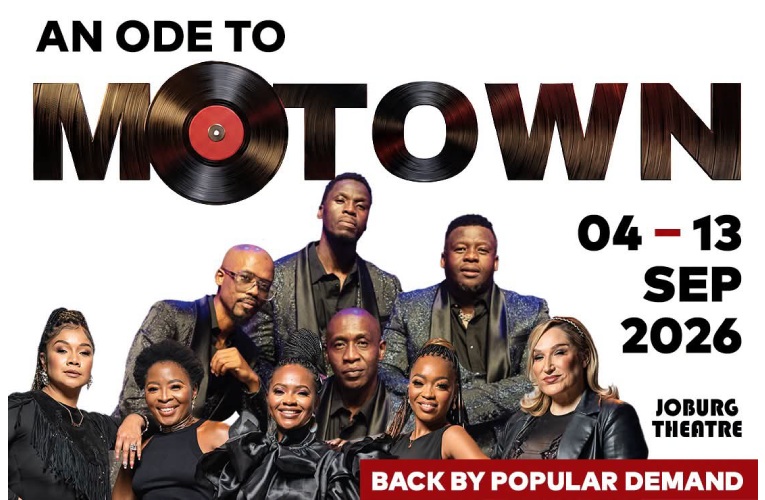
I attended the opening night of Motown at the somewhat packed Nelson Mandela auditorium at the Joburg Theatre on Friday night.
The headline act was Lerato Mvelase, accompanied by a stellar cast of songstresses and a highly talented backup band. From the first note, it was clear this was not just a concert. This was a musical rendition of a vision. The vision of one man – Berry Gordy.
And as I sat there, in that beautiful hall named after Madiba, watching local talent imitate Black Americans sing their way out of pain, I could not stop thinking about Black South Africans who sang their way into freedom, and then lost the plot.
What is remarkable about Berry Gordy is that he was not just a producer. He was a man with a dream in a nightmare.
Like millions of African Americans in Detroit in 1959, he was afflicted by the trauma and pain of being Black in a white racist society. He worked on the assembly line at Ford Motor Company. He was broke. He had failed as a boxer, failed as a record store owner. He had every reason to believe the system was designed to crush him.
But he believed one radical thing: that creative artistic talent could lift the oppressed from their plight.
Not protest. Not begging. Art.
So in a small house at 2648 West Grand Boulevard, he put up a sign: Hitsville U.S.A. He signed up the best young Black artists at the time – kids from the projects – Diana Ross, Smokey Robinson, Stevie Wonder, Marvin Gaye, The Temptations. They all knew one thing: when you were at Motown, you were guaranteed to become a superstar. Not because Gordy had money. Because he had a vision.
Motown was not about music. It was about a super dream. When artists have a super dream and a system, nothing can stop them.
Gordy created a factory of dignity. He had artist development. He had charm school. He taught his singers how to walk, how to talk to white media, how to dress. He had the Funk Brothers as the house band. He had songwriters Holland-Dozier-Holland writing hits like cars off an assembly line. Black excellence, packaged, exported.
He understood what Steve Biko would later say: Black man, you are on your own. Gordy did not wait for white America to validate him. He built his own empire and made white America come to him.
The show on Friday captured that. Lerato Mvelase did not just sing popular sing-alongs
She embodied that Gordy ethic – polish, grace, absolute precision. The songstresses behind her were not backing singers. They were Supremes. The band was not backing. They were the pulse of Detroit.

It was a tribute to what happens when talent meets vision.
And that is what broke my heart.
Because as I watched, I was struck by how Black South African artists in the early 1990s lacked dreams and vision at exactly the moment we needed a Berry Gordy.
Think about it. In 1990-1994, we were Detroit in 1959, but bigger. We were emerging from the trauma and pain of apartheid, just as African Americans were emerging from segregation. Our nation was poised for greatness. Nelson Mandela was the most respected global statesman on earth. The world wanted to hear us. The world wanted to buy us.
What did our artists do?
Of course, they created. They gave us kwaito. They gave us new genres. They gave us Mdu, Arthur, Boom Shaka, TKZee. Highly talented young musicians who came from the same townships that produced the struggle.
But it was misdirected energy.
The music became about song and dance for all-night drinking sessions. Pantsula, champagne, Sika Lekhekhe. It was brilliant, it was ours, but it had no Hitsville. It had no vision beyond the tavern and the awards ceremony.
We celebrated the superstar, but we never built the super dream.
Berry Gordy asked: How do we make our music respectable enough to enter the white house and stay in the Black house? How do we make the oppressed proud of themselves?
Our 90s music industry asked: How do we get a record deal, get a BMW, and get on Jam Alley?
There was no system. No Motown charm school. No artist development. No publishing house that owned masters for our children. No Berry Gordy figure who would say: You are talented, but I will make you legendary. I will make you global.
So yes, some of those artists have done very well for themselves as individuals. They are maybe millionaires. They continue to get SAMAs. They get lifetime achievement awards. They deserve them.
But where is the dream and vision they left for the nation?
More than 30 years later, what musical institution did we build that outlived apartheid? What is our Hitsville U.S.A.? What catalogue do our children own?
Berry Gordy’s catalogue is worth over $300 million today. It lifted an entire community. It created jobs – songwriters, producers, tailors, choreographers. It taught Black kids that they could be more than singers – they could be owners.
Our kwaito catalogue? Most masters are owned by white-owned record labels that no longer exist. Our biggest stars died without medical aid, fighting over royalties. We produced stars, not systems. Millionaires, not moguls.
We had talent. We never had a Gordy.

As the Joburg Theatre audience stood up on Friday night to clap for American music from 1960, something in me suffocated. Not because Motown is not beautiful. It is. But because we are still clapping for other people’s dreams.
We have never had our own Motown moment. We have never had a South African music visionary who said: I will rally highly talented artists to create a South African sound that defines a free nation.
We still wait.
So the question Lerato Mvelase’s beautiful show left me with is not about Motown.
It is about us.
More than 30 years after democracy, what kind of musical tribute can we put up to honor and celebrate South African artists themselves? Not a cover show. An original dream.
Will our own Barry Gordy please raise his hand?
Because the children in the townships now doing Amapiano on TikTok have more talent than Detroit ever had. What they lack is what Diana Ross had – a man who saw them not as singers for a weekend, but as superstars for a century.
We are still on our own.