



Multimedia artist Sizwe Khoza’s exhibition The People and I In Contemplation, engages with black portraiture through a fresh lens
By Edward Tsumele, CITYLIFE/ARTS Editor
You know what it is to wake up early on a Saturday morning and go out. This particular Saturday, the weather was particularly angry. Bitingly cold. In fact it would not be an exaggeration to suggest that it was grumpy and merciless for the poor souls that, like me, had to wake up early for this errant or that. This was tempting the weather’s fate, and it responded accordingly.
But to wake up I had to. After all, I was invited to an exhibition of a new artist I had not met before, and whose art practice I was not familiar with. You know what they say about curiosity.
“You definitely know Sizwe, that I am quite sure. He will be here this afternoon coming from the East Rand where he hails from.” Curator Makgati Molebatsi said to me as she walked me around the exhibition at Art Mile in Rosebank. I was a little distracted as I kept on looking at the bar, wondering whether having a cup of coffee would assist in keeping the weather at bay. Right there.
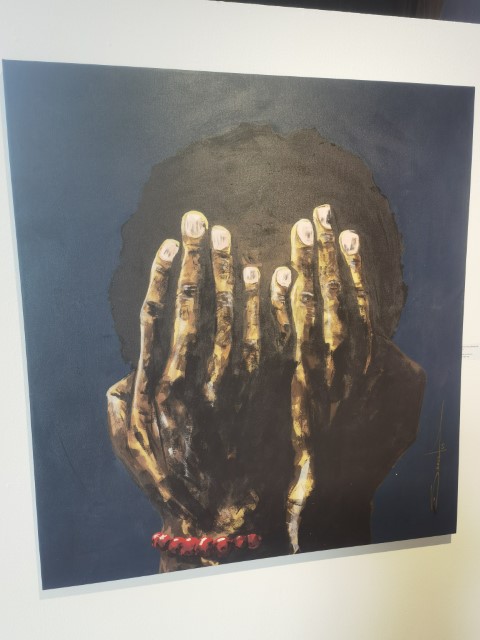
But sooner than later, I found myself even forgetting about the mean weather as I got engrossed in viewing the beautiful art works that constitute this exhibition.
“Sizwe is known for painting images of children, and this is the first time in his art practice that he has created this body of work, a far departure from what he is known for,” Makgati said.
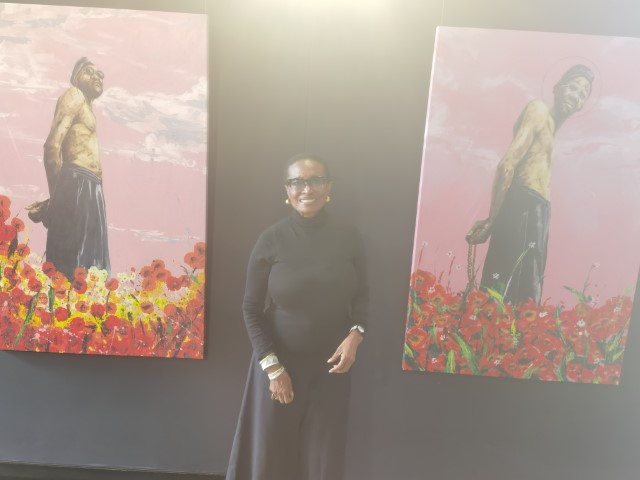
Welcome to the exhibition of Sizwe Khoza: The People and I, In Contemplation, a solo exhibition which opened on 3 May, running till 8, June 2025 at Keyes Art Mile Annex Gallery, Keyes Avenue, Rosebank.
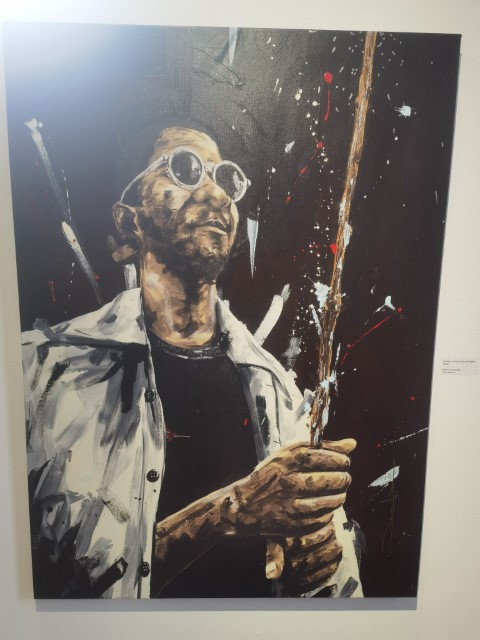
“Makgati Molebatsi Art Consulting and Sizwe Khoza Arts are pleased to present “The People and I, In Contemplation,” a solo exhibition of new works by artist Sizwe Khoza, on view from 3 May to 8 June 2025 at the Annex Gallery, Keyes Art Mile in Rosebank, Johannesburg.
The exhibition showcases 13 recent works that reflect a profound journey of introspection, memory, and emotional depth. Khoza’s visual language—shaped by his early engagement with black portraiture, personal photographs, and lived experiences in both Mozambique (his birthplace) and South Africa (his home)—has evolved to incorporate the metaphor of chess as a symbolic device to explore power, strategy, and life’s unpredictability.
Khoza describes his practice as rooted in the journey of a vagabond—a search for self through unfamiliar experiences, driven by instinct rather than societal expectations,” reads the curatorial note accompanying this exhibition.
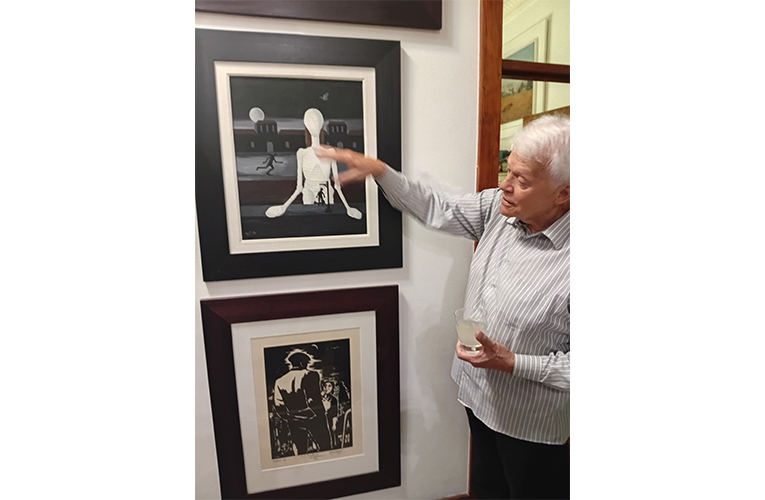
Indedd I found the work to be fresh, and the portraits became alive, especially when your gaze lingered a bit more, rather than looking quickly while passing on to the next portrait. The truth is the artist has a fresh way of creating portraits that simply tells you that he loves what he does and invets a lot of his energy in it, such as time and his intellect.
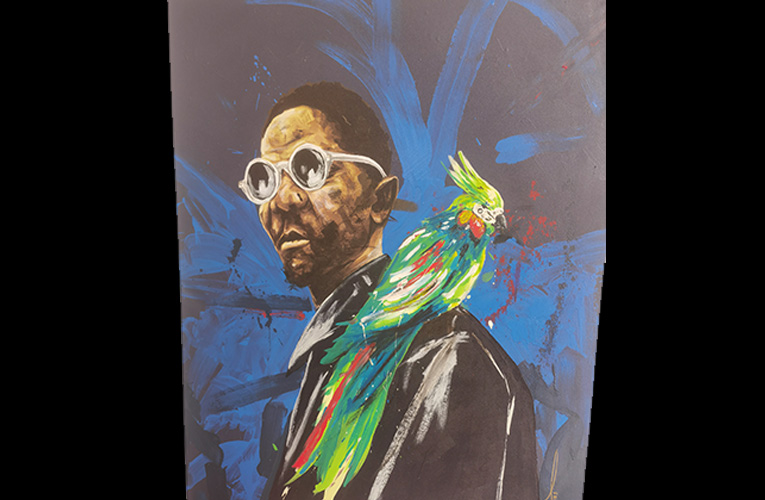
I was particularly touched by one piece that showed the portrait of a man with a bird perched on his shoulders comfortably. The man did not seem to mind his companion, and the portrait told you that these two are comrades and are comfortable in each other’s company.
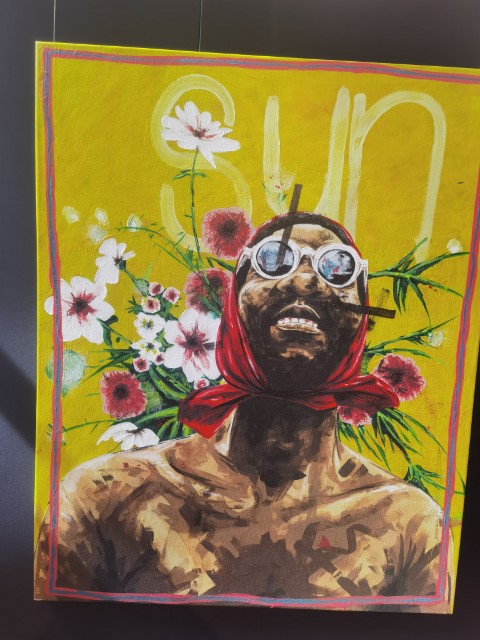
The artist explains his art practice. “Through my art, I explore themes of spirituality, humanity, connection, and the quest for meaning in a world often marked by loneliness, division, and hardship. At its core, my work seeks connection in a world that can feel profoundly isolating.” The People and I, In Contemplation, extends from Khoza’s 2022 solo series At Least For Now, delving deeper into themes of solitude, reconnection, and inner dialogue.
Created during a period of personal transition—moving away from the city, returning home, and establishing a new studio—the works serve as meditative reflections on the self and the sacredness of spending time in one’s own company. Each piece highlights the importance of our relationship with ourselves — the ‘People within’ — and how these internal dialogues shape our lives. This body of work is a reminder that solitude is not emptiness. It is sacred. It is presence.