



Photographer Lidudumalingani’s Sites of Mourning, an online exhibition of femicide in South Africa will make you cringe but necessary to view
By Edward Tsumele, CITYLIFE/ARTS Editor
“By one estimate, South Africa leads the world in femicide rates, five times higher than the global average. These sombre images are focused on sites where women were either killed or dumped after being killed. Accompanied by ruminative captions by the photographer, Sites of Mourning serves as a monument to the women’s lives.
This portfolio contains descriptions of violence, and thus may be emotionally challenging for certain viewers and readers,” this is how the writer contextualises this portfolio.
I therefore hesitated. Deciding whether I must go ahead and look at these images. This is because every moment when these terrible things were reported on by various media platforms, I re-remembered everything. Every detail re-emerged in my head. Every detail re appeared, playing havoc with my emotions and mind.
Just then, I also remembered that we might be a great nation in several respects, and indeed we certainly are. Our winning Springbok squad, our global sound of Amapiano, our globally respected artists –actress Nomzamo Mbatha, comedian Trevor Noah, multi-disciplinary artist William Kendrige, Modernist Era artists including Sydeny Kumalo, David Kuloane, Gerard Sekoto, George Pemba, Irma Stern, Maggie Loubser, Alexis Preller, and so forth and so on. These achievements are certainly a symbol of a great nation.
But just then, I stopped. Reminded also that we are a nation of killers. At least in our midst we have sadist killers. These are usually and certainly mostly men who kill women. And in most cases, they do so for no discernible reason. Unprovoked, but go ahead and kill anyway. Like monsters that are often portrayed in horror movies, the level of brutality during the act is chilling. Really chilling. They dump them in shallow graves. Sometimes leave them in bushes. Like the carcass of an animal the hunter does not want anymore, after a successful hunting party. Even in toilets like shit, dis respecting the sacredness of a human being.
These are the terrible stories of our lives. Worse still, in a number of cases, these women-killing men pretend to have fallen in love with their victim. Gullible and believing that they have found their right prince, they are lured on false dates to fancy restaurants where the monster pays for the lunch, only for the woman, mostly lonely, pretty love struck young women to later pay with their own lives.
It is a double betrayal, first pretending to have fallen in love with them, and secondly to take away their young pretty life. Their future and dreams gone in the most cruel of ways imaginable. Extreme violence used. In most of the cases reported, the women never survive to tell the story of their misfortune and ordeal in the hands of a monster fake lover. A brutal and hard hearted con artist. This is really sickening. The national psychosis of violence against women and children. It is a pandemic. It is a crisis.
And so I am glad that after initially hesitating, I went through these images. Revisiting the trauma I and certainly many others experienced when these cases hit media headlines. This reminder of evil co existing with excellence is a necessary pain we all have to injure. It is a disturbing but ever present reality. An uncomfortable duality. But we need to be aware of it. Acknowledge this strange phenomenon in everyway possible. Maybe, just maybe, we will one day find a final solution to stop these cruel and senseless killings and violence against our women folklore. Our mothers. Our sisters. Our nieces. Our daughters. Our aunts.
And therefore, although re-remembering those moments through these images is a painful experience, viewing these photographs is necessary. The photographer has done a pretty good job, of raising the issue of this scourge in society. The images are haunting, and this is not because the photographer as done anything wrong. In fact the opposite is true. In anything this portfolio is a stark is a reminder that we maybe, a great nation whose citizens punch above the weight in several aspects of human endeavour. But is that is only half the part of the story of who we are. The good part of our DNA. But there is also that ugly part. The cruel part that we need to acknowledge in order to seek a solution to the existential crisis that stalks our women folklore every day.
Part of that solution is to speak loudly about this problem. Document this pandemic just as the photographer Lidudumalingani has just done with this beautifully curated online exhibition titled Sites of Mourning. This is important work. I therefore invite you to tour this exhibition. It is important doing so, not matter how painful the journey might be. Here is a selection of some of the images, part of the online exhibition, the full exhibition of which you can view more images and the latest information relating the project on https://www.tenderphotos.com/sites-of-mourning-lidudumalingani
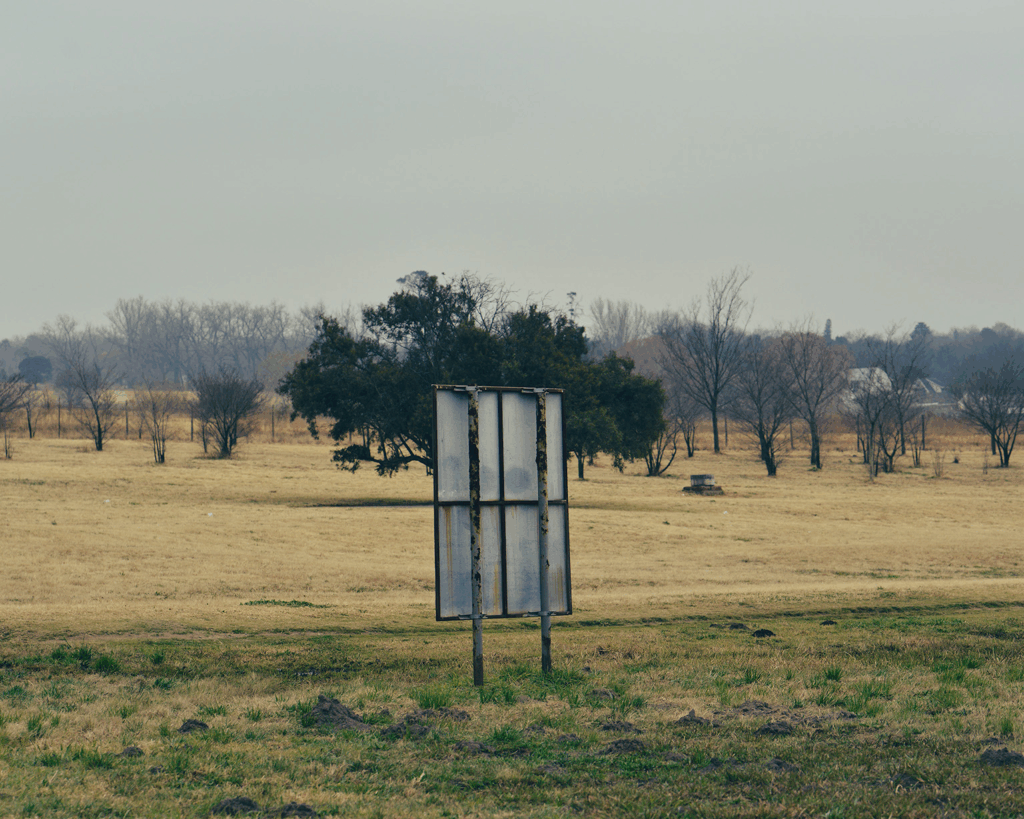
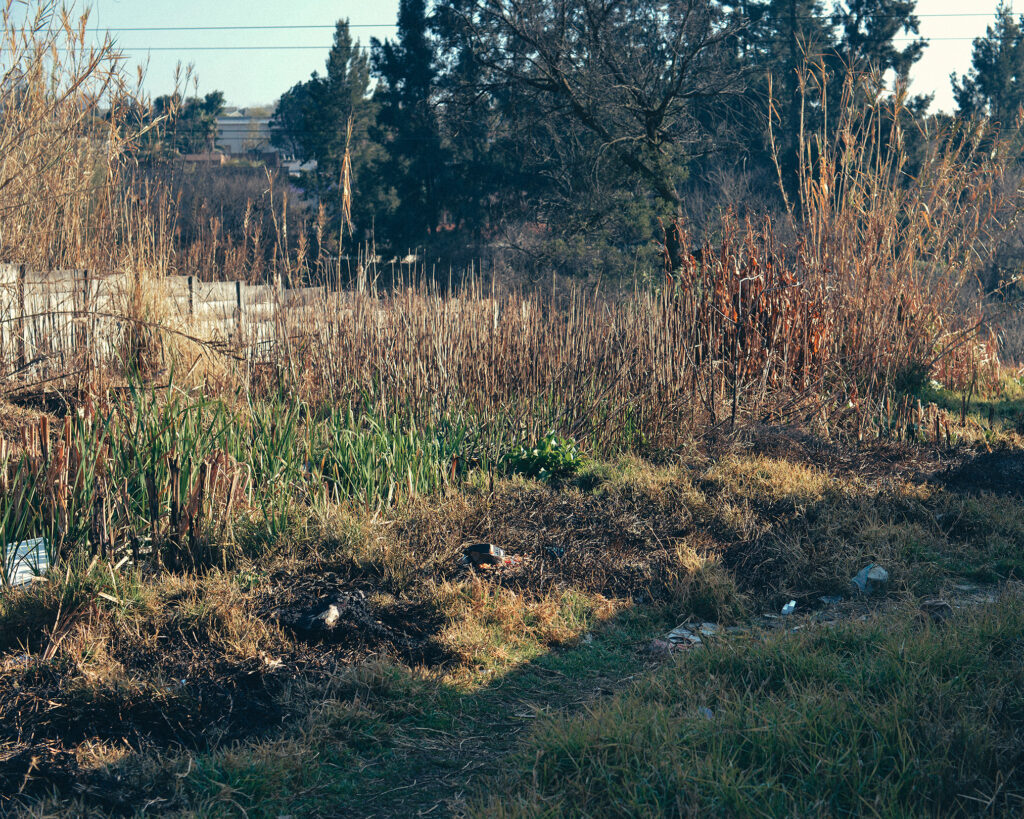
Karabo Mokoena, 2017. Corlet Drive, Lyndhurst. A woman who lives opposite the location asks me what I am doing there. The collective trauma of this community still exists eight years after the incident. Two people walk up from the path into the street and disappear up the road. Life goes on.
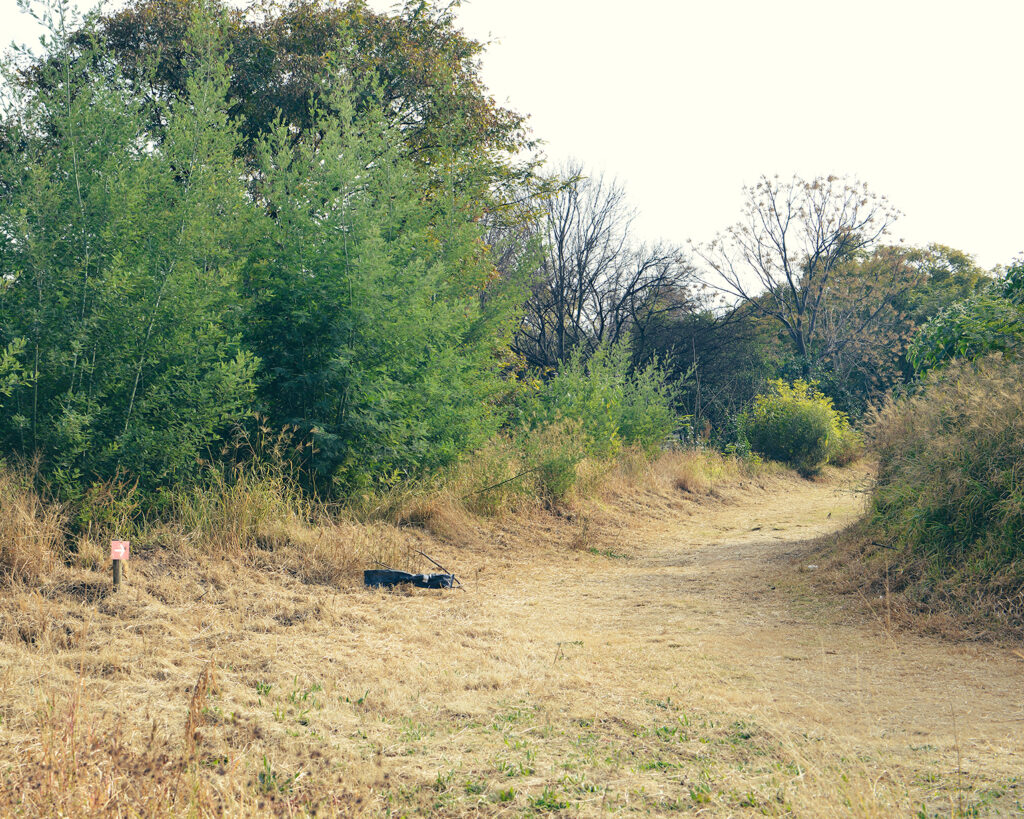
Kirsten Kluyts, 2023. George Lea Park, Sandton. On the right of this photograph is a football field, hidden by a tall mound, where I play on most Saturday mornings. These sites are everywhere, and chances are you have walked over a ground in which a woman was found dead.
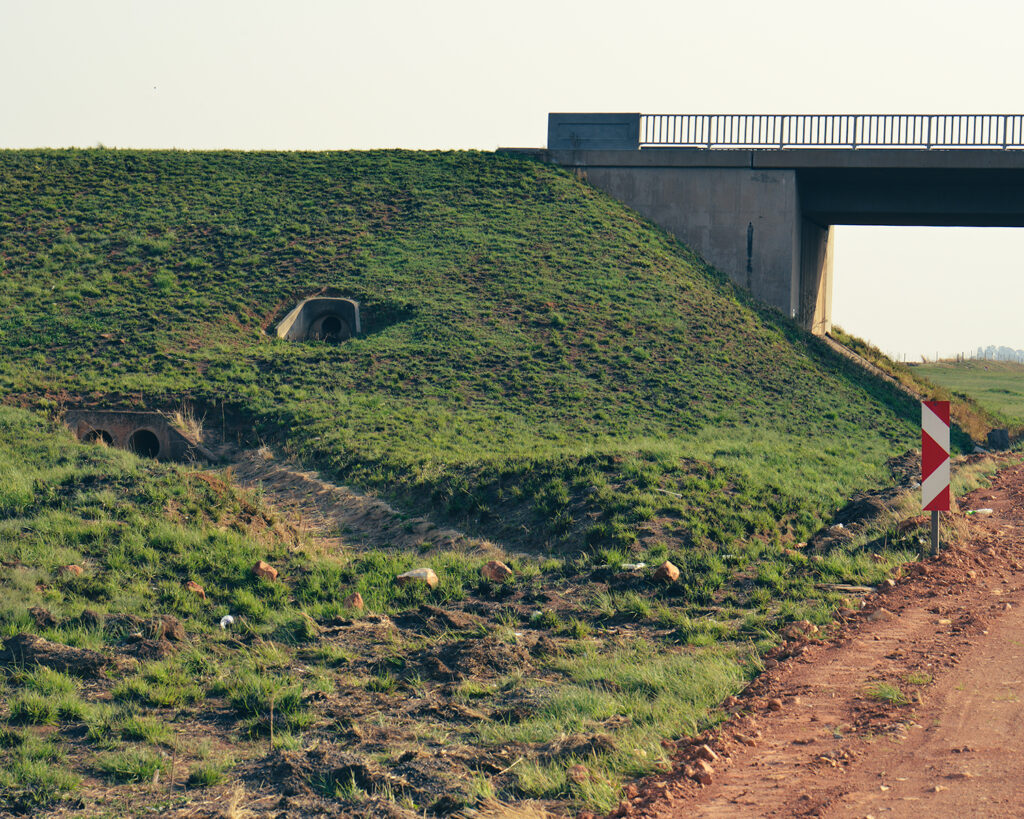
Lia Anita Adeline , 2021 Dwarsfontein Ardent Offramp, Delmas. Lia was likely rolled from the top of the bridge and landed at the bottom embankment along the highway. So reads an article. Another human did that to her.
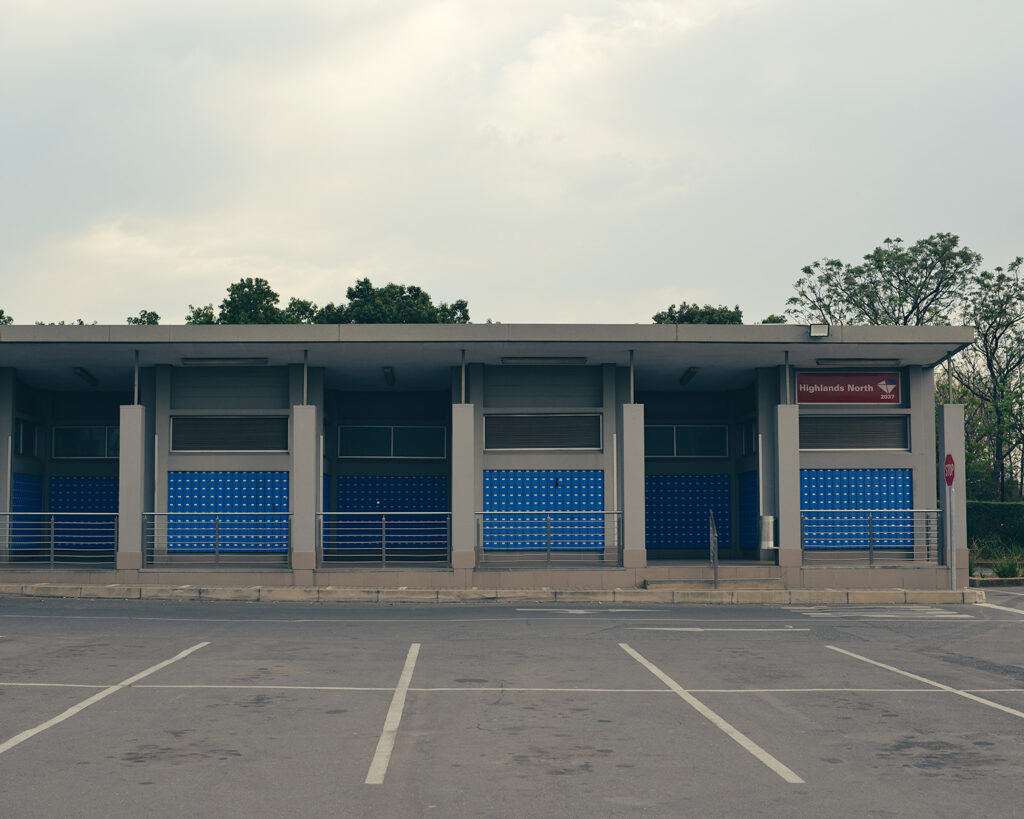
Magda Frazer, 2011. Post Office, Balfour Park. Magda went to work early and found her colleague and an accomplice robbing the post office. That was her undoing, arriving early at work.
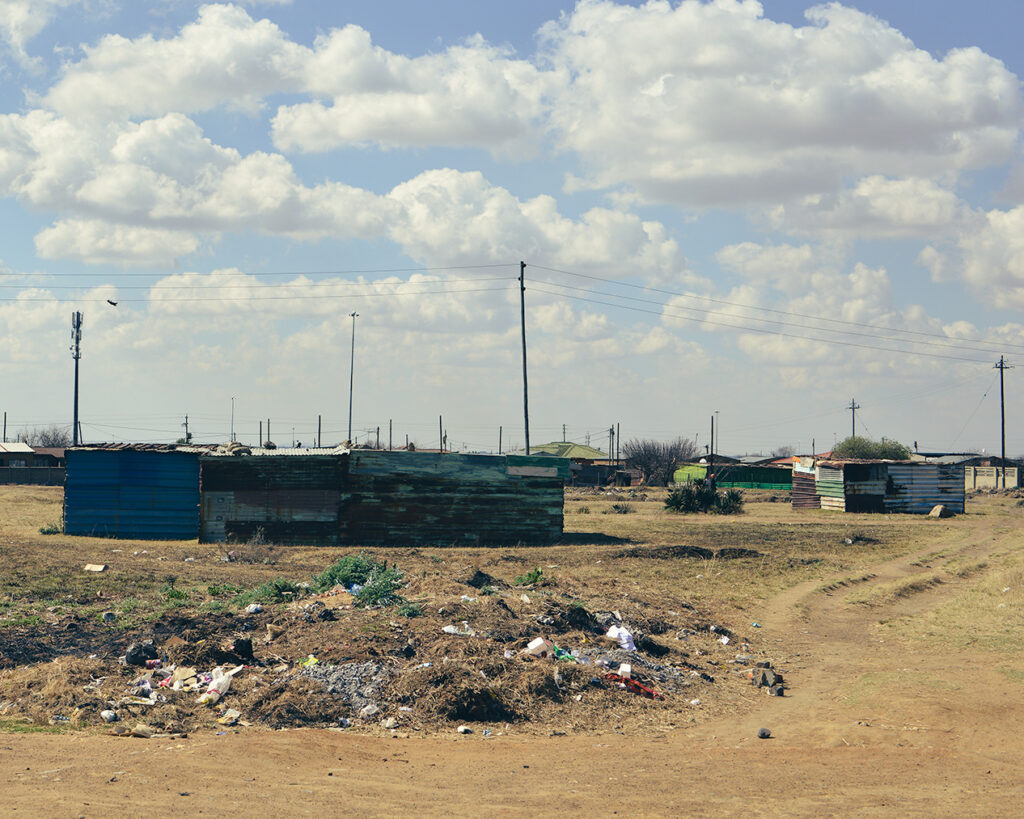
Mohanuwa Kobedi, 2020. Zamdela, Sasolburg. On the Sunday I make the photograph, I can hear the church drum and singing from inside. After the body was found in the Church’s toilet, the church took down the toilet and continued as usual.
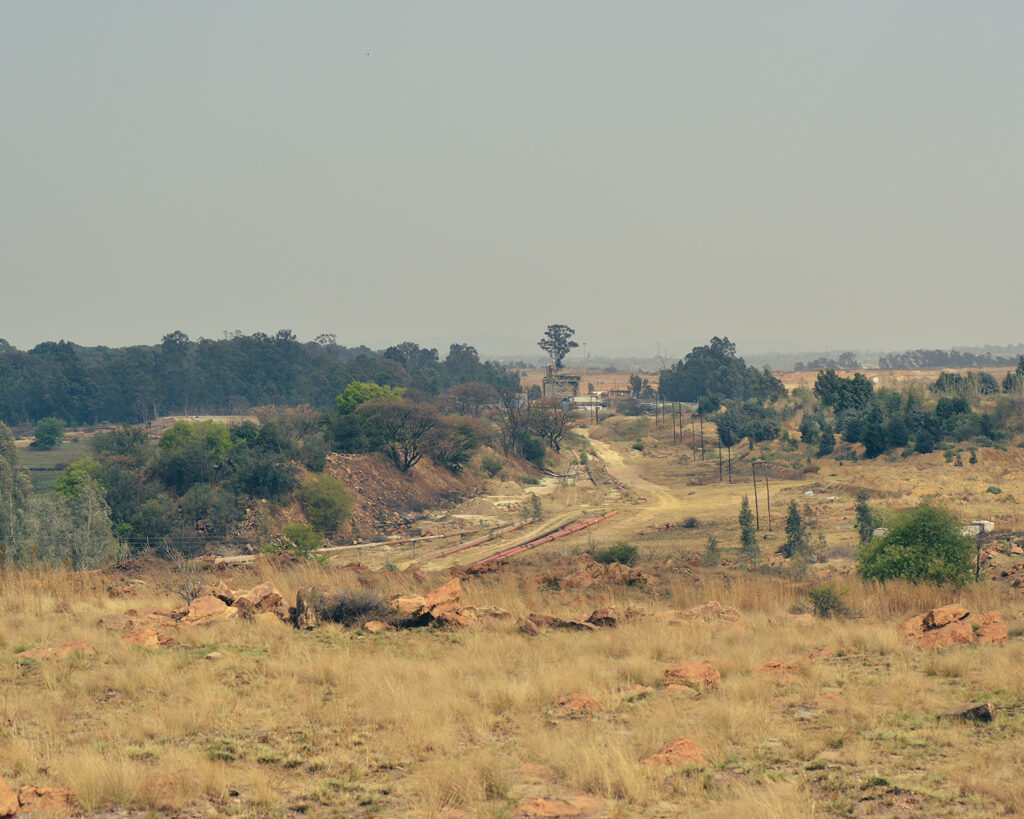
Moses Sithole victims, 1995. 10 bodies dug up. The callousness of a serial killer, so much evil, so much pain, so many bodies.
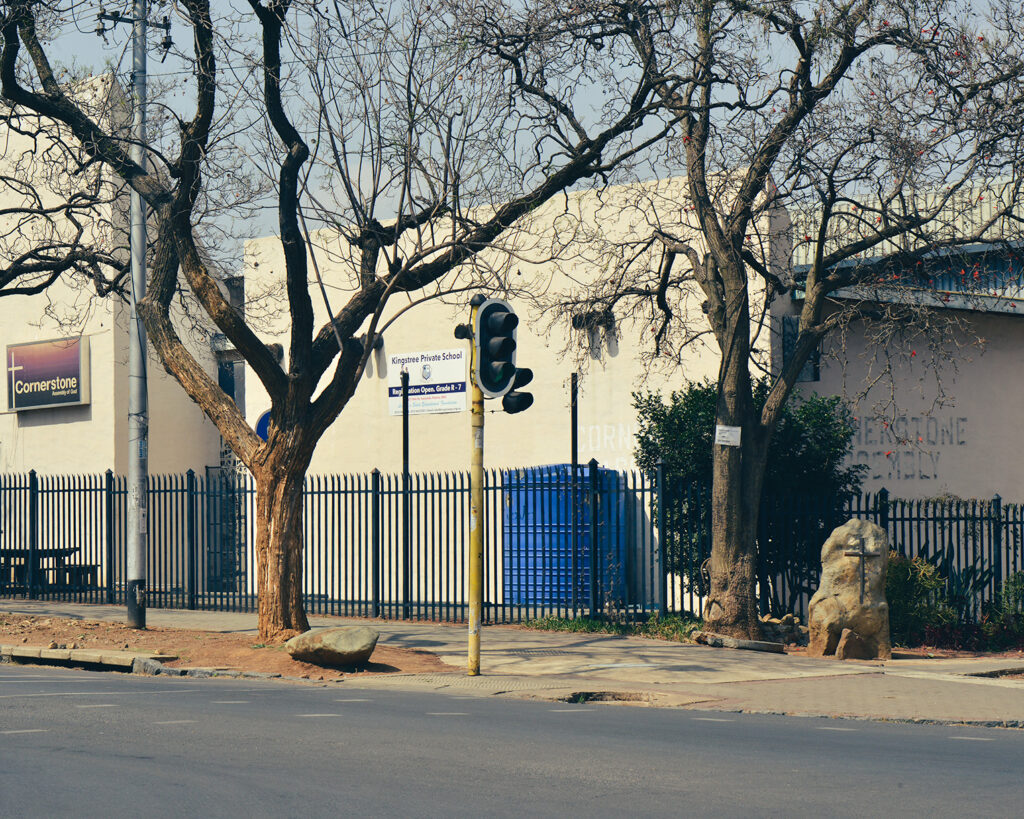
Monica Matrose, 2023. Wessels and Park Street, Pretoria. Monica’s partner stabbed her here with a pair of scissors, next to this church, next to this cross on a stone, right under God’s nose.
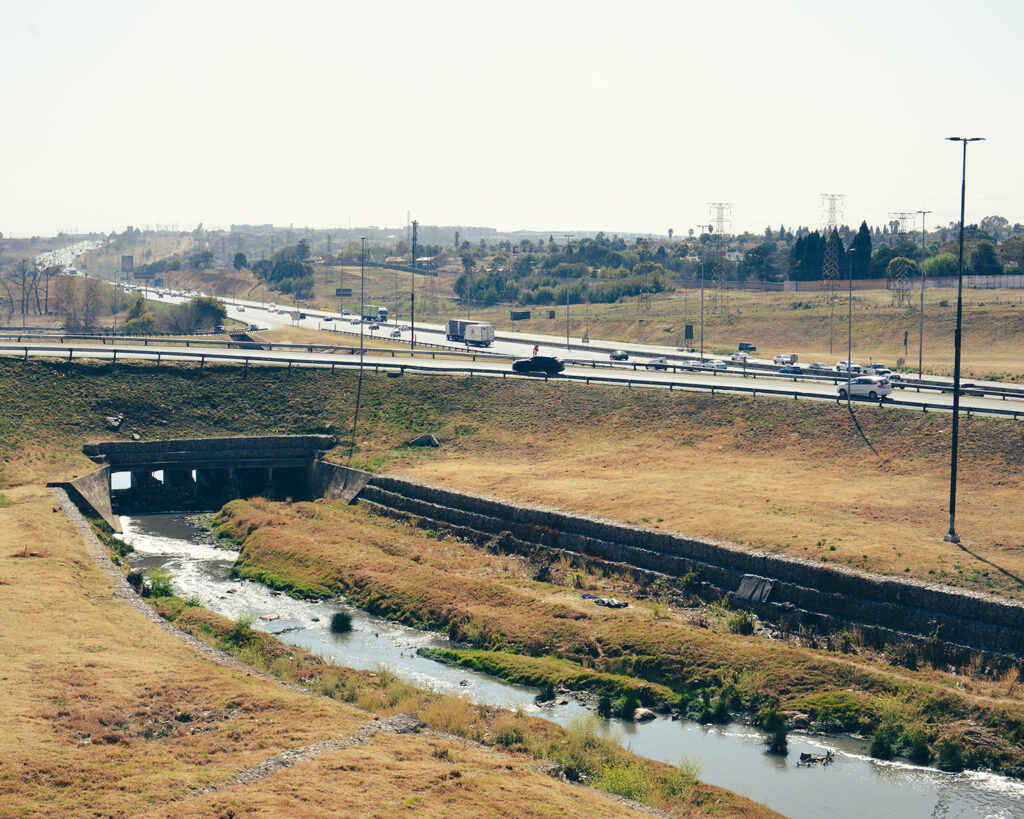
Soldier in uniform, 2015. N3 Highway, Edenvale Alberton. The photograph is perfect, the water, the highway, the scale. I feel terrible thinking about this frame as beautiful considering what happened here.
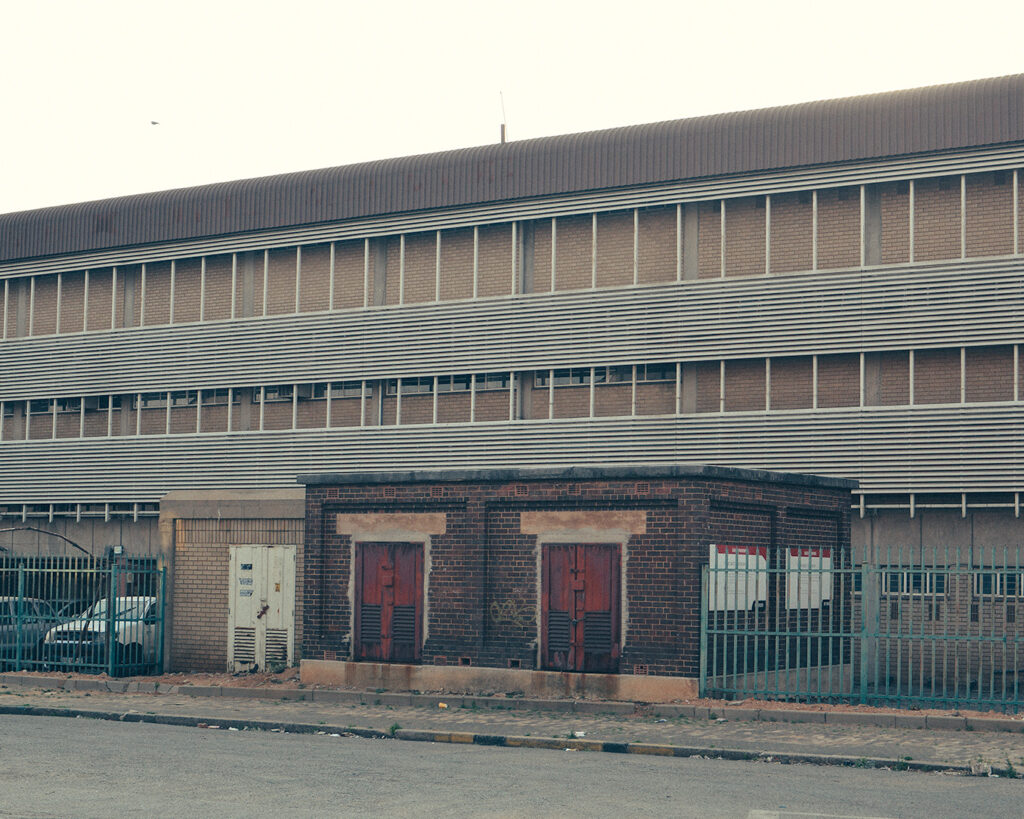
Six Decomposing bodies, 2024. 13 Sprinz Avenue, Village Main, Johannesburg. It is quiet on the day I come here. The humming of machinery that categorises an industrial area is absent. There is something about the quiet, the eeriness, that says here a body can decompose and nobody can see it, and the killer knew that, and this wasn’t by chance.
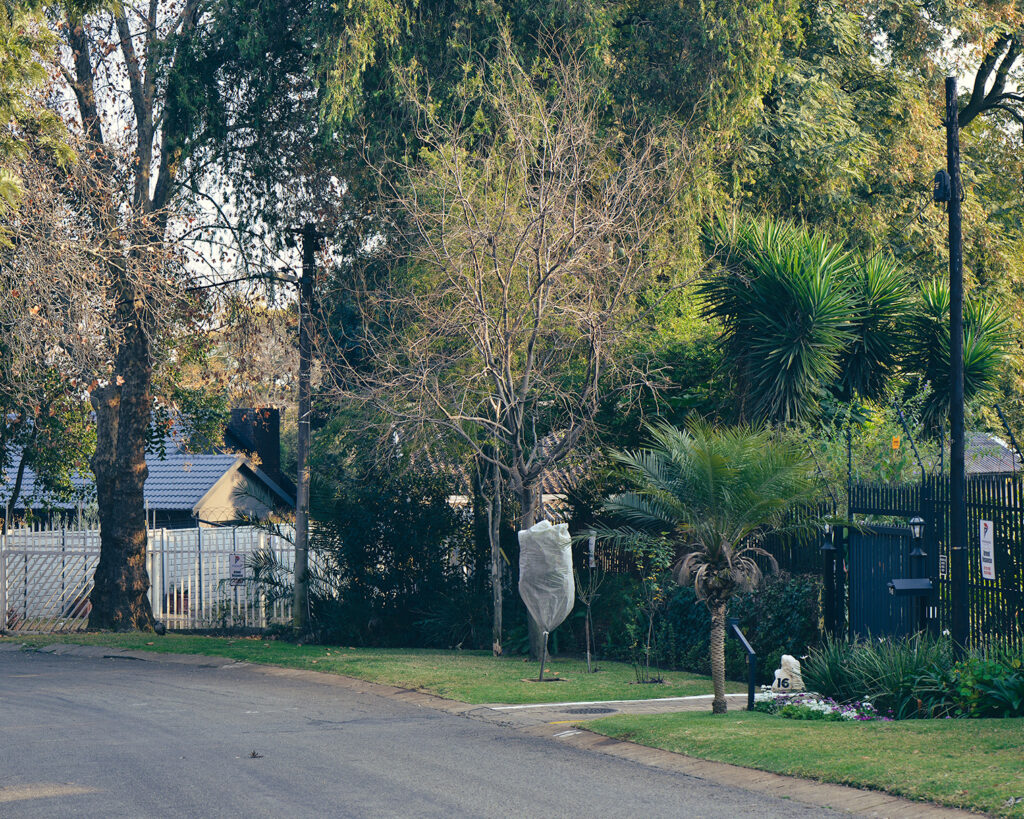
Tanya Kelly Flowerdale, 2023. Durham Street, Darrenwood. Durham Street is two streets away from my house, tucked amongst a few houses. It bends, and each step reveals more of the street. Behind the houses, there is an open field, which is also behind shops. Yet she was dumped here, amongst houses, instead of the deserted fields behind.
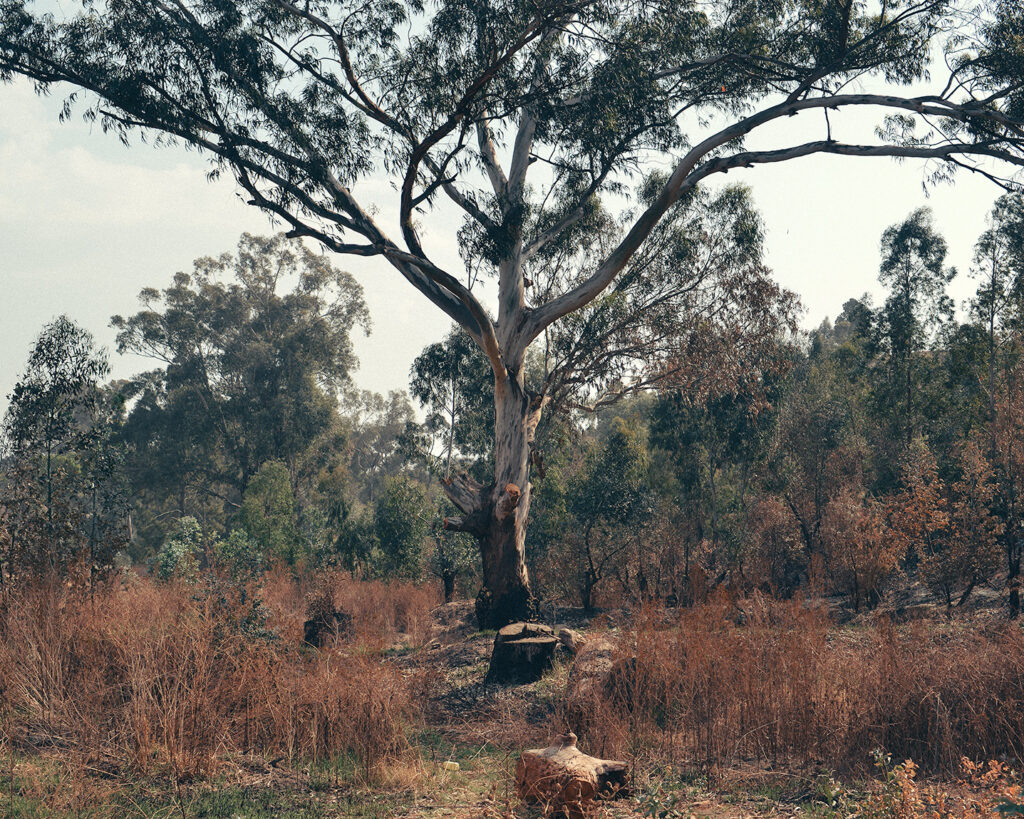
Tshegofatso Pule, 2020. Durban Deep, Roodepoort. I find the man who found her and posted her picture on FB. He willingly takes me to the location. We circle the tree. He notices that the branch has been cut and the land around the tree has been cleared. After the incident, a developer bought the land, and has built a block of flats already not far from the tree. Right where Tshegofatso was found, a block of residential flats will likely go up.
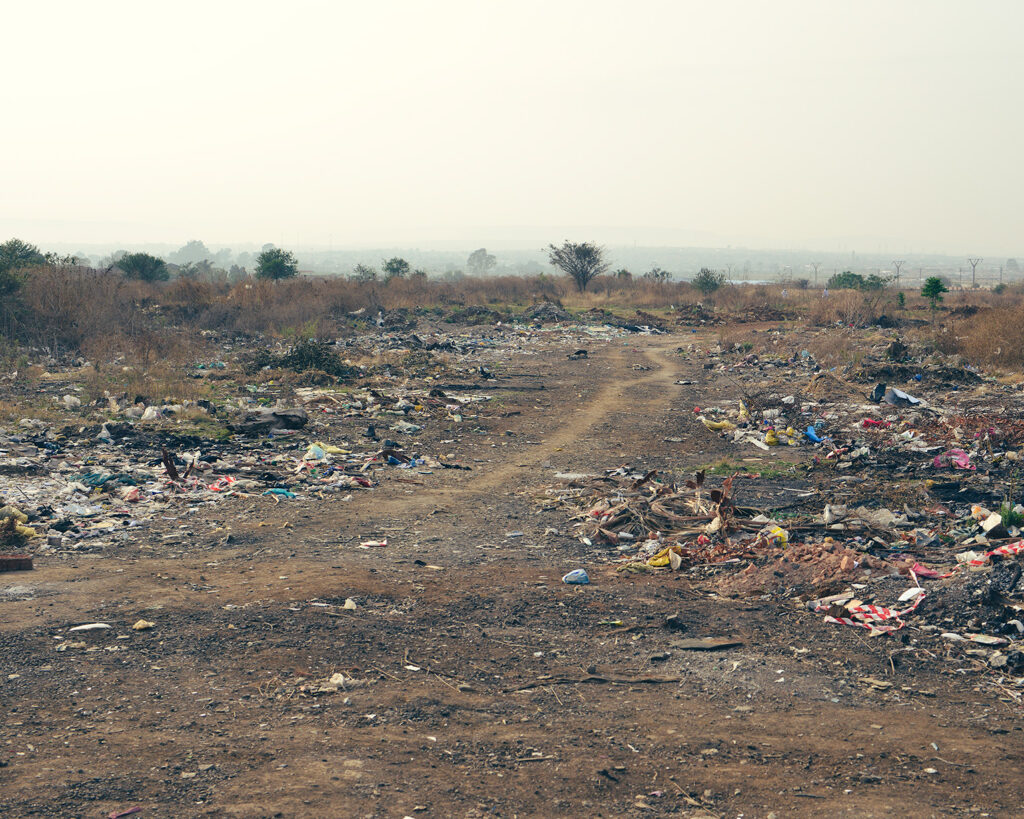
Two bodies, 2025. Dennebom Train Station, Pretoria. The location is behind a church. The community has been complaining about this area, asking the municipality to clean it, but for now it is still a dumpsite, and the site of mourning.
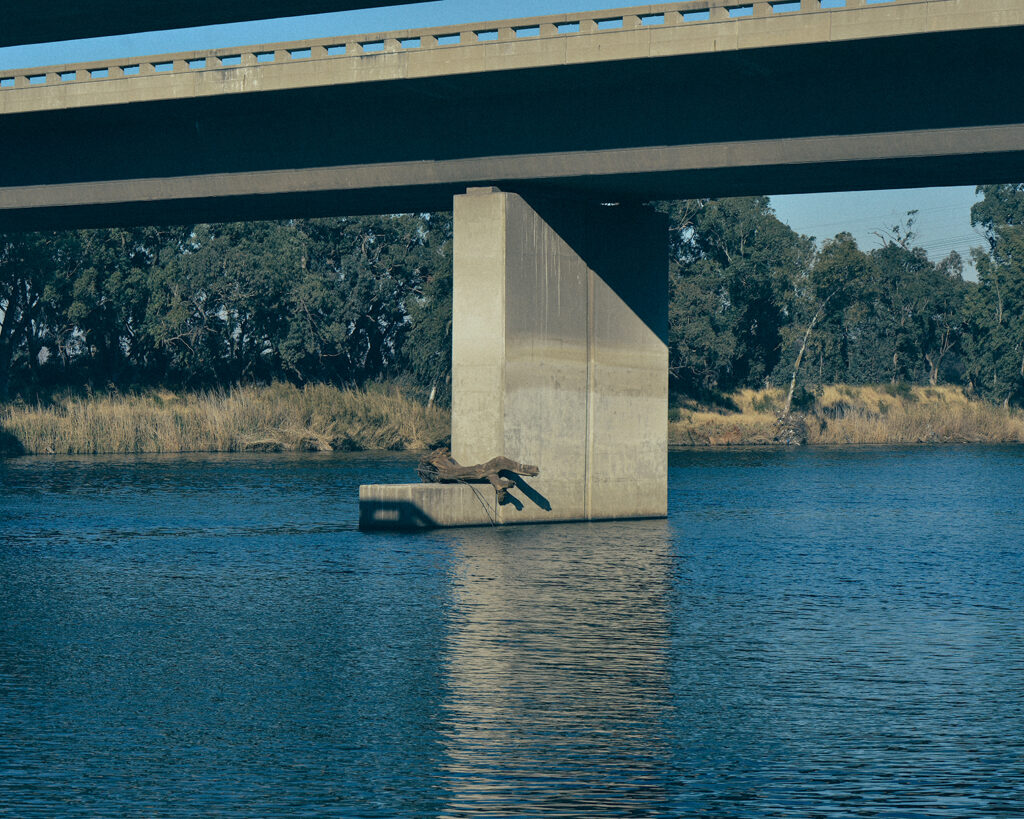
Unknown, 2021. Vaal River R59, Viljoensdrift. On the Vaal River, under the bridge, church members hold a small ceremony, right where a woman’s body was found. Against the concrete walls of the bridge, a friend notices strange markings, and he says this is where it is rumoured satanic groups meet.
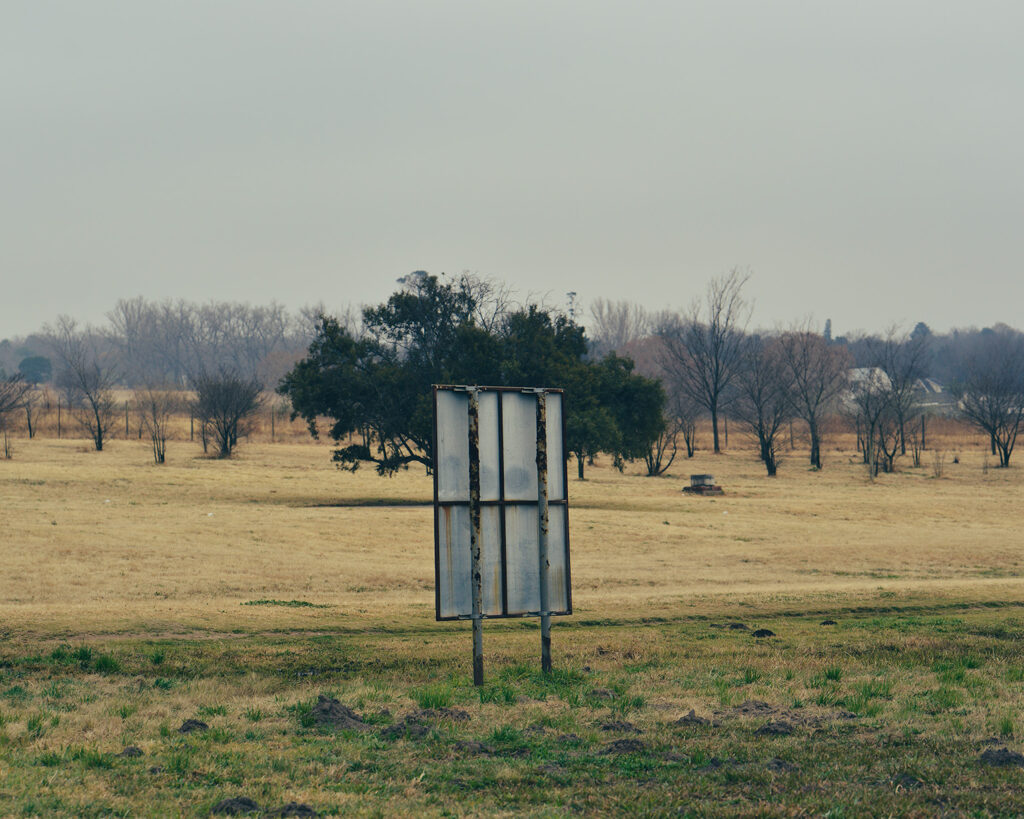
Unknown, 2019. Delta Park, Blairgowrie. On the day I make the image, a group of around 200 people walk Delta Park. And another handful, further down, with dogs, and on bicycles.
About the photographer
.Lidudumalingani is a writer and photographer. His photographs have been shown in group exhibitions in South Africa and in Amsterdam. In 2021, he received the COVID-19 Emergency Fund from National Geographic, to make work about how his village was adjusting after COVID-19 restrictions were lifted. As a writer, he was awarded the Caine Prize for African writing in 2016 for his short story Memories we Lost. In the same year, he was awarded the much coveted Miles Morland Scholarship. He has contributed to the BBC, The Africa Report, Chimurenga, Mail and Guardian, Wanted Magazine, Visi Magazine, Enkare Review, Quartz Africa, Africa is a Country, and Tender Photo. He has appeared in literary festivals and conferences around the world. Lidudumalingani currently works as a Commissioning Editor at The Multichoice Group and Showmax.
Throughout November, Tender Photos will showcase Sites of Mourning by South Africa-based photographer Lidudumalingani. An essay contextualising the images by Bongani Kona will be published Actor, director, writer, producer, comedian, disc juggler, and digital creator, today (November 12), followed by a short story by Temitope Owolabi..