
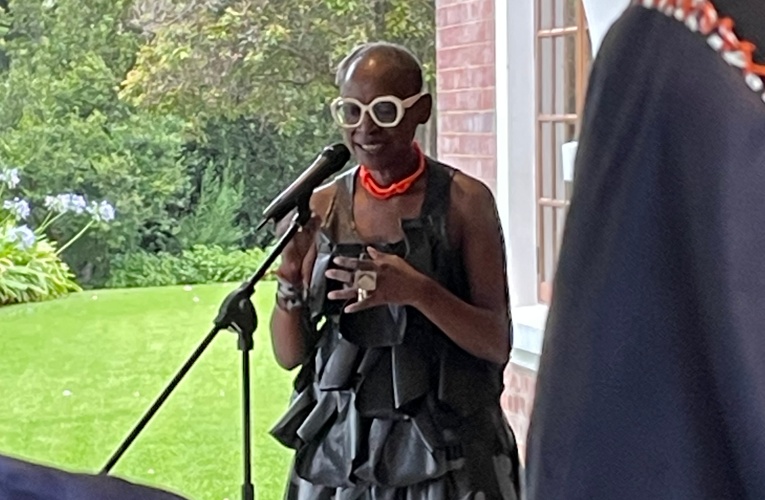
The late Koyo Kouoh was set to disrupt the pattern in which for centuries the Venice Biennale was curated
CITYLIFE/ARTS pays tribute to a formidable African curator who passed on only a few days before she was to prsent the theme of the 61st Venice Biennale.
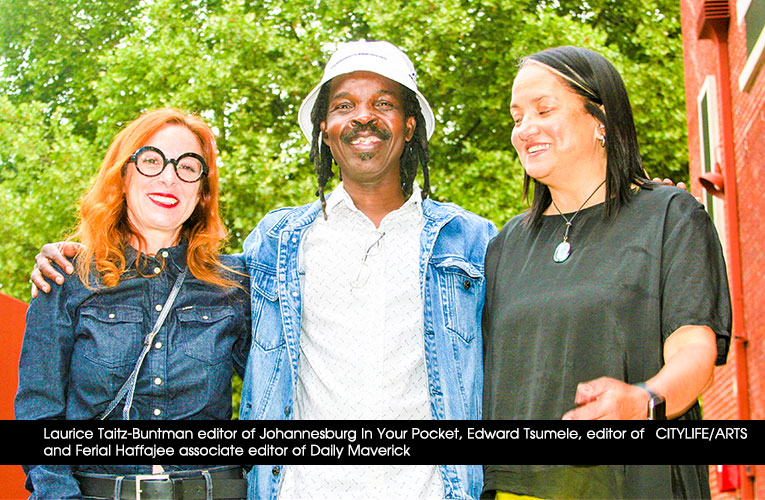
By Edward Tsumele, CITYLIFE/ARTS Editor
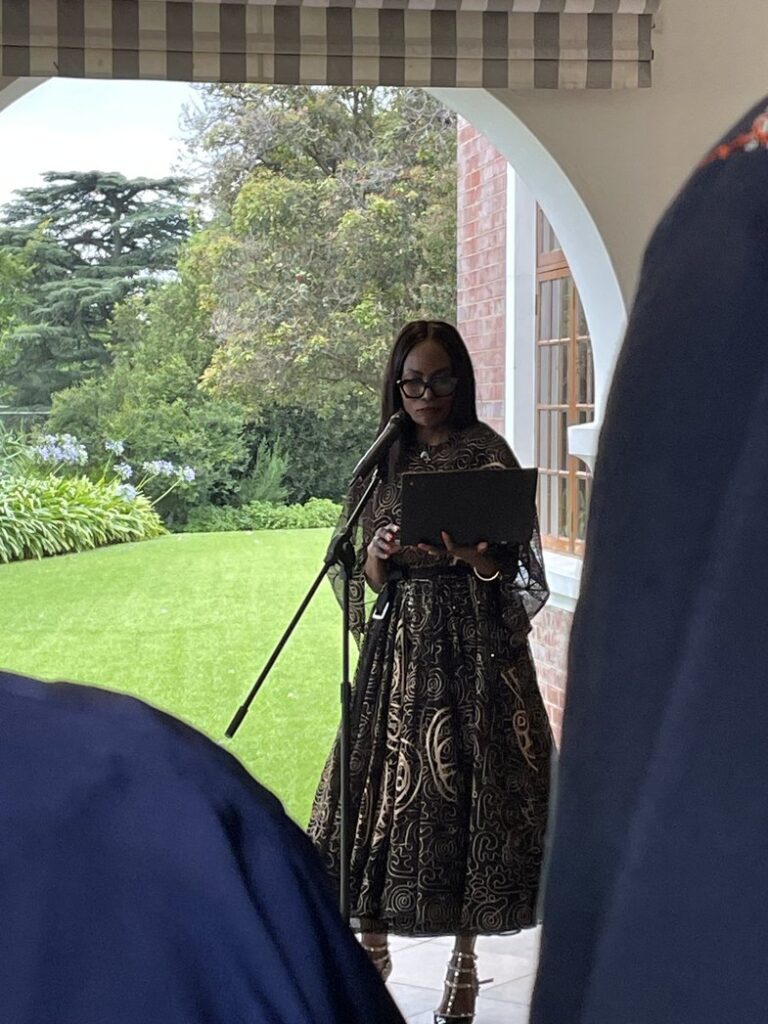
When in February this year, what started off as a rumour in Johannesburg’s increasingly close-knit art ecosystem slowly consolidated into a fact, and that is that a dinner was organized for Koyo Kouoh, at well-known art collector and businesswoman Pulane Kingston’s house, those of us who were left out among those invited to this intimate event, billed as exclusive, we felt our egos deflated. WE too should have been at this event where an assortment of people in the art eco-system, such as her associates, friends and friends of friends were invited. We were probably right to feel that our egos were left dented.
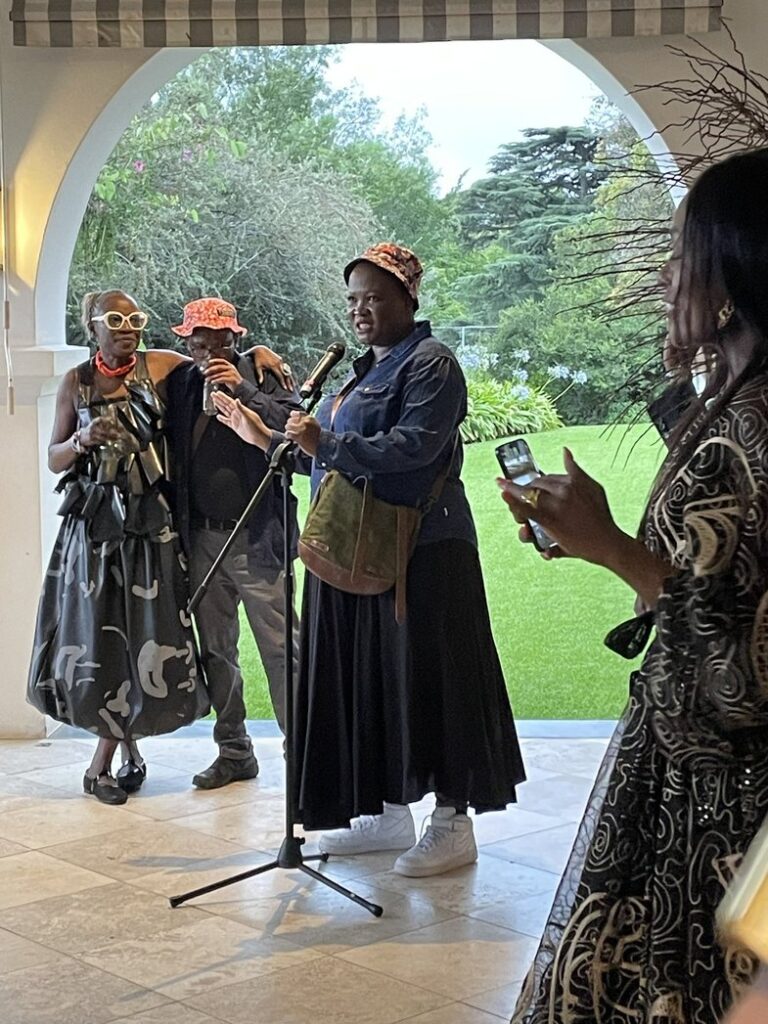
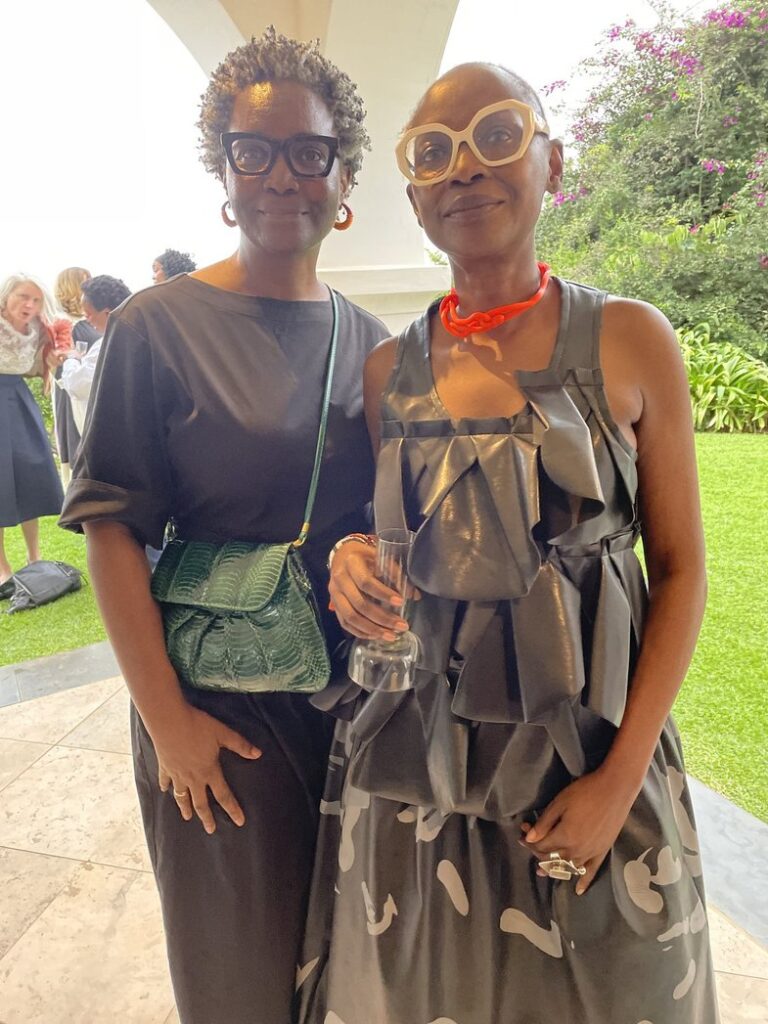
After all this was a dinner billed as “exclusive” where those who play an important role in the art eco-system in Johannesburg were to gather and break bread with Koyo, who had just been announced as the curator of the 61st Venice Biennale. That is where it was expected the Executive Director and Chief Curator of Zeitz Museum of Contemporary Art Africa (Zeitz MOCAA) in Cape Town, was going to take into confidence those who gathered, giving them an insight into her thinking around her curation of the biennale. Her being trusted to run the biennale for 2026, is a big deal.
First, this is the biggest and oldest art event in the world, whose longevity runs into centuries, and being appointed as the curator of the event is a big deal in the world of art globally. But secondly, and perhaps more importantly, she was the first African woman to be trusted with this rather demanding responsibility, that sees the gaze of the art world gets focused on the person appointed to such a position, particularly their curatorial thrust being scrutinized closely, with the world’s leading art critics struggling impatiently to steady their fingers on the keyboard, ready for action, waiting to notice even the smallest slip ups, ready to skin the curator alive. Such is the pressure of being appointed to this position.
Therefore, for Koyo, she must have been aware that she was being watched closely, and therefore she must have worked very hard to make sure that in her curatorial thrust, there was no room for mistakes, no cracks that would give her detractors an opportunity to discredit her as a token curator who was chosen not because of her expertise, which she has in bucketful, but based on her gender as well as on the fact that she was African, and those powers simply wanted an African face this time around.
But on Saturday, May 10, 2025, just like a thief in the night, her life was suddenly stolen by a mysterious and mean abstract character. Koyo at a relatively young age of 57, died suddenly. She was left with two weeks to present her curatorial theme, an event that would have given the art world a deep insight into her curatorial thinking around the 61st Venice Biennale for 2026. Therefore, as a result of the highly regarded curator’s demise, we will never know what she was going to deliver come next year.
The art world is in mourning right now as they contemplate what will happen to the 61st biennale as its architect did not live to see her plans and their implementation through. Death has done a cruel blow to one of the continent’s formidable art voices and thinkers.
After all, for the years that she has worked as a curator on the continent, she has demonstrated that she is one of the few art players and thinkers who were making the necessary changes especially when it comes to putting Contemporary African art first globally. For this Koyo was not apologetic. She is known for her efforts in terms of her curatorial practice to frame African art for Africans first, and the rest of the world secondly.
That is being brave in a world where until recently African art was thought of as some sort of curiosity, especially by the Western art gaze, instead of being seen and understood to be part of the global art production that is changing how we as humans see ourselves and our civilization. Now that is important and a great deal for an African curator, who in fact did not have any art training, her area of expertise and training being in banking. Skills the Cameroonian born and Switzerland raised curator honed through education in Switzerland where she was raised from the age of 13.
Koyo, however, came back to Africa in the 1990s, to share the wisdom of the world she had gleaned when she was way the continent of her birth. She made Senegal home, where she became active in the art space, founding formidable art initiatives that transformed the art landscape, such as the Raw Material Company an arts residency Project, which benefitted the art world immensely.
She became a formidable force, a guiding light in the world of art. Not only in Africa, but globally. She was also gifted linguistically as she was fluent in several languages, including French, German, English and Italian, and Russian, skills that are important in the interlinked global art ecosystem.
Her expertise and her original thinking around art practice got noticed by the art world. And when her current employer Zeitz MOCAA faced turbulence that threatened to undo the good work the museum was set out to achieve in 2019, when the founding executive director and chief curator faced allegations of sexual harassment of staff and racism, they did not have to look beyond Koyo as a replacement for leadership of the institution.
Koyo came with a solid reputation in the art world. The Zurich raised, curator at the time of her death lived between Cape Town, South Africa; Dakar, Senegal; and Basel, Switzerland. In 2007 and 2012, she joined the curatorial teams for documenta 12 and 13 in Kassel, Germany. She was also on the search committee that chose Polish curator Adam Szymczyk as artistic director for documenta 14. Between 2013 and 2017, Koyo was curator of the artistic program of 1-54 Contemporary African Art Fair. Since 2009, she was the co-founding artistic director of Raw Material Company art center in Dakar.
It indeed turned out to be a good decision, as Koyo is said to have turned the situation around, restoring the museum’s reputation, serving it from what could have been a disaster for this important institution of art in Africa.
She was quick to put up programmes that in a way made people to forget about the racism and sexual harassment scandal that had befallen the institution shortly after it was launched.
For example, her curation of When We See Us: A Century of Black Figuration in Painting, spotlighting a century of work by artists from Africa and the global African Diaspora was highly rated, deemed the biggest exploration of Black self-representation and subjectivities to date.
And so, it can be argued that whatever curatorial skills she had and the study of African art she did, were self-taught, just as the late Nigerian curator Enwezor Okwui did, who became the first African to curate the Veniece Biennale in 2015.
It is therefore understandable why the art world in general and African particular in mourning the death of this talented African in the manner it is happening. They indeed feel robbed by a mythical thief called death, who descended on the Swiss hospital where Koyo lay and suddenly took her life away. She is said to have been suffering from cancer, which she had recently been diagnosed with. However, the reality now is that with that theft by the cruelty of death, it also dissolved the African hopes of having one of their own, a formidable woman in charge of the world’s most prestigious art event.
Tributes continue to pour from all over the world, praising the curator for the legacy she left behind.
“Koyo worked with passion, intellectual rigor, and vision on the conception and development of the Biennale Arte 2026. Her passing leaves an immense void in the world of contemporary art and in the international community of artists, curators, and scholars who had the privilege of knowing and admiring her extraordinary human and intellectual commitment,” said Venice Biennale in a statement.
“Zeitz MOCAA Mourns the Passing of Koyo Kouoh, Executive Director and Chief Curator
It is with profound sorrow that the Trustees of the Zeitz Museum of Contemporary Art Africa (Zeitz MOCAA) received news in the early hours of this morning, of the sudden passing of Koyo Kouoh, our beloved Executive Director and Chief Curator.
Out of respect, Zeitz MOCAA will close its doors today, and all programming will be suspended until further notice. Our thoughts are with Koyo’s family at this time,” treads a statement issued by the museum.
“We did not spend extended endless time together, but the minutes and the hours we managed to squeeze in over the past 21 years were nothing short of meaningful. Somehow in those moments, friendship bloomed, one that we came to call sisterhood. Every time we met, we embraced with warmth, and we laughed, deep joyous, knowing laughter. My long overdue weekend visit to Cape Town will remain unfulfilled. A lingering wish left behind,” writes well known Johannesburg based curator Makgati Molebatsi on her Instagram account.
It is therefore clear that Koyo was a formidable art voice on a continent that desperately seeks to refind its voice and position as a significant contributor to world amidst of a cacophony loud, sometimes disapproving voices from especially the West’s art capitals, threatening to mute and drown the African voice in the process. Koyo was that voice. The voice of that necessarily became discordant for the sake of African contemporary art. She was set to disrupt the pattern in which for centuries the Venice Biennale was curated.
Koyo Kouoh led the citation team on my show “Waiting for Gebane 2013 to 2018. momentous time during the difficult Covid-19 time. I will always be grateful for that ocassion. She went on to nominate me for the inaugural K21 Art Prize which h I went on to win in 2023,” says South African artist Senzeni Marasela about the role that the late curator played in her development as a practicing artist.
Rest in peace Koyo as future generations of African thinkers gather their sometimes-fragmented collective intelligences to create an intelligible, cohesive African voice around art curation.