



The musical play Lament: Songs of Imbokodo centres powerful women voices in storytelling
The musical supported by the Department of Sport, Arts and Culture, is headed for a season at South African State Theatre, 12-16 November 2025.
By Edward Tsumele, CITYLIFE/ARTS Editor

When I arrived at the While City Jabavu Central, Soweto, on Friday, November 7, 2025, walking towards the Methodist Church Hall, 100 metres away, I noticed taxis as usual negotiating their way to and from Johannesburg, offloading their human cargo. Their notoriety for speeding was constrained by-the incessant drizzle. The type that falls for hours, leaving the ground wet and too slippery for cars to speed. People were walking intentionally to somewhere and from somewhere despite the rain that left the thirsty grounds wet.
But as soon as I entered the Methodist Church grounds, I heard a strong rhythmic sound emanating from the Church Hall. Matshidiso Ndinisa gave me a knowing look. She gave a half smile and spoke. “We are 40 minutes into rehearsal, but you will still catch the Sesotho dialogue.”
I did not respond as I literally rushed into the hall where the sound was coming from. J had been won over by the lamenting haunting melodies, the stomping of the ground by the energetic dancers. The rhythm of the drums and marimba was just too much to ignore.
I grabbed the nearest chair quickly and quietly. I did not even give the show’s assistant director Dickson Malele, even a nod as a way of greeting, for we had not seen each other for months this year. I was a bit embarrassed.
But the truth is, my attention was focussed on the stage where there was serious dialogue taking place. The singing was haunting. The marimba beats and the drum sound accentuated the effect of the message.
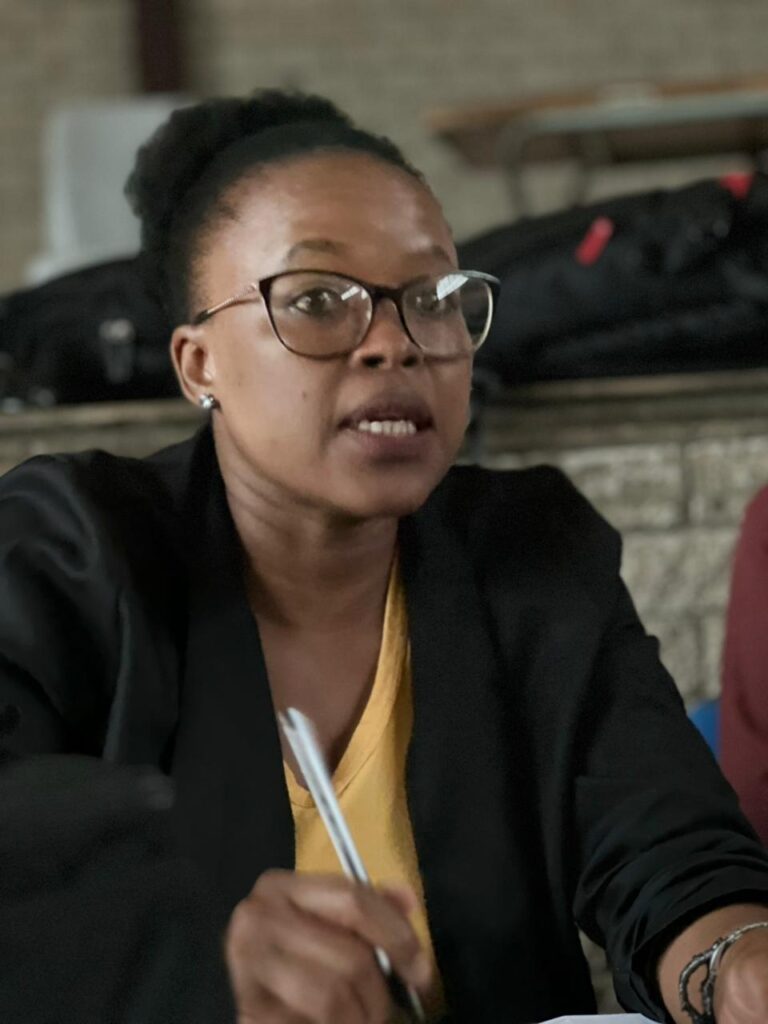
It became immediately clear that here I was to be immersed into a multi-layered and complex story of women abuse, suffered by women folklore under the tight grip of a toxic combination of rigid tradition, greed, poverty, masculinity and patriarchy, and yet at the end the women folklore remarkably manage to wiggle themselves out of that space of oppression.
Lament: Songs of Imkokodo was in rehearsal, readying itself for a season at South African State Theatre from November 12 to November 16, 2025, with two matinees on Saturday and Sunday. Both shows at 3pm in the Sibusiso Khwinina venue of the South African State Theatre in Pretoria.
Witten and directed by Matshidiso Ndinisa, with Dickson Malele as assistant director and musical direction by Themba Lenkosi, this show is beautifully done, telling a complex story of women’s resilience using well rendered dialogue, beautiful music and wonderful acting. This is a theatre piece that teaches, but at the same time entertains just as it tells the destructive nature of the intersection of tradition, masculinity and greed in the oppression of women in society.
However with a sense of humour, original music composed by Lenkosi, and some music adapted from pop sounds such as from the late Brenda Fassie, this is an important, if not interesting show, that centres women, putting them in the heart of the story.
The lead characters are strong, the acting is good, so good that as an audience you will be taken on a journey of how the women themselves made mistakes when they were young, but as they matured after they have been burnt by the hard life in a big city where wolves gallivant and hunt the vulnerable in broad daylight, the women overcome their circumstances and self-correct at the end.
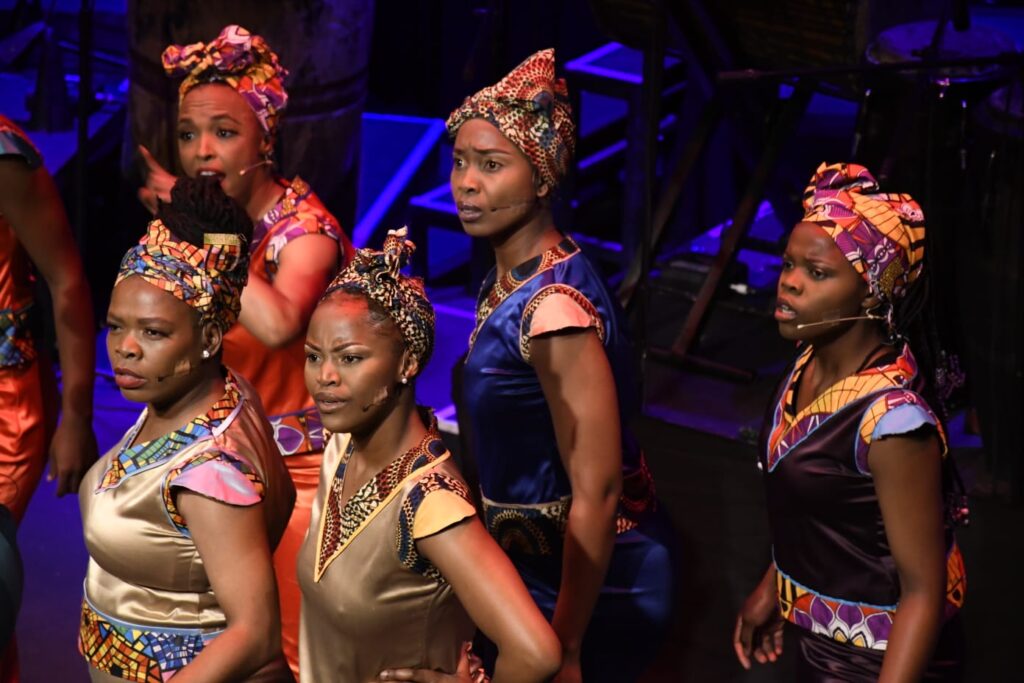
And so Lament: Songs of Imbokodo is not a story of pity. It is a story of the human triumph. A story of the resilience of the human spirit, demonstrating its ability to overcome oppression and suppression.
The women characters at the end become winners, and those who oppressed them in the first place become losers.
“AS for the character that I play, I cannot say I relate per se, but I know of village girls who leave their homes to go to the big city, lured by the bright lights, only to face the rough side of city life. They end of in a situation whereby they become what we used to call Slay Queens, offering themselves to rich guys with money, and in the process, losing themselves. With regards to interpreting my character, the fact is, I am full of energy and am able to act in a way that results in strong dramatic effect. That made it easy for me to play this character,” Tshegofatso Mafujane told CITYLIFE/ARTS shortly after rehearsal.
“I play the role of a character called Azania, who grew up without her mother. People in the township whispered to her that he mother went to exile. But she does not even know what exile is. She however is gifted musically, and music actually serves her as she performs on stage,” said Aphiwe Dumeko.
Lenkosi who is the musical director, and has worked on the past three iterations of the play previously, composed all the songs, with the exception of an adaptation of some of Brenda Fassie’s songs.

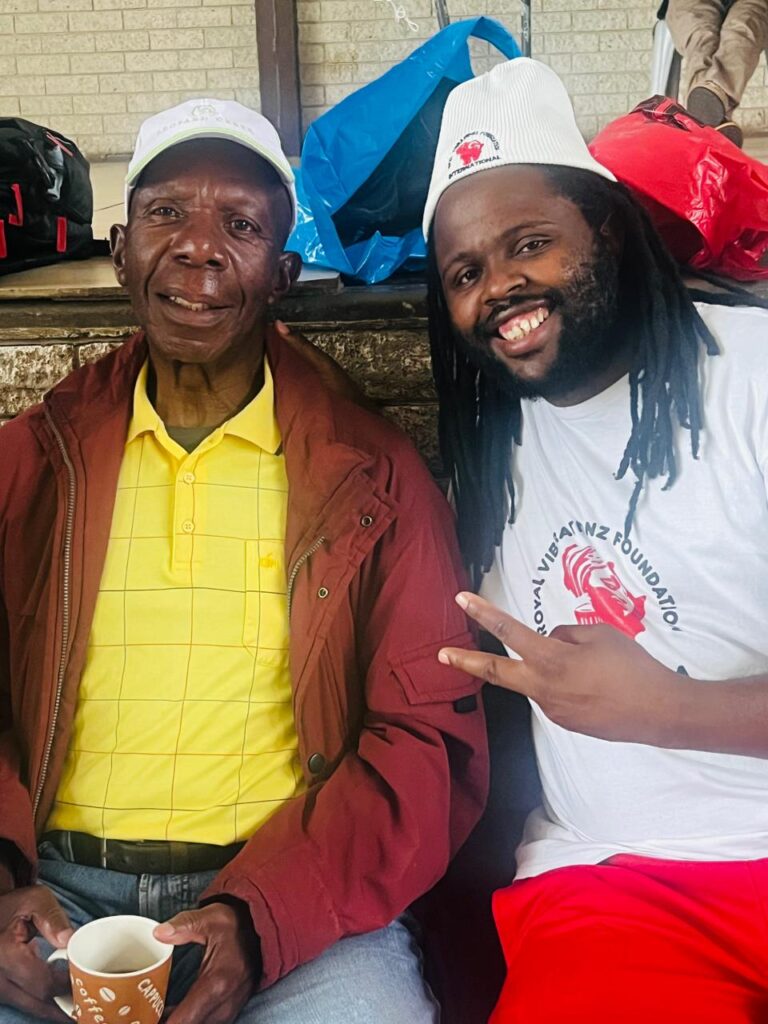
“I worked well with the cast. I have even learned that when you work with women artists, the approach when it comes to teaching them the music is different to when you are working with male musicians. For example, women are emotional human beings and you need to be aware of that. You need to be sensitive to that. But otherwise we worked well. And as to the band, it was much easier because they belong to my group Royal Foundation Vibrations. We have been working together already, and therefore they are familiar with the music and my style,”Lenkosi said.
What has made it easier is the fact that he makes the instruments – the drums and the marimba.
And so what is at the centre of the message of this musical play?
“The story is looking at the struggle women from all aspects of life face. We look at women who left their kids behind to join the struggle and fight for the future of their children, we look at the girl child remaining home, the struggle that child faces and how the men treat such destitute girls.
We look at the loneliness of the Basotho girls who have been kidnapped (chobediso). Being taken away from their loved ones against their will. The pain of having to marry a man you do not know and not even attracted to. How lonely these women feel in loveless planned marriages in the name of tradition, how their children become raised and how their children also become victims of unsolved loveless homes.
We look at the Zulu women who are left at home to raise their children, and the fearless ones follow their husbands and end up living in hostels and raise their children in rough environments of the hostels in the cities. While other men go to the cities to find greener pastures for their families and end up being swallowed by the things of the city and forgetting about their families.
We also look at the unsolved reality of our people where men kill women, we leave a question behind of, you kill me because you are afraid of my strengths, you kill me because you were failed and not taught how to love yourself, or you can’t love yourself without me, you kill me because you are not capable of loving another human being, or No you kill me because only you can have me?
We also question the system that fails women who end up in prison because of the so-called boyfriend / husband and end up serving sentences for the crimes thy did not intend on doing. looking at how women suffer in the name of love and fearing for their lives and how society judges them and label them. The narrative is told through the beautiful sounds of Marimba, singing and dance,” explains Ndinisa.
The cast:
Bonolo Mapota: Lead Dancer, plays Sotho Woman, Lethabo
Aphiwe Dumeko: Lead singer, Plays Freedom fighter’s Child, Azania
Tshegofatso Mafojane: Narrator, Plays Mafikeng girl, Brenda
Thembisile Khumalo: Lead Singer, Plays Zulu rural woman, ma-Khumalo
Gugu Radebe: Singer and Dancer: an Exiled Mother (Winnie Song)
Busisiwe Mahlangu: Dancer Singer: Ensemble
THE BAND:
Omphemetse : Alto Marimba and drums
Nompumelelo Nhlapo: Singer and Percussionist
Melissa Ndlovu: Soprano Marimba
Thabisile Ndlovu: Tenor Marimba
Mitchel: Bass Marimba
The story is driven by six women from different backgrounds who all meet in Johannesburg.