
The 61st birthday celebration of Mabrr…, a memorable event for a memorable cultural figure in South Africa
The event which took place at the Market Theatre Precinct in Newtown attracted a huge presence of artists, journalists and members of the LGBQ+ community.
By Edward Tsumele, CITYLIFE/ARTS Editor
She passed on, on May 9, 2004, but the room, Gramadoelas at the Market Theatre Precinct in Newtown, Johannesburg, felt as if she was there. Of course not physically but in spirit that manifested itself physically through the people that gathered to honour an icon, a star whose artistry was simply extraordinary. Controversial yes, as at times her off stage adventure bordering on the destructive side of life, such as serial boozing and drug abuse, threated to derail her career, but fact is Brenda was simply phenomenal. Those of us who lived during her life time, and interacted with her socially and watched her on stage, can boldly attest to the fact that Brenda had presence. She had the sort of charisma that was infectious on stage and off stage. She never tried to be somebody that she was not. She was raw in her approach to life, when interacting with others and also on stage that many of us admired and connected with as a fellow human being.
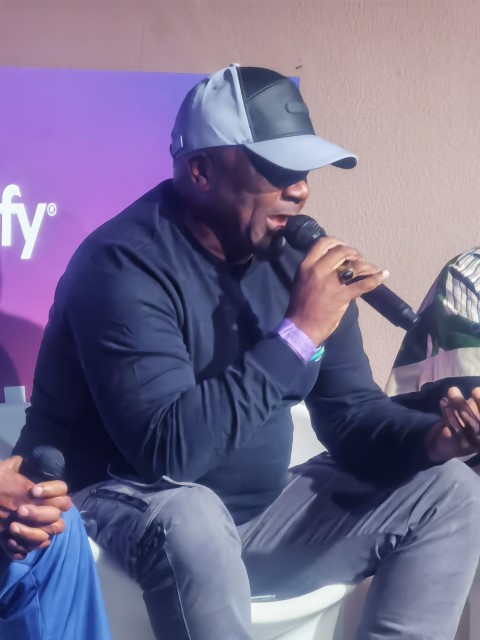
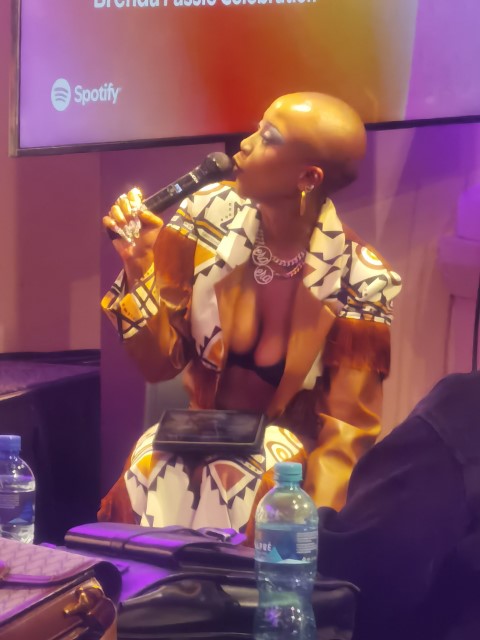
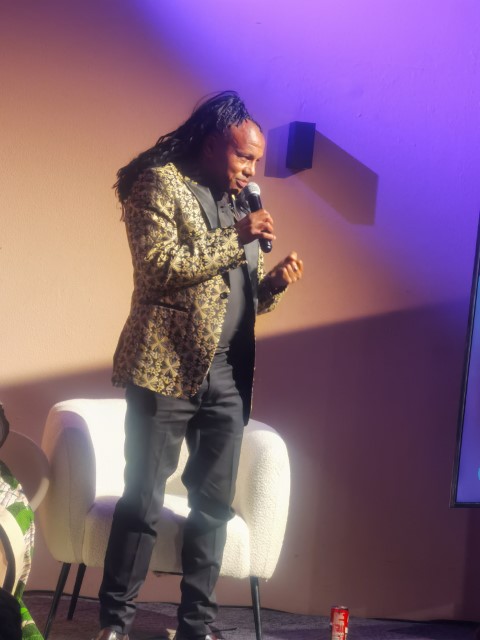
On Tuesday these qualities of Brenda were told by all the panel members who discussed Brenda’s life and how their own lives intersected with that of the late music star, both as a friend and colleague as well as how their own career trajectories were shaped by that intersection.
For example, Sello ‘Chicco’ Twala, the producer and musician turned businessman on a panel titled Brenda Fassie Remembered hosted by artist Moozlie, he shared how at the beginning of their professional relationship as her producer tasked by EMI, Brenda’s recording company to produce Too Late for Mama, the journey experienced a rocky start.
“This is because this happened shortly after Brenda had chased me away. It just happened that after that incident EMI asked me to produce her. When I went to her place to speak to her about the project, she initially did not want to come out to meet me. But I remained there asking her to come out. But I must have impressed her by singing one of her songs and then she relented and came out. She first dismissed me and said you Shangaan what do you know about producing,” Twala shared.
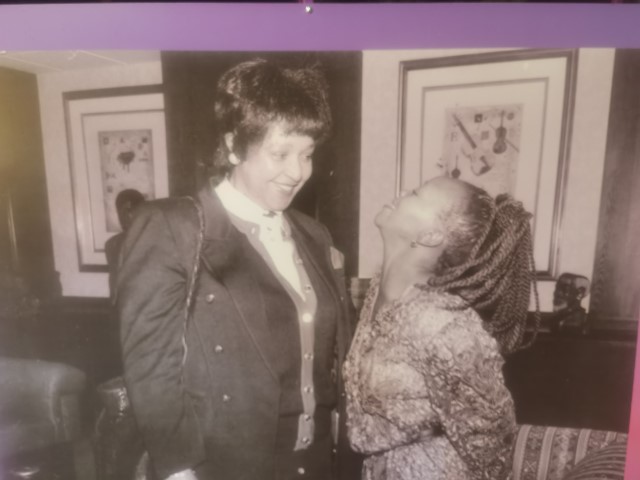
With her confidence won, however, Twala went on to produce Too Late for Mama, followed by Black President, an overt political song, ironically by someone who was not politically active. Her closeness to the late Winnie Madikizela-Mandela must have influenced her to do so, Twala revealed.
However from there on, Twala took a break from working with Brenda and at the same time her career almost went down the drain, nose diving to the extent that there was a real prospect of the talented artist disappearing into obscurity as what was produced at that time did not make any impact, and her destructive drug taking misadventures made the situation worse. Those were rally dark years for Brenda, the once promising South African music star, who was at the time dealing with her real existential threats.
“The situation was really bad for Brenda. But it just happened that I was driving through Hillbrow, not far from her flat when I got a call from EMI. Anyway, I and Tokyo Sexwale, who was Premier of Gauteng went to pluck her from there and took her to a rehab centre, after which I took her to the studio.
“We worked on her album, and the last song Vulindlela EMI actually did not like it, but I insisted that let us give it a chance as this might be the one that actually works. What happened after that was phenomenal. The company could not cope with sky rocketing demand because of that song as they worked overnight pressing more CDs to meet public demand,”Chicco told the audience that had a huge presence of artists, journalists and members of the LGBQ community. The event was organised by Spotify Glow as a celebratory event for what would have been Brenda’s 61st birth day on October 4, 2025.
The panel also comprised of Blondie Makhene, David Mabaso of the Big Dudes, Yvonne Chaka Chaka and Melvyn Matthews who credited for writing Weekend Special, one of the most memorable songs by the artist.
Yvonne spoke of how Brenda first opened doors for her as a Form 2 student when she could sing with her band straight after school, rehearsing with the band.
“But sooner after she would sometimes confront me and accused me of wanting to be her,” and added, “Later in life, when my career had taken off and she was not in a good financial position, she frequently came to my home to ask for money, and I always gave her money whenever she rocked up and asked. But first of all she would lecture you about not valuing money a lot. She would say money is not everything because when we die we leave everything behind. She would then ask for money, and I would give her. She herself was extremely generous. She always gave money to people,” Chaka Chaka said.
Today Chaka Chaka enjoys immense admiration as a musician and businesswoman in South Africa and the rest of the African continent where she is fondly known as The Princess of Africa. She is indeed a household name with a solid following by both ordinary people and high powered fans, counting presidents as part of her following. Chaka Chaka is also a respected educator with academic qualifications in education and is a successful businesswoman in South Africa with a diverse business portfolio.
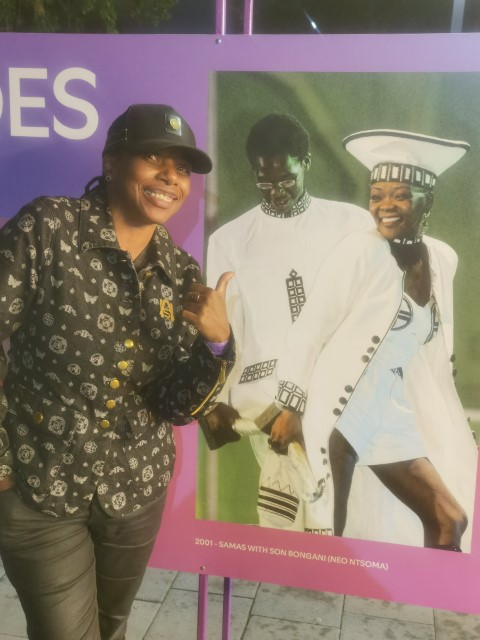
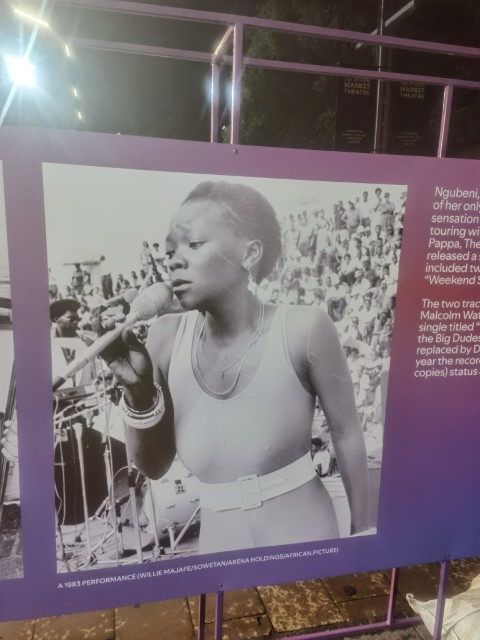
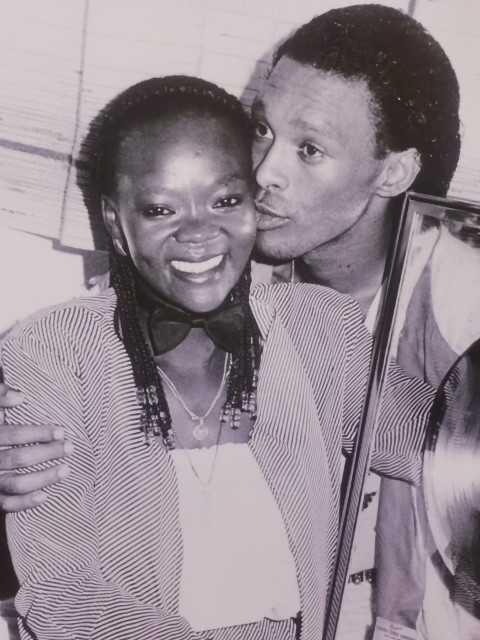
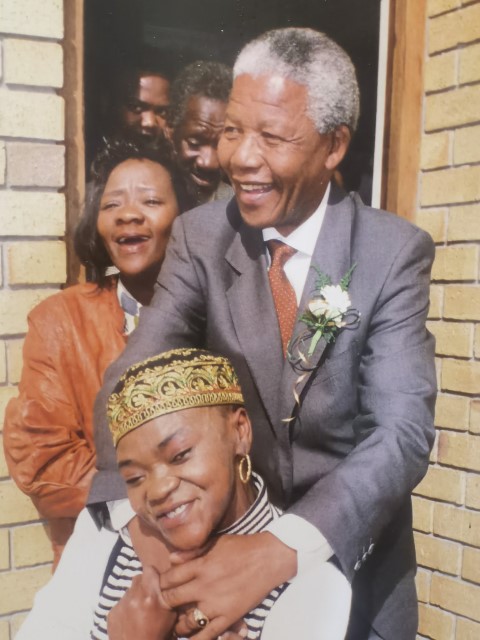
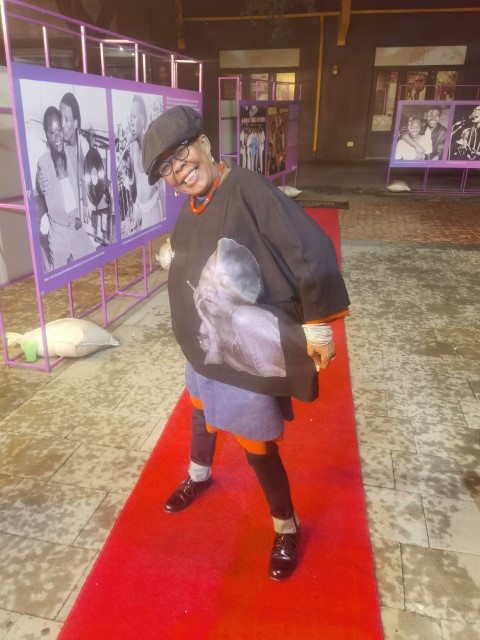
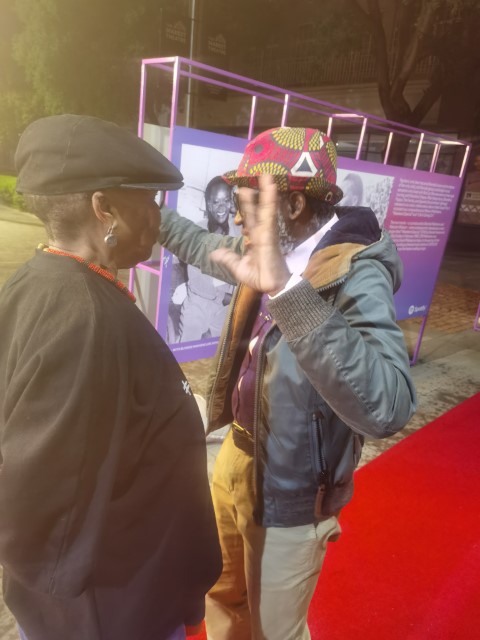
But the celebrations did not only take place inside the venue, but extended outside as well. The market Theatre Precinct outside the entrance of the Market Theatre hosts an exhibition of iconic pictures of Brenda, some with leaders such as Winnie Madikizela-Mandela, former Presidents of South Africa Thabo Mbeki and Nelson Mandela among others. It is also at the same place where there is a permanent exhibition of Brenda’s portrait in a form of a sculpture that just like that of Kippie Moeketsi, barely 50 Metres apart at Kippies, a former Jazz club, is popular with locals. On any given day, you are likely to see locals taking pictures next to these two artworks paying tribute to two of the country’s cultural figures who made a mark artistically on the country’s cultural map.
And so, Tuesday’s Spotify Glow celebration of the 61st birth of Mabrr was a memorable event for a memorable cultural figure in South Africa.
This celebratory event, was held under the auspices of Spotify’s global LGBTQIA+ initiative,
Spotify GLOW also lit up New York City’s Times Square with an out-of-home banner dedicated to her. This visual tribute underscores her far-reaching impact not just as a South African icon but as a global cultural force whose influence continues to inspire artists worldwide.
At the heart of this celebration is ‘The Impact of Brenda Fassie’ – a 10-minute documentary which premiered today on Spotify’s YouTube channel, spotlighting Brenda’s influence across generations. The film features artists who have drawn inspiration from her sound and unapologetic presence – amongst them are Langa Mavuso, Zoë Modiga, Muneyi, and Nanette. https://m.youtube.com/watch?v=cMERflftolw
Tuesday’s event featured a series of panel discussions and the immersive exhibition showcasing rare photos, performance footage, personal memorabilia and iconic moments from her trailblazing career – the space serves as both a homage and a creative reflection, inviting fans and supporters to experience Brenda’s energy firsthand for a month from 4 November to 4 December 2025.
The event and exhibition, curated by Maria McCloy, gathered her family, friends and the people who have helped shape and understand her journey, including Chicco Twala, Yvonne Chaka Chaka, Blondie Makhene, David Mabaso of her first band The Big Dudes, academic Dr Mbali Mazibuko and journalist Charl Blignaut. Together, they unpacked Brenda’s influence on music, identity and African pop culture.
‘It was an honour to be asked by Spotify Glow to curate this event and involve so many key musicians, producers, DJs, journalists, photographers, friends and family in memorialising her, whilst also making sure the new generation learnt about Brenda Fassie too,’ said curator Maria McCloy.
She added, “She gave us so much, not only an album nearly every year from 1983 till 2004 and countless hits, she inspired black people, women and queer people with her immense talent and beautiful boldness both during apartheid and freedom. She was at the forefront of so many movements: from bubblegum to kwaito and Afro-pop. She was friendly to everyone despite her mega fame, we often saw her out and about partying and she was hilarious. Everything got a lot more boring on Joburg’s streets the day she died in 2004. I wish she was here to celebrate her 61st year on earth.”
“Brenda Fassie was more than a performer – she was a revolution,’ said Phiona Okumu, Head of Music at Spotify Sub-Saharan Africa. ‘Through her voice and her truth, she shattered boundaries with her remarkable authenticity. With GLOW we honour her for who and what she was.’