



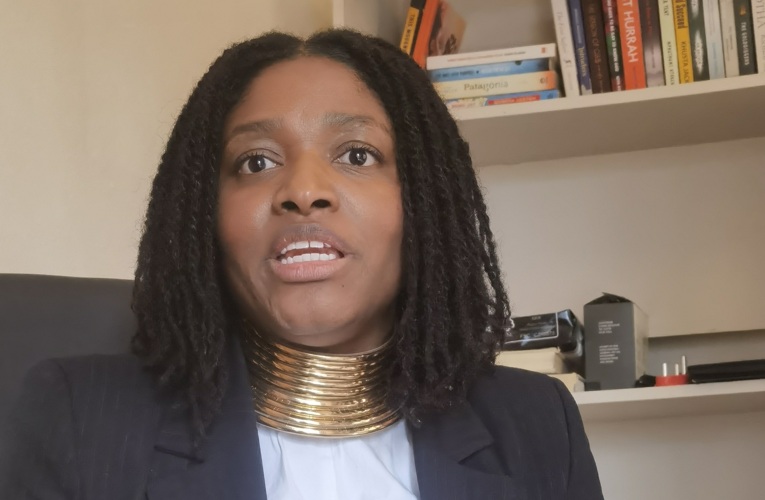
There is a new director at Johannesburg Institute for Advanced Study, Professor Victoria Collis-Buthelezi calibrating a new path for the institute into the future
At JIAS this is where researchers, thinkers, writers and prolific academics, mainly from the Global South, take time off their busy schedules of their daily grind to come and think, research and produce knowledges that seek to give solutions to some of the most pressing problems affecting societies in the Global South.
By Edward Tsumele, CITYLIFE/ARTS Editor
When you get to the Johannesburg Institute for Advanced Study (JIAS) 1 Trolip Street in Westdene, just West of Johannesburg, the first thing that you will notice is the fact that the sprawling collection of buildings that constitute the place are perched high on a hill top, giving you once you are up there, a clear view below of the buildings around the area and even as far as Melville. The institute gives the surrounding areas a curious gaze. The institute’s architectural design could not have been better for a place that prides itself of giving those in residency, its fellows, an atmosphere of tranquility, to be able to work having a sense of being oblivious of the bustling city life around them.
You could easily conclude, if you wish, that the institute’s geographical position is in many ways, an apt metaphor for the role the institute plays in knowledge production and research that is for the benefit of South African society, the African continent, African diaspora and generally the Global South.
Within this building, rather a collection of buildings, which looked at face value, could easily fool you into believing that not much happens there due to the fact that the Institute launched in 2015, a collaborative initiative involving the University of Johannesburg (UJ) in South Africa and Nanyang Technological University (NTU) in Singapore, not much happens there. You would be very wrong in fact.
JIAS is therefore one of the few critical institutes attached to a university that seek to contribute to knowledge production especially in the Global South. The institute is off campus of University of Johannesburg, where there is a lot of bustling, serious knowledge production and intellectual engagement. However big ideas are equally in fact also being produced in this quiet environment that pretty much defines the atmosphere permeating the open spaces between the several buildings and seminar rooms around JIAS, adding to the overall knowledge production eco-system of UJ.
At JIAS this is where researchers, thinkers, writers and prolific academics, mainly from the Global South, take time off their busy schedules of their daily grind to come and think, research and produce knowledges that seek to give solutions to some of the most pressing problems affecting societies in the Global South, in a world whose multipolar architecture struggles to exist and thrive in the face of the constant on-slot from those obsessed with the Unipolar world, long dominated by the Global North. Not only when it comes to producing knew knowledges, but also the control of cultural production and epistemological practices.
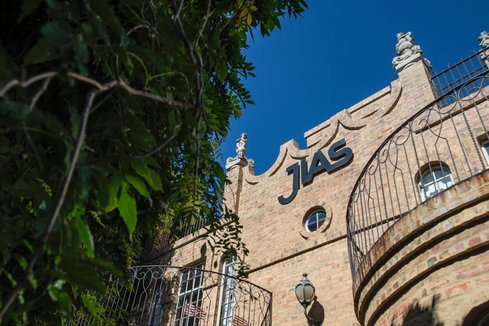
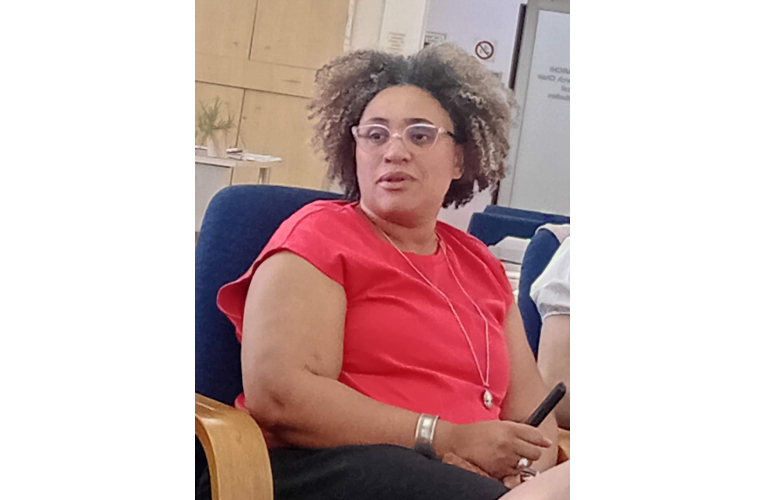
This is the impression I was left with when last week, I visited the institute for an interview with its new director, Professor Victoria Collis-Buthelezi, who was appointed to this position after its director Dr Bongani Ngqulunga moved on last year. The author of the seminal book The Man Who Founded The ANC: A Biography of Pixley ka Isaka Seme, was the second person to hold such a position, as its Founding Director in 2015 was Peter Vale. The appointment of Prof. Collis-Buthelezi, or simply Victoria, as she insisted during the interview that I call her that, means that this is the third Director to hold the influential position at the institute since its finding.
CITYLIFE/ARTS therefore engaged with her to find out what she is bringing into this highly regarded institute that has since its founding, seen highly regarded researchers, academics, writers and journalists benefit from the resources the institute and UJ make available to them to make their lives easy while they were there working on their various projects in an environment that allows comfort and non-pressured work ethics for its fellows.

“Although I am no stranger to JIAS, having been here before when Bongani was the director, this time appointed 2024 first as Acting Director and this year Director, it feels different as I have to make sure that everything runs smoothly, its programmes and even when there is no water I need to take responsibility,” Victoria said as she laughed.
However, running the institute is no laughing matter as it soon emerged during the interview.
‘’Coming here, I needed to think about the critical role that the institute could play, as currently a lot is happening in the world. The world keeps on shifting. And also, being based in Johannesburg, a place which is complex and issues of migration being part of that, there is therefore a need to critically reflect on the role that JIAS could play in society in search of solutions to some of the pressing issues of society through its research initiatives,” Victoria said.
She compared this period in history as different from when the idea of institutes for advanced study emerged as a response after the First and Second World Wars, first in the US, and therefore necessitating for such institutes to find solutions to different pressing problems from those that emerged in the aftermath of the two wars.
That then brought us to discussing what it is that the new director for JIAS is bringing to the table to add to their already established and popular initiatives that have taken shape and solidified over the years under the leadership of her two predecessors.
“Before being appointed to this position here by UJ, I was Director at Centre for the Study of Race, Gender and Class (RGC). I also taught in the English department as Associate Professor. Before that I was at UCT (University of Cape Town) and at Wits, at WISER (Wits Institute for Economic Research).
“The two new programmes that we have introduced here, which are already running with cohorts are the Senior Research Fellowship and Global Blackness and AI + Life Matters whose aim is: “bring together scholars, activists, artists, and collectives who seek to meditate on Blackness as a global category of identification and its local iterations across diverse temporalities and geopolitical locations.”
The institute offers in its programming, an intellectual menu that is quite diverse titivate a wide range of thinkers and creators from diverse intellectual and cultural backgrounds interesting in shaping the direction of higher education in future at UJ and of course beyond.
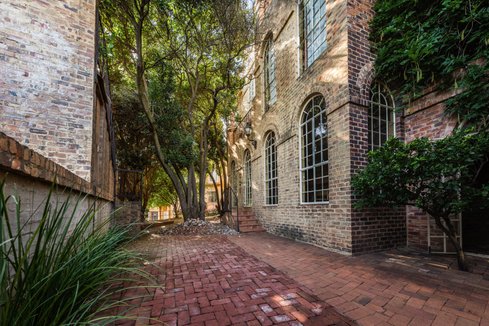
JIAS launched in 2015 as a flagship initiative of the University of Johannesburg. Its mandate is to attract and nurture groundbreaking intellectual work, towards reshaping the direction of higher education not only at UJ, but across South Africa, the African continent and globally.
JIAS therefore being one of three Institutes for Advanced Study (IAS) on the continent, and a member of the University-Based Institutes for Advanced Study (UBIAS) offers five fellowship programmes:
- Writing Fellowships
- Creative Writing Fellowships
- Visiting Professorships
- Research fellowships
- Postdoctoral Fellowships
Since its inception, JIAS has supported over 170 fellowships and 350 public events, establishing itself as a key site for critical enquiry and community in Johannesburg. Each Director has brought unique ideas, projects, and value to the Institute.
And therefore, the eyes are now on the new director with regards to the direction in which she will lead JIAS, and more exciting programmes are on the pipeline come next year.
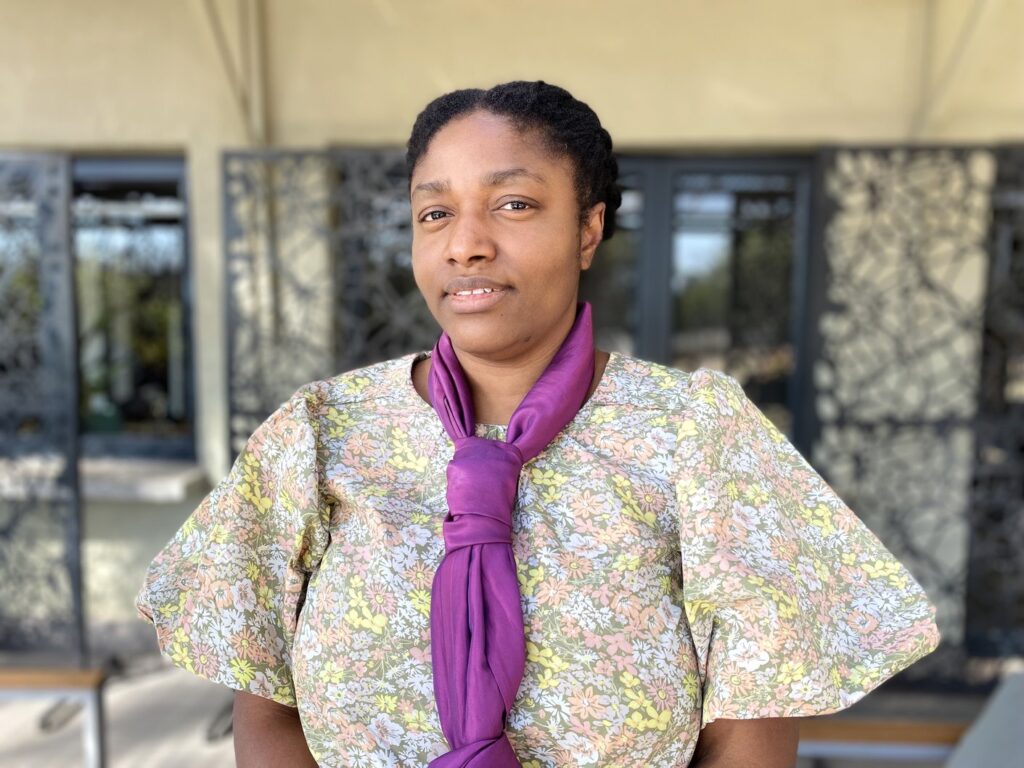
“Next year we will be introducing an interdisciplinary PHD, which UJ has already approved. The learners will be able to tap into the resources the university offers through its library with an extensive collection of books. JIAS has also over the years established a solid network of around 25 academics and 15 of them have already agreed to work with the institute with regards to the PHD as supervisors for the first cohort of students to be enrolled,” Victoria shared.
Victoria comes from an interesting cultural and intellectual background, hailing from Trinidad and Tobago, who came here while doing research for her PHD.
“I came to South Africa in pursuit of Henry Sylvester-Williams one of the pioneering thinkers from the Caribbean who came to came to Cape Town in the 20th Century to attend a conference and never returned, but instead chose, to settle. My research took me to Cape Town, and my research findings are part of a book that will be published next year. It is also important to note that it was not just the prominent thinkers who came here and never returned. Some were ordinary people, such as general labourers on ships that came here and settled in Cape Town,” she gave a hint of what her book carries.
The person Victoria is referring to is the Caribbean intellectual Henry Sylvester-Williams who became prominent in Black Consciousness circles of the time, the Trinidadian lawyer, activist, councilor and writer who was among the founders of the Pan-African movement.
As a young man, Williams travelled to the United States and Canada to further his education, before subsequently moving to England, where he founded the African Association along with Alice Kinloch and Thomas Josiah Thompson in 1897 to “promote and protect the interests of all subjects claiming African descent, wholly or in part, in British colonies and other place, especially Africa, by circulating accurate information on all subjects affecting their rights and privileges as subjects of the British Empire, by direct appeals to the Imperial and local Governments.”
In 1900, Williams organised the First Pan-African Conference, held at Westminster Town Hall in London. In 1903 he went to practise as a barrister in Southern Africa, becoming the first black man to be called to the bar in the Cape Colony.
Well as we concluded the interview with Victoria, I could not help but was curious about her double-baralelled surname, especially because half of it is a prominent surname in South Africa. Again, she laughed.
“Well, we met in New York,” that all she was prepared to reveal publicly.
Well just before I left, I considered what JIAS’s new values under Victoria’s leadership are, and these rang in my mind as she escorted me out of the sprawling premises:
“Underscoring our renewed vision for JIAS are four key values: Repair, Regard, Community & Connection. We are committed to building a community of scholarship and creative practice, grounded in a Black, feminist, and queer politics of care”.